

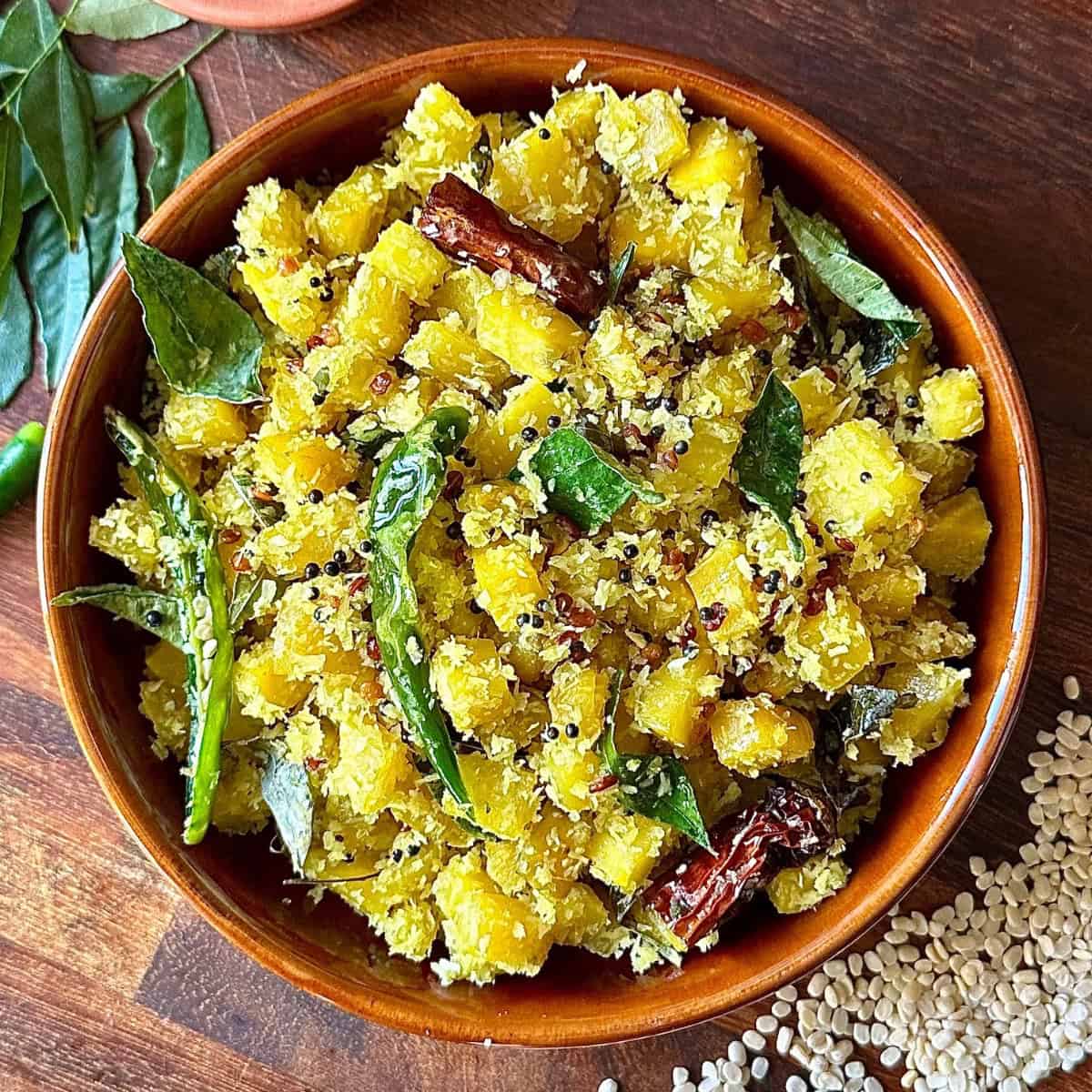
Many people think Indian food is complex, with long ingredient lists, plenty of spices and even longer cooking times. This beetroot thoran will change that.
Thoran is a classic Kerala dry vegetable dish, stir-fried with mustard seeds, curry leaves and coconut. There are many variations; this is how my mum made it, and I'm using golden beetroot here for its milder taste and colour.
The ingredient list is short, and the cooking process is even easier. In 20 minutes or less, you have a bright, flavourful dish. In this recipe, I use golden beetroot, sautéed in a tempering of black mustard seeds and curry leaves. Then I add desiccated coconut softened in coconut milk, which brings creamy sweetness without needing fresh coconut- a great hack to avoid the work of fresh coconut or if it's not readily available where you live.
Once you make this, you'll want to make it again and again, hopefully with different vegetables. Enjoy it as a side, with dosa, or even as a filling for a wrap.
In short: Beetroot thoran is a classic Kerala dry vegetable dish. In this version, sauté 10mm dice of raw golden beetroot in a coconut-oil tempering of black mustard seeds, urad dal, curry leaves, and chilli. Finish with desiccated coconut softened in coconut milk. It takes one pan and 20 minutes; it's vegan, and you can serve it as a side with rice, with dosa or as a wrap filling.
Jump to:
Why you'll love this beetroot thoran
- Quick and easy - a one-pot recipe ready in 20 minutes.
- No fresh coconut needed - uses desiccated coconut and coconut milk to replicate the taste and texture of fresh coconut.
- Uses golden beetroot - a milder beetroot that lets other flavours shine through, and it doesn't stain like red beetroot.
- Learn a tempering technique - a valuable skill that enhances flavour and applies to other dishes.
Key Ingredients & Notes
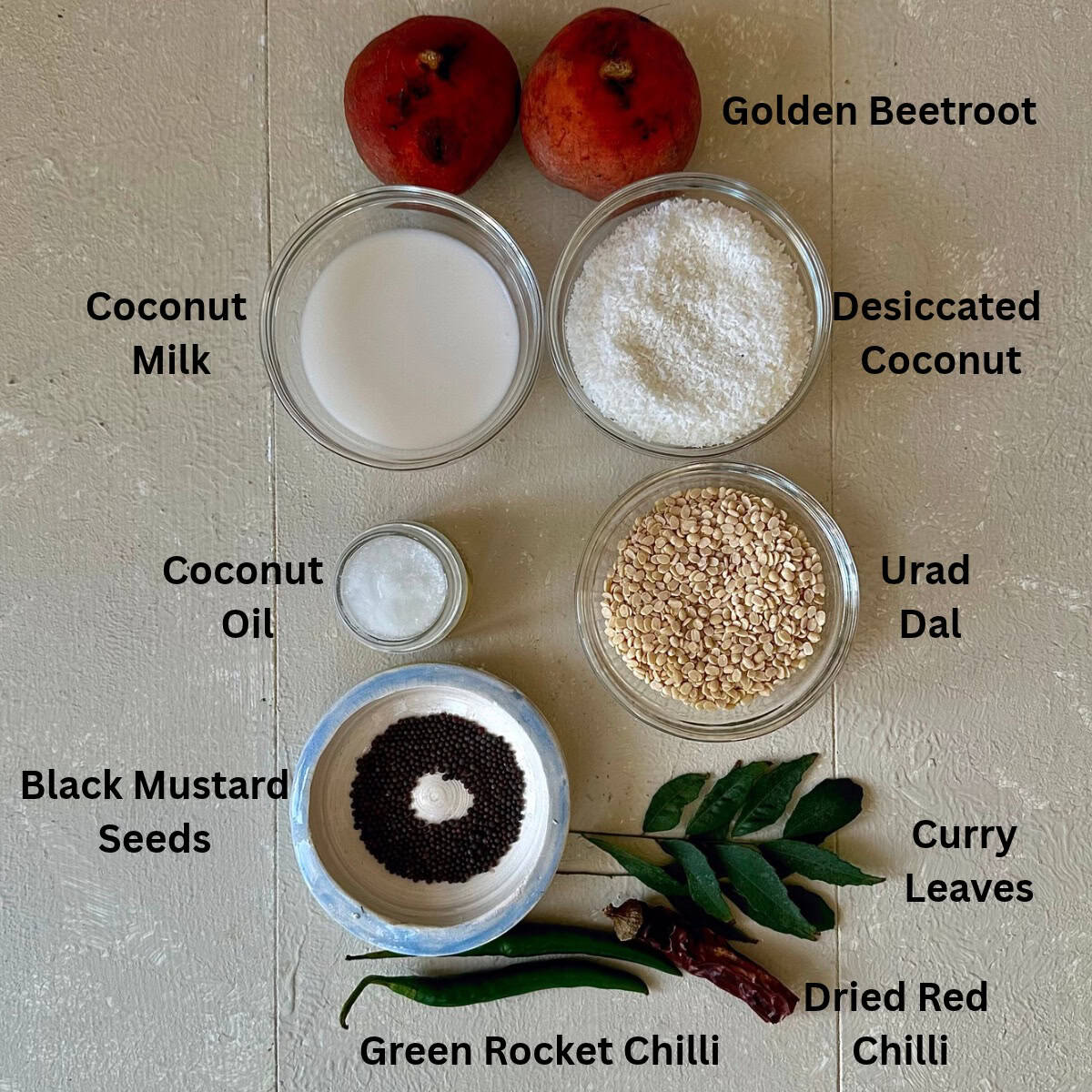
- Golden beetroot - Milder than red beetroot, so it doesn't overpower other flavours or "stain" the other ingredients like red beetroot.
- Desiccated coconut & coconut milk - replaces fresh coconut, where the coconut milk rehydrates the desiccated coconut, almost replicating the texture and flavour of fresh coconut.
- Coconut oil - traditionally used in South Indian cooking.
- Black mustard seeds, urad dal, dry red chilli, green rocket chilli, fresh curry leaves - the quintessential, authentic tadka aromatic ingredients for an excellent thoran. You can grow a curry leaf plant indoors on a windowsill in the UK. Otherwise, use dried curry leaves, available at supermarkets, Whole Foods, and Amazon.
See the recipe card for quantities.
How to Make Golden Beetroot Thoran
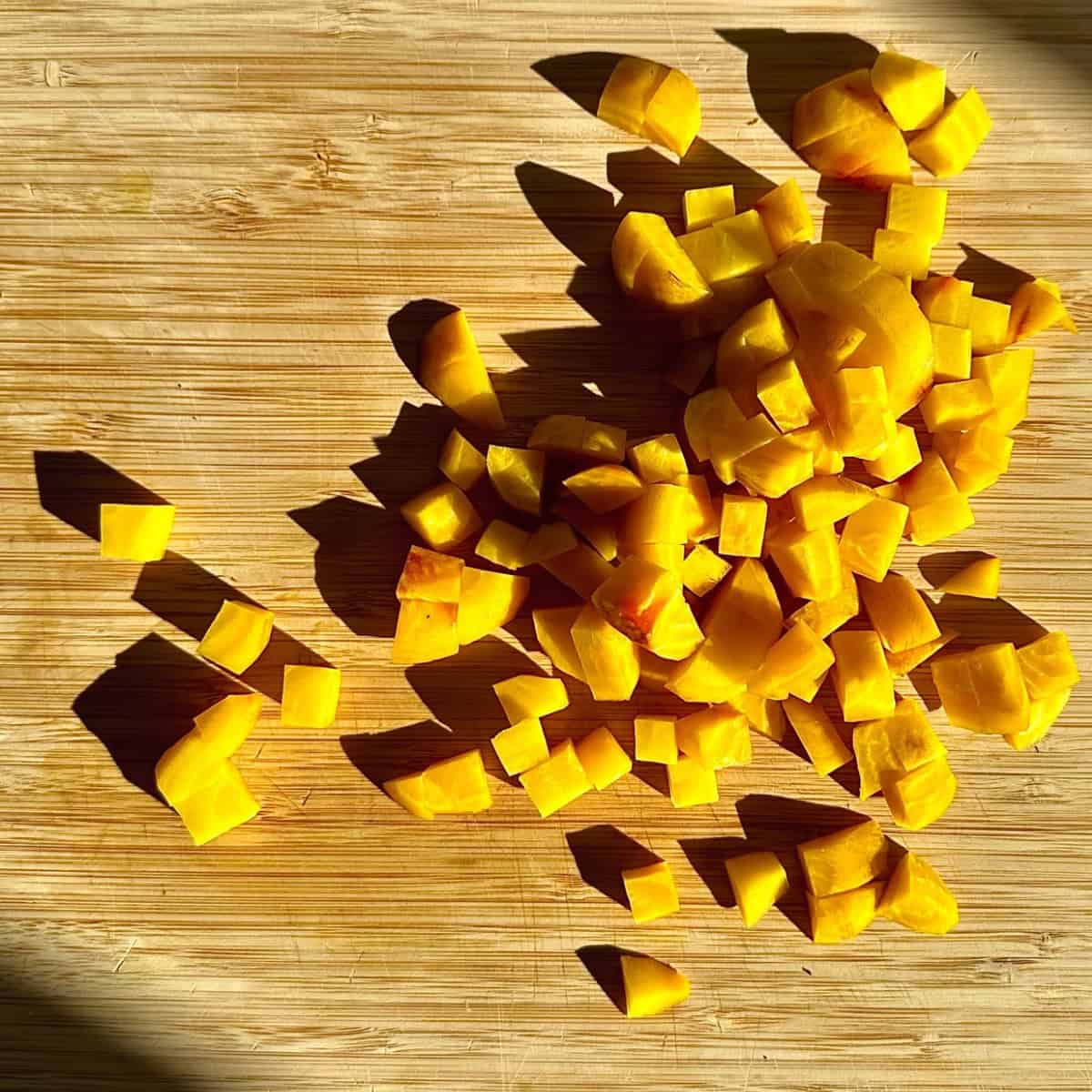
- Prepare the beetroot: Wash the beetroot and cut it into 10 mm dice. Keep the dice even so everything cooks evenly. Make sure the beetroot is properly dry, or it will spit in the hot oil and stop the tempering sizzling. Slit the green chilli down the middle and pick the curry leaves off their stems.
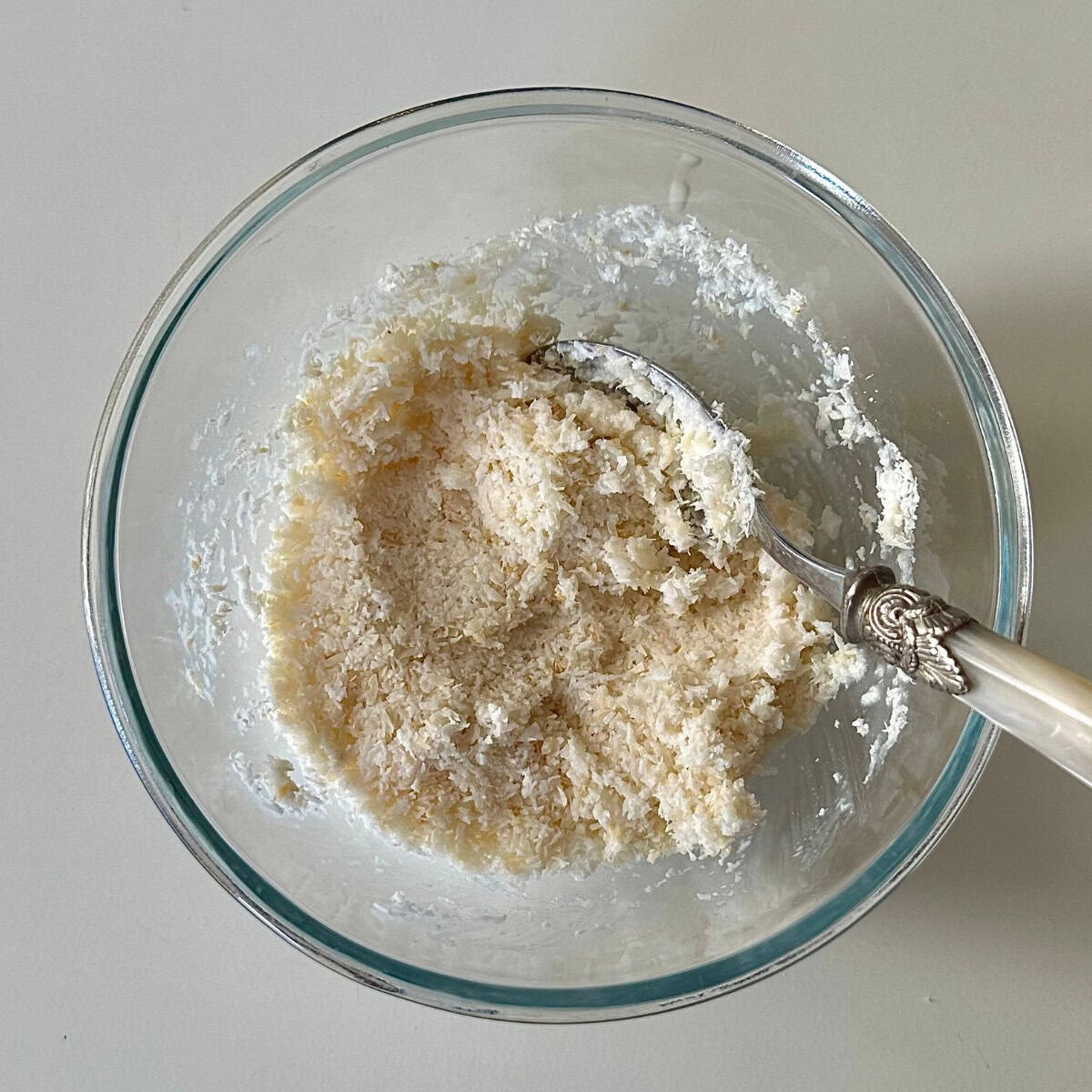
- Soak the coconut: Mix together the desiccated coconut and the coconut milk in a bowl. Set aside while the desiccated coconut softens while you cook the beetroot.
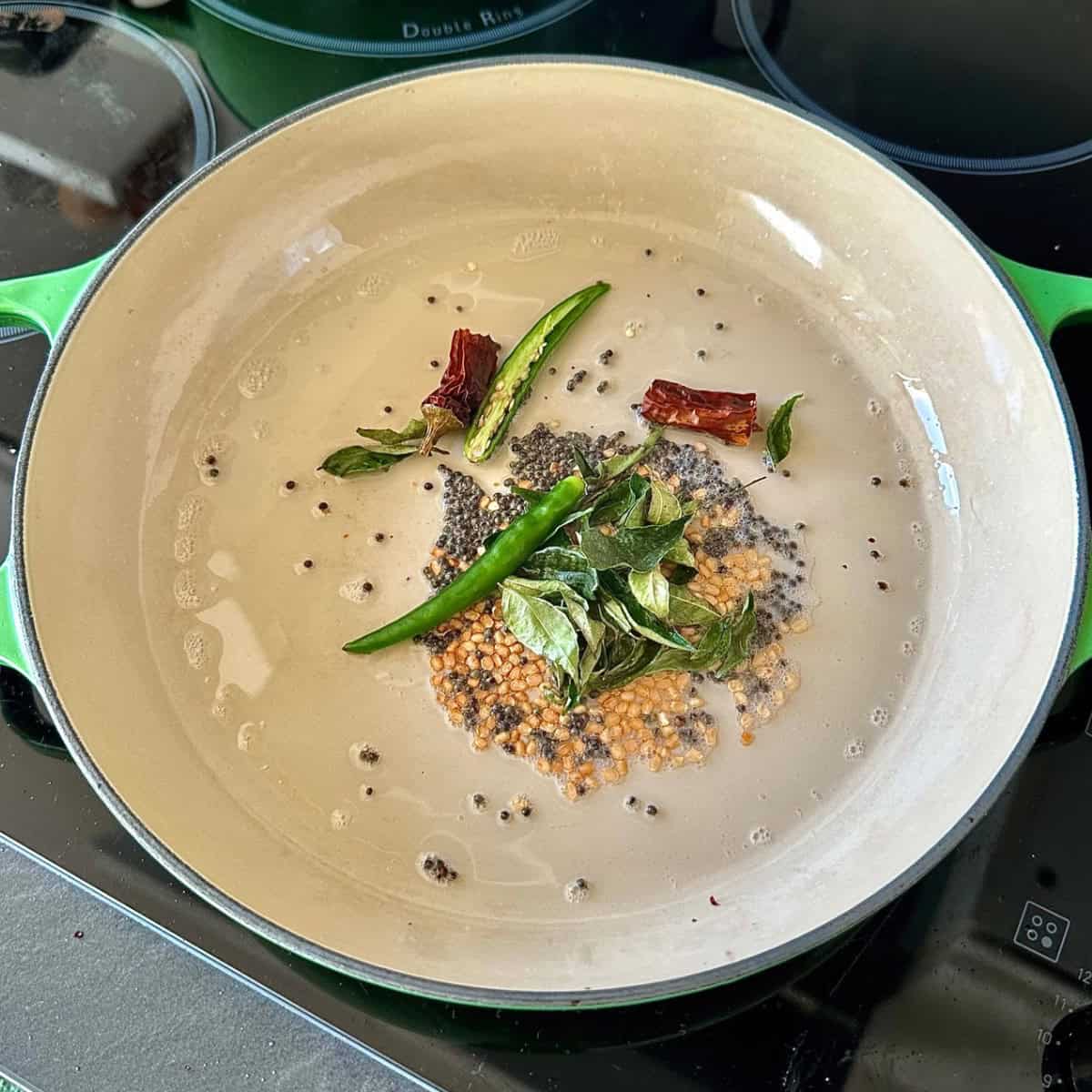
- Tempering: Heat the coconut oil in a wide pan over a medium-high heat and add the mustard seeds. Once they start to pop, lower the heat and add the urad dal, curry leaves, whole red chilli, slit green chilli and salt. Stir until the dal turns golden, not black. Be careful: the curry leaves will spit oil
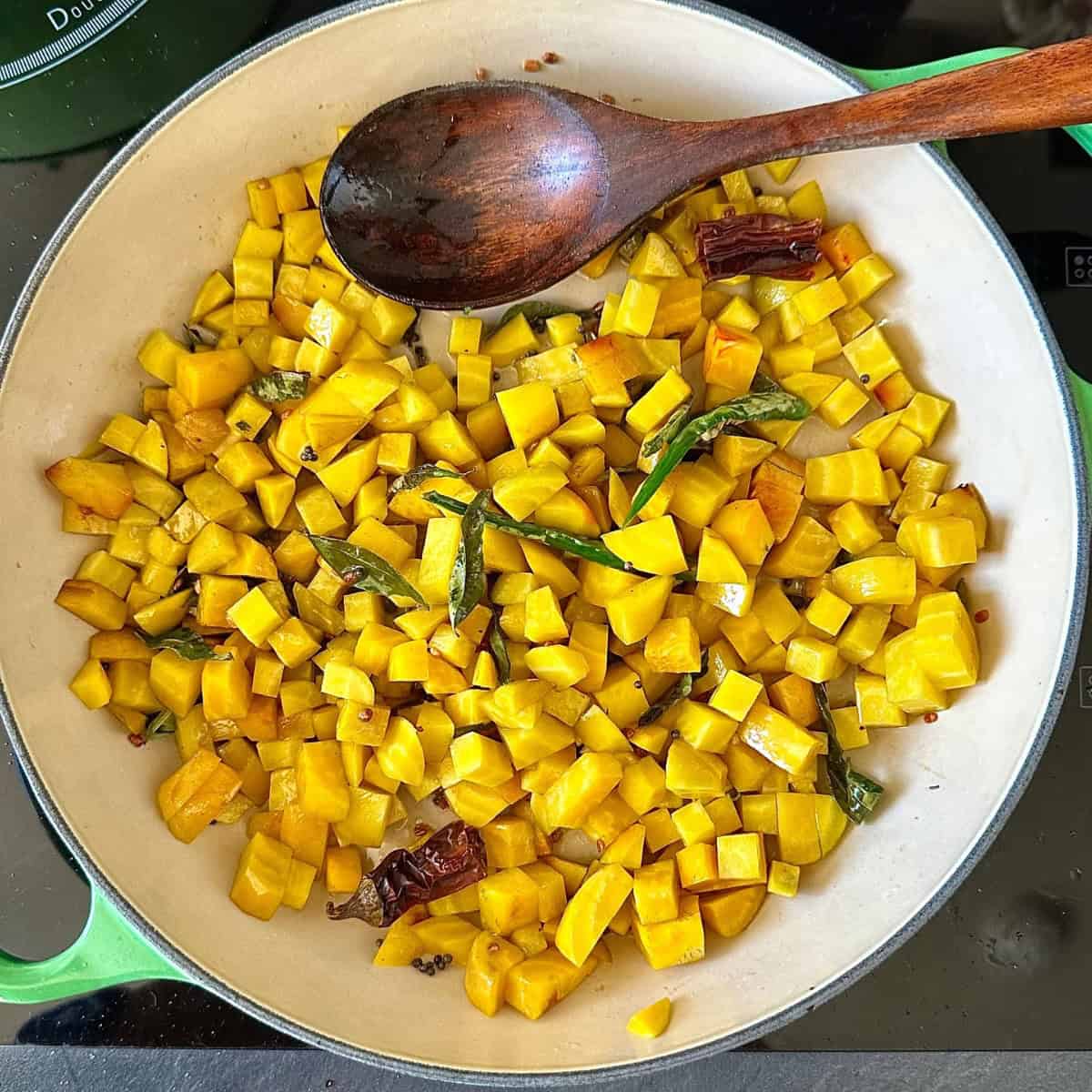
- Cook the beetroot: Sauté the diced beetroot with the tempering for a couple of minutes. Add a splash of water (approx. 2 tbsp), cover and cook for 5 minutes. The cooked beetroot will have a little bite and will not be completely soft.
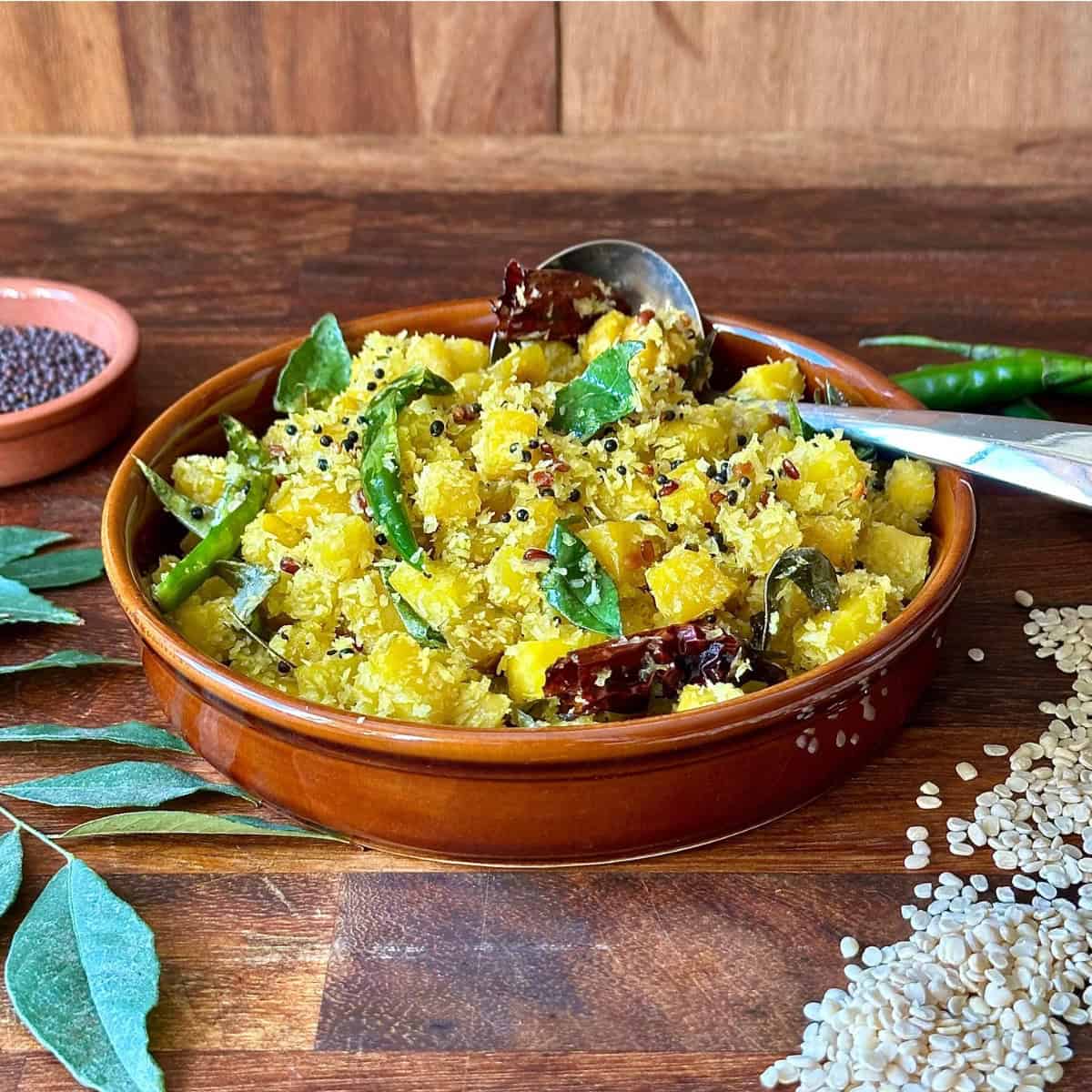
- Finish and serve: Stir through the coconut mix and cook for another 5 minutes over medium heat, until the coconut is warmed through and the thoran looks dry rather than wet. Taste and adjust the salt.
Substitutions & variations
- Coconut- You can use fresh coconut (40g) if you have access to it; just don't use the coconut milk. Coconut milk rehydrates the dry desiccated coconut.
- Beetroot - You can replace golden beetroot with red beetroot. It will give the dish a more dominant flavour and colour. You can also use squash or pumpkin, cooked in the same way.
- Curry leaves - If you don't have fresh curry leaves, you can use dried ones. Add them before the beetroot to prevent them from burning. I successfully grow a curry leaf plant on my windowsill in the UK - available from the Citrus Centre, Sussex.
- Coconut oil - I use coconut oil because it is traditionally used in South Indian cooking. You can use olive oil or vegetable oil if you wish.
- Add companion vegetables - Kale or spinach - stir in finely shredded kale or spinach halfway through the final cooking period; Cabbage - shred the cabbage and stir it in with the beetroot; Carrot - add grated carrot to the beetroot for colour and sweetness.
Equipment
For this recipe you will need:
- A small bowl to mix together the desiccated coconut and coconut milk.
- A large frying pan with a lid to cook the thoran.
- Digital scales for accurate ingredient measurements.
- Measuring spoons to measure the spices
Storage
Store the thoran in an airtight container in the fridge for up to three days. Reheat in the microwave or in a steamer. If you reheat it in a pot, add a little water to prevent the coconut from burning on the bottom.
I haven't tried freezing it as it's best eaten fresh.
Recipe TipS
Have all your prep ready before you start cooking. Tempering is quick, and any delay can burn everything. For a successful tempering, make sure to do the following:
- Make sure the oil is hot.
- Add the mustard seeds and wait till they start to pop.
- Turn down the heat so you don't burn the ingredients. Immediately add the other ingredients in this order: urad dal, curry leaves, whole red chilli, slit green chilli and salt. Be careful - the oil may spit when the curry leaves go in.
- Immediately add the diced beetroot.
The beetroot is done when it is soft but still has a bite.
FAQ
Thoran is made with grated coconut (usually fresh), black mustard seeds, fresh curry leaves, fresh green chillies, and dried red chillies. Some people add urad and chana dal; some may add asafoetida as well. It uses minimal spices, and you can adjust them to the vegetable you choose. You can also add cumin and onions.
Yes, they are the same core dish: a dry, stir-fried vegetable side dish. Poriyal and palya are regional name variations. Poriyal is used in Tamil Nadu, and palya in Karnataka. Thoran is used in Kerala.
When heated in oil, black mustard seeds are more pungent and sharper than yellow or brown mustard seeds. So if you use yellow or brown, you may need more. I also wouldn't wait for them to pop; because they are small, they will burn. Black mustard seeds pop because heat removes the bitterness and releases the pungent flavour.
It's a cooking technique in which you briefly cook whole spices in hot fat. Heat releases the spice's essential oils into the fat, and the fat then carries the spices' flavours. This aromatic mixture is sometimes the base of a dish, sometimes the topping, for example, dals.
Yes. This will speed up cooking, and you won't need to add water.
Thoran is usually a side dish, served with dosa, idli, or even rice. The main dish is usually dal or sambar. I sometimes use it as a filling for wraps.
No, you don't have to; just scrub it well to remove any mud from the top and bottom. If your beetroot has any hairs, remove them.
Yes. It is both vegan and gluten-free
📖 Recipe
Golden Beetroot Thoran
Equipment
- Bowl to mix the desiccated coconut and coconut milk
- Frying pan to cook the thoran
Ingredients
- 560 g Golden beetroot diced (10mm dice)
- 2 tablespoon Coconut oil
- 40 g Desiccated coconut
- 70 ml Coconut milk about 40g
- 1 teaspoon Black mustard seeds
- 1 teaspoon Urad dal
- 1 Whole dried red chilli
- 1 Fresh green finger chilli
- 1 teaspoon Salt
- 2 stems Fresh curry leaves
Instructions
- Wash the beetroot, green finger chilli, and curry leaves, then dry them well. Peel the beetroot and cut it into 10 mm dice.
- Slit the green chilli lengthwise and pick the curry leaves off their stems.
- Mix the desiccated coconut and coconut milk in a small bowl and set aside to soften.
- Heat the coconut oil in a wide pan over medium-high heat. Add the mustard seeds and, once they start to pop, lower the heat. Add the urad dal, curry leaves, whole red chilli, slit green finger chilli and salt, and stir until the dal turns golden.
- Add the diced beetroot and sauté for 2 minutes. Add a splash of water (about 2 tbsp), cover and cook for 5 minutes, until just tender with a little bite
- Stir in the coconut mix and cook for 5 more minutes over medium heat, until the coconut is warmed through and the thoran looks dry. Taste, adjust the salt and serve immediately.
More Golden Beetroot & Indian-Spiced Recipes
Still got beetroot on the board? Here are a few more ways to use it, plus two quick sides that pair well with this thoran.





Leave a Reply