


This masala white Urad dal recipe is a comforting Indian-style lentil dish. It is made with skinned white Urad dal, onions, tomatoes and warming spices. White urad dal has a mild, earthy flavour and cooks to a soft, creamy texture, making it perfect for a rich and satisfying everyday meal.
Why you'll love this white Urad dal
- Creamy, rich and deeply comforting.
- A great way to cook white Urad dal.
- Made with simple pantry ingredients.
- Full of warming spice and savoury flavour.
- Naturally vegan if made with oil.
- Perfect with rice or flatbreads.
- Ideal for a cosy everyday meal and the lunchbox at work.
What is White Urad Dal?
White urad dal is black gram with the dark outer skin removed. It has a mild, earthy flavour and cooks down to a soft, creamy texture, making it ideal for rich, comforting dal recipes like this one.
It is also used in Indian cooking for dishes such as idli, dosa and papad, where its binding and fermentation properties are especially valued. Depending on the type, it may be sold whole or split.
This North Indian-inspired white urad dal recipe is a great choice if you enjoy dals with more body and creaminess than lighter lentils such as moong dal or masoor dal.
For an even richer and more indulgent option, try my kaali dal. Made with whole black urad dal, it takes longer to cook but rewards you with an even deeper flavour and more buttery texture.
Jump to:
Key Ingredients & Notes

- White urad dal - White urad dal has a mild, earthy flavour and cooks to a soft, creamy texture, making it ideal for this comforting masala dal.
- Red onion - adds sweetness and depth to the dish's base.
- Ginger and garlic - A classic aromatic base that gives the dal warmth and savoury depth.
- Oil or ghee - Use either, depending on your preference. Ghee adds richness, while oil keeps the dish vegan.
- Tomatoes - Cooked with the onions and spices, tomatoes help form the masala base and add gentle acidity.
- Turmeric - Gives the dal its warm golden colour and adds earthy depth.
- Cumin, coriander and red chilli powder - A simple spice combination that brings warmth, fragrance and balanced heat.
- Sea salt - Enhances and balances the dish's flavours.
- Optional garnish - Fresh coriander and a sprinkle of chaat masala add freshness and a tangy finishing note.
See the recipe card for quantities.
How To Make Masala White Urad Dal
To begin, prepare your ingredients:
- Rince the dal under cold, running water from the tap.
- Place the dal in a saucepan and soak for 2-3 hours, adding enough water to cover them by at least 2 inches, as the dals will expand while soaking.
- Peel and thinly slice the onion.
- Peel the ginger and garlic.
- Quarter the tomatoes.
- Roughly chop the fresh coriander.

- Add the chopped tomatoes, ginger, and garlic to a blender and blend until smooth.
- Rinse and drain the soaked dal, then transfer it to a pot with 500ml water and turmeric. Bring to the boil, then reduce the heat and simmer for about 15 minutes, until the white urad dal is almost cooked. It should still hold its shape, but break easily when pressed between your fingers.

- While the dal is cooking, heat the oil in a medium frying pan and fry the onions until golden brown.

- Add the tomato, ginger and garlic puree to the onions and cook for about 5 minutes, until it thickens and deepens in colour.
- Stir in the cumin, coriander, chilli powder and sea salt, then cook for a further 5 minutes.

- Add the partially cooked dal and its cooking water to the pan. Stir well, then cover and cook over a medium heat for 10 minutes to let the flavours meld.

- Adjust the seasoning to taste, then stir through the chopped coriander and chaat masala, if using.
FAQ's
White urad dal and black urad dal come from the same lentil, but white urad dal has had the black outer skin removed. Because of this, white urad dal cooks more quickly and gives a softer, creamier texture. It is often used in dishes such as idli, dosa and papad, and may also be sold as dhuli urad dal or split urad dal.
Black urad dal retains its dark outer skin, which gives it a deeper flavour and means it usually takes longer to cook. When cooked for long enough, it becomes thick, rich and silky, making it ideal for more indulgent dals such as maa ki dal or kaali dal.
Split black urad dal still has the black skin, but because it is split, it cooks more quickly than whole black urad dal.
In short, white urad dal is better for a softer, creamier dal with a shorter cooking time, while black urad dal gives a deeper flavour and can become especially rich and velvety when cooked slowly.
Yes, soaking white urad dal is recommended for the best texture and even cooking. Because the outer husk has been removed, it needs less soaking time than whole black urad dal. White urad dal usually benefits from 1 to 2 hours of soaking, while whole black urad dal is best soaked for 6 to 8 hours or overnight.
Soaking helps the dal cook more evenly and gives it a creamier texture. It may also make it easier to digest.
White urad dal is a nourishing ingredient that provides plant protein, fibre and a range of essential minerals. It can help make vegetarian meals more filling and satisfying. Although whole black urad dal contains more fibre because the outer husk is still intact, white urad dal is still a nutritious choice and works well in everyday cooking.
White urad dal has a mild, earthy flavour and a soft, creamy texture when cooked. It is less bright than moong dal and less sweet than masoor dal, making it a good choice for richer, more comforting dishes.
Substitutions & Variations
If you do not have white urad dal, you can still make a version of this recipe with other lentils, though the flavour and texture will be different.
Yellow moong dal - A good alternative if you want a softer, comforting dal. It has a milder flavour than urad dal and cooks in about 30 minutes.
Puy lentils - These hold their shape well and have a more peppery flavour. They will give the dish a less creamy texture than urad dal.
Oil or ghee - This recipe uses oil to keep it vegan, but you can use ghee instead for a richer, more traditional flavour.
Curry leaves - If you have fresh curry leaves, add a few to the onions or masala base for extra aroma and depth.
Spinach - For a boost of greens, stir in a handful of spinach towards the end of cooking and cook until just wilted.
Yoghurt - You can use dairy or dairy free yoghurt, a spoonful of yoghurt makes a cooling garnish in place of, or alongside, the coriander and chaat masala
Equipment
For this recipe, you will need a saucepan, a frying pan and a blender. Measuring spoons and digital scales are helpful for accuracy.
Storage
Store the white urad dal in an airtight container in the fridge for up to 3 days.
It also freezes well, so you can batch-cook it and freeze it in portions for a quick meal later.
Chefs Tips
- Do not skip soaking the white urad dal. Soaking helps it cook more evenly and gives the finished dal a creamier texture.
- Cook the dal separately until almost tender, then add it to the masala. This ensures it softens properly before the final simmer, when the flavours come together.
- When adding the spices, give them time to cook out in the masala, so they release their full aroma and flavour.
📖 Recipe

Masala White Urad Dal
Equipment
- Measuring spoons
Ingredients
- 250 g Urad Dal
- 500 ml Water to cook dal
- 90 g Red Onion
- 10 g Garlic
- 25 g Ginger
- 200 g Tomato
- 2 teaspoon Sea salt
- 1 tsp Turmeric
- 1 teaspoon Cumin powder
- 1 teaspoon Coriander powder
- 1 teaspoon Red Chilli powder
- 2 tablespoon Oil or Ghee
- Fresh Coriander leaves
- 1 teaspoon Chaat masala optional
Instructions
- Rinse the dal well, then soak it in water for 1 to 2 hours.
- Thinly slice the onions. Peel the ginger and garlic, then quarter the tomatoes.
- Add the tomatoes, ginger and garlic to a blender and blend to a smooth puree. Roughly chop the fresh coriander and set aside.
- Rinse and drain the soaked dal, then transfer it to a pot with 500ml of water and turmeric. Bring to a boil, then reduce the heat and simmer for 15 minutes until the dal is almost cooked. It should still hold its shape, but break easily between the fingers.
- Meanwhile, heat the oil in a separate frying pan and cook the onions until golden brown.
- Add the tomato, garlic & ginger puree to the onions and cook over a medium heat for about 5 minutes, until the mixture thickens and deepens in colour.
- Stir in the coriander, cumin, red chilli powder and sea salt, then cook for a further 5 minutes. so the spices release their flavour.
- Add the partially cooked dal and its cooking water to the pan and stir well. Cover and cook for 10 minutes, over medium heat, allowing the flavours to meld together.
- Once cooked, the dal should be soft and creamy, while still holding some shape. Adjust the seasoning to taste.
- Garnish with the chopped coriander and sprinkle with chaat masala, if using. Serve with either flatbread or rice.
Nutrition
NOTES
What to serve with white Urad dal
Serve this masala white Urad dal with steamed basmati rice, Jeera rice, roti, naan or laccha paratha for a comforting meal. For a fresher contrast, add a simple salad, sliced onions or a spoonful of yoghurt on the side.
More dal recipes to try
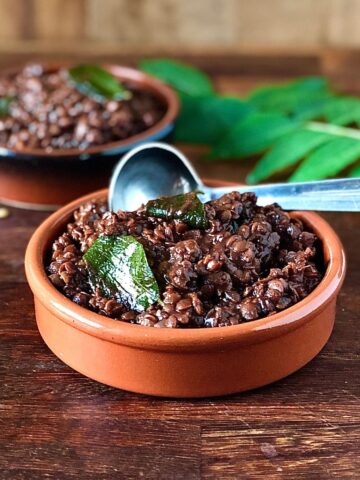
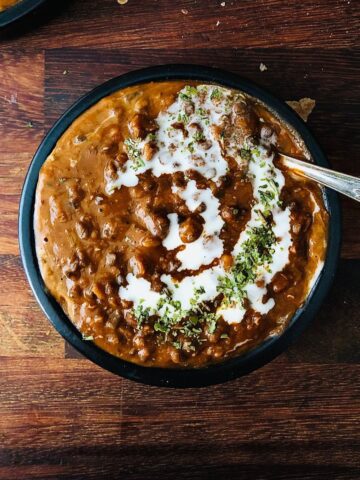
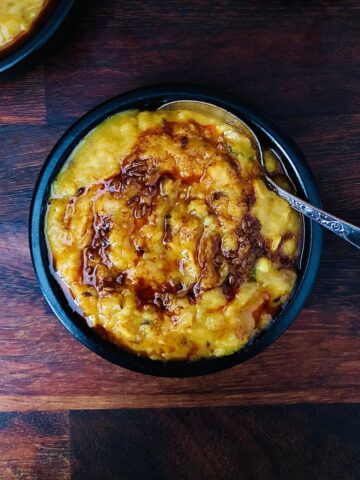
If you enjoy the comforting, creamy texture of this white urad dal, here are a few more dal recipes to explore. From lighter everyday dals to richer, slower-cooked favourites, these recipes are full of flavour and perfect for cosy meals.

Food safety
- Wash your hands regularly while preparing, handling and cooking food.
- Wipe down countertops and high-contact points regularly.
- If you cook meat and fish, do not use the same utensils on cooked food that previously touched raw meat. Use separate chopping boards for meat and fish. Wash your chopping boards immediately after use.
- Cook food thoroughly to a minimum internal temperature of 165 °F (74 °C).
- Don't leave food at room temperature for extended periods (more than 2 hours).
- Store food correctly.


Emily Cantwell says
How much water
Chef Tripti says
Hello Emily
For soaking you can add any amount as long as the daal is covered. For cooking, it's about an inch over the daal.
Regards
Tripti
PK says
Love this recipe! Easy to follow and cook. Hearty and warm meal for cold days.
Chef Tripti says
Am glad you enjoyed it.
Mrs Helen Stradling says
How much water to cook the Da is not stipulated !!
Please advise.
Chef Tripti says
Hello there! As a general rule for all lentils, we put water about half an inch above the lentils. The amount of water varies according to the size of pot, however usually half an inch above the lentils is usually enough. Hope this helps
Georgeanna Pilcher says
This was a really helpful article, especially the part about focusing on sustainable habits instead of quick fixes. A lot of people underestimate how small daily changes can make a big difference over time. I also liked the emphasis on consistency rather than perfection, which is something many beginners struggle with. Thanks for sharing practical advice that feels realistic and achievable.
Chef Tripti says
Thank you so much for your kind words.
Eveline says
Hello,
I don't know about the others asking about water, but my question would be how much to add to simmer at the end, not for cooking the lentils originally
Chef Tripti says
For both cooking the lentils first and the final cooking time with the masala, I always recommend that the water should be about half and inch above the surface of the lentils. Usually half an inch above the surface of the lentils always works.I hope this helps.
Tripti
Mark says
Nowhere in the recipe does it state how much water to use. I ended up with a much watery curry than I probably should have, some advice there would have been helpful.
Thanks for the recipe otherwise.
Chef Tripti says
Hello Mark,
I sincerely apologise. I have updated the recipe with the amount of water to cook the daal.
I really appreciate your feedback.
Thank you for trying out my recipe.I hope you will try it again and this tie it will be perfect.
Best wishes
Tripti