

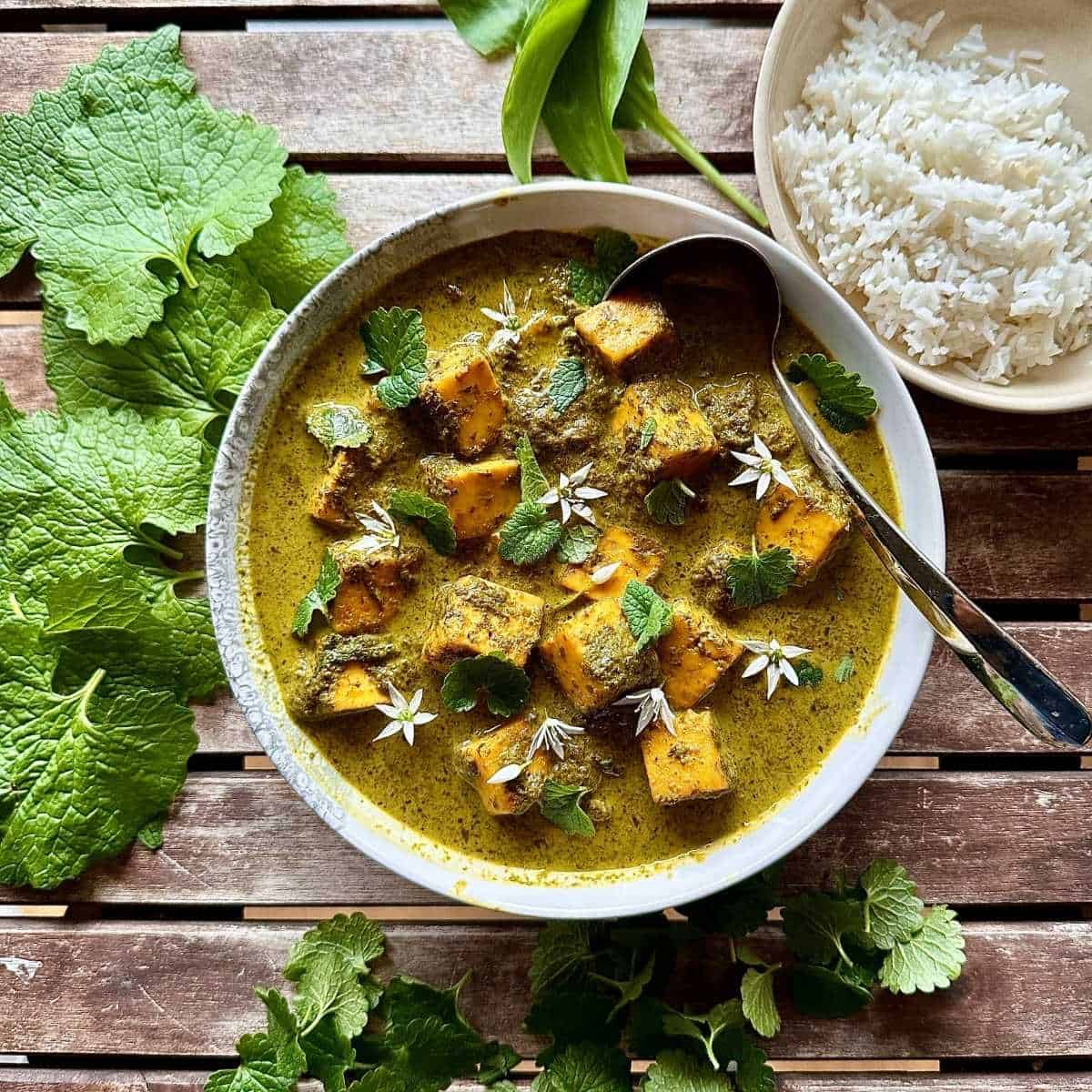
This wild garlic curry with paneer is a fragrant, comforting spring curry made with coconut milk, green chilli, ginger and foraged wild greens from England. The inspiration comes from Thai jungle curry, a bold, herb-heavy curry traditionally made with ingredients gathered from Thailand's forests. While jungle curry is usually made without coconut milk, I use it here to soften the wild greens and give this vegetarian curry body and richness. It is flavourful, seasonal and an easy way to bring foraged ingredients into a simple meal served with rice.
Why You'll Love This Wild Garlic Curry With Paneer
- A creative way to use wild garlic. Wild garlic is not just used as a garnish here. It forms the base of the curry paste and gives the whole dish its fresh, garlicky flavour.
- It celebrates seasonal wild greens. This recipe brings together wild garlic, garlic mustard, ground ivy and nettles in one fragrant spring curry.
- The coconut milk balances the greens. It gives the curry body and richness while softening the stronger, more bitter notes of the foraged ingredients.
- It is easy to make. Once the greens are washed and the paste is made, the curry comes together in a few simple steps.
- Paneer makes it satisfying. The paneer adds protein, texture and substance, making this a proper dinner rather than just a side dish.
- It connects foraging with everyday cooking. This is a practical way to turn seasonal wild food into a comforting curry you can serve with rice.
Jump to:
Key Ingredients & Notes
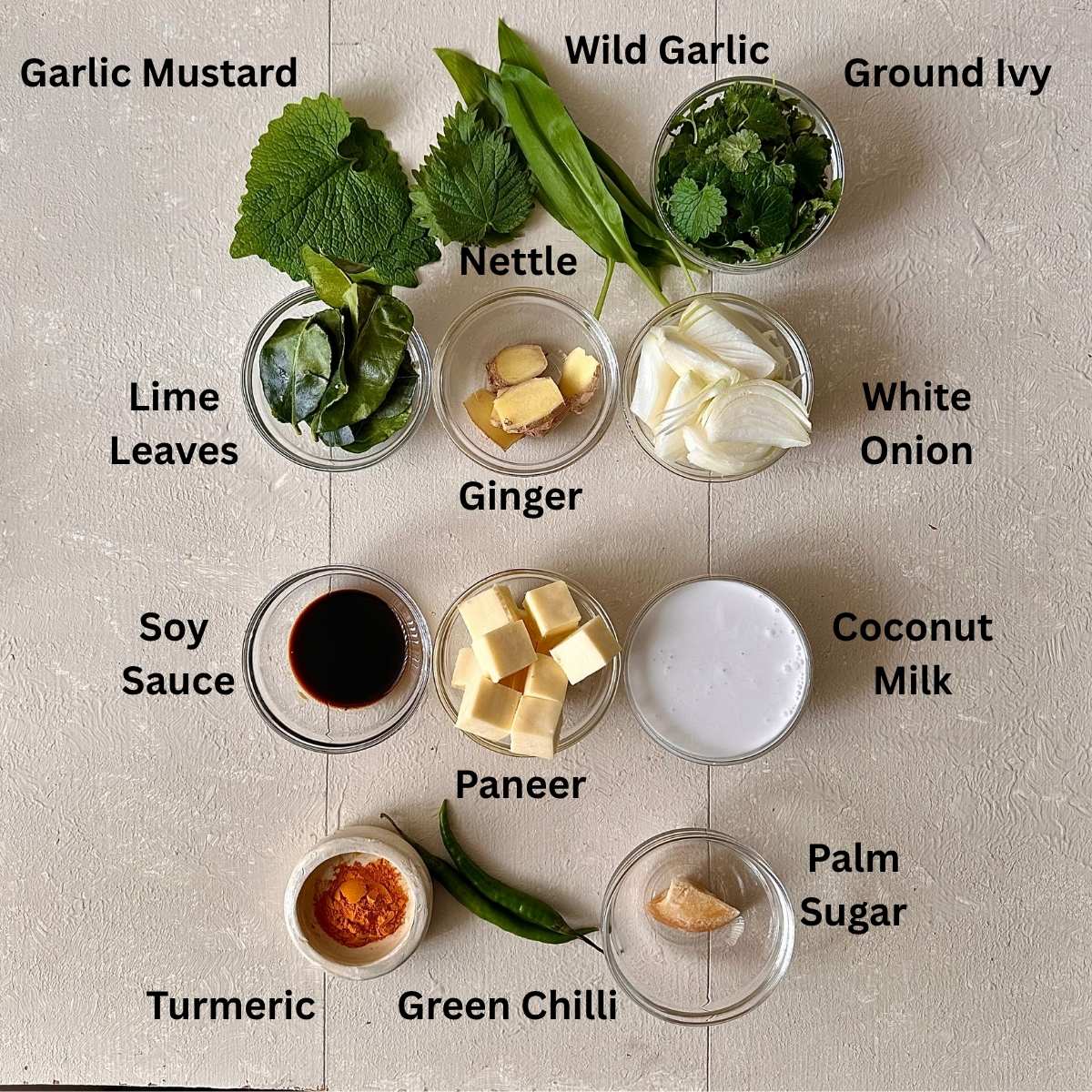
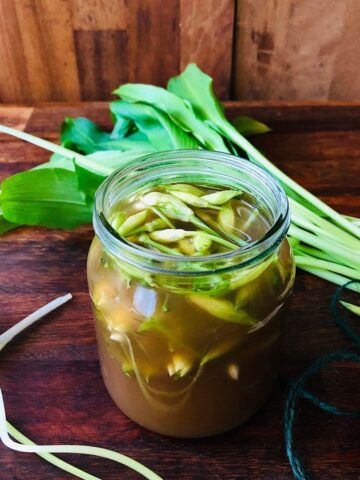
- Wild garlic - Wild garlic is the main foraged ingredient in this curry. It brings a fresh, garlicky flavour, but is softer and more subtle than ordinary garlic. Use fresh, vibrant leaves. Wash them well, then pat them dry before chopping and grinding into the curry paste.
- Garlic mustard - Garlic mustard is another foraged green with gentle garlic notes and a peppery edge. It is stronger and more bitter than wild garlic, so it works best as part of a mixed wild greens paste rather than as the dominant flavour.
- Ground ivy - Ground ivy has a distinctive herbal, slightly minty- sagey flavour. Use it carefully, as its flavour can come through strongly once cooked.
- Nettles - Nettles bring an earthy, green flavour and are a nutrient-dense wild leaf. Handle them with gloves while raw. Once cooked, the sting disappears completely.
- Paneer - Paneer is a mild cheese made by curdling milk with an acid, such as lemon juice. It adds body and protein to the curry without overpowering the wild greens, allowing the fresh, aromatic flavours to shine.
- Coconut milk - Coconut milk gives this curry richness and a Thai curry-like feel. It also balances the stronger, more bitter notes of the wild greens.
- Palm sugar, soya sauce and lime leaves - Palm sugar, soya sauce and lime leaves are often used in Thai cooking. The sugar adds gentle sweetness, the soya sauce brings saltiness and umami, and the lime leaves add a fragrant citrus note.
- White onion - White onion gives the curry a mild, savoury base without overwhelming the wild greens.
- Ginger and turmeric - Ginger and turmeric add warmth, colour and depth to the curry paste.
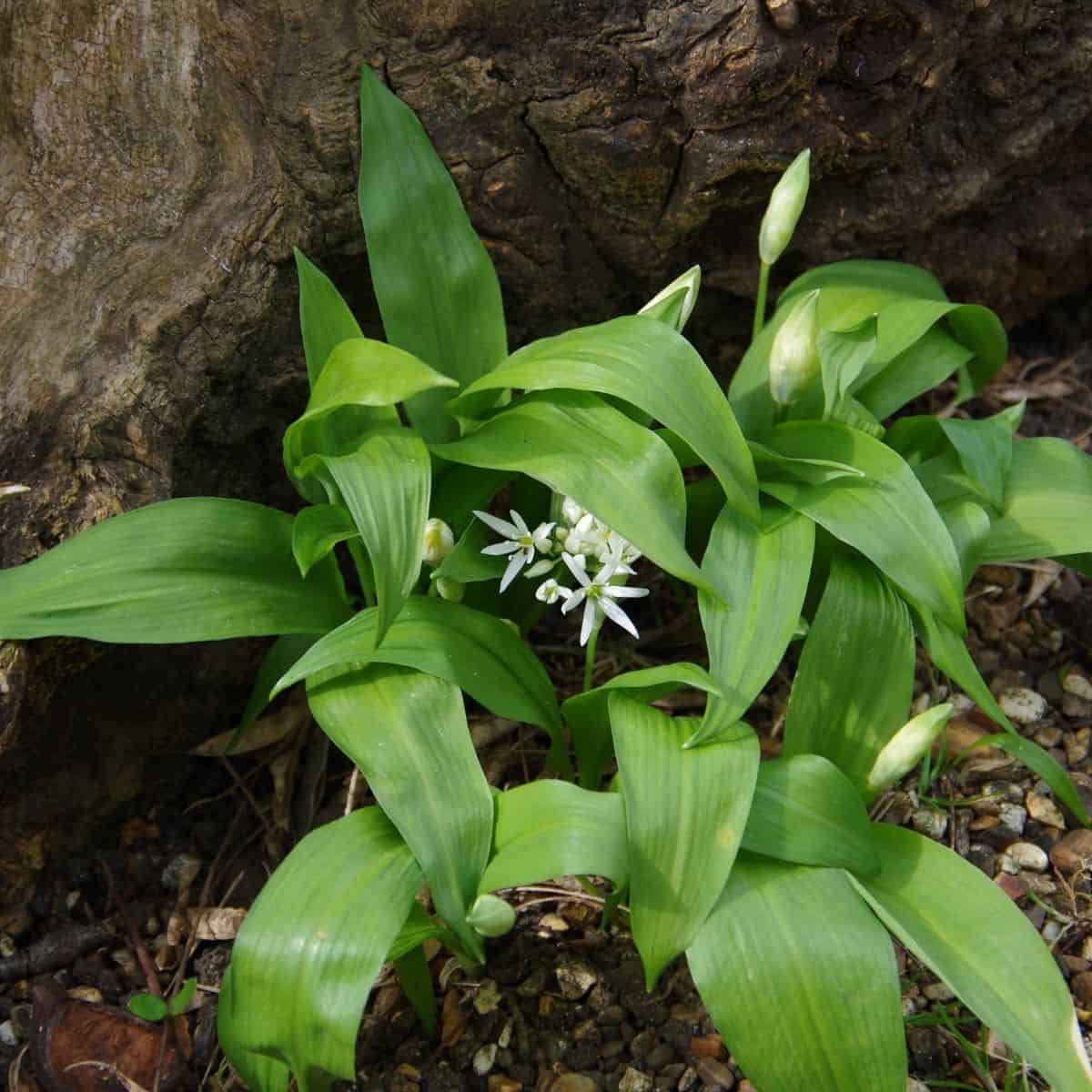
Wild garlic
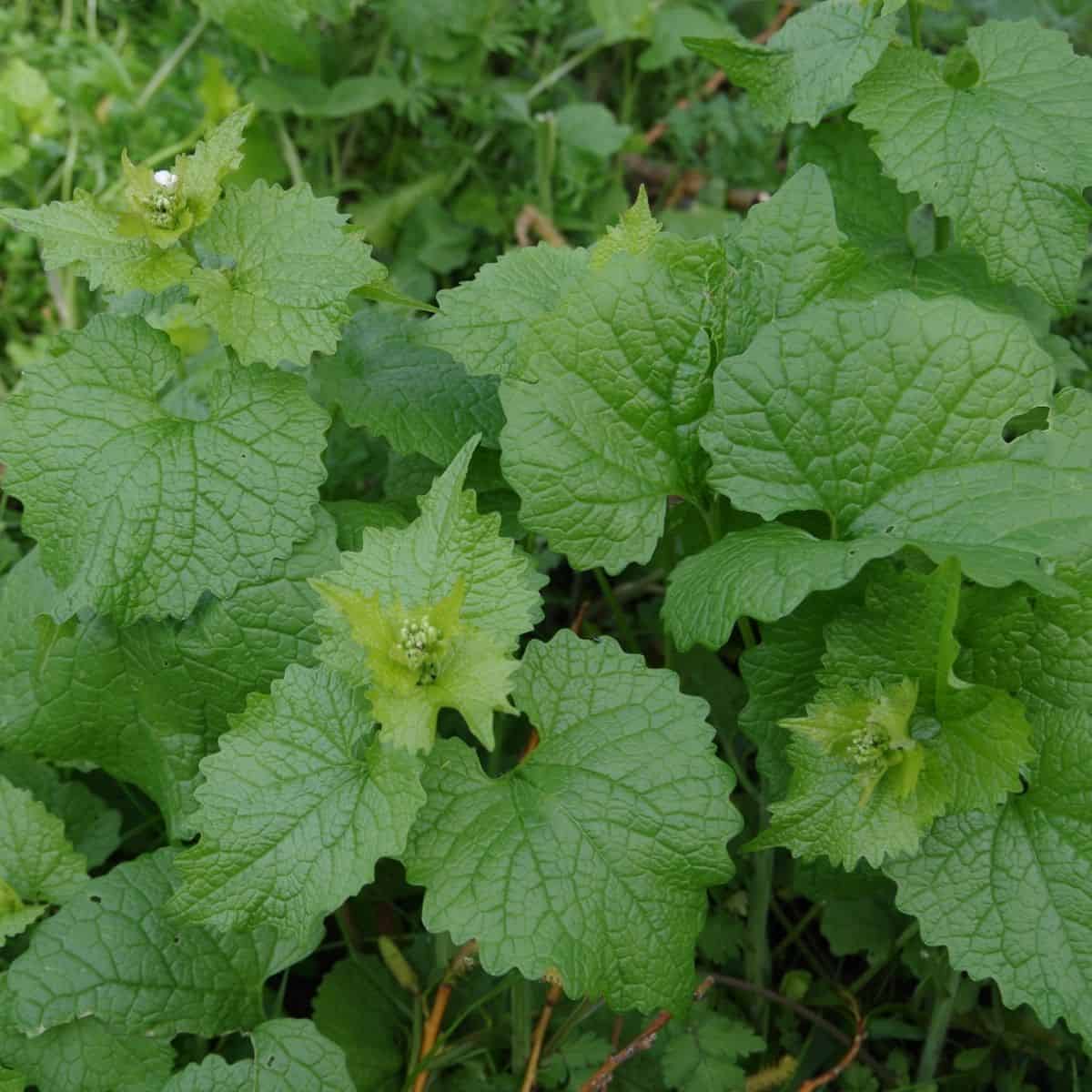
Garlic mustard
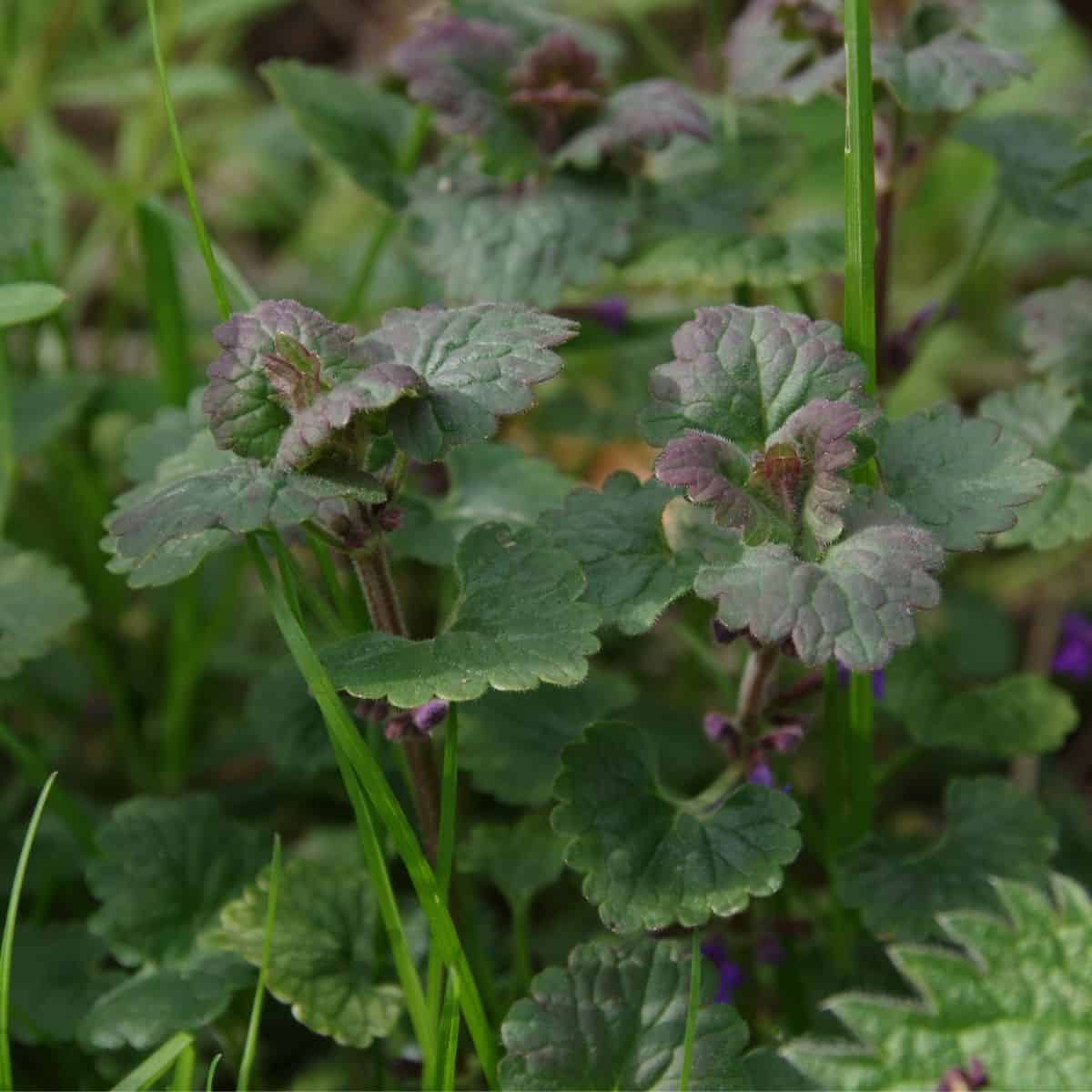
Ground ivy
See the recipe card for quantities.
How To Make Wild Garlic Curry With Paneer
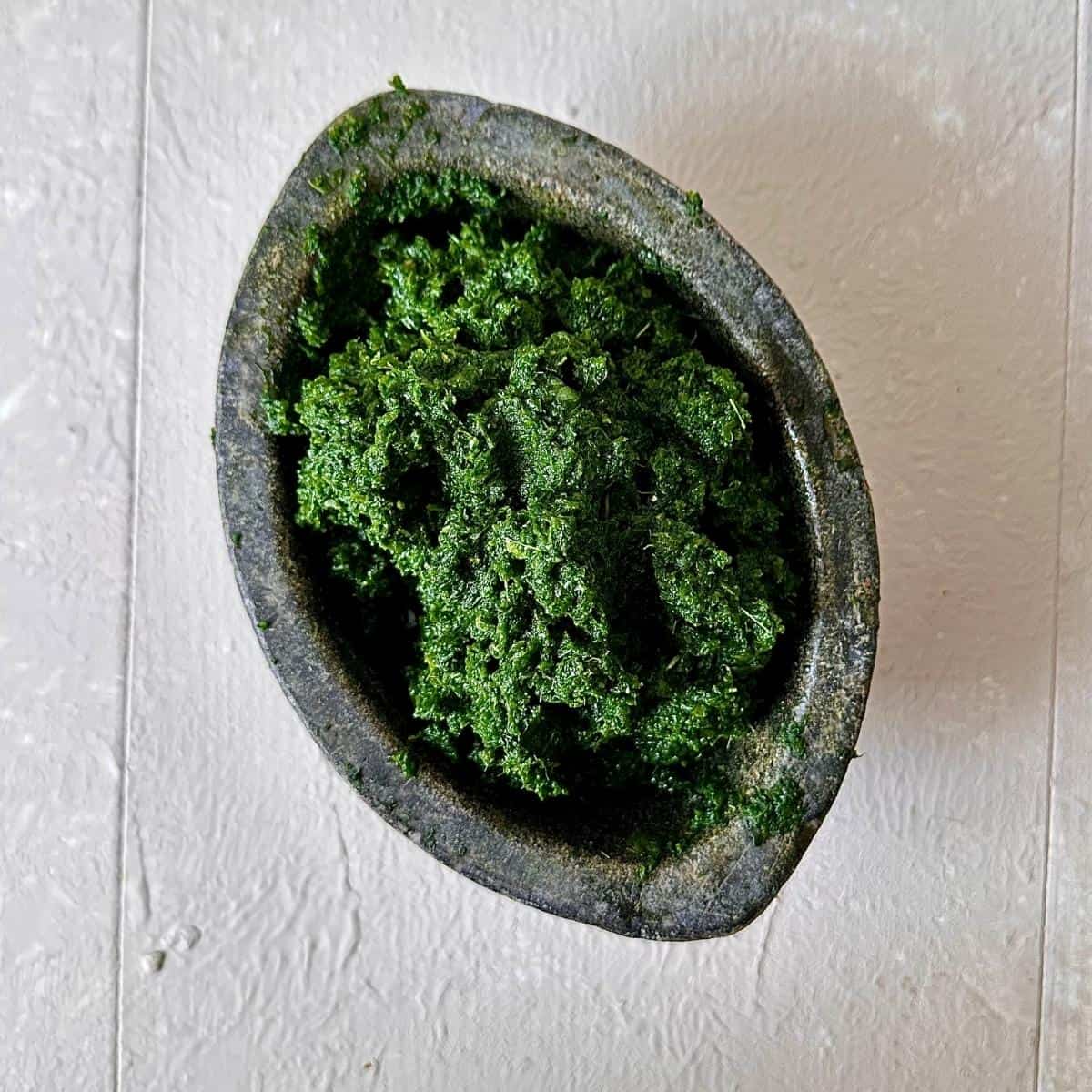
- Wash and pat dry the wild garlic, garlic mustard, ground ivy and nettle leaves. Roughly chop or tear the leaves into smaller pieces.
- Roughly chop the onion, ginger, green chilli and lime leaves. Add them to a pestle and mortar with the wild garlic, garlic mustard and ground ivy, then grind everything into a rough green paste. You can also use a food processor for a quicker version. Keep the nettles separate at this stage.
- Cut the nettle leaves into smaller pieces, then cut the paneer into cubes. Chop the palm sugar finely so it melts quickly into the curry.
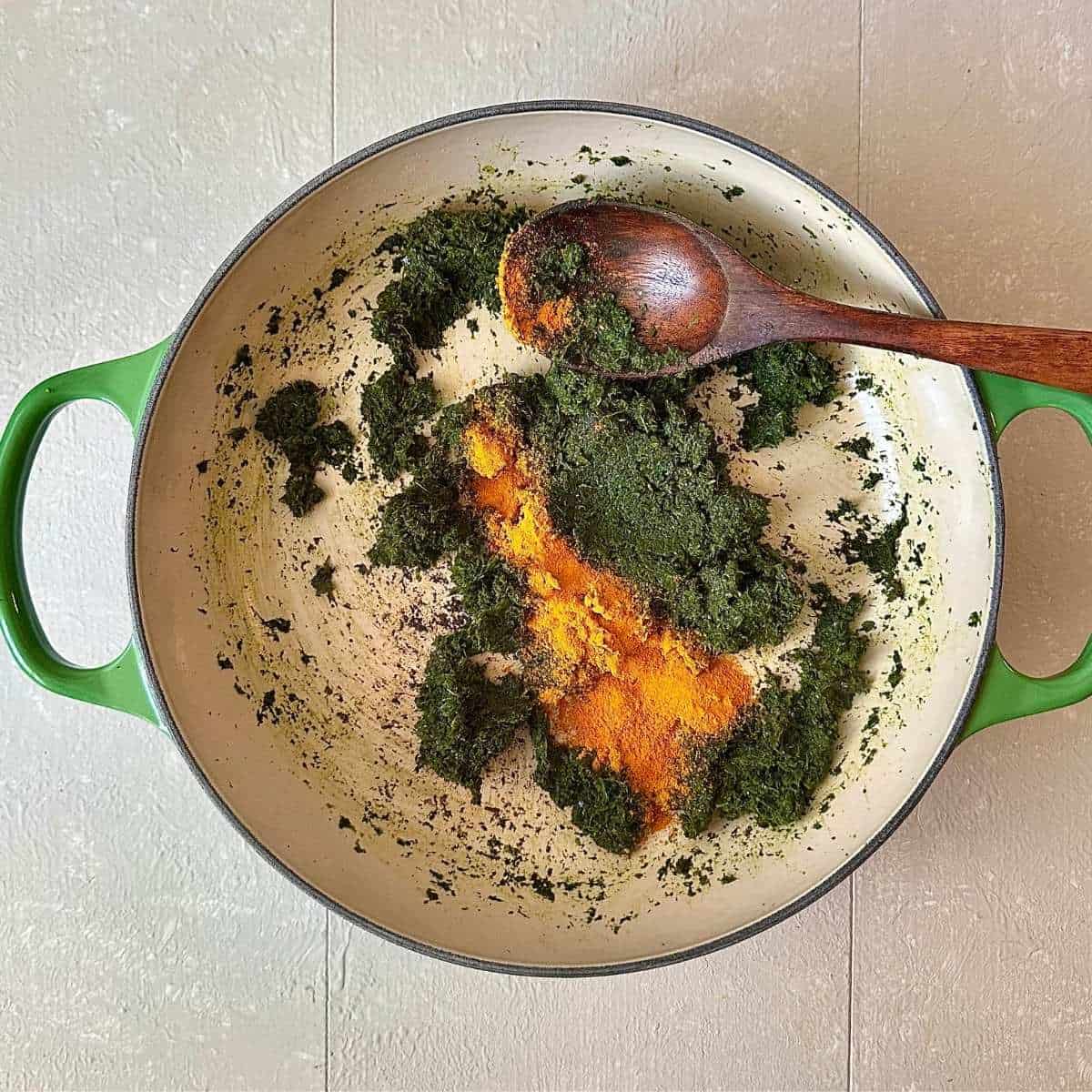
- Heat the olive oil in a pot over medium heat. Add the green paste and fry for 5 to 10 minutes, stirring often, until fragrant and deeper in colour. If the paste starts sticking to the bottom, add a small splash of water.
- Add the turmeric and cook for another 5 minutes, stirring so the spice cooks into the paste.
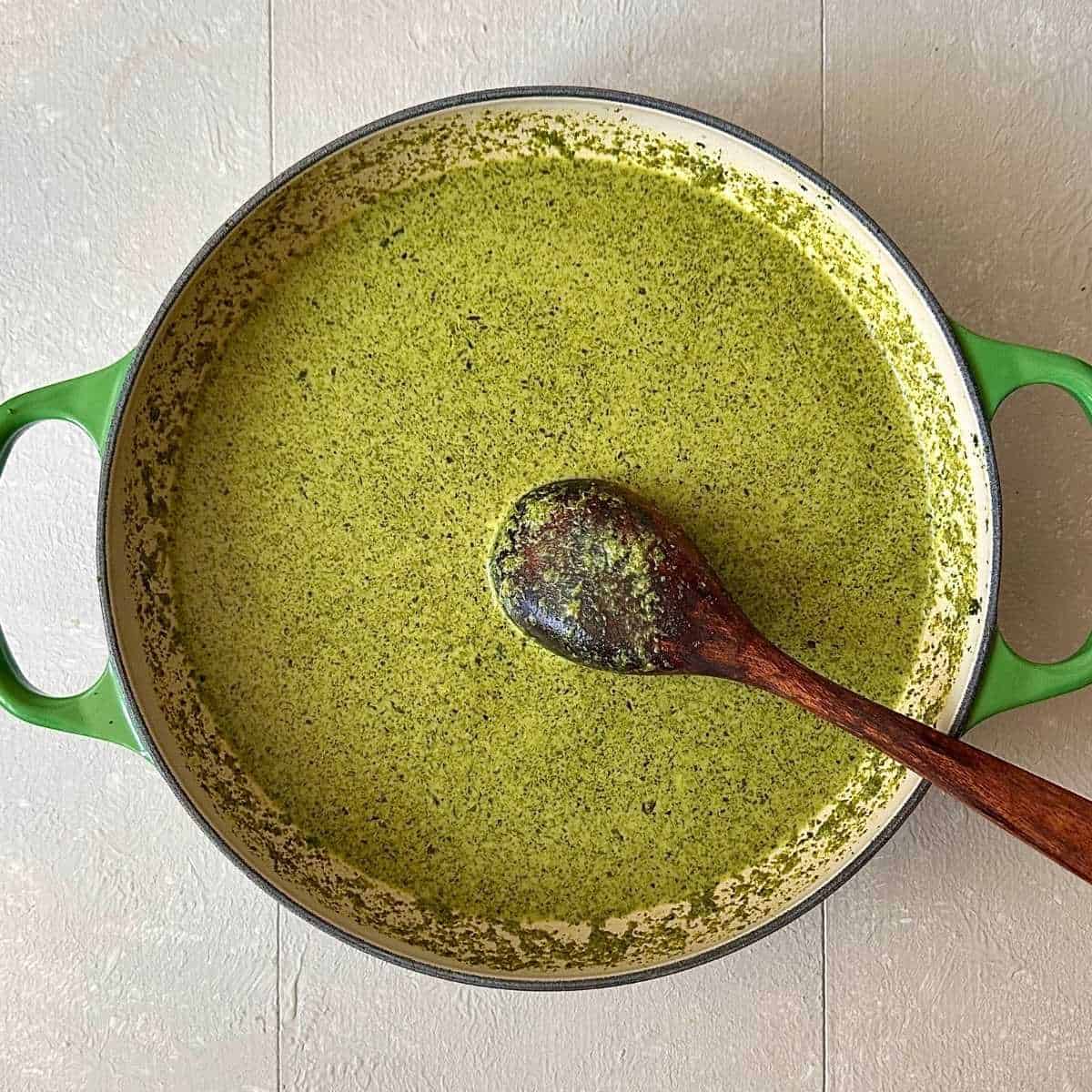
- Pour in the coconut milk and simmer for 5 minutes.
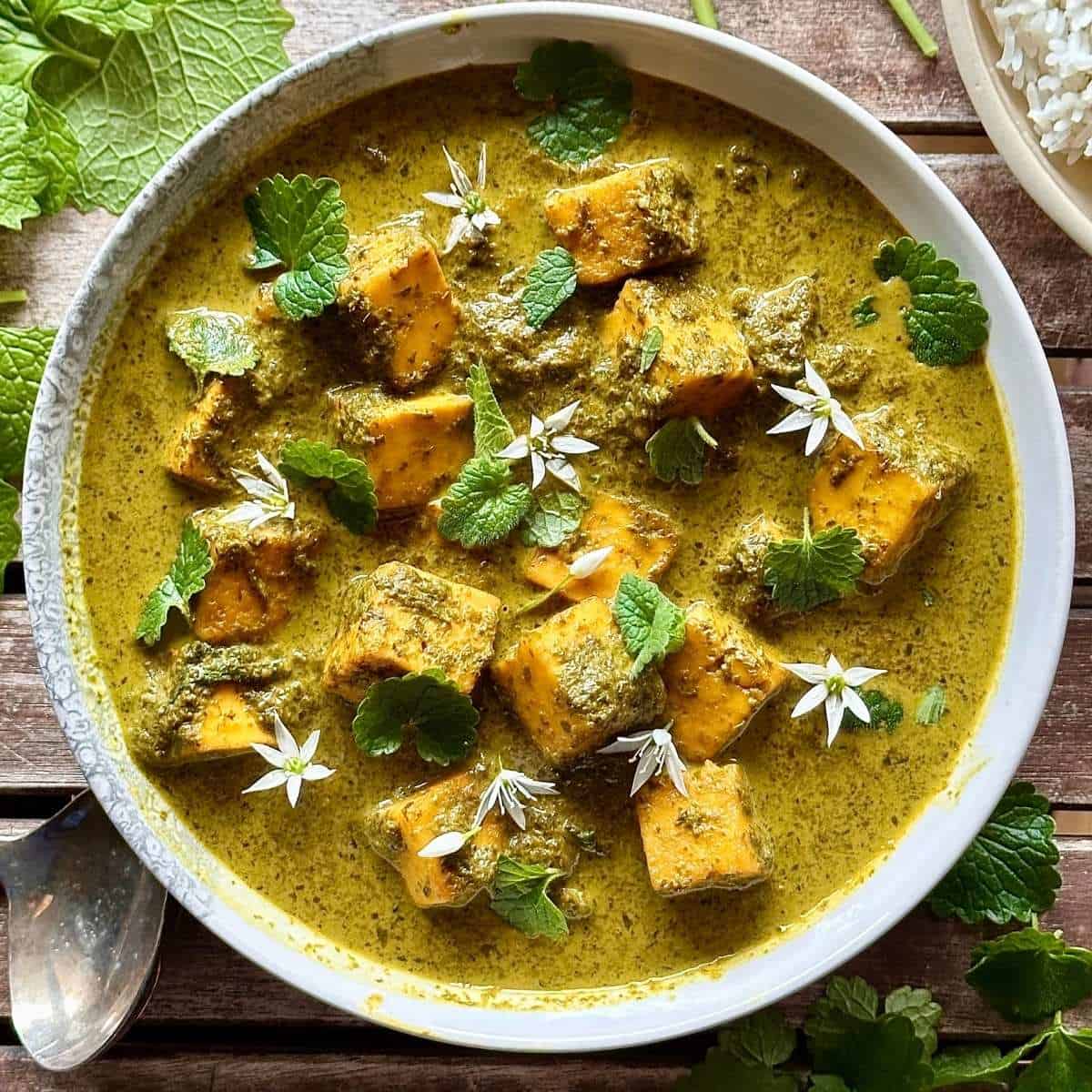
- Add the palm sugar, soya sauce, paneer cubes and nettle leaves. Simmer for another 10 minutes, until the curry thickens slightly and the greens are cooked. Taste and adjust the seasoning before serving with steamed rice.
Substitutions & Variations
Coconut Milk
If you do not want to use coconut milk, replace it with vegetable stock or chicken stock, depending on your preference. The curry will be lighter and closer in feel to a traditional jungle curry, but it will not have the same richness or creamy texture.
Paneer
The paneer adds protein and makes the curry more substantial. You can replace it with your preferred protein, such as firm tofu, chicken or fish. If using chicken or fish, make sure it is fully cooked before serving.
Lemongrass
For extra Thai-inspired flavour, add a little chopped lemongrass to the paste. Use only the tender inner part of the stalk and chop it finely before grinding or blending.
Lime Leaves
If you do not have lime leaves, use a little lime zest instead. It will not taste exactly the same, but it will still bring a fresh citrus note to the curry.
Vegan Version
Replace the paneer with firm tofu and use vegetable stock if you are not using coconut milk. Also check that your palm sugar and soya sauce are vegan-friendly.
Extra Heat
Add another green chilli to the paste or finish the curry with sliced fresh chilli. Do not overdo it, as the wild greens already bring strong, complex flavours.
Equipment
Digital Scales
Use digital scales to weigh the wild greens accurately, especially stronger ingredients like ground ivy and garlic mustard. A little too much can change the balance of the curry.
Pestle and Mortar or Food Processor
A pestle and mortar gives you a rougher, more textured paste and helps release the aroma of the greens, ginger, chilli and lime leaves. A food processor is quicker and easier, especially if you are making the curry on a busy day.
Large Saucepan or Casserole Pot
Use a large saucepan or casserole pot to fry the paste and simmer the curry. Choose one with enough space so the paste can cook properly before the coconut milk is added.
Chopping Board and Sharp Knife
You will need these for chopping the greens, onion, ginger, lime leaves, palm sugar and paneer. A sharp knife makes the prep much easier and safer.
Storage
Curry Paste
The curry paste can be made in advance and kept in the fridge for up to three days in an airtight container. You can also freeze the paste for up to three months in a silicone bag, freezer-safe ziplock bag or small airtight container.
Cooked Curry
Once cooked, the curry can be stored in the fridge for up to three days in an airtight container. Reheat thoroughly until piping hot before serving.
Freezing
I do not recommend freezing the finished curry. Coconut milk can split once defrosted and reheated, and the paneer may become firmer in texture. Freeze the curry paste instead for a better make-ahead option.
Chef's Tips
- Wear gloves when handling fresh nettles. Once nettles are cooked, the sting disappears.
- Be certain before using foraged greens. Wash them carefully and only cook with plants you can identify with complete confidence.
- Keep the nettles separate until the simmering stage. This stops them from being overworked in the paste and helps preserve their flavour.
- Fry the green paste properly before adding coconut milk. This is where the flavour develops, so do not rush this step.
- Add water, not more oil, if the paste catches. If the paste starts sticking to the bottom of the pot, add a small splash of water to stop it from burning.
- Taste before adding extra salt. Soya sauce already brings saltiness and umami.
- Serve with plain steamed rice. It keeps the dish balanced and lets the flavour of the wild greens stay central.
FAQs
Yes. All parts of the wild garlic plant are edible - the leaves, bulbs, stems, flowers and seeds - and lend a garlicky element to your recipes. As with all foraging, for your safety, it is extremely important to identify the plant correctly. Do not guess!
Yes. However; as with all foraging, do it mindfully and sustainably. Only take what you know you will use. Always get permission to forage on private land and don't forage in protected areas of scientific interest or outstanding natural beauty.
📖 Recipe
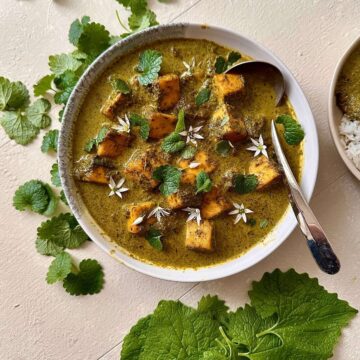
Wild Garlic Curry with Paneer
Equipment
- Pestle and mortar or Food processor
Ingredients
- 85 g Wild Garlic 50 leaves approx
- 40 g Garlic Mustard 40 leaves approx
- 10 g Ground Ivy 100 leaves approx
- 10 g Nettle leaves 30 leaves approx
- 2 Green chilli
- 1 teaspoon Turmeric
- 5 g Lime leaves 10 leaves approx
- 100 g Onion
- 20 g Ginger
- 400 ml Coconut milk
- 250 g Paneer
- 2 tablespoon Olive Oil
- 15 g Palm sugar
- 2 tablespoon Soya sauce
Instructions
- Wash the wild garlic, garlic mustard, ground ivy and nettle leaves well. Pat dry, then roughy chop or tear the leaves into smaller pieces. Keep the nettles separate.
- Roughly chop the onion, ginger, green chilli and lime leaves.
- Add the wild garlic, garlic mustard, ground ivy, onion, ginger, green chilli and lime leaves to a pestle and mortar. Grind a little at a time into a rough green paste. Alternatively, use a food process and pulse until you have a corse paste.
- Roughly chop the nettle leaves. Cut the paneer into bite sized cubes.
- Finely chop the palm sugar so it dissolves easily in the curry.
- Heat the oil in a large saucepan over medium heat. Add the green paste and fry for 5-10 minutes., stiring often, until fragrant and deeper in colour. If the paste starts to catch on the bottom of the pan, add a splash of water.
- Add the turmeric and cook for another 2-3 minutes, stirring well.
- Pour in the coconut milk an simmer for 5 minutes.
- Add palm sugar, soya sauce, paneer cubes and chopped nettles. Simmer for another 10 minutes, or until the curry has thickened slightly and the nettles are cooked. Taste and adjust seasoning if needed.
- Serve hot with steamed rice.
More Wild Garlic and Wild Greens Recipes
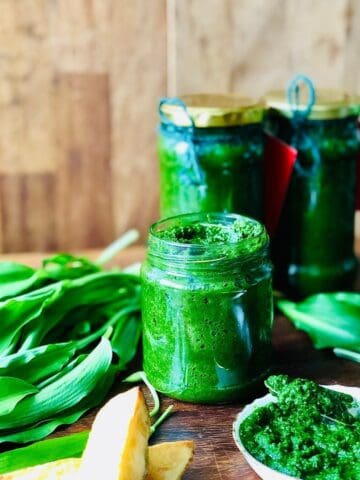
If you enjoy cooking with foraged ingredients, these wild garlic and wild greens recipes are a good place to start - fresh, seasonal ways to bring more spring flavour into your kitchen.
Food Safety
- Wash your hands regularly while preparing, handling and cooking food.
- Wipe down countertops and high-contact points regularly.
- If you cook meat and fish, do not use the same utensils on cooked food that previously touched raw meat. Use separate chopping boards for meat and fish. Wash your chopping boards immediately after use.
- Thoroughly cook food to a minimum temperature of 165 °F (74 °C).
- Don't leave food at room temperature for extended periods (more than 2 hours).
- Store food correctly.




Leave a Reply