

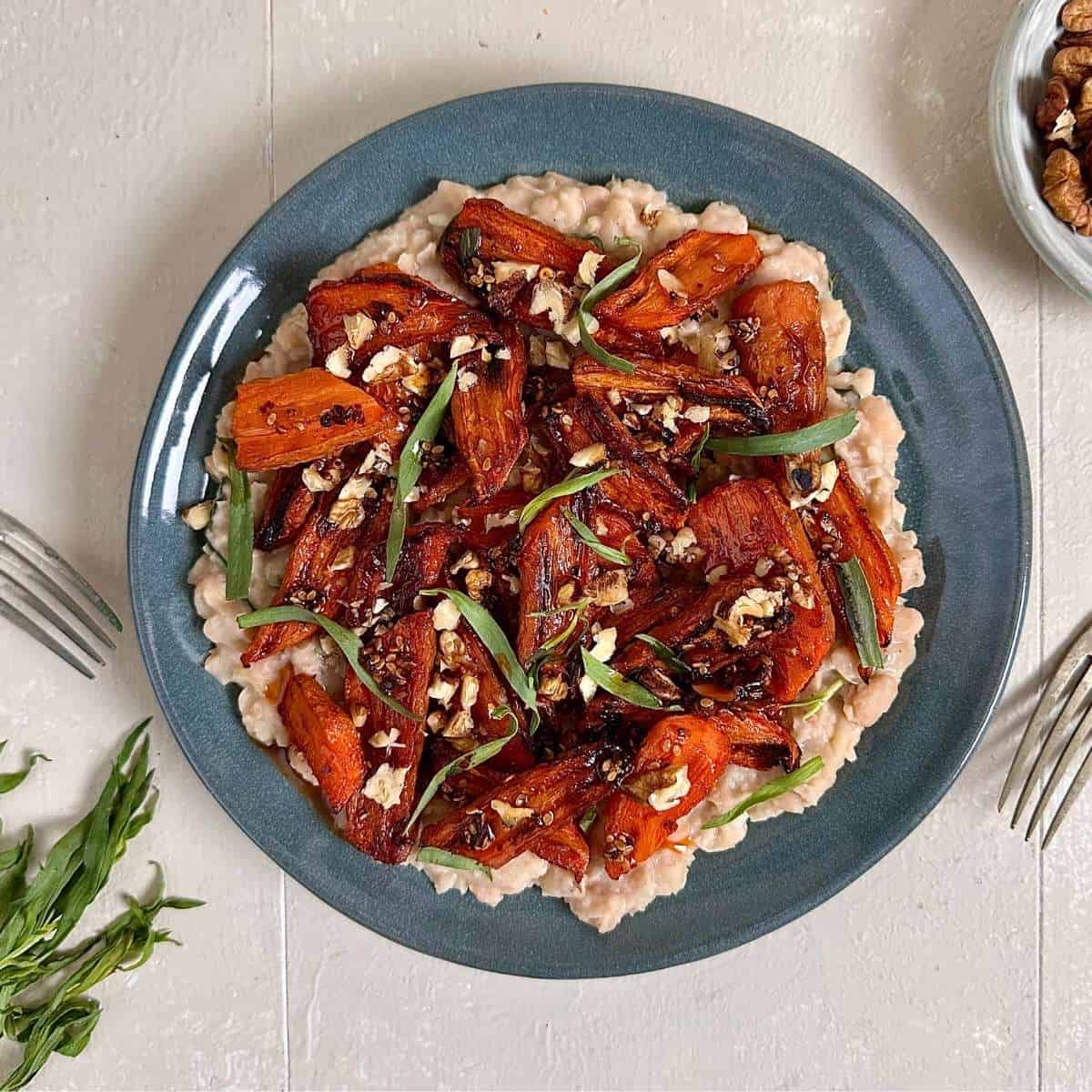
These gochujang roasted carrots are sweet, caramelised and gently smoky, paired with rustic white beans cooked until soft and comforting. Roasting draws out the carrots' natural sweetness, while the gochujang adds savoury depth and a subtle chilli warmth, transforming this humble vegetable. With just a handful of ingredients, this dish works well as either a light main course or an accompaniment. Simple, plant-forward cooking with real flavour and quiet sophistication.
If you enjoy carrots roasted until deeply sweet and caramelised, you might also like this silky carrot soup, where those flavours are carried into something softer and more comforting
Why You'll Love These Gochujang Roasted Carrots
- Big flavour from simple ingredients - An uncomplicated recipe that uses thoughtful technique to elevate everyday ingredients. Gochujang bring savoury depth and gentle heat, whilst roasting the carrots draws out their natural sweetness.
- Versatile on the table - Enjoy as a light main meal, or serve as an accompanying side dish
- Naturally plant-based - No substitutions necessary; just straightforward vegan cooking with a satisfying protein element from the white beans.
- Economical - Made with affordable, staple ingredients that store well and work year-round.
Jump to:
Key Ingredients & Notes
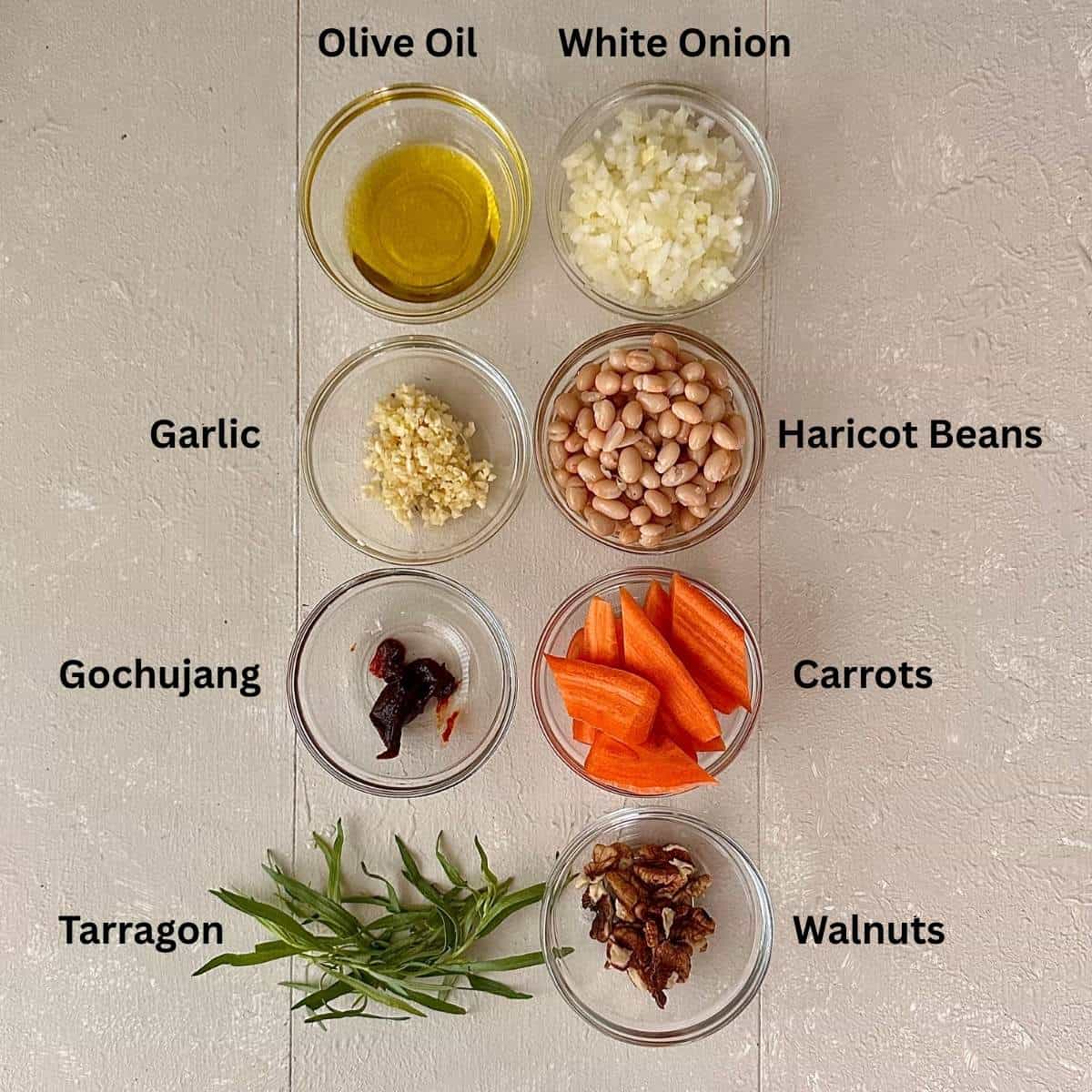
- Tinned Haricot beans - A mild-tasting white bean that complements the gochujang carrots without competing with them.
- Carrots - Roasting concentrates their natural sweetness, which balances the savoury heat of the gochujang
- Gochujang - A fermented Korean chilli paste that adds deep umami, gentle heat, and subtle sweetness.
- White onion, garlic & bay leaf - Form the savoury backbone to the rustic haricot bean bed the carrots sit on.
- Olive oil - Helps the carrots caramelise in the oven.
- Tarragon - Brings a soft aniseed note that lifts the sweetness of the carrots.
- Walnuts - As a garnish, adds texture and a gentle bitterness
- Salt and pepper - for seasoning and sharpening the flavours as the dish cooks.
See the recipe card for quantities.
How to Make Gochujang Roasted Carrots & Rustic White Beans
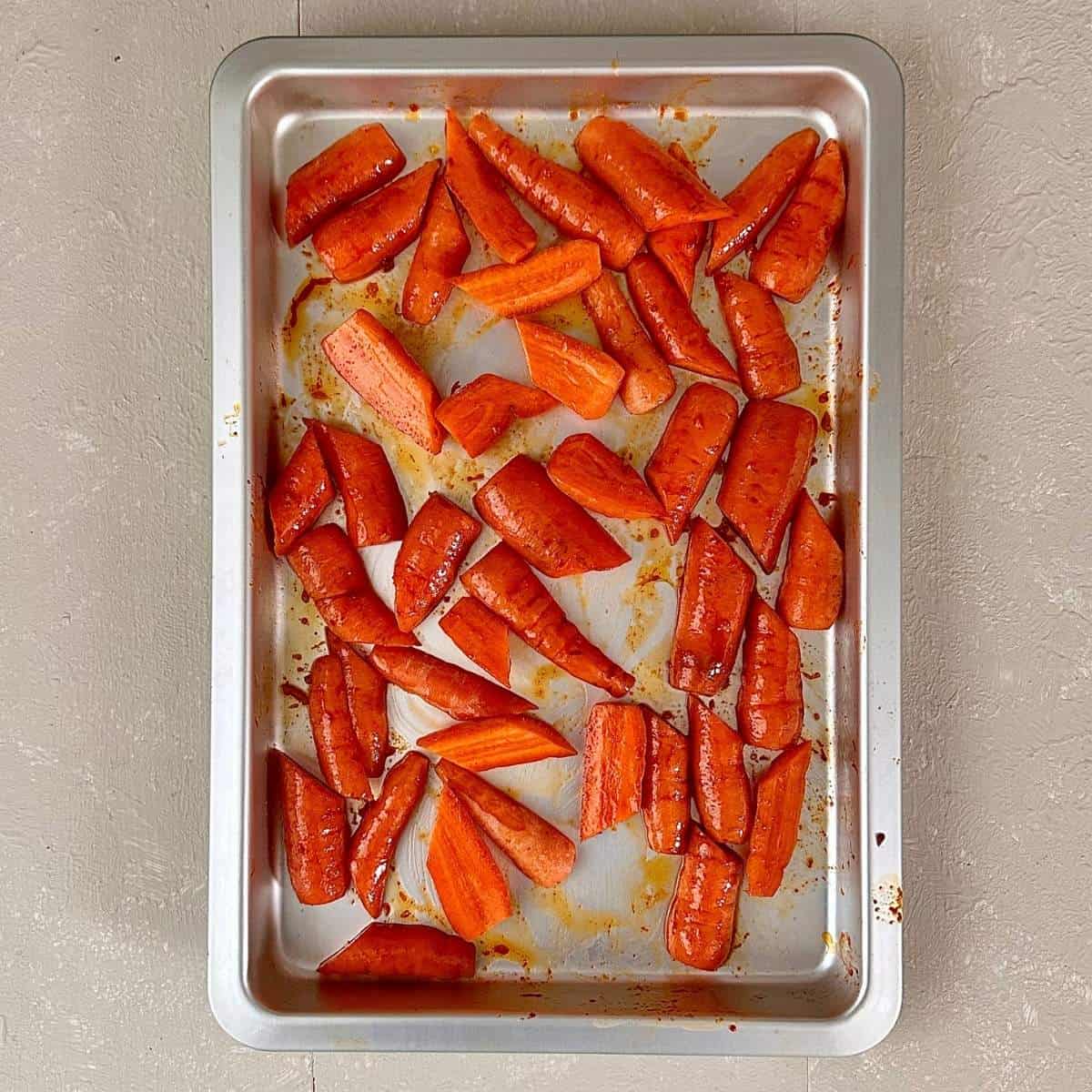
- Cut the carrots in half, lengthwise, and then chop into chunks.
- Marinate the carrots in one tablespoon of olive oil, the gochujang, salt and pepper - make sure all of the carrots are well coated.
- Preheat the oven to 180ºC.
- Roast the carrots in the oven for 20 minutes. Shake half way through for even colouration.
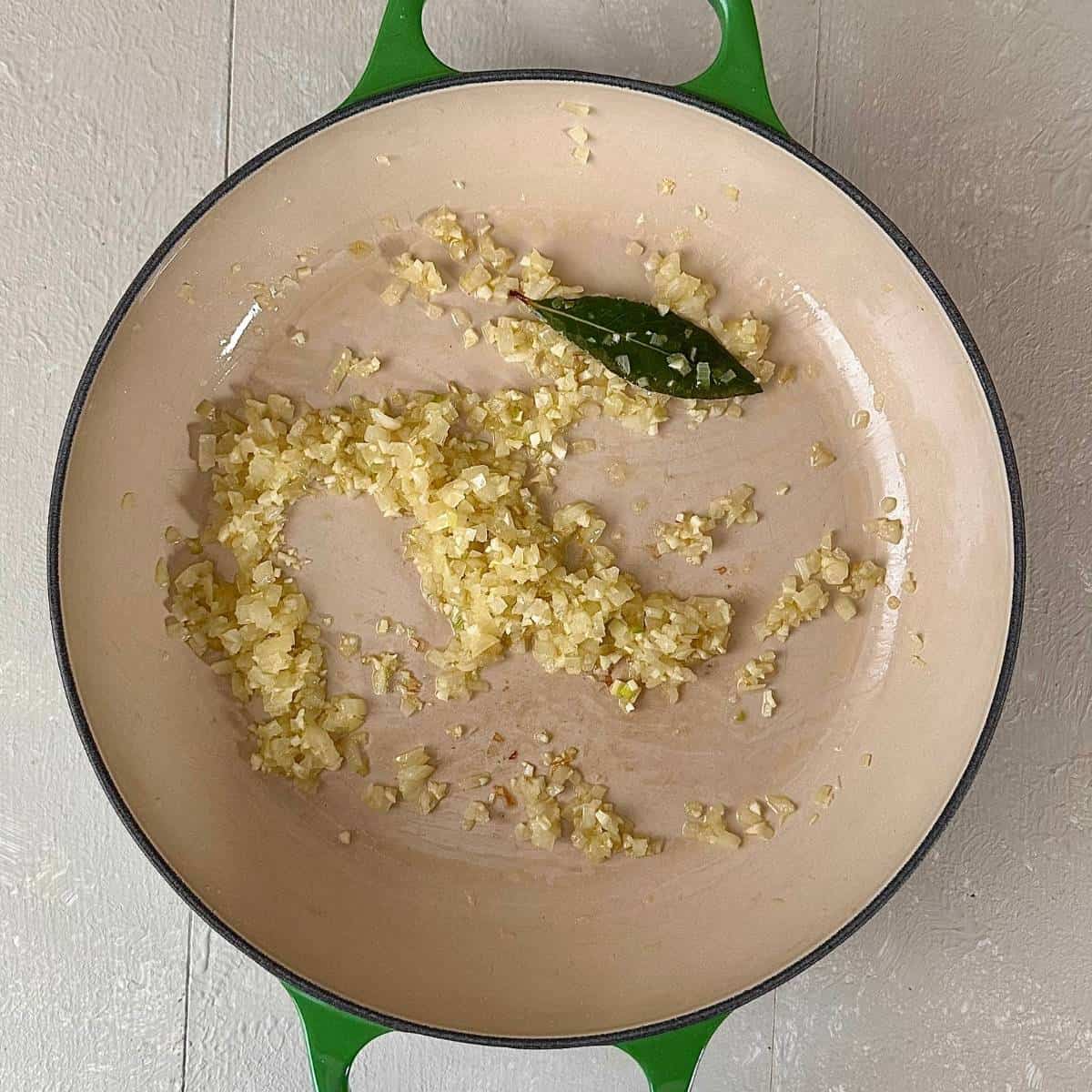
- Finely chop the onion and garlic.
- Heat a tablespoon of the olive oil in a pot. Add the bay leaf.
- Add the chopped onion and saute until soft and translucent.
- Add the garlic and fry for one minute.
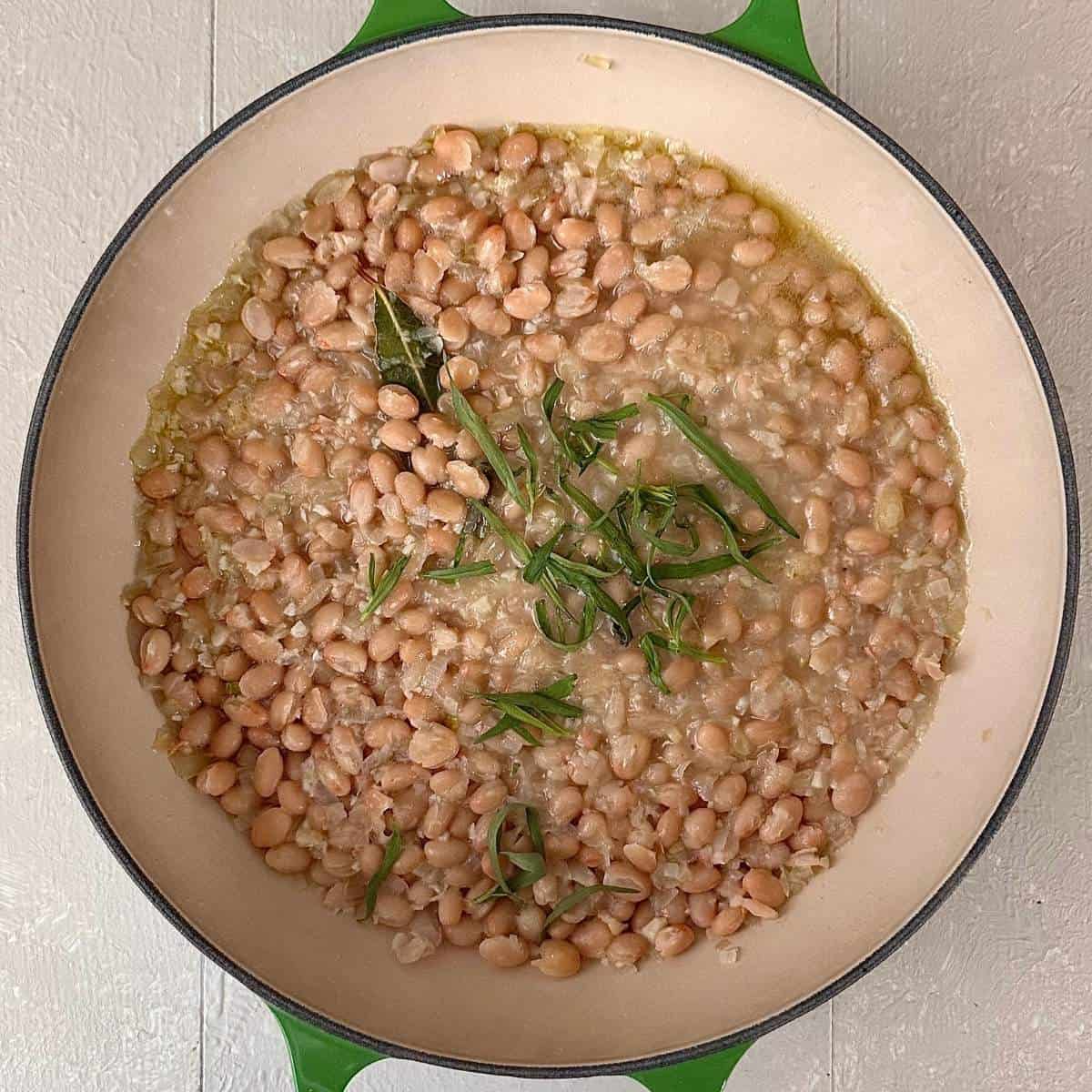
- Add the haricot beans and the liquid from the tin, along with salt and pepper.
- Add 200ml of water and cook for 10 minutes until the haricot beans are soft.
- Add half of the tarragon leaves.
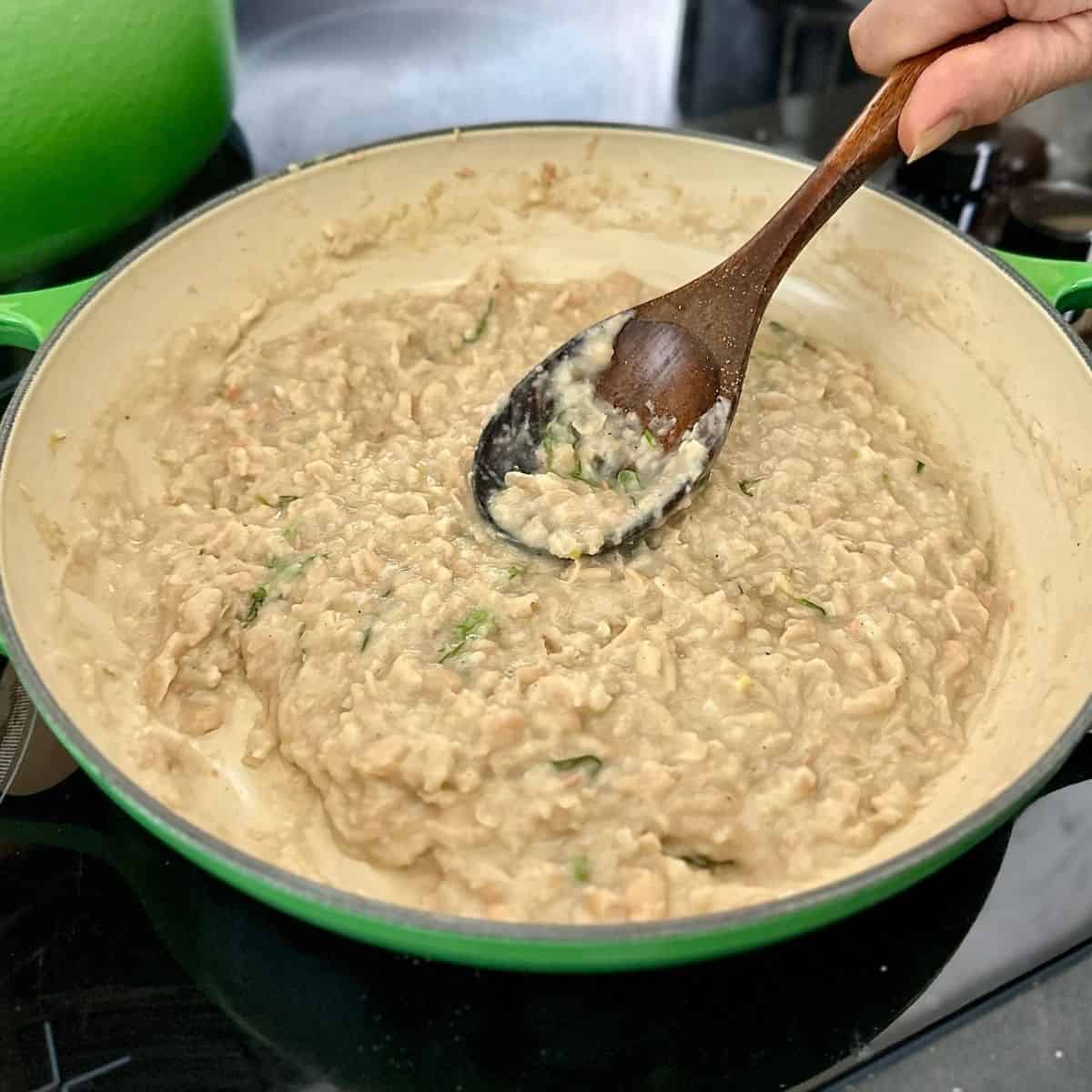
- Press the beans with the back of a ladle to break them down and make them mushy.
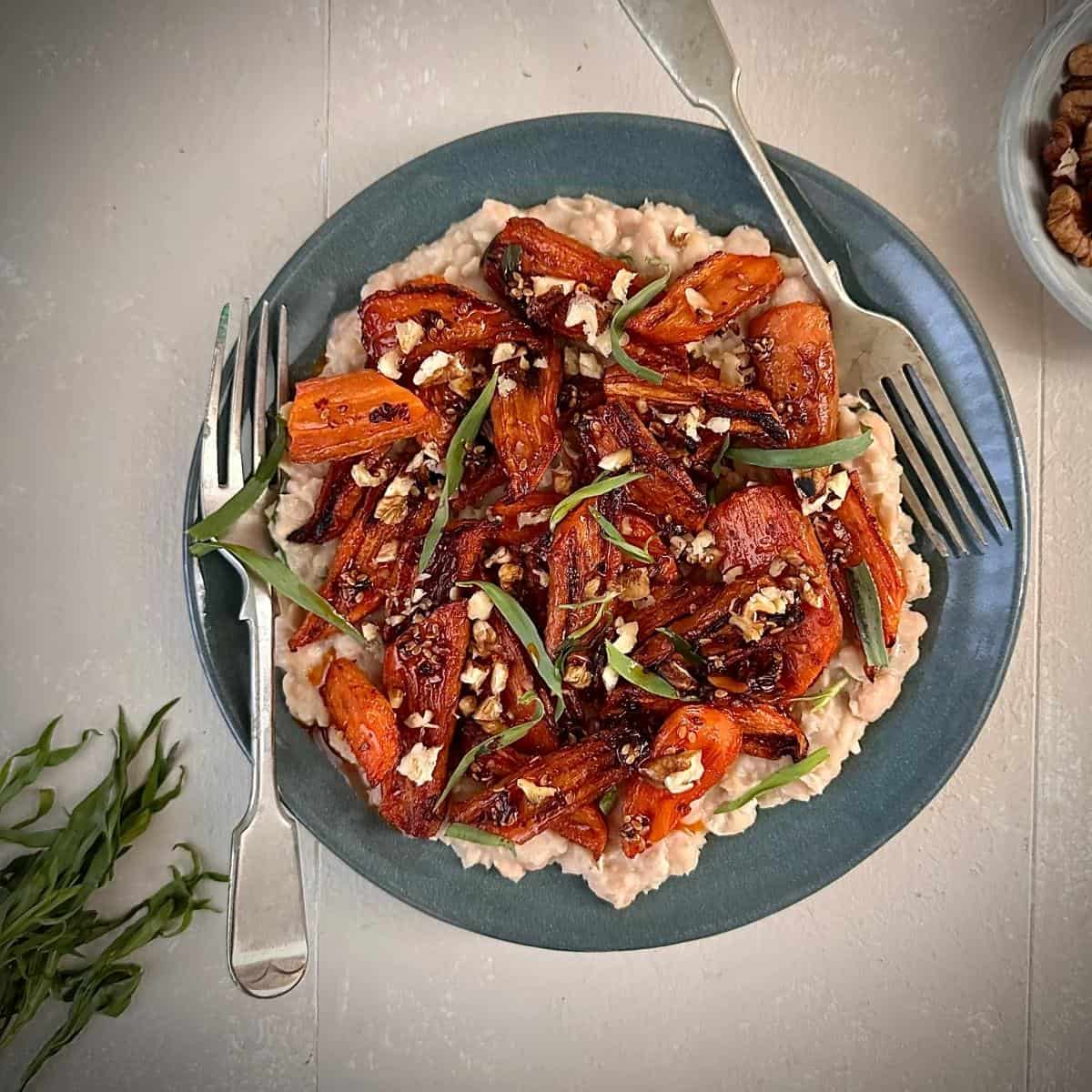
- Transfer the rustic haricot beans to a serving plate and top with the gochujang-roasted carrots.
- Garnish with chopped walnuts, the remainder of the tarragon and chilli oil (optional)
Substitutions & Variations
- Beans: Haricot beans can be replaced with cannellini beans or other white beans, which offer a similar texture and mild flavour.
- Herbs: Tarragon adds a subtle aniseed note, but dill or parsley work well if you prefer something fresher. The flavour profile will shift slightly, but the dish remains balanced.
- Vegetables: This recipe also works beautifully with parsnips or turnips, roasted until caramelised in the same way as the carrots.
- Nuts: Walnuts can be swapped for almonds, pine nuts, or hazelnuts for a different texture and aroma.
- Heat level: This recipe is intentionally mild. For a spicier version, increase the gochujang to taste, or add a little extra towards the end of roasting.
Storage
Chefs Tip
Roast the carrots hard, not gently.
Give them space on the tray and use a hot oven so they caramelise rather than steam; shaking the tray halfway through helps them cook evenly and develop deeper sweetness, which balances the savoury heat of the gochujang.
FAQ
Gochujang is mildly to moderately spicy. The amount used in this recipe doesn't add too much heat; it just adds another layer of flavour. It can be spicy if used in greater quantity. Gochujang is fermented and therefore is sweeter and more savoury.
Any white beans, like haricot or cannellini, work best as they are small and can easily be mashed. You can use butterbeans as well. Haricot beans are slightly softer than other white beans and create a smoother base, while butter beans offer a larger, heartier texture. Cannellini beans are similar in size to haricot beans and are similarly mild in flavour. Any white bean will work, but haricot provides the best results.
The combination of gochujang carrots and the white bean base means this can be served as a light main meal. As a side dish, you may get more than 2 portions from this recipe. Of course, you can omit the haricot beans and just serve the roast and the gochujang carrots as a side on their own.
Yes, 100% vegan without changing anything. It uses plant-based ingredients, including carrots, white beans, olive oil, herbs, and gochujang - just check that your gochujang brand contains no added honey or animal-derived ingredients.
Gochujang is a fermented Korean chilli paste made from red chilli powder, glutinous rice, fermented soybeans and salt. It has a deep savoury flavour with gentle heat and subtle sweetness, making it more complex than standard chilli sauces. I use it in this recipe for flavour depth, not heat.
📖 Recipe
Gochujang Roasted Carrots with Rustic White Beans
Equipment
Ingredients
- 400 gms Tinned haricot beans
- 70 gms White onion
- 10 gms Garlic
- 2 tablespoon Olive oil
- ½ teaspoon Salt
- Ground black pepper, a pinch
- Tarragon, a few sprigs
- 400 gms Carrots
- 2 teaspoon Gochujang
- 15 gms Walnuts
- 1 nos Bay leaf
Instructions
- Scrub and wash carrots. Cut lengthwise and diagonally in half or into three, depending on size.
- Marinate carrots with salt, black pepper, one tablespoon olive oil and gochujang. Mix well so that each carrot is coated, and set aside.
- Finely chop onions and garlic.
- Wash tarragon and pat dry.
- Preheat oven to 180ºC ( fan assisted )
- Roast marinated carrots for 20 minutes. Give the tray a shake after ten minutes for even colour.
- Heat oil in a pot, and add a bay leaf.
- Sauté onions. Once the onions are soft and translucent, add the garlic and fry for one minute.
- Add haricot beans, including their liquid, along with salt, black pepper, and 200 ml of water. Cover and cook for ten minutes or until soft and mushy.
- Add half of the tarragon leaves. Then, using the back of a ladle, gently press the beans to break. You should end up with mushy beans. Similar to a rough puree.
- Transfer onto the plate base. Add roasted carrots on top.
- Garnish with chopped walnuts, tarragon leaves and chilli oil ( optional ). Serve immediately.
Nutrition
NOTES
Food Safety
- Wash your hands regularly while preparing, handling and cooking food.
- Wipe down countertops and high-contact points regularly.
- If you cook meat and fish, do not use the same utensils on cooked food that previously touched raw meat. Use separate chopping boards for meat and fish. Wash your chopping boards immediately after use.
- Cook food thoroughly to a minimum internal temperature of 165 °F (74 °C).
- Don't leave food at room temperature for extended periods (more than 2 hours).
- Store food correctly.




Leave a Reply