

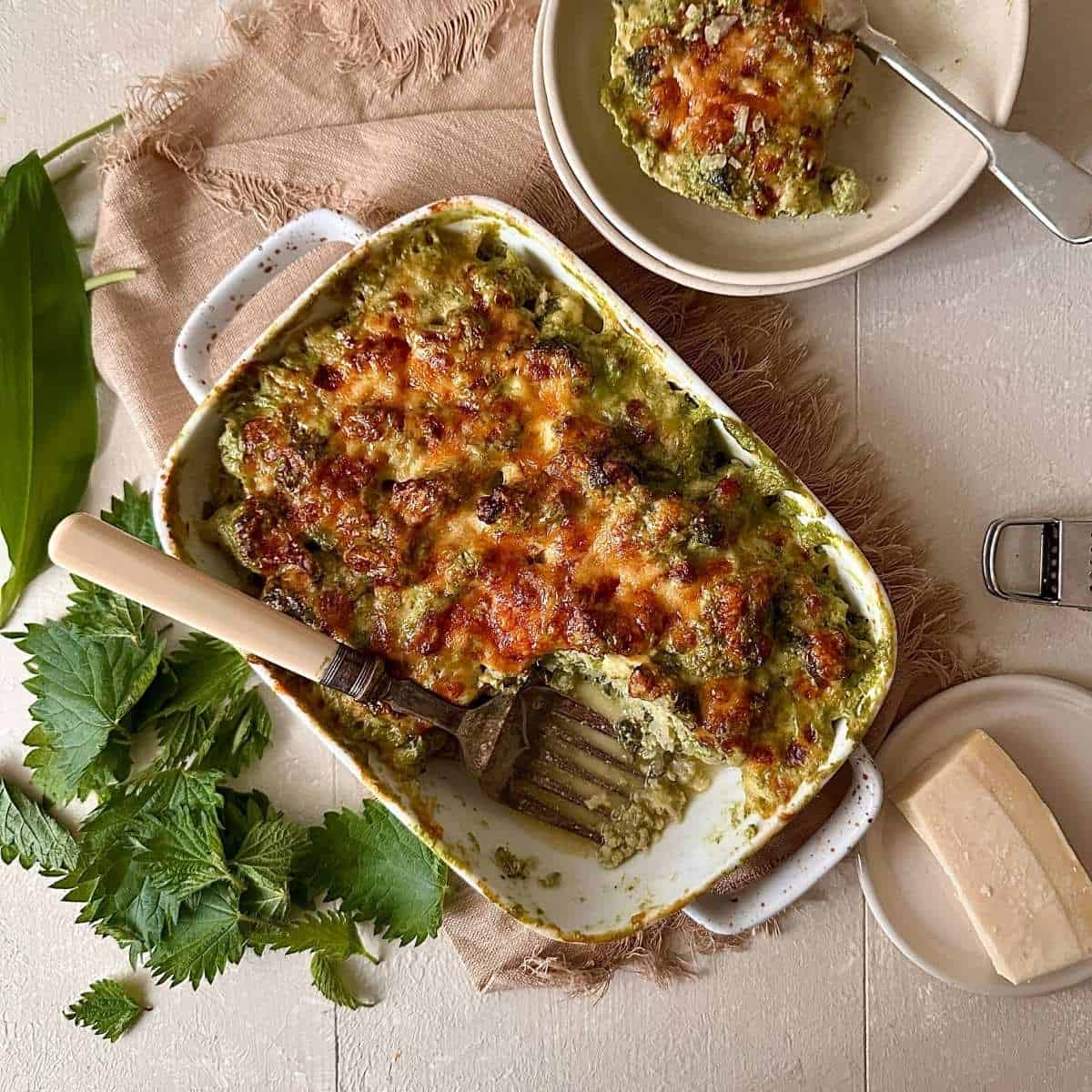
This wild garlic cauliflower cheese with nettles gives a classic British favourite a seasonal spring twist. Rich, creamy and comforting, it combines everything you expect from traditional cauliflower cheese with the mild, fresh flavour of wild garlic and the earthy depth of nettles.
If you've been wondering how to cook with wild garlic or nettles, this is an easy place to start - a familiar dish that lets these foraged greens shine without overpowering them. The vivid greens against the golden baked topping make it as good to look at as it is to eat. Serve as a vegetarian main or as a side to a Sunday roast.
Jump to:
Why You'll Love This Wild Garlic Cauliflower Cheese With Nettle
- A seasonal twist on a classic cauliflower cheese using wild garlic and nettles.
- A simple, approachable way to start cooking with foraged ingredients.
- Lighter and quicker than traditional versions - no béchamel needed.
- Rich, creamy and full of flavour without being heavy.
- Vegetarian and easy to adapt to what you have.
Key Ingredients & Notes
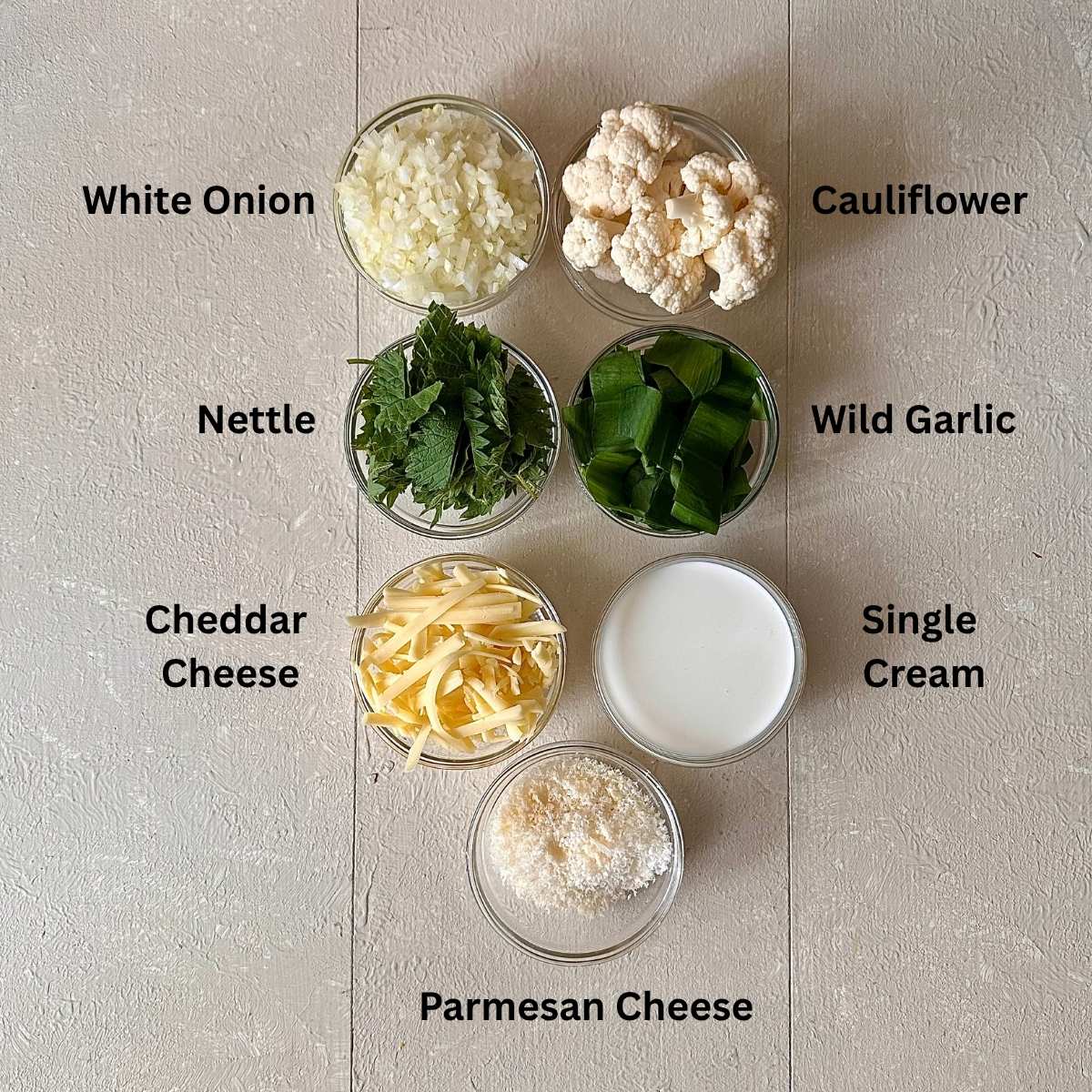
- Cauliflower - The base of the dish. Cut into florets, then halve so they cook evenly. No pre-boiling required, as it will cook during baking.
- White onion - Finely chop so it melts into the sauce, adding a gentle savoury base without overpowering the wild garlic.
- Wild garlic - A seasonal UK green with a mild, fresh garlic flavour.
- Nettles - Once blanched, they lose their sting completely. They bring an earthy flavour similar to spinach. Handle carefully before cooking.
- Single cream - No need for a béchamel here. It gives a rich sauce, brings everything together and keeps the recipe simple.
- Mild cheddar & Parmesan - Cheddar provides the classic flavour, while Parmesan adds depth and helps create a golden topping.
- Salt & pepper - Season well to bring everything together.
See the recipe card for quantities.
How to Make Wild Garlic Cauliflower Cheese with Nettle
- Wash and pat dry the nettle and wild garlic. Roughly chop.
- Finely chop the white onion.
- Break the cauliflower into florets, then cut each into half or thirds. Roughly chop the stems and leaves. We use everything!
- Grate the cheddar cheese and parmesan cheese.
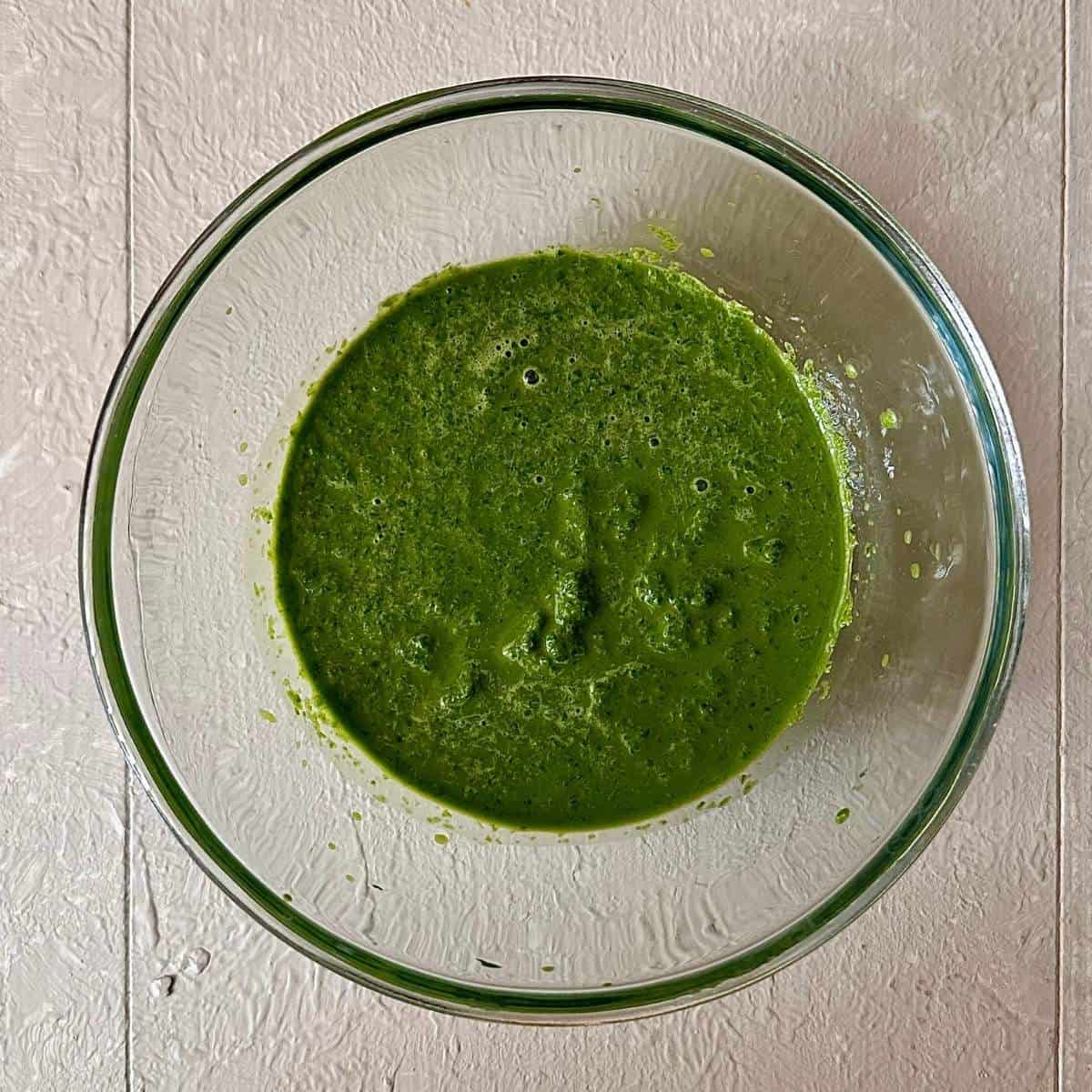
- Blend the wild garlic into a puree with 1 tablespoon of olive oil. Add a little water to assist the blending if required.
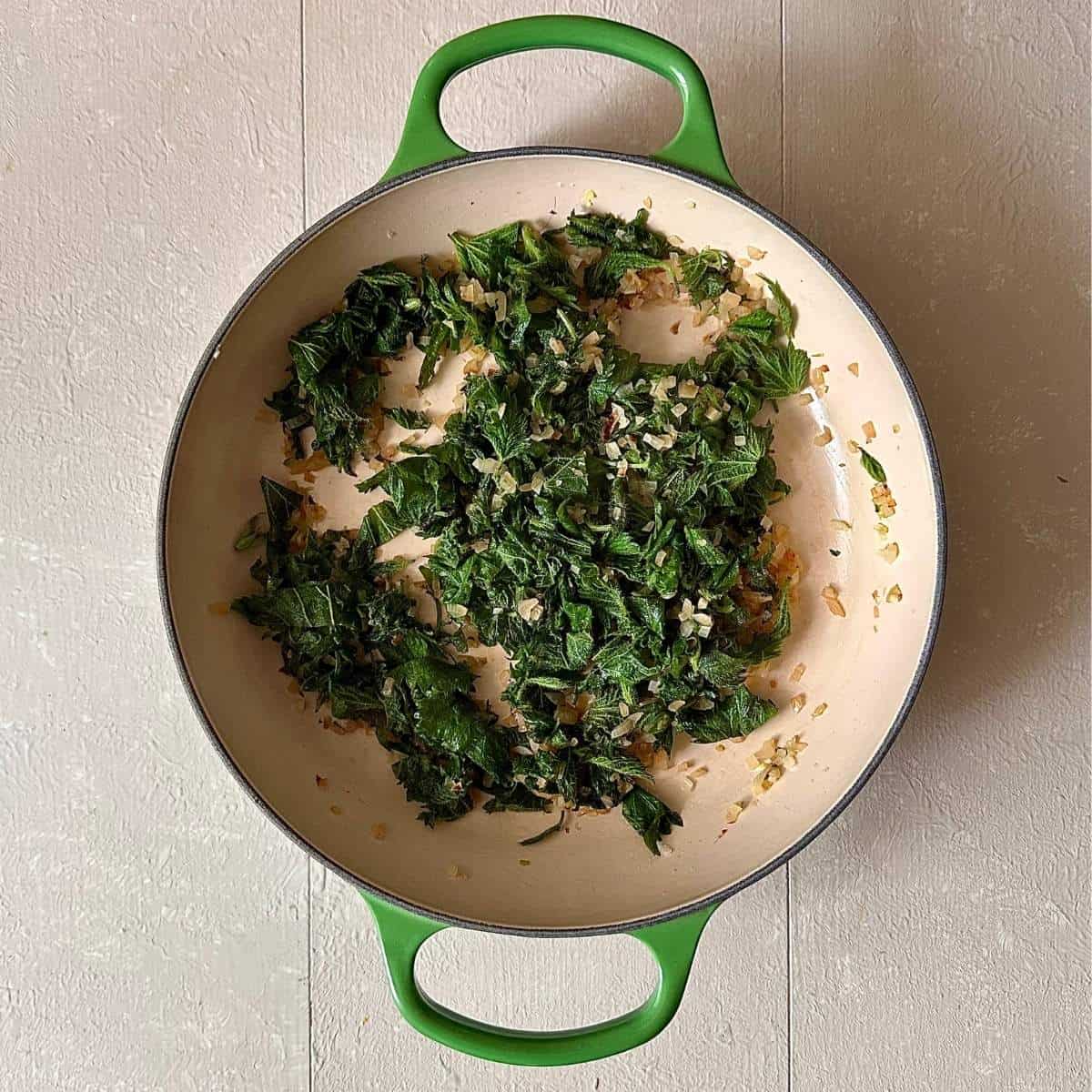
- Heat 1 tablespoon of olive oil in a casserole.
- Fry the chopped onions until translucent.
- Add the chopped nettle and fry for a few minutes until wilted.
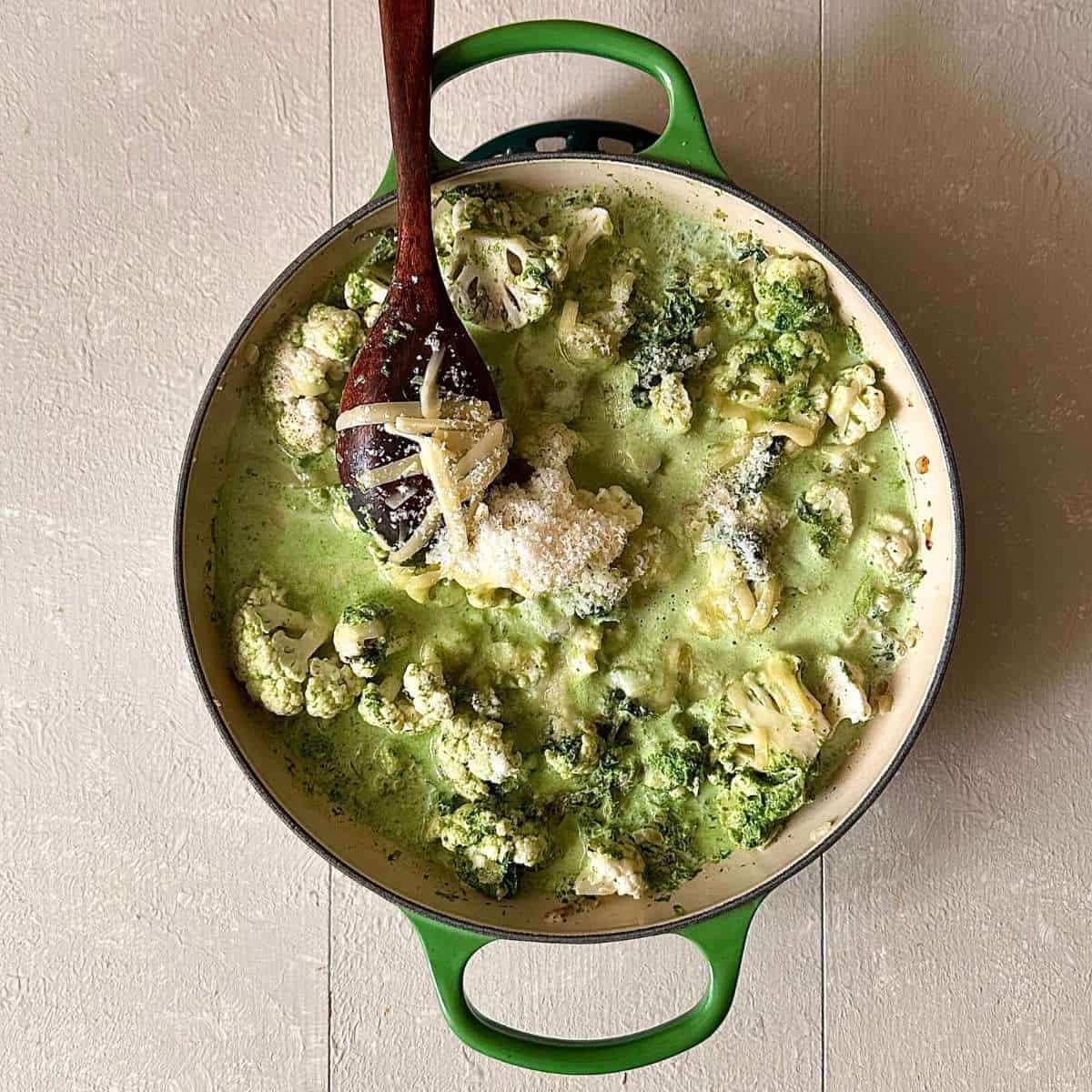
- Add the cauliflower, cream, pureed nettle, salt and half of the grated cheddar and parmesan.
- Cook for about 10 minutes over a medium heat. Add the ground pepper.
- Preheat the oven to 180ºC.
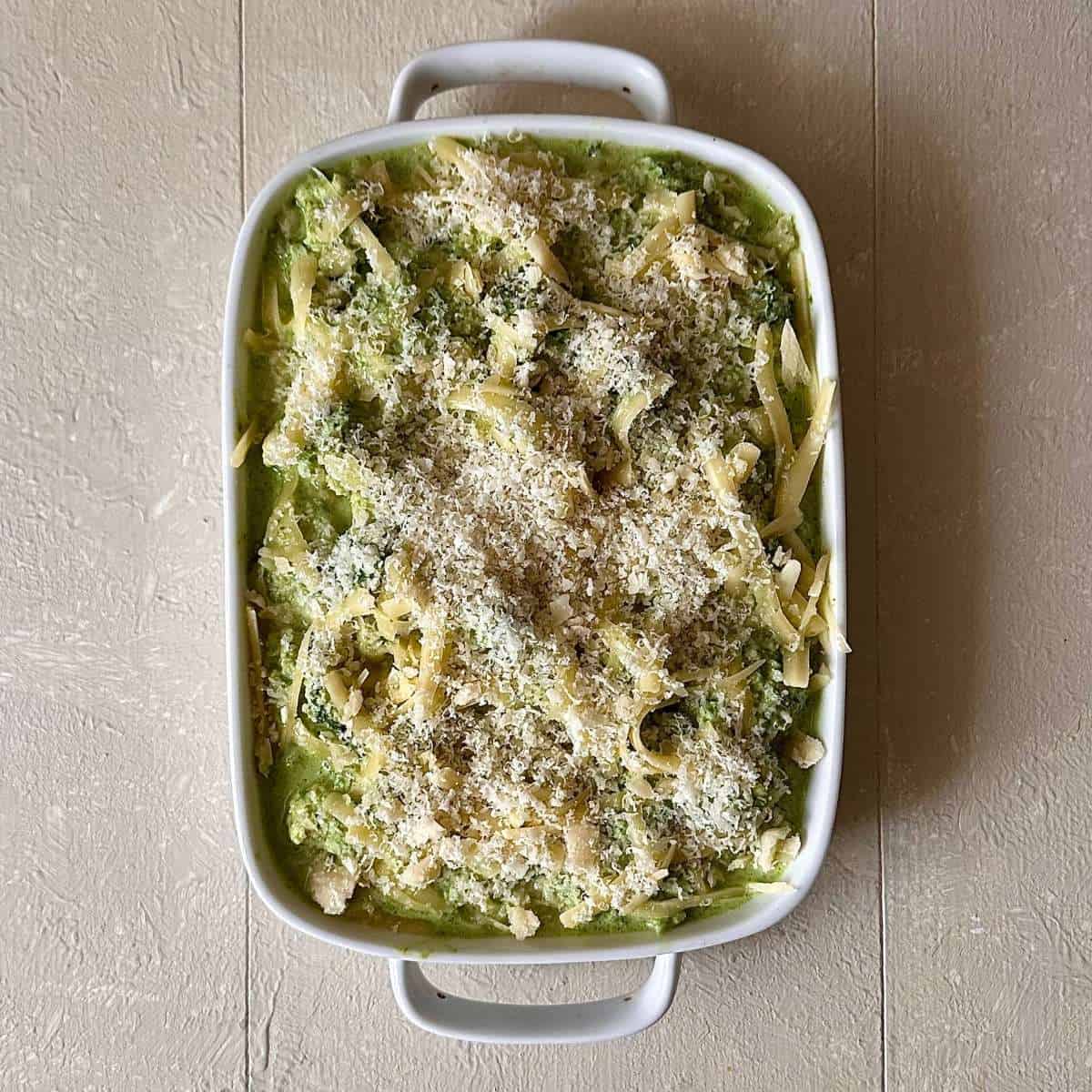
- Once bubbling, turn off the heat and sprinkle over the remaining grated cheddar and parmesan cheese.
- Cast-iron casseroles can go into the oven directly from the hob. If your pan is not oven-proof, transfer the ingredients to an oven-proof dish, sprinkle over the cheeses and place in the oven.
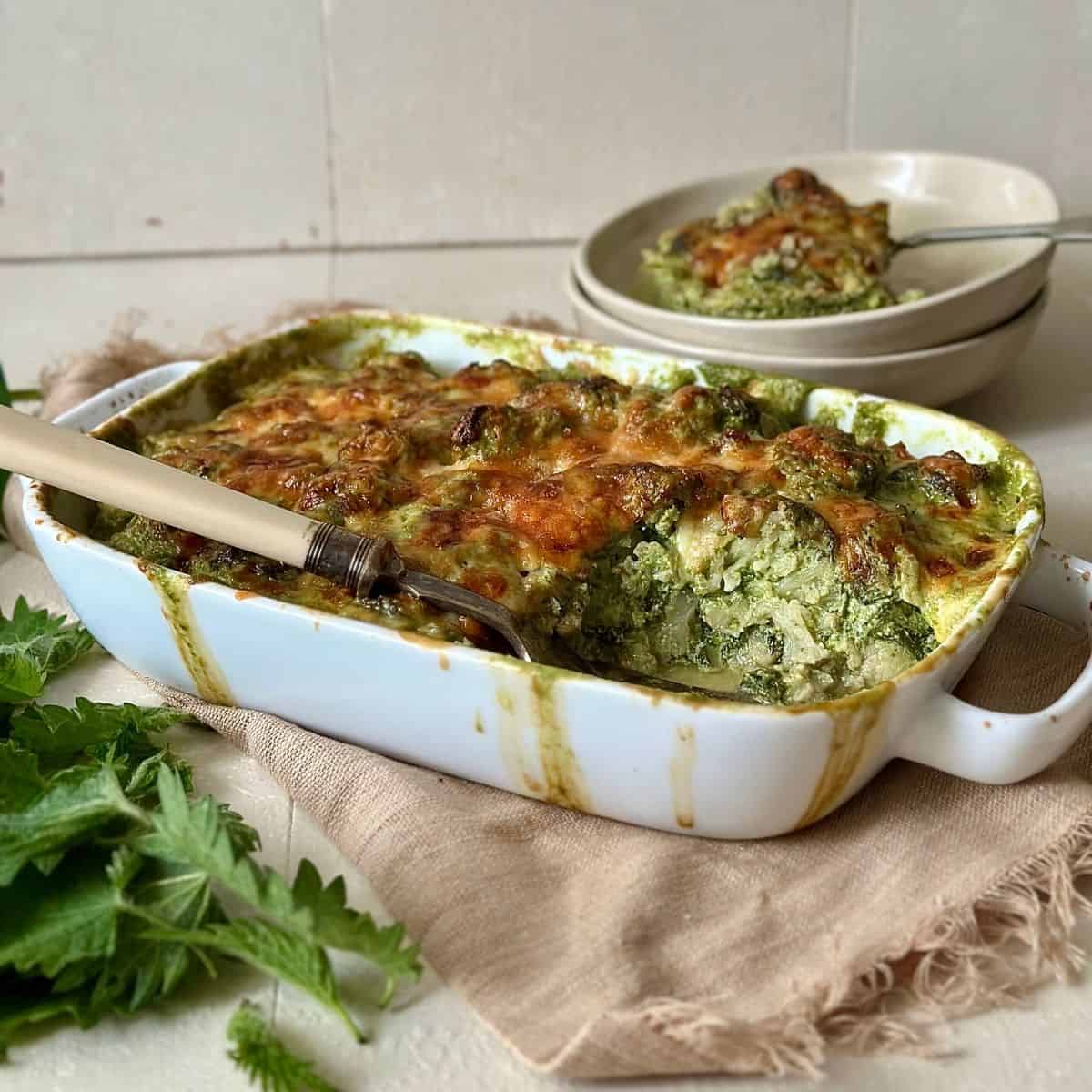
- Place in the oven and bake for 30 minutes until golden brown. Use a knife to check if the cauliflower is cooked. The knife should easily pass through the cauliflower.
Substitutions & Variations
Make it dairy-free - Use oat or soya cream in place of single cream. Swap cheddar for a dairy-free alternative, and Parmesan for a vegetarian or vegan hard cheese such as Pecorino.
No nettles - Replace with spinach, kale or chard. All work well and give a similar texture.
No wild garlic - Use a small clove of garlic and a handful of herbs or spinach to replicate the flavour.
Swap the cauliflower - thinly sliced potatoes to turn this into more of a dauphinoise-style bake. Layer evenly in an ovenproof dish or pan for consistent cooking.
Change the cheese - Try a stronger cheddar, Gruyère or a mix for a deeper flavour.
Equipment
- Ideally, use an oven-proof casserole. These can cost quite a lot of money but are definitely an investment. I have had mine for five years, and I use it every day.
- Use a blender/food processor to puree the wild garlic.
- Digital scales for accurate measuring.
Storage
Store any leftovers in the fridge for up to 3 days. Reheat only what you need to keep the texture at its best.
You can also freeze this cauliflower cheese in portions for up to 3 months. Reheat in the oven from frozen at 180°C, covered, for 25-30 minutes until piping hot throughout.
For a quicker option, defrost fully in the microwave, then reheat until hot throughout.
Chef Tips
- Cut the cauliflower into evenly sized florets so they cook through at the same rate. Roasting rather than boiling gives a deeper flavour and avoids excess moisture.
- Use tongs when chopping nettles to hold them down if you are worried about the sting.
- Don't over-bake - you want a golden top and moist inside.
FAQ
No. In this recipe, the cauliflower is roasted rather than boiled, which gives better flavour and avoids excess moisture. They also cook twice, once in the sauce and then in the oven. Cut the florets into halves or thirds so they cook through evenly.
Nettles are a nutrient-rich green, high in vitamins A, C and K, as well as minerals such as iron. They've traditionally been used to support seasonal allergies, but in cooking they're best valued as a versatile, spinach-like ingredient with a slightly deeper, earthier flavour.
In the UK, you can pick wild garlic for personal use, as long as you do not uproot the plant. Avoid protected areas such as Sites of Special Scientific Interest, and always get permission if foraging on private land. Take only what you need and pick responsibly.
Yes, wild garlic is safe to eat, and all parts of the plant are edible - leaves, stems, buds and flowers. Correct identification is essential, so never guess. If you're unsure, learn from an expert or use a reliable guide such as Food for Free by Richard Mabey.
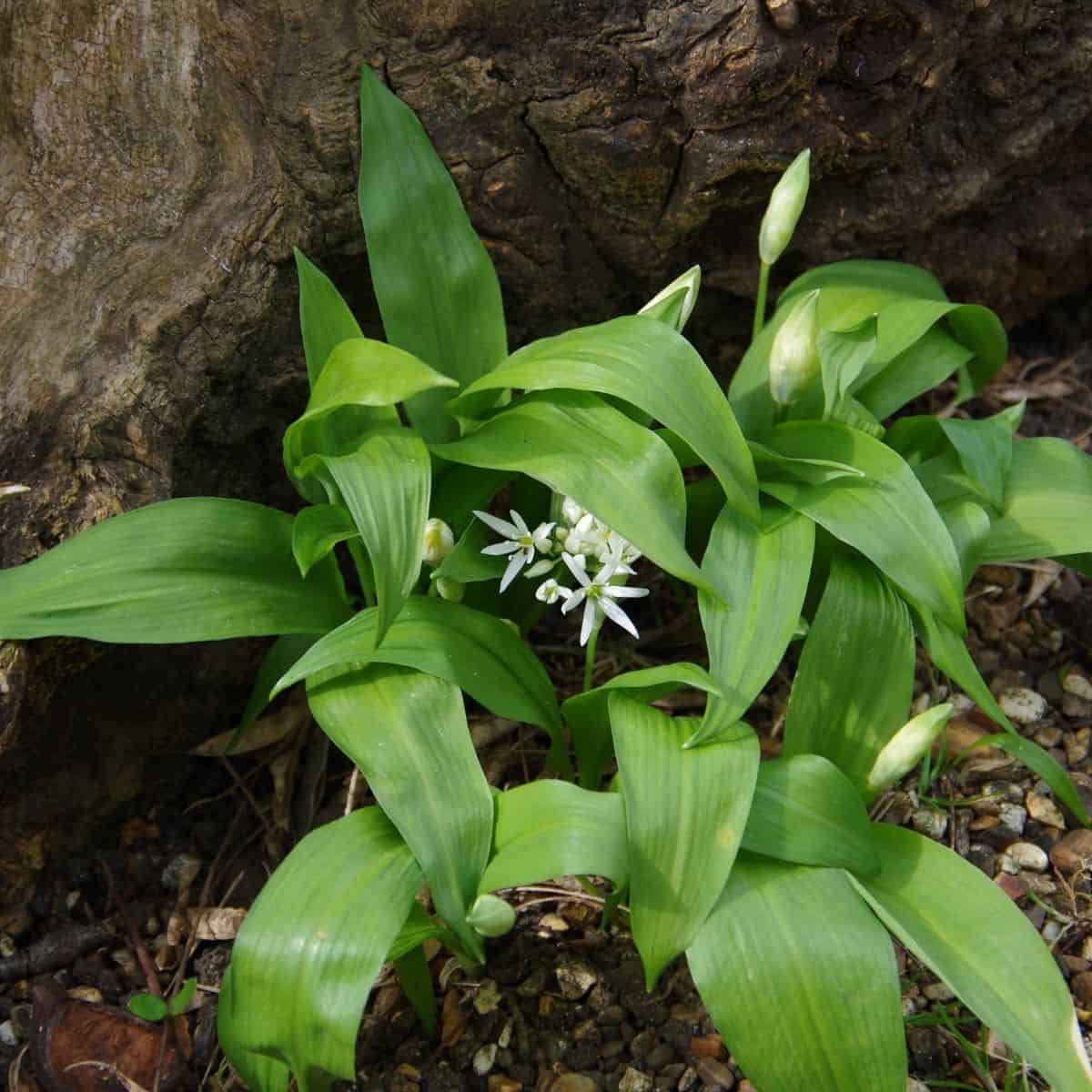
Habitat - Damp, shady woodlands, often carpeting the ground
Smell - A strong garlic aroma when the leaves are crushed (key identifier)
Leaves - Long, smooth, bright green leaves
Flowers - Small white star-shaped flowers appearing in spring (April-May in the UK)
Lookalikes - Lily of the valley, lords & ladies, and fool's parsley (all toxic)
If in doubt, do not eat.
Cooking with Nettles and Wild Garlic
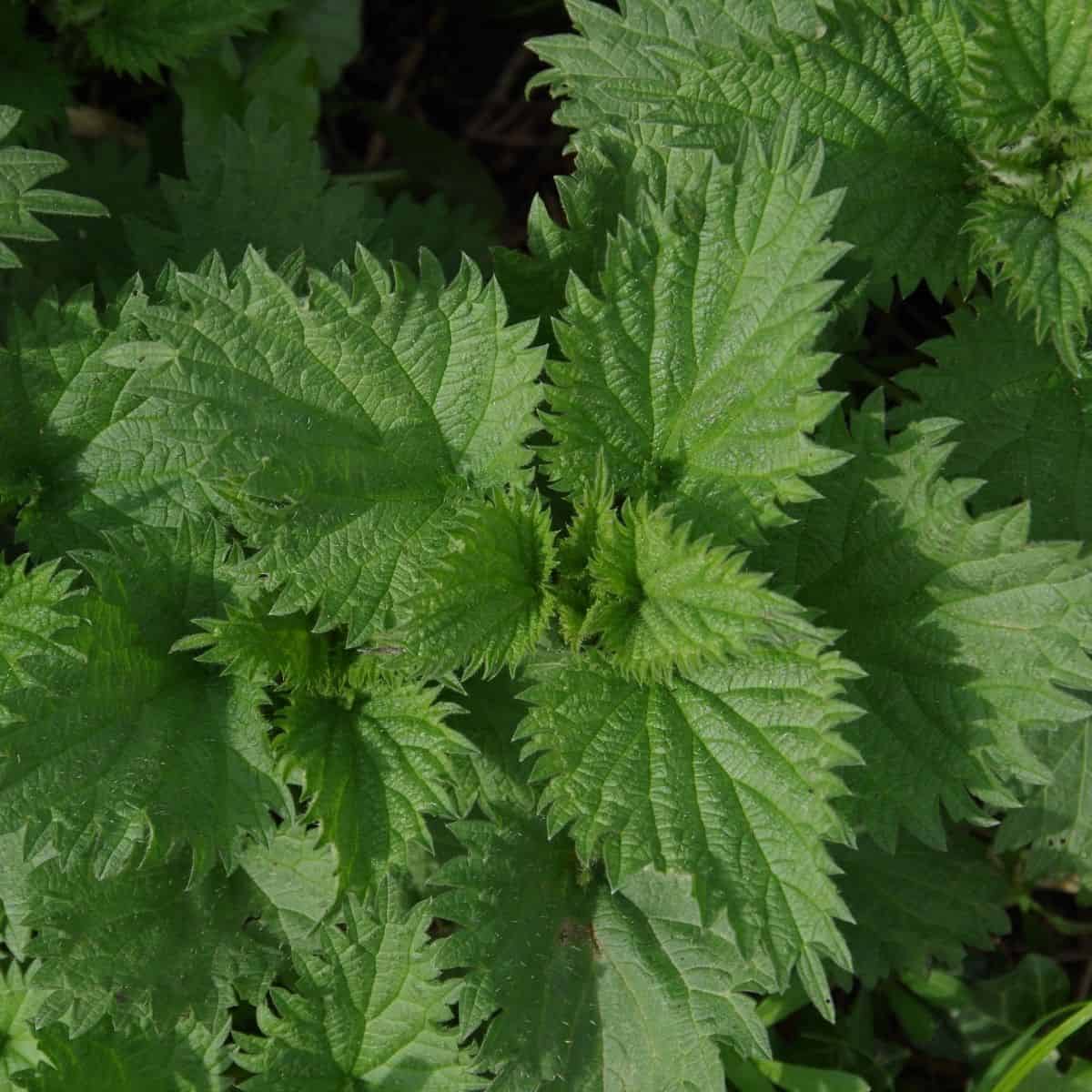
Nettle
Wild Garlic
Cooking with nettles and wild garlic is an easy way to bring seasonal flavour into everyday dishes. Both are widely available across the UK in spring and make a good starting point if you're new to foraging.
Nettles have a reputation because of their sting, but once blanched, they lose it completely. What you're left with is a nutrient-rich green, similar to spinach, with a slightly deeper, earthier flavour. In most cases, you can use nettles anywhere you would use spinach. Handle with care when picking, or wear gloves. I tend to take only the top four leaves so the plant can continue to grow. Nettles are generally easy to identify, but if in doubt, leave them - never guess.
Wild garlic is milder and more delicate than bulb garlic, with a fresh, gently aromatic flavour. It works particularly well in sauces like this, adding lift without overpowering the dish. All parts of the plant can be used, including the leaves, flower buds, flowers and seeds.
Used together, nettles and wild garlic bring a balance of earthy and soft garlicky notes, turning a classic cauliflower cheese into something more seasonal and distinctive.
📖 Recipe
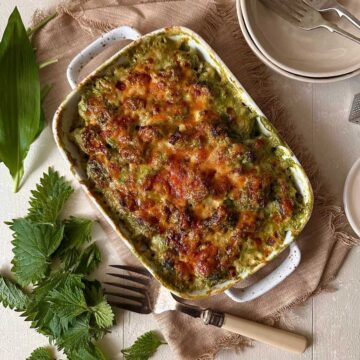
Wild Garlic Cauliflower Cheese with Nettles
Ingredients
- 650 g Cauliflower
- 100 g White onion
- 50 g Wild garlic about 30 leaves
- 50 g Nettle leaves about 80-100 leaves
- 300 ml Single cream
- 100 g Mild cheddar chees
- 30 g Parmesan cheese
- 2 tablespoon Olive oil
- 1 teaspoon Salt
- ½ teaspoon Black pepper
Instructions
- Thoroughly wash and pat dry the wild garlic and nettle leaves, then roughly chop.
- Finely chop the onions.
- Break the cauliflower into florets, and cut large florets in half or into thirds. Roughly chop the stem and leaves. We use everything.
- Grate the cheddar cheese and parmesan cheese.
- Blitz the wild garlic leaves with 1 tablespoon of olive oil into a puree. Add a little water to assist blending if required.
- Heat oil in a casserole (cast-iron pot) or other oven-proof pan. Add the chopped onions and fry until translucent.
- Add the chopped nettle leaves and fry for a minute or two, until wilted.
- Add the cauliflower, cream, and salt, then add the wild garlic puree and half of both cheddar and parmesan cheese.
- Cook for about ten minutes over medium-high heat, and add black pepper.
- Preheat oven to 180ºC (fan assisted)
- Once the cauliflower is bubbling, turn off the heat. Add both the grated cheddar and parmesan on top and bake in the oven for a further 30 minutes. If your cooking pot is not oven-proof, transfer it to a baking dish, add cheese on top and bake.
- Once the cauliflower cheese has a nice golden-brown colour and you've checked with a knife that the cauliflower is cooked, remove from the oven and allow to cool for five minutes before serving. Serve hot.
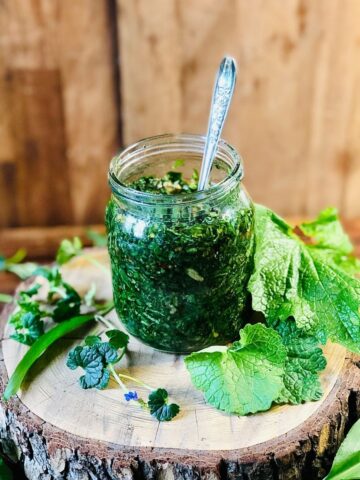
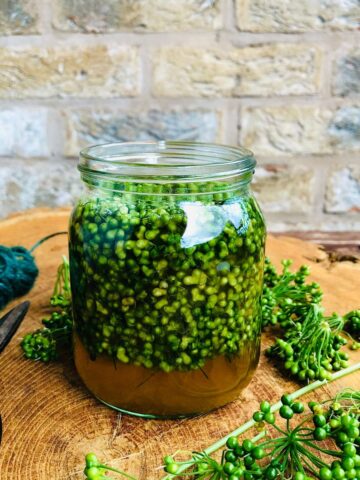
More Wild Garlic Recipies
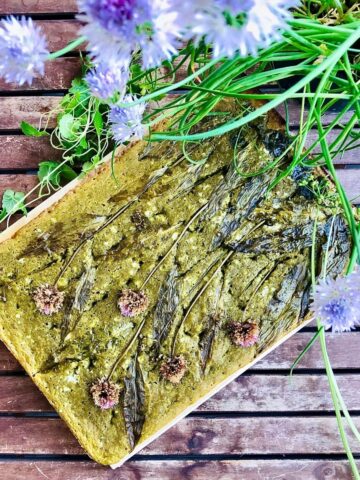
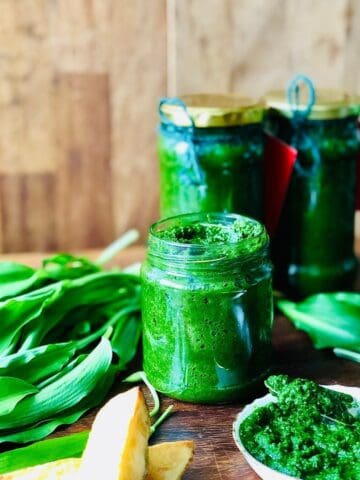
Here are a few more ideas to make the most of the wild garlic season.
Food Safety
- Wash your hands regularly while preparing, handling and cooking food.
- Wipe down countertops and high-contact points regularly.
- If you cook meat and fish, do not use the same utensils on cooked food that previously touched raw meat. Use separate chopping boards for meat and fish. Wash your chopping boards immediately after use.
- Thoroughly cook food to a minimum temperature of 165 °F (74 °C).
- Don't leave food at room temperature for extended periods (more than 2 hours).
- Store food correctly.



Leave a Reply