

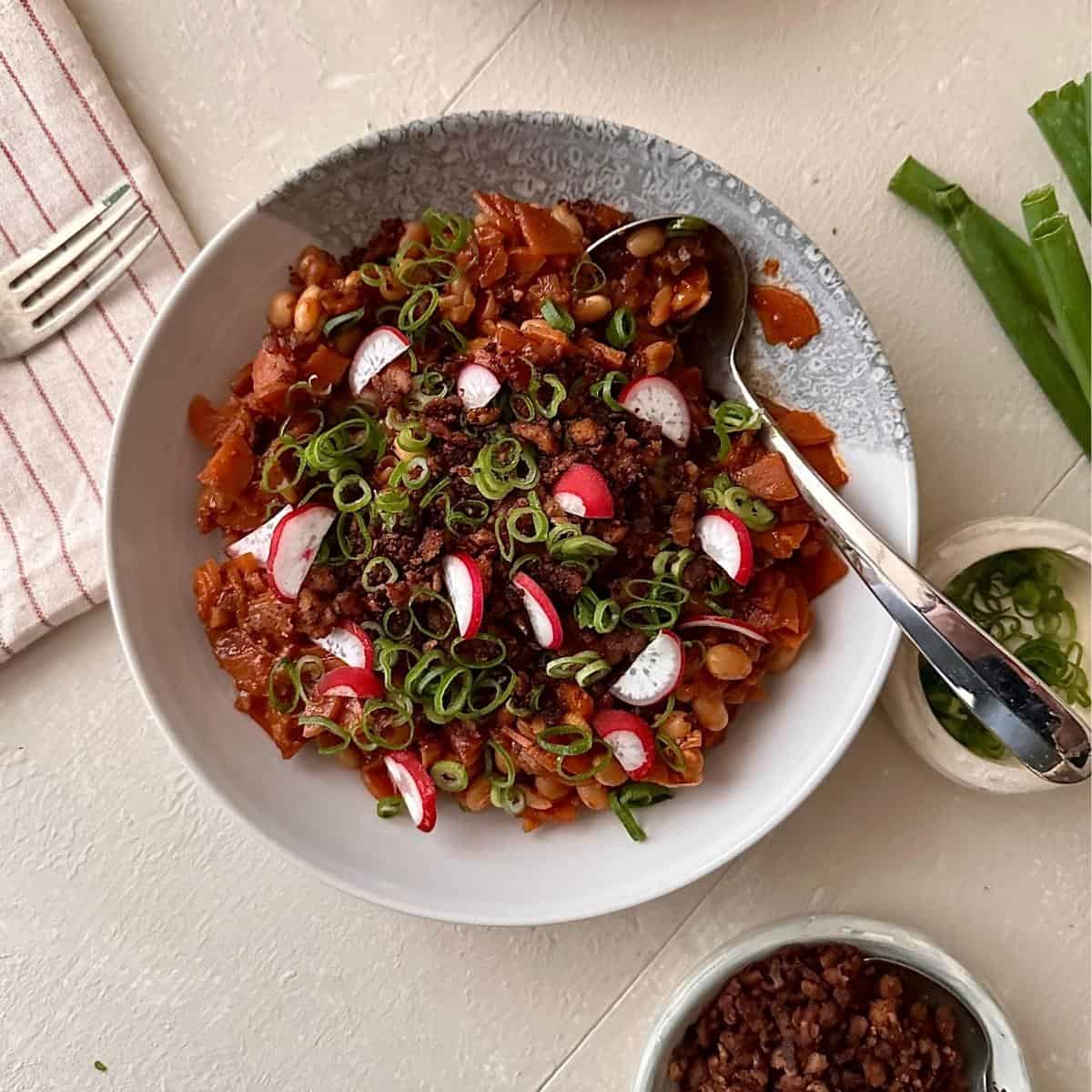
Weekday meals need to be simple, nourishing and satisfying without compromising on flavour. This kimchi white bean stew with tempeh crumble delivers just that. White beans, carrot and a little tomato passata create a comforting base, while kimchi brings tang, heat and depth. I think condiments are underrated as excellent flavour boosters in cooking, and kimchi is the star of the show here. Topped with crisp tempeh crumble and fresh spring onions, this is a wholesome plant forward dinner for a busy lifestyle with plenty of texture and bold, savoury flavour.
Kimchi is what gives this stew its bold character. Another favourite condiment I use to bring depth and warmth to dishes is harissa. For another hug-in-a-bowl meal, try my beetroot stew with harissa.
Why You'll Love This Kimchi White Bean Stew With Tempeh Crumble
- Bold, comforting flavour - Kimchi brings depth, tang and a gentle heat that gives this stew its savoury character.
- High in plant protein - Both the haricot beans and the tempeh make this a satisfying, protein-rich meal without any meat.
- Perfect for busy evenings - When you want something quick, nutritious and full of flavour, this is an easy dinner to turn to.
- Easy to adapt - Swap the beans, adjust the heat or use different vegetables depending on what you have at hand.
- A brilliant way to use kimchi - An easy way to add instant depth and bold flavour, straight from the jar.
Jump to:
Key Ingredients & Notes
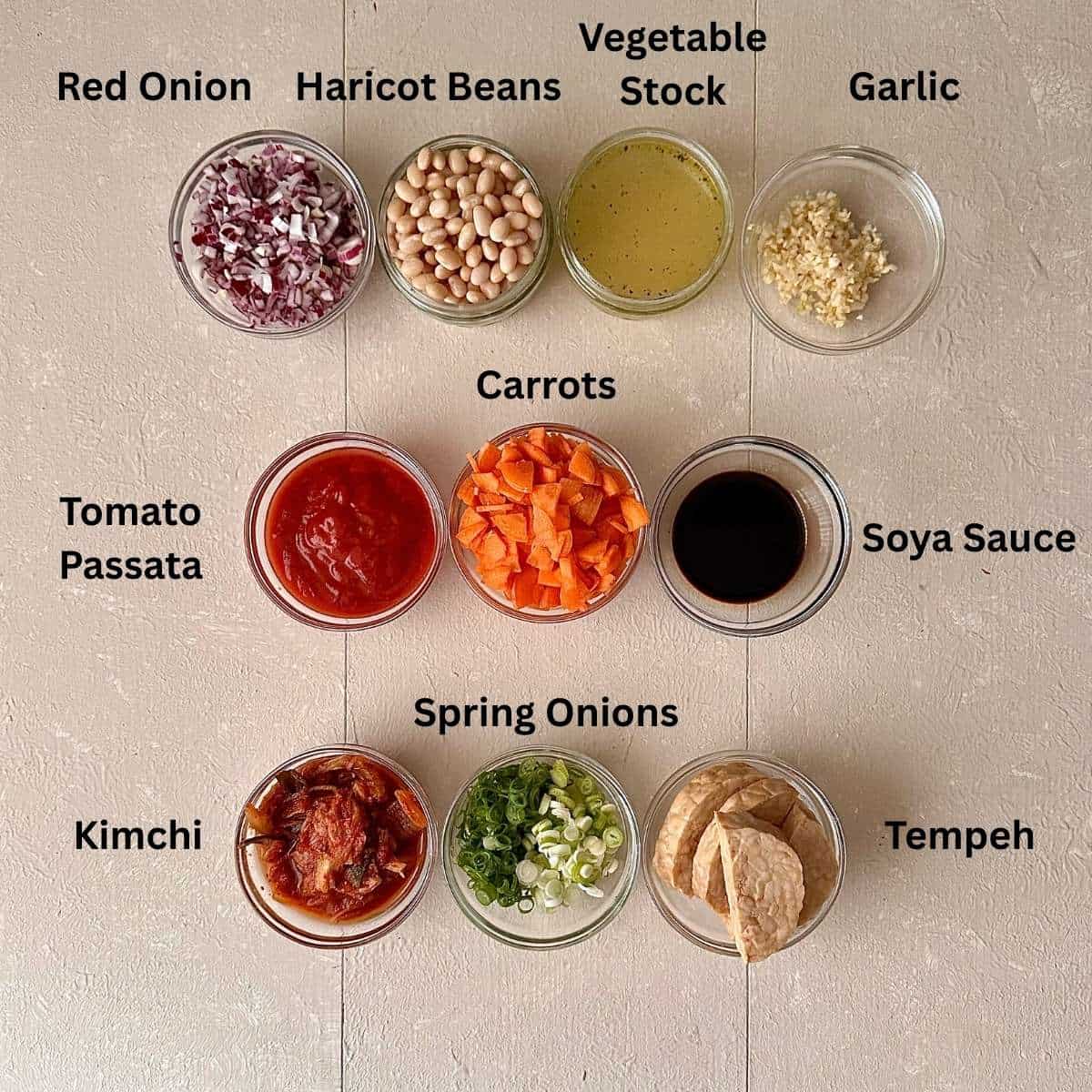
- White beans and tempeh - These give the stew body, texture and protein. Tempeh is a fermented soy product with a firm texture, which makes it ideal for creating a crisp crumble.
- Red onion and garlic - The classic savoury base of the dish.
- Carrots - These help bulk out the stew, adding sweetness and balancing the kimchi's tang.
- Tomato passata - Adds body and a little acidity, while allowing the kimchi to remain the star.
- Kimchi - A Korean fermented vegetable dish that brings heat, tang and depth of flavour.
- Soy sauce - Adds savoury, umami depth
- Vegetable stock - Forms the base of the stew and brings everything together. Use cubes or homemade stock.
- Spring onions - Adds freshness and a light allium flavour.
See the recipe card below for exact quantities.
How to Make Kimchi White Bean Stew With Tempeh Crumble

- Heat 1 teaspoon of the olive oil in a pot over medium heat.
- Fry the onions until translucent, then add the chopped garlic and fry for about a minute until soft.
- Add the carrots and fry for 1 minute.
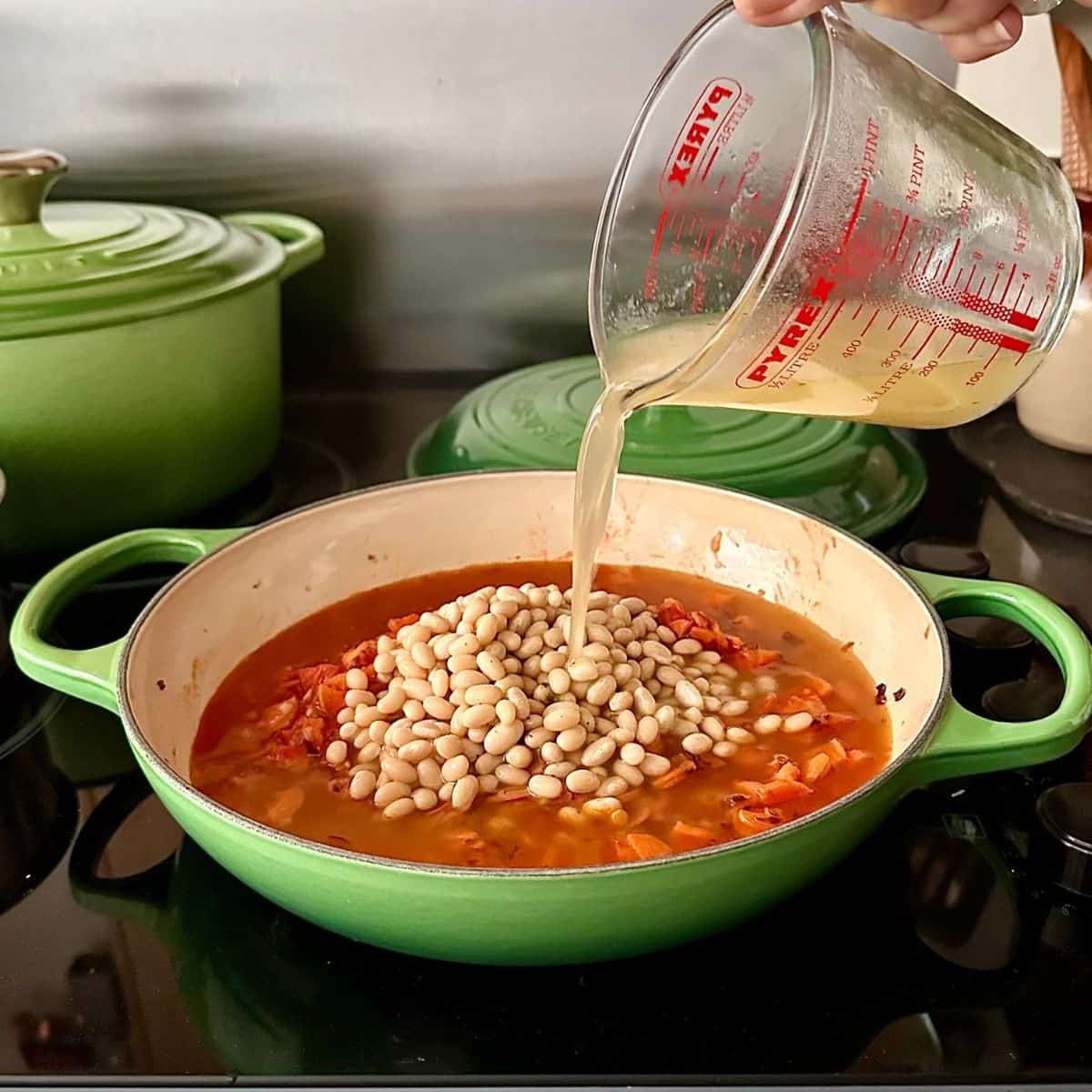
- Add the passata, soaked and drained haricot beans and vegetable stock.
- Cover and cook for 30 minutes, or until the haricot beans are soft enough to be crushed between your fingers.

- While the beans are cooking, grate the tempeh.

- Add soya sauce and some of the kimchi juice and mix well. Set aside.
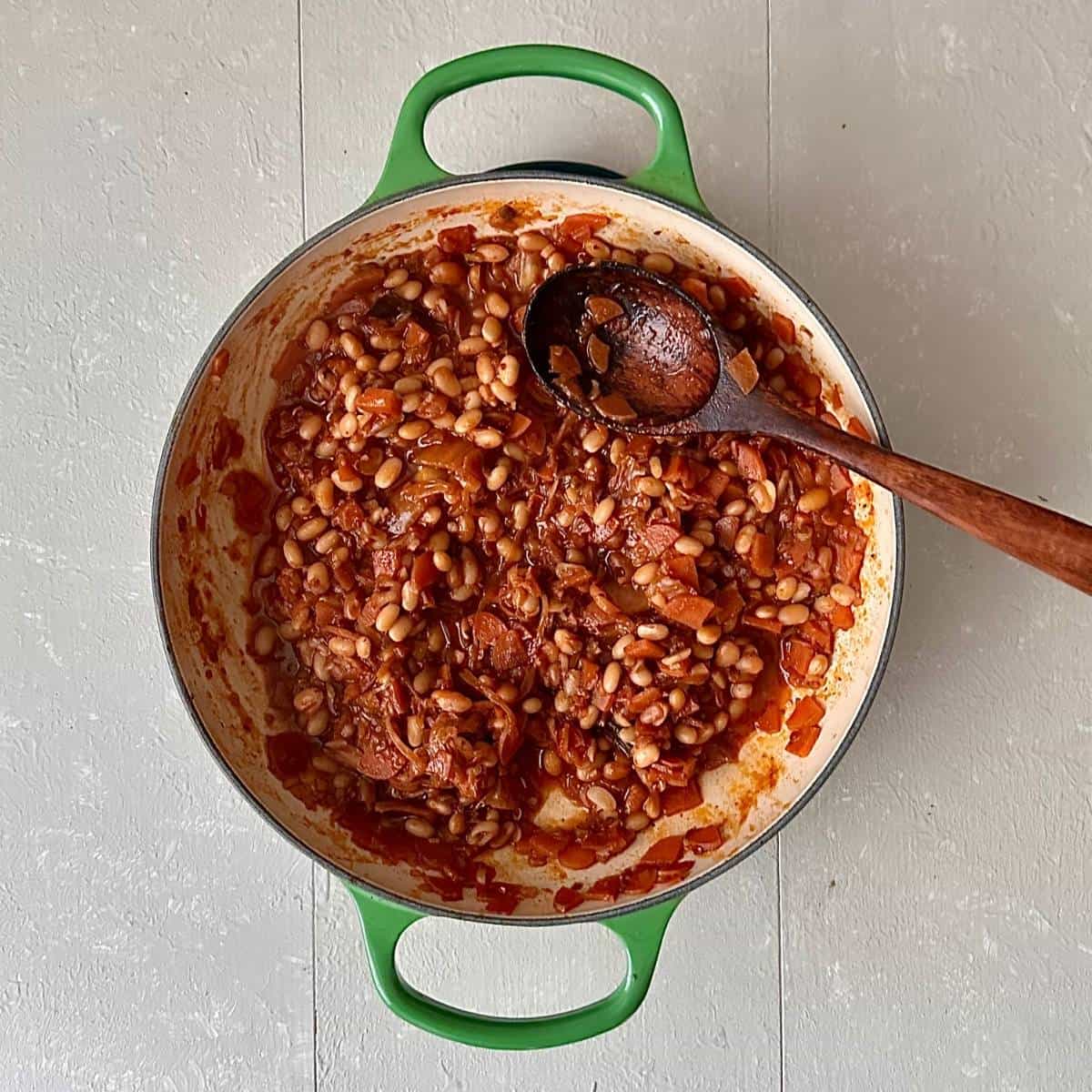
- Once the haricot beans are cooked, season with 1 teaspoon of soya sauce and add the kimchi along with its juice.
- Add the white parts of the spring onion.
- Turn off the heat, stir, and let it sit for 2 to 3 minutes.
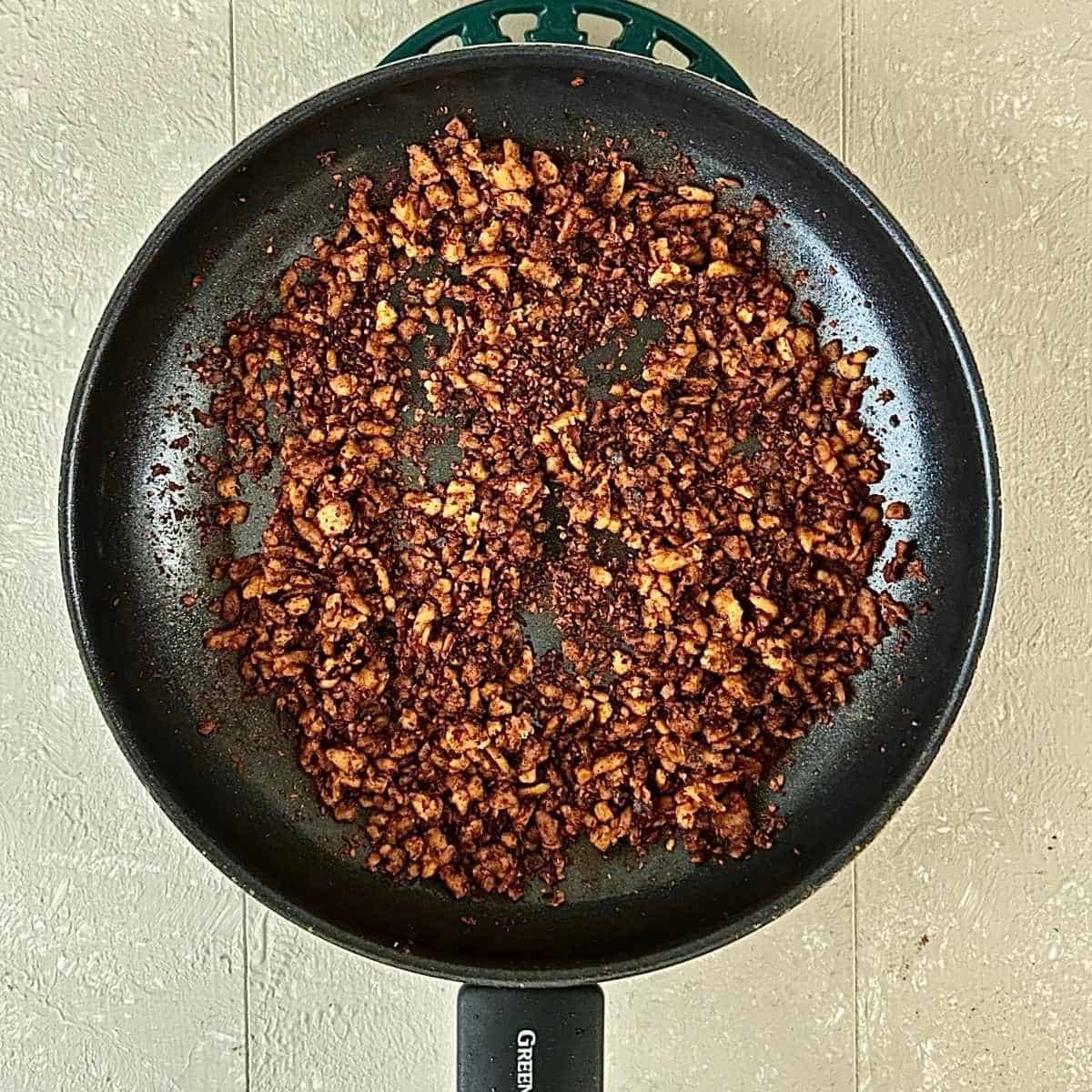
- In a frying pan, heat the remaining olive oil over medium-high heat.
- Fry the tempeh until golden brown (5 to 10 minutes).
- Stir often to ensure even browning.

- To serve, put the beans in a bowl, top with tempeh crunch and garnish with the green part of the spring onion and, optionally, some sliced radish.
Substitutions & Variations
This dish is quite versatile and can be adapted in various ways:
Beans
- Haricot Beans - I have used dried haricot beans; this can be made with canned beans and will save you 20 minutes of cooking time.
- Haricot beans could be replaced with other white beans - butterbeans or cannellini beans. Even chickpeas could be used, but these will give a much firmer texture.
Tempeh Crumble
- If you don't have tempeh, try it with extra crumbled extra-firm tofu.
Carrots
- Carrots -You can replace this with any vegetable of your choice, although it does add sweetness, the main goal to add carrots was to bulk up the meal.
Kimchi
- Depending in you kimchi's saltiness and spiciness, adjust to taste.
- If you don't like kimchi, you can use harissa paste or just a simple red pepper paste. I've used an amount of kimchi to appeal to the widest audience; however, you can adjust it to your taste.
Heat Level
- You can add more heat by adding a little gochujang, chilli flakes, or a drizzle of chilli oil.
Garnish
I love this stew with spring onions and sliced radish; however, here are some alternative garnish ideas:
- Sesame seeds.
- Cucumber.
Storage
Store the haricot beans and tempeh crumble separately in the fridge for up to 3 days. Reheat thoroughly before serving.
The Bean stew can be frozen in an airtight container for up to 3 months. The tempeh crumble will lose its crispiness. I do not recommend freezing it.
Chef Tips
- Forgot to soak haricot beans? Cook them separately, adding ½ teaspoon of baking powder to speed up the cooking process.
- Season with care - Kimchi, stock and soy sauce all bring salt to the dish, so taste before adding any extra.
- Add kimchi near the end - This helps preserve its brightness and keeps its fermented character fresh and lively.
FAQ
No. If you follow the proportions of this recipe, it should not be overly spicy. Of course, everyone's heat tolerance is different.
Yes. This recipe is completely vegan, as long as you use a vegan kimchi - check the label.
Yes. Using tinned beans will cut down the cooking time by around 20 minutes. Use 2 x 400g tins, drained and rinsed, in place of 200g dried beans.
Tempeh adds extra protein, along with a savoury, slightly nutty flavour and pleasing texture.
Absolutely. Use firm tofu if you want to grate and cook it in the same way as the tempeh. Alternatively, use medium tofu, crumble it, season it and bake it for 15-20 minutes until lightly golden.
Yes. In fact, it tastes better the next day, once the flavours have had more time to develop.
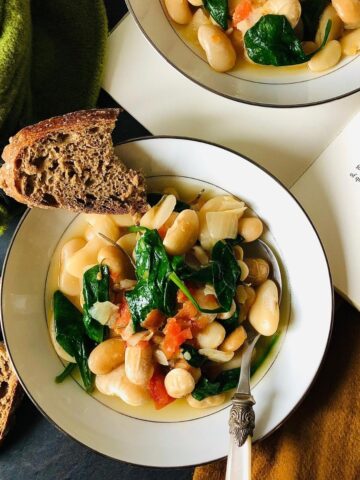
More Hearty Plant-Forward Stews
If hearty, nourishing stews are your idea of comfort food, then try these flavour-packed stews next.



📖 Recipe

Kimchi White Bean Stew With Tempeh Crumble
Equipment
Ingredients
- 200 gms Dried haricot beans
- 60 gms Red onion
- 10 gms Garlic
- 100 gms Tomato passata
- 150 gms Carrots
- 105 gms Kimchi with juice
- 2 tablespoon Olive oil
- 500 ml Vegetable stock
- 125 gms Tempeh
- 2 teaspoon Soya sauce
- 30 gms Spring onion
Instructions
- Rinse and soak the Haricot beans overnight, or for at least 4-6 hours.
- Finely dice the onion and roughly chop the garlic.
- Thoroughly wash carrots and pat them dry. Halve or quarter them lengthwise, then finely slice.
- Wash and pat dry the spring onions. Finely slice the green and white parts, keeping them separate.
- Heat 1 tablespoon of olive oil in a pot over a medium heat. Add the onion and cook until translucent. Then add the garlic and fry for about 1 minute until softened.
- Add the carrots and fry for 1 minute, then add passata, soaked and drained haricot beans, and vegetable stock. Cover and cook for 30 minutes, or until beans are soft and can be crushed between your fingers. If using tinned haricot beans, cook for about 20 minutes.
- While beans are cooking, grate the tempeh using the large side of the grater. Add 1 teaspoon of soya sauce and the kimchi juice. Mix to combine and set aside.
- Once the beans are cooked, season with 1 teaspoon of soya sauce and add the kimchi, along with its juice. Add the white part of the spring onion. Turn off the heat, stir through and let it sit for 2 - 3 minutes.
- Heat 1 tablespoon of olive oil in a frying pan over a medium-high heat. Add the tempeh and fry until golden brown and crispy, stirring often to ensure an even colour. This should take about 5-10 minutes.
- Before adding any extra seasoning, taste first, as there is already plenty of salt in the kimchi, stock and soy sauce.
- To serve, add the beans into a bowl topped with tempeh crumble and sliced green spring onion. Serve hot
Food Safety
- Wash your hands regularly while preparing, handling and cooking food.
- Wipe down countertops and high-contact points regularly.
- If you cook meat and fish, do not use the same utensils on cooked food that previously touched raw meat. Use separate chopping boards for meat and fish. Wash your chopping boards immediately after use.
- Cook food thoroughly to a minimum internal temperature of 165 °F (74 °C).
- Don't leave food at room temperature for extended periods (more than 2 hours).
- Store food correctly.




spicefan says
Sounds delicious! I totally agree about condiments – a little soy sauce or gochujang can really elevate a dish like this.
Chef Tripti says
Thank you very much for your kind words. I've got some other condiment recipes on the blog and more to come!