

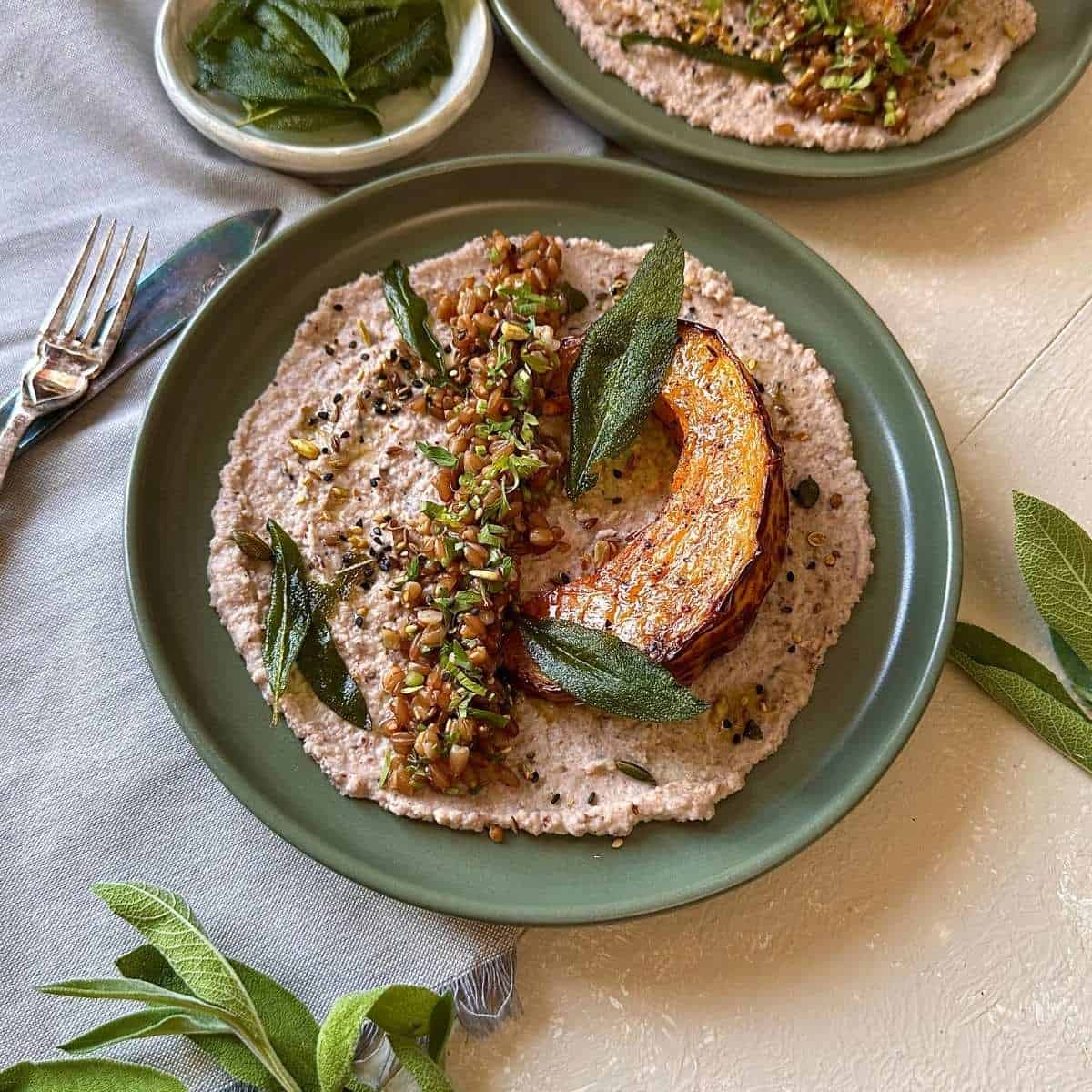
Crown Prince pumpkin has steely blue skin, rich orange flesh, and a sweet, nutty flavour - it's one of my favourite pumpkins to eat, and the star ingredient here. The sweet pumpkin meets tangy, earthy black eyed pea hummus and mellow, nutty spelt. It's definitely not a quick dinner - there's real effort involved - but it's a rewarding one, and if you follow my sequence of cooking, everything will be ready before you know it. It's a meal you could put on a weekly meal plan, or cook to impress guests.
I grow a lot of pumpkin, simply because it's easy to grow and it can sit at room temperature for up to a year without spoiling. I love pumpkins generally too - they're so versatile, from soups and stews to dips and galettes, they add flavour to almost anything. You'll love this recipe because the ingredients are simple, and your stove and oven do most of the work.
why you'll love this Roasted Pumpkin, black-eyed pea hummus and spelt
- A genuinely different way with pumpkin. Most pumpkin recipes take you straight to soup - this one puts it centre-plate instead, as the actual main event alongside hummus and spelt.
- Make most of it ahead. The hummus and spelt both hold well in the fridge for a few days, so on the night you're really just roasting pumpkin and frying sage.
- A proper balance of textures. Soft roasted pumpkin, creamy hummus, chewy spelt, and crisp fried sage - nothing here is one-note.
- Substantial enough to be dinner. Between the black-eyed peas and the spelt, it's got enough protein and bulk to properly satisfy on its own - this isn't a side dish dressed up.
- Entirely plant-based. No dairy, no eggs, nothing to swap out - vegan as written, start to finish.
Jump to:
key Ingredients & notes
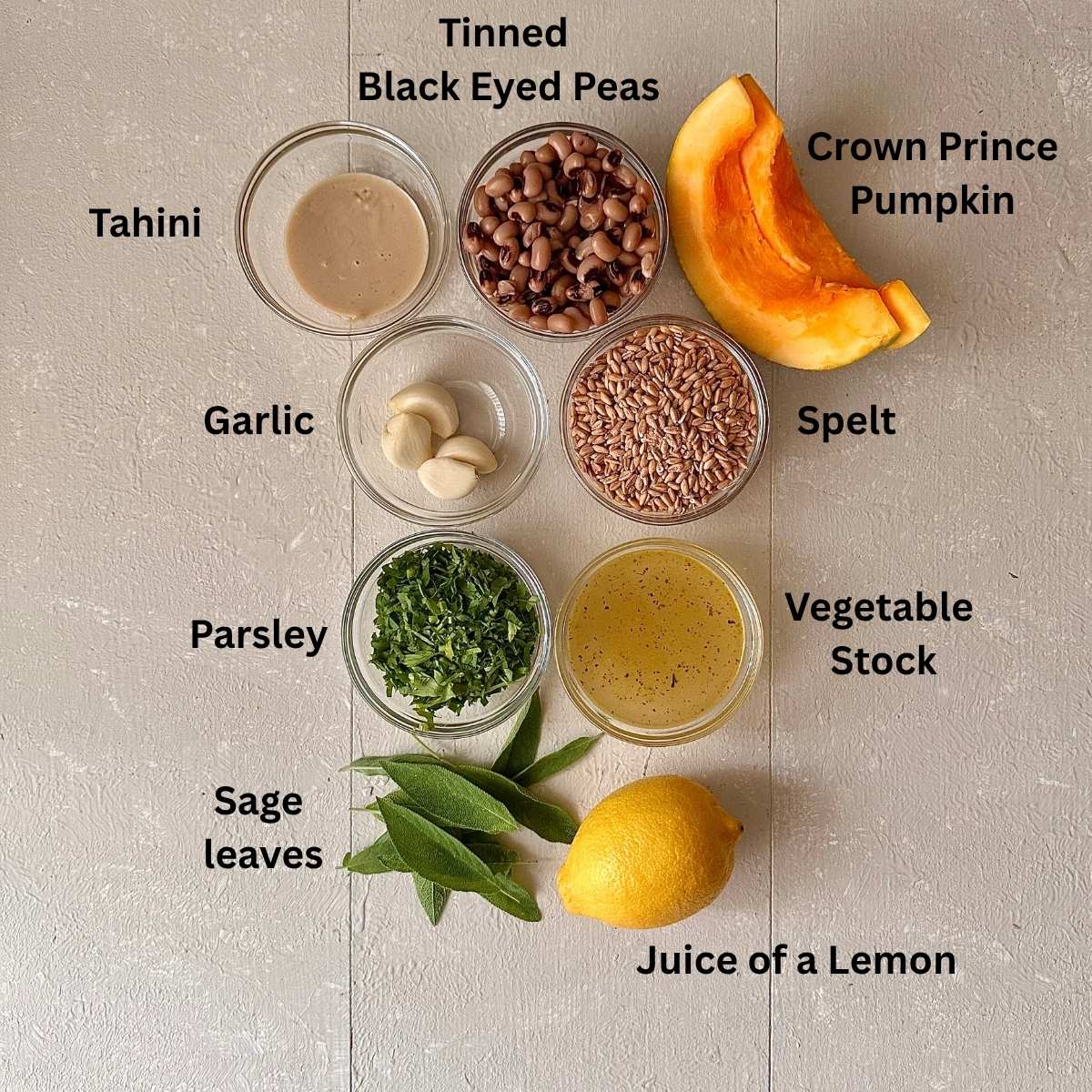
- Crown prince pumpkin - A sweet, dense pumpkin, perfect for roasting, resuling in melt-in-the-mouth texture.
- Spelt and parsley - Spelt adds bite and a nuttly flavour and turns this dish into a full meal, suitable for a weeknight dinner.
- Black-eyed peas - I use tinned black-eyed peas for speed, but of course you can soak dry peas, cook then and use them. Earthier than chickpeas, black-eyed pea hummus suits well the sweet crown price pumpkin sweetness.
- Tahini, garlic & lemon juice - Standard hummas mechanics: tahini for fat and creaminess, garlic for aromatic sharpness, lemon for acid to cut the richness of the tahini and balance the sweetness of the pumpkin
- Fried Sage leaves - Gives a crispy texture contrast and a slighly bitter flavour contrast.
- Vegetable stock - cooking the spelt in vegetable stock lets its season itself while cooking.
See the recipe card for quantities.
HoW TO MAKE Roasted Pumpkin, black-eyed pea hummus and spelt
Start the spelt first - it takes the longest to cook. While it simmers, prep and roast the pumpkin. Once the pumpkin is in the oven, make the hummus and fry the sage. Everything should land on the plate warm at the same time.
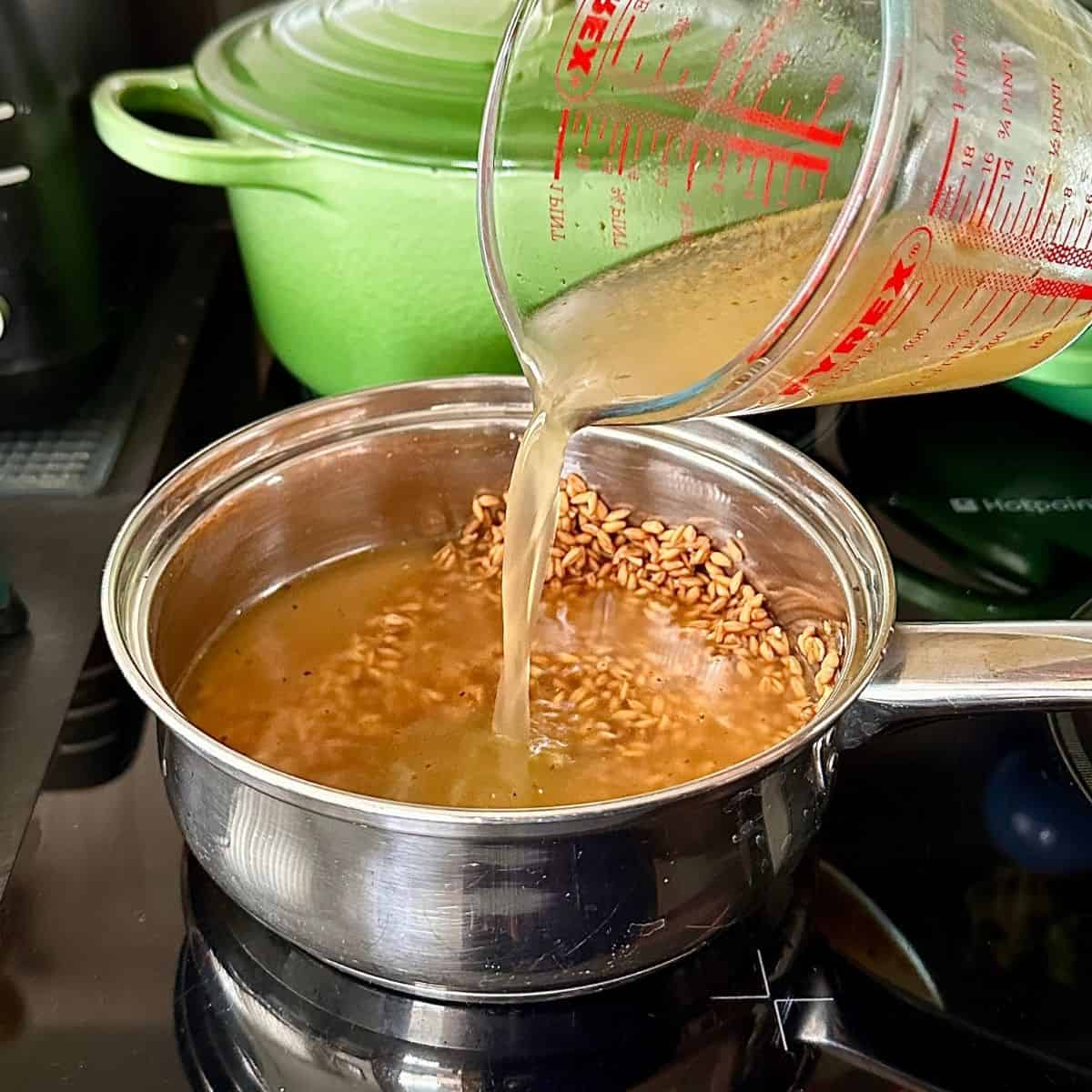
- Wash and rinse the spelt.
- Add the spelt and vegetable stock to a saucepan, cover, and bring to a boil.
- Cook the spelt for 40 - 45 minutes until it is al-dente. Drain
- Chop the parsley and mix it into the spelt.
- Set aside.
- Preheat the oven to 180ºC.
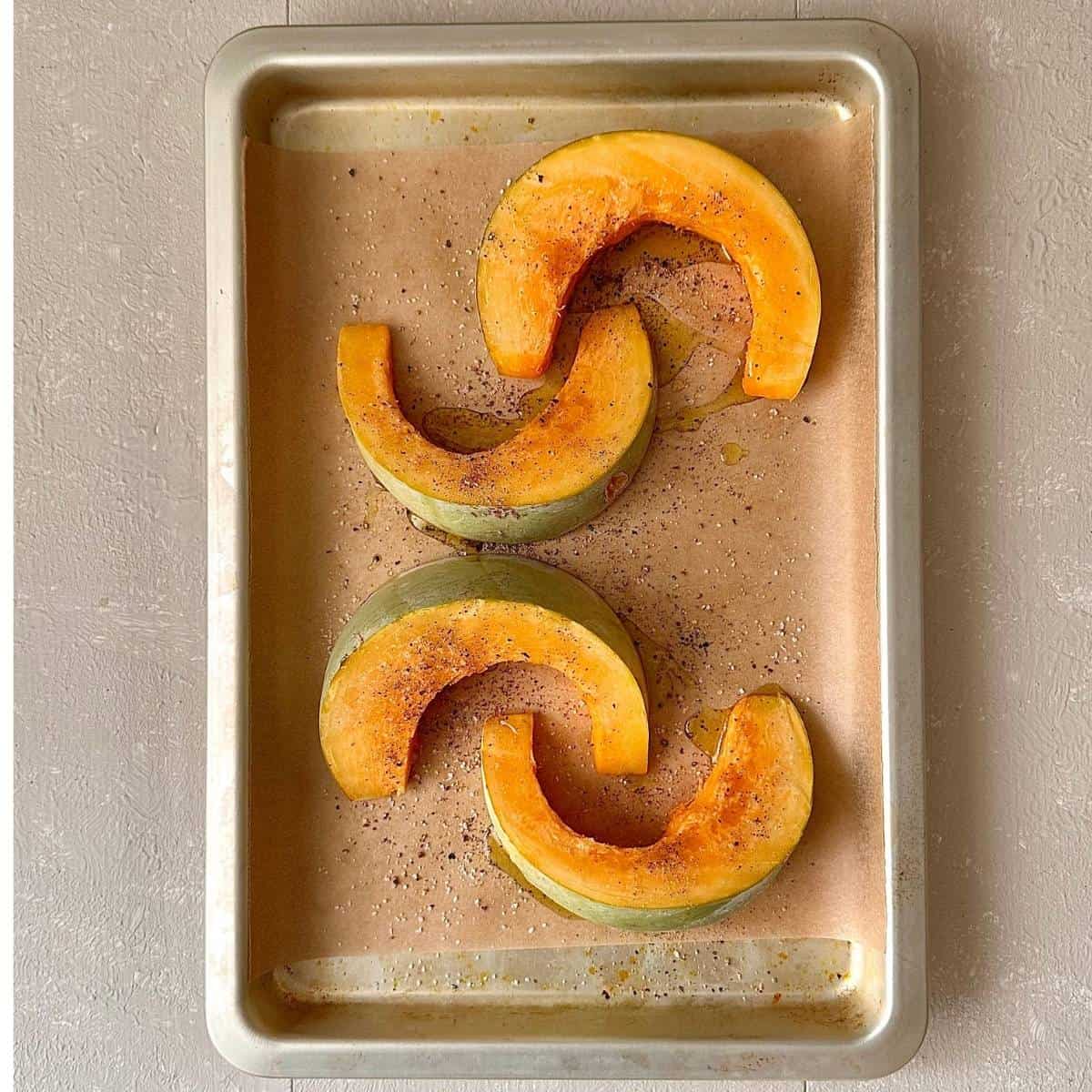
- Cut the pumpkin into 4 wedges and remove the seeds. Do not peel the pumpkin.
- Place on a baking tray lined with parchment paper. Season with salt and pepper and drizzle over the olive oil.
- Roast the pumpkin for 30 minutes. Turn the pumpkin wedges over half way through cooking to ensure even colouring.
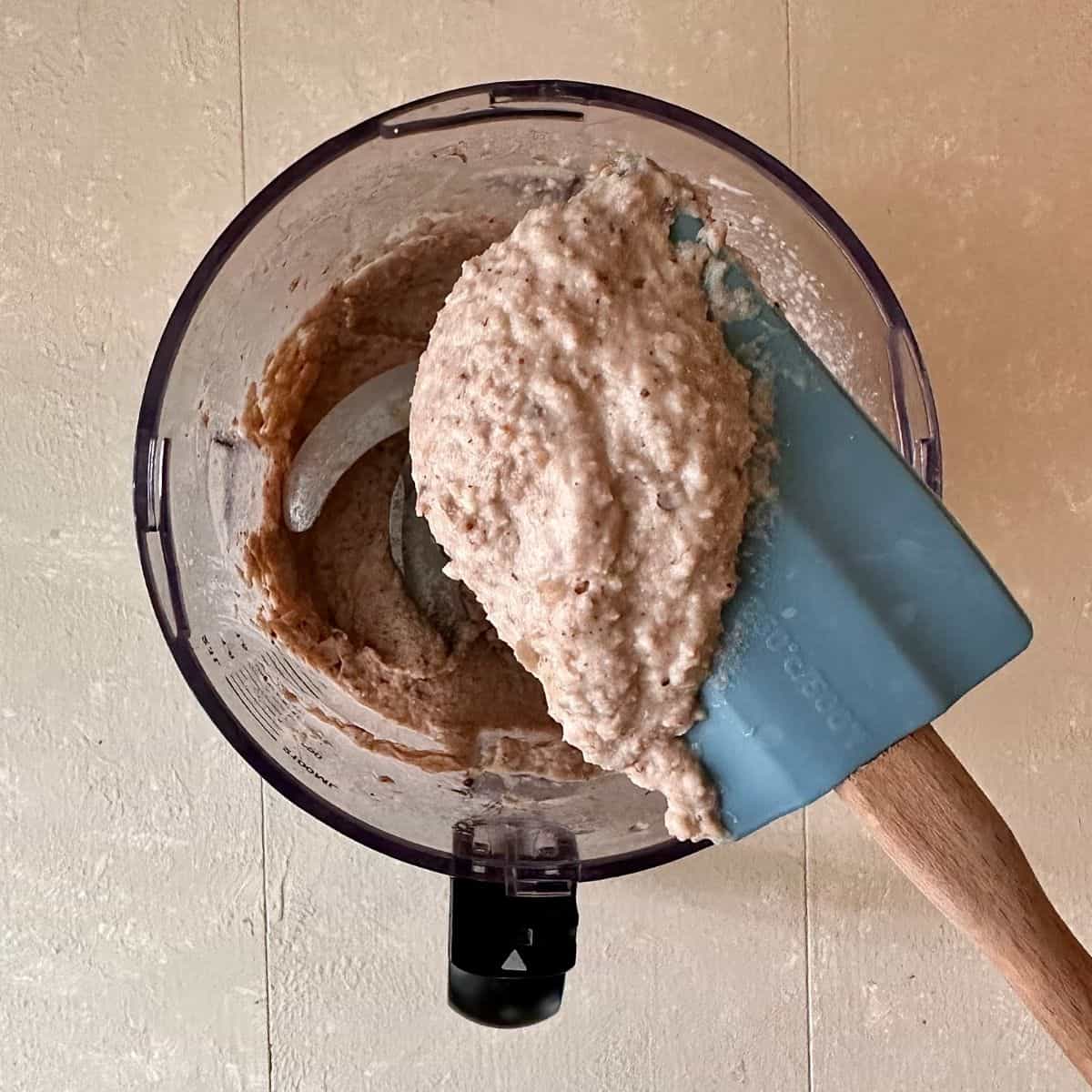
- Drain the water from the tin of black eyed peas. Keep 50ml of the water.
- Add the blacked eyed peas to a blender with the garlic, tahini, and salt. Blend to a puree.
- Add the 50ml of saved water from the tin and the lemon juice and blend further. Taste and season more if necessary.
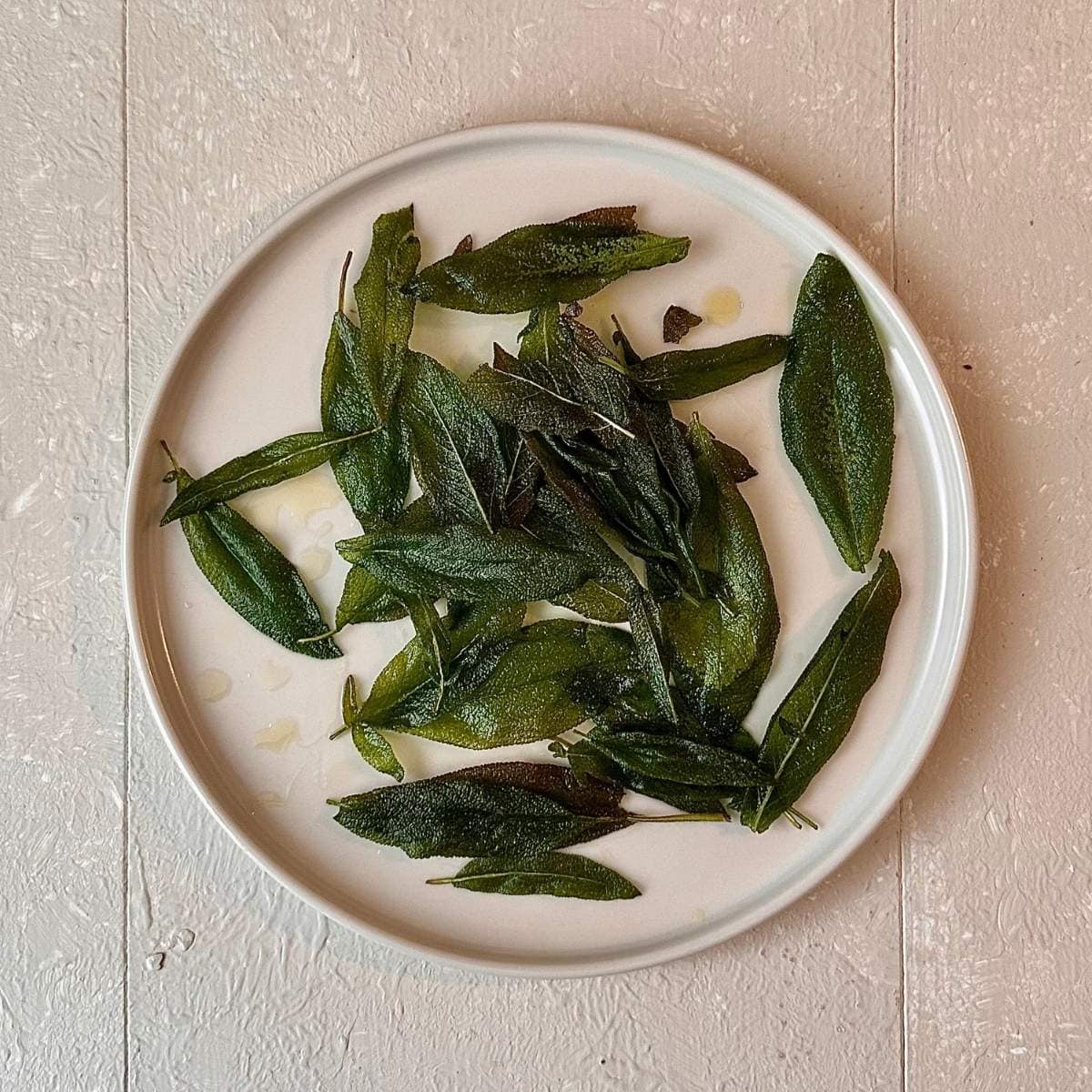
- Remove the sage leaves from the stems,
- To fry, heat the oil in a frying pan and place a layer of the sage leaves in the pan and fry for about 30 seconds until the sage leaves are dark green and crispy.
- Transfer to a paper towel / kitchen roll to soak up excess oil.
- Save the frying oil for garnish.
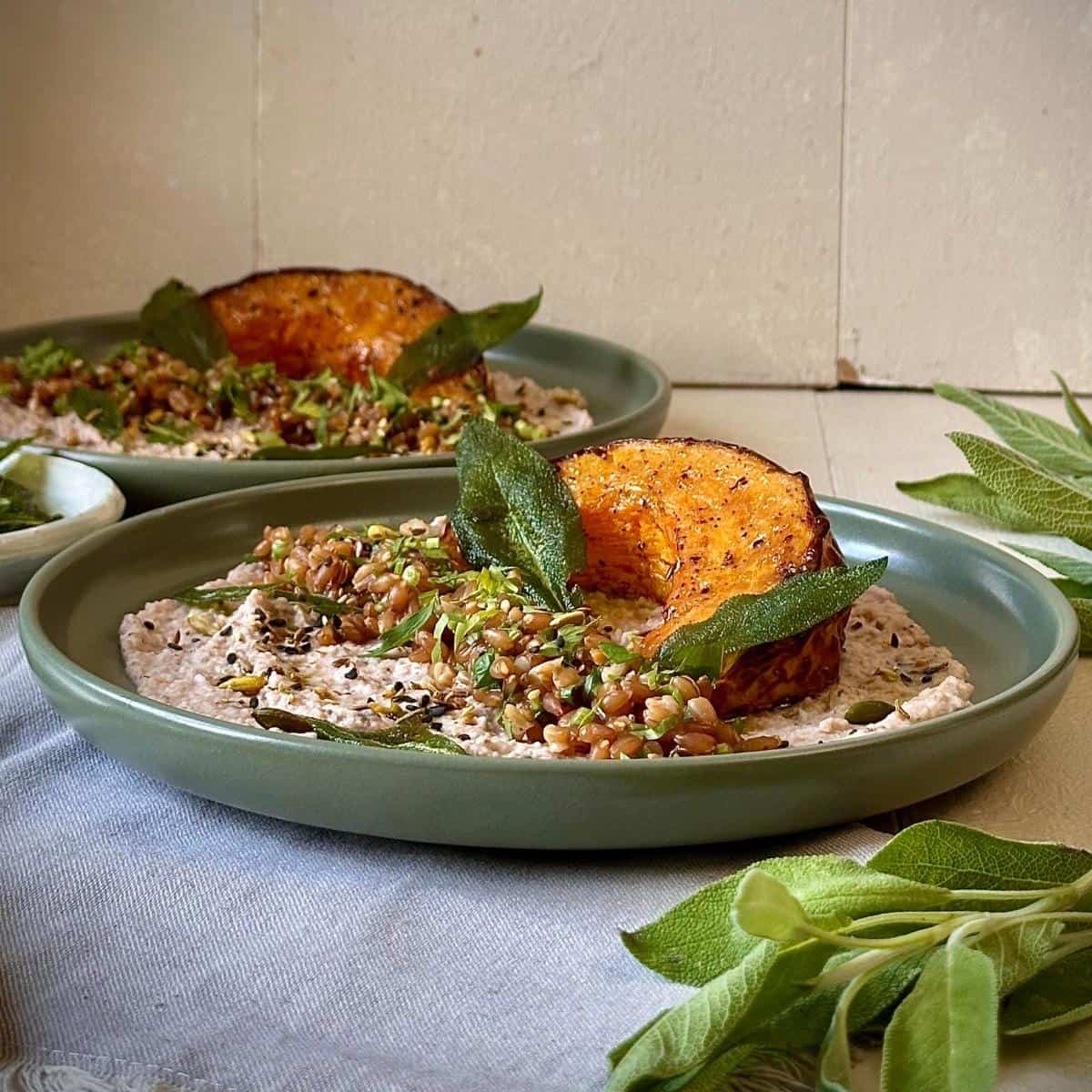
- Assemble the elements together. Start with a bed of black eyed pea hummus spread over the plate. Place a wedge of pumpkin onto the hummus bed, with the spelt to one side.
- Garnish with the fried sage leaves and drizzle over the oil save from frying the sage leaves.
Substitutions & variations
- Crown prince pumpkin - Almost any pumpkin or squash works here - the flavour shifts a little, but it's still a good plate. I've made this with butternut squash plenty of times when Crown Prince wasn't around. The only one i would suggest avoiding is jack-o-lantern.
- Black eyed peas - Chickpeas, kala chana, or any white bean will all sub in fine - the humm us will taste slightly different each time, but it holds up. A pinch of kala namak is worth adding if you want that deeper, more eggy, earthy note the black-eyed peas naturally lean toward.
- Spelt - Freekeh or bulgur wheat both work well in place of spelt. If you need this gluten-free, quinoa is your best swap - it won't have quite the same chew, but it takes the stock flavour just as well.
- Sage Leaves - if fresh sage isn't available, crispy fried curry leaves or fresh thyme sprigs (very briefly fried) give a similar aromatic, crisp garnish - though sage's specific bitterness won't be replicated exactly.
- Vegetable Stock - water works in a pinch, but the spelt will taste noticeably flatter. If you want to boost it without making stock from scratch, a spoon of miso or nutritional yeast stirred into water gets you most of the way there
Equipment
- Food processor to make the hummus.
- Saucepan to cook the spelt.
- Frying pan to fry the sage.
- Baking tray to roast the crown prince pumpkin.
Storage
Store each component separately in airtight containers.
Fridge: Reheat the pumpkin covered with foil in the oven for about 15 minutes. Reheat the spelt in the microwave, or in a pot with a splash of water. Bring the hummus to room temperature before serving rather than reheating it.
Freezer: The hummus and spelt both freeze well for up to three months in airtight containers - the pumpkin doesn't, whether raw or cooked, so roast it fresh each time instead. Defrost both overnight in the fridge. The hummus can separate slightly as it thaws, so give it a good whip before serving to bring it back together. Reheat the spelt the same way as above - microwave, or a pot with a little water.
RECIPE TIPS
- Frying the sage - Test your oil with one leaf before doing the rest - if it doesn't bubble and crisp within a couple of seconds, it's not hot enough yet and you'll end up with limp, greasy leaves instead of crisp ones. This is the step people rush, and it's the one place rushing actually costs you.
- Roasting the pumpkin: Don't overcrowd the tray - if the wedges are touching, they'll steam rather than caramelise, and you'll lose that deep colour on the cut edges.
- Seasoning the hummus: Salt it in stages, not all at once - a little with the beans before blending, then taste and adjust once the lemon and reserved water go in. The acid changes how the salt reads, so seasoning before that point means you're guessing.
The skin of crown prince pumpkin is tough when uncooked so be very careful when you are cutting the pumpkin wedges. However, you do not need to peel the pumpkin as the skin is edible and softens on cooking.
Yes. The black-eyed pea hummus and the spelt hold up well in the fridge for a few days. On the day of the meal, all you need to do is roast the pumpkin fresh, so this can be an ideal quick weeknight meal.
Yes, this recipe is vegan. If you use stock cubes, check the ingredients lis to make sure it is vegan. You can make your own stock if you want to.
This recipe is not gluten-free as the spelt contains gluten. Using quinoa makes the recipe gluten-free.
Sweeter and denser than butternut, with a firmer, less watery flesh - that's exactly why it roasts so well instead of going soft and mushy. If you've never cooked with it before, think of it as butternut's more intense, less common cousin.
📖 Recipe
Roasted Pumpkin, Black-eyed pea hummus and Spelt
Equipment
- Oven tray
Ingredients
Crown Prince Pumpkin
- 500 g Crown Prince pumpkin
- ½ teaspoon Sea Salt
- ½ teaspoon Crushed Black pepper
- 1 tablespoon Olive oil
Black Eyed Pea Hummus
- 240 g Tinned Black eyed peas
- 1 tablespoon Tahini
- ½ Lemon for juice
- 20 g Garlic
- ½ teaspoon Sea salt
- 50 ml Water from the black-eyed pea
Spelt
- 100 g Spelt
- 300 ml Vegetable stock
- 20 g Parsley
Fried Sage Leaves
- 3 tablespoon Olive oil
- 5 g Sage leaves about 10-15
Instructions
Cooking the Spelt
- Wash and rinse the spelt. Drain the water.
- Add the rinsed spelt into a pot with a lid. Add the vegetable stock, cover, and bring to a boil. Reduce the heat and simmer. Cook for about 40-45 minutes covered, until the spelt is al dente. Set aside.
- Before plating, mix in the chopped parsley, and check the seasoning.
Cook the Crown Prince Pumpkin
- Pre heat the oven to 180ºC
- Remove the seeds and cut the pumpkin into four wedges.
- Place the pumpkin onto a baking tray, season with salt, black pepper and coat with olive oil.
- Roast the pumpkin in the oven for 30 minutes. Turn the pumpkin halfway through cooking for even colour both sides.
Black Eyed Pea Hummus
- Drain the water from the tin of black eyed peas, but save 50 ml
- In a food processor add the black eyed peas, garlic, tahini and salt. Blend to a puree.
- Clean the sides of the food processor. Add the juice of half a lemon and some of the saved water from the black eyed peas tin and blend further.
- Check the seasoning. Blend to your desired consistency by adding more water if required.
Fried Sage leaves
- Wash and pat dry the sage leaves. Remove the leaves from the stems.
- Heat the oil in a pan. Add a few leaves in a single layer and fry for about 20-30 seconds until they turn dark green and crispy. Be careful not to fry for too long as they will turn brown. Remove from the oil immediately, transferring them to kitchen paper or paper towel to drain the excess oil.
- Save the cooled oil for garnish.
Assembly
- Add a bed of black-eyed pea hummus to your serving plate and spread evenly.
- Place the roast pumpkin one on the hummus bed.
- Mix the chopped parsley into the spelt. Add the cooked spelt onto the serving dish, to one side.
- Garnish with the fried sage leaves and drizzle over the saved oil from frying the sage.Serve immediately.
Nutrition
More pumpkin dishes
I love cooking with pumpkin. Here are more recipes for you to try.
Food Safety
- Wash your hands regularly while preparing, handling and cooking food.
- Wipe down countertops and high-contact points regularly.
- If you cook meat and fish, do not use the same utensils on cooked food that previously touched raw meat. Use separate chopping boards for meat and fish. Wash your chopping boards immediately after use.
- Cook food thoroughly to a minimum internal temperature of 165 °F (74 °C).
- Don't leave food at room temperature for extended periods (more than 2 hours).
- Store food correctly.

Leave a Reply