

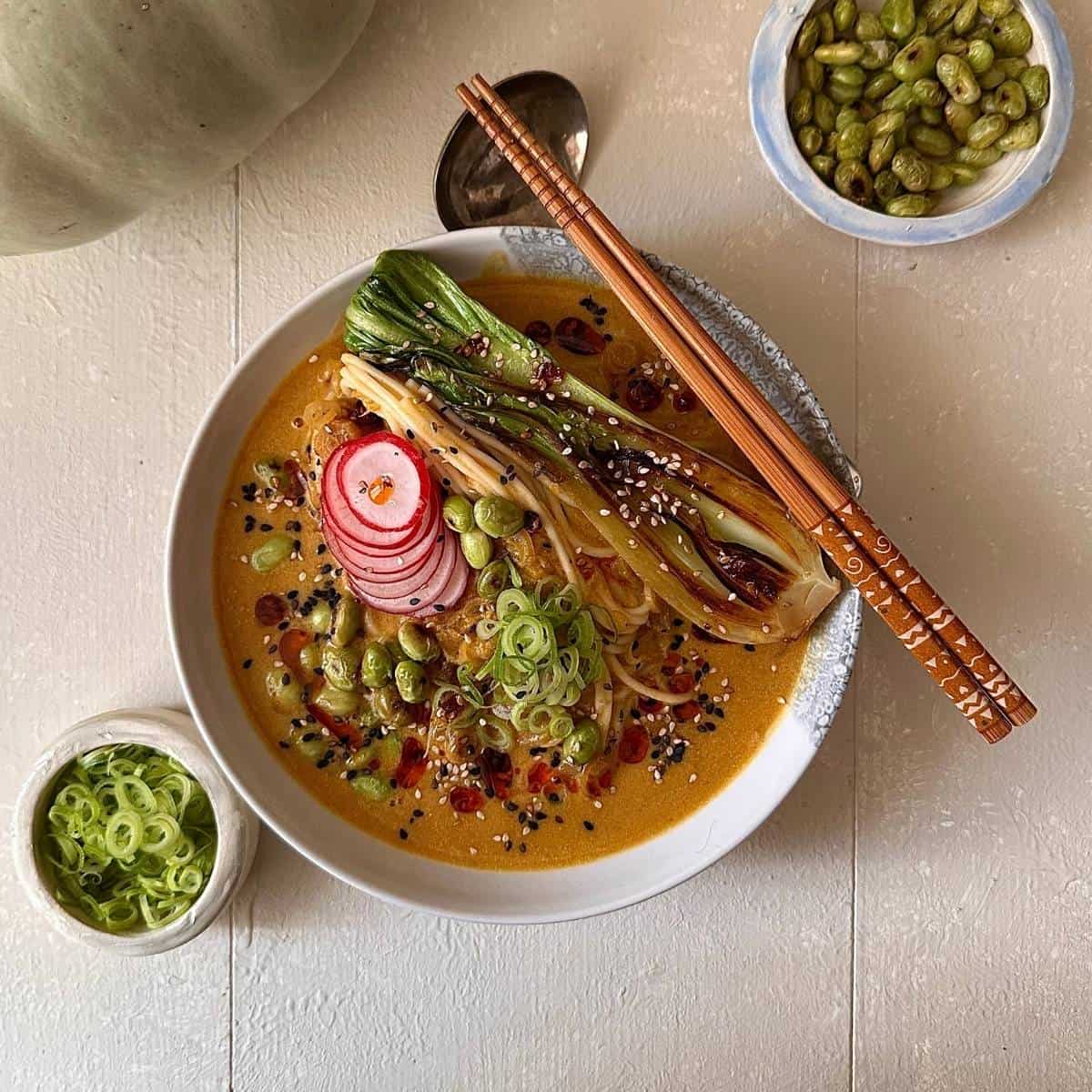
This veggie ramen with miso and pumpkin broth is rich, comforting, and deeply savoury, built entirely from vegetables, so it is vegetarian and vegan-friendly. Roasted pumpkin gives the broth natural sweetness and body, while miso, ginger and garlic bring layers of umami without the need for meat or fish stock. Finished with silky noodles, lightly charred bok choy and fresh toppings, it's a nourishing bowl that feels both indulgent and balanced.
Why You'll Love this Veggie Ramen
- Comforting without being heavy - roasted pumpkin gives the broth natural sweetness and body, and miso adds savoury umami.
- Fully vegetarian, full of flavour - no meat or fish stock needed to create a memorable, satisfying ramen.
- Balanced and nourishing - a mix of vegetables, noodles and plant protein makes this a complete bowl.
- Restaurant-style, made at home - simple techniques, thoughtful layering, and a creative broth. This recipe is as close to authentic ramen as possible, given that it's vegan.
Jump to:
Key Ingredients & Notes
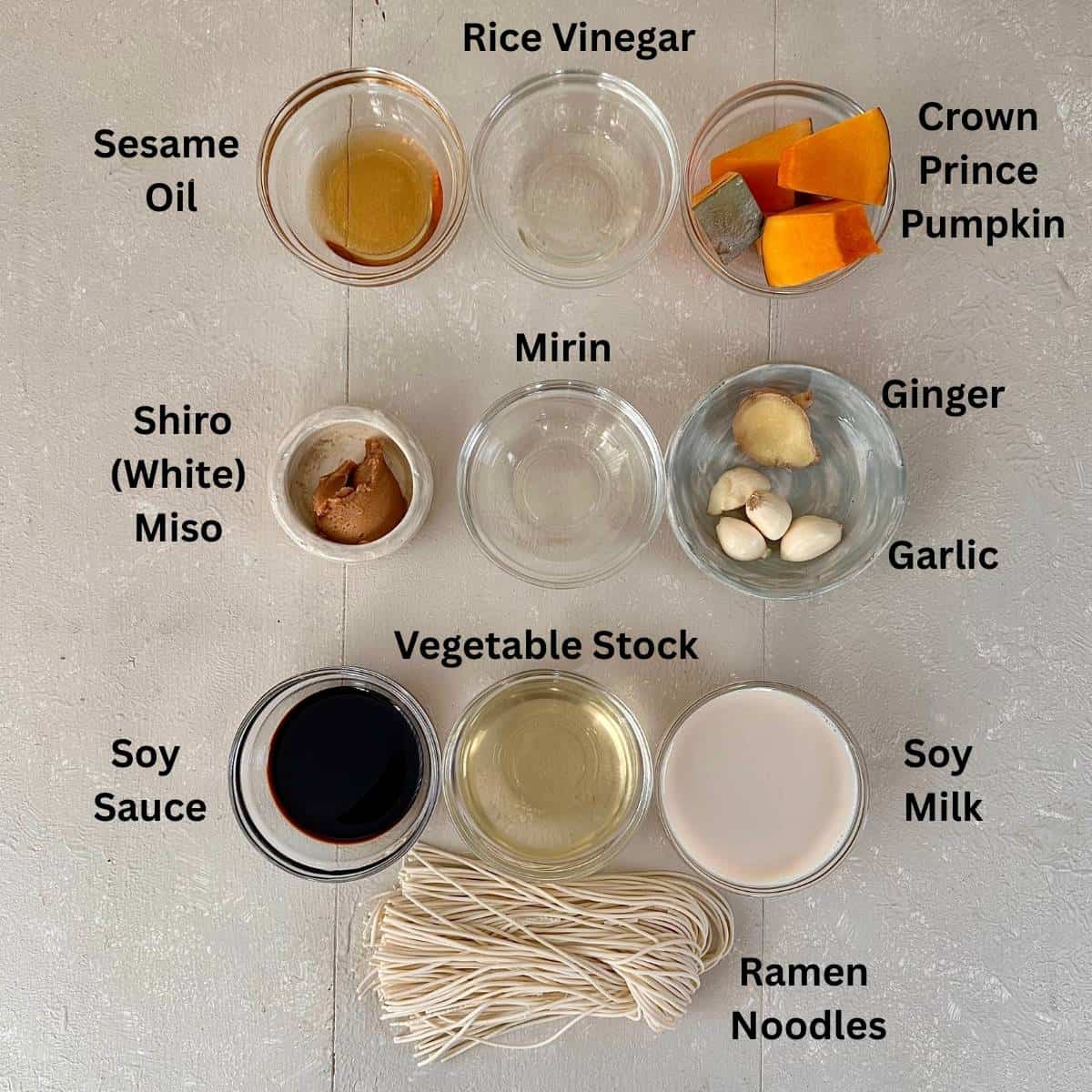
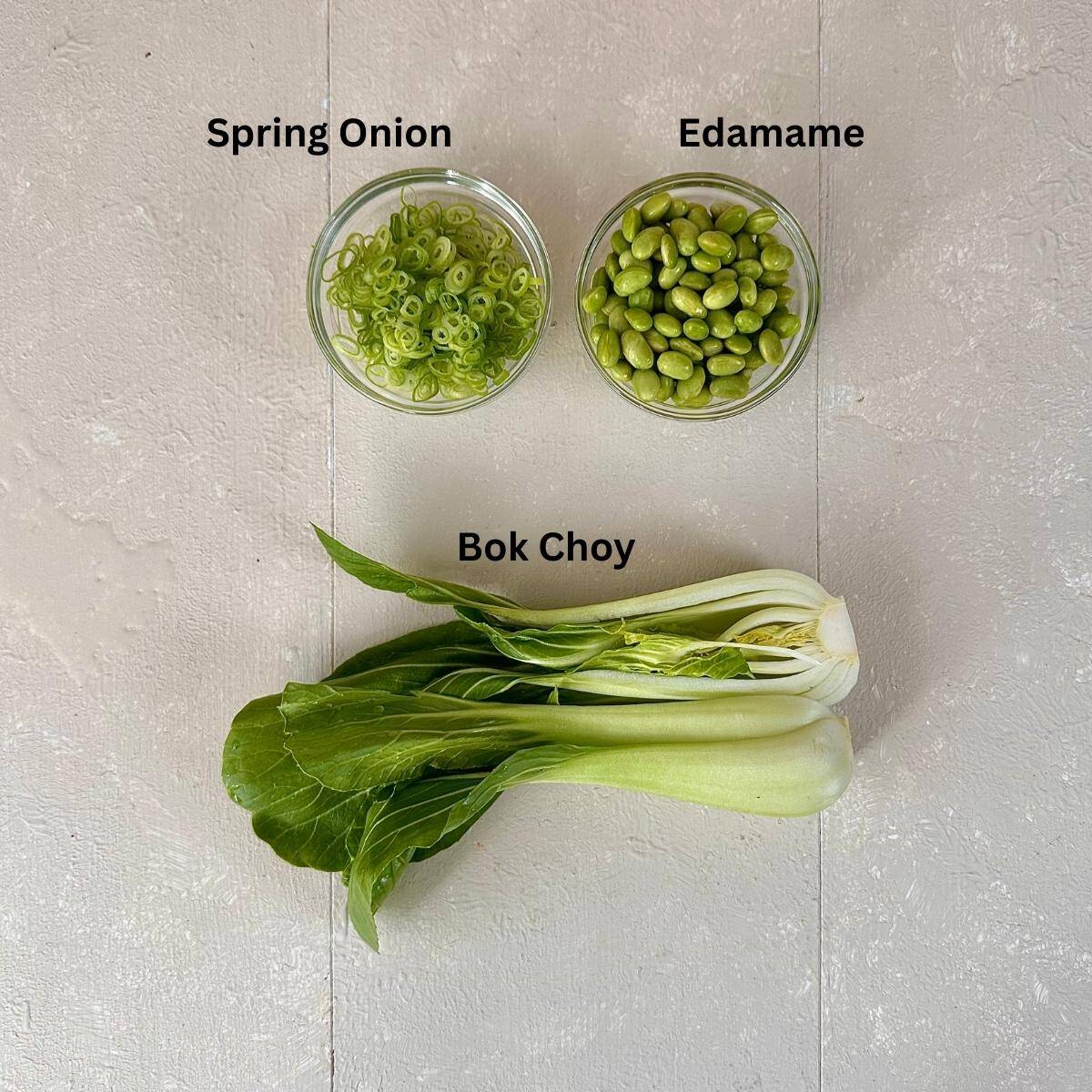
Garnish Ingredients
- Crown Prince Pumpkin - forms the backbone of the broth, giving it body and flavour. Roasting concentrates its natural sweetness. Visit my crown prince pumpkin galette recipe for more details on crown prince pumpkin and other pumpkins used in cooking.
- Garlic and ginger - provide savoury warmth and freshness, balancing the sweetness of the broth.
- Shiro (white) miso - Made from fermented soya bean and salt. Miso provides depth, savouriness and that essential umami character associated with ramen. I use white miso so as not to overpower the other flavours.
- Soy sauce, mirin and rice vinegar - Mirin is a sweet Japanese rice wine used in cooking. It adds a gentle sweetness to a dish. Rice vinegar is a mild vinegar made from fermented rice and adds brightness and acidity to the dish, helping keep the flavours balanced with the sweet elements.
- Vegetable stock - you can use shop-bought stock cubes or granules. Why not make your own? Check out my " How to Make Vegetable Stock Like a Chef " post.
- Sesame oil - used for its nutty aroma.
- Soy milk - adds creaminess to the broth.
- Ramen noodles - Wheat noodles that are chewy, typically served in savoury broths.
- Garnish elements -I used edamame to add a bit of protein, spring onion and radish for another layer of flavour.
See the recipe card for quantities.
How to Make Veggie Ramen with a Pumpkin and Miso Broth.
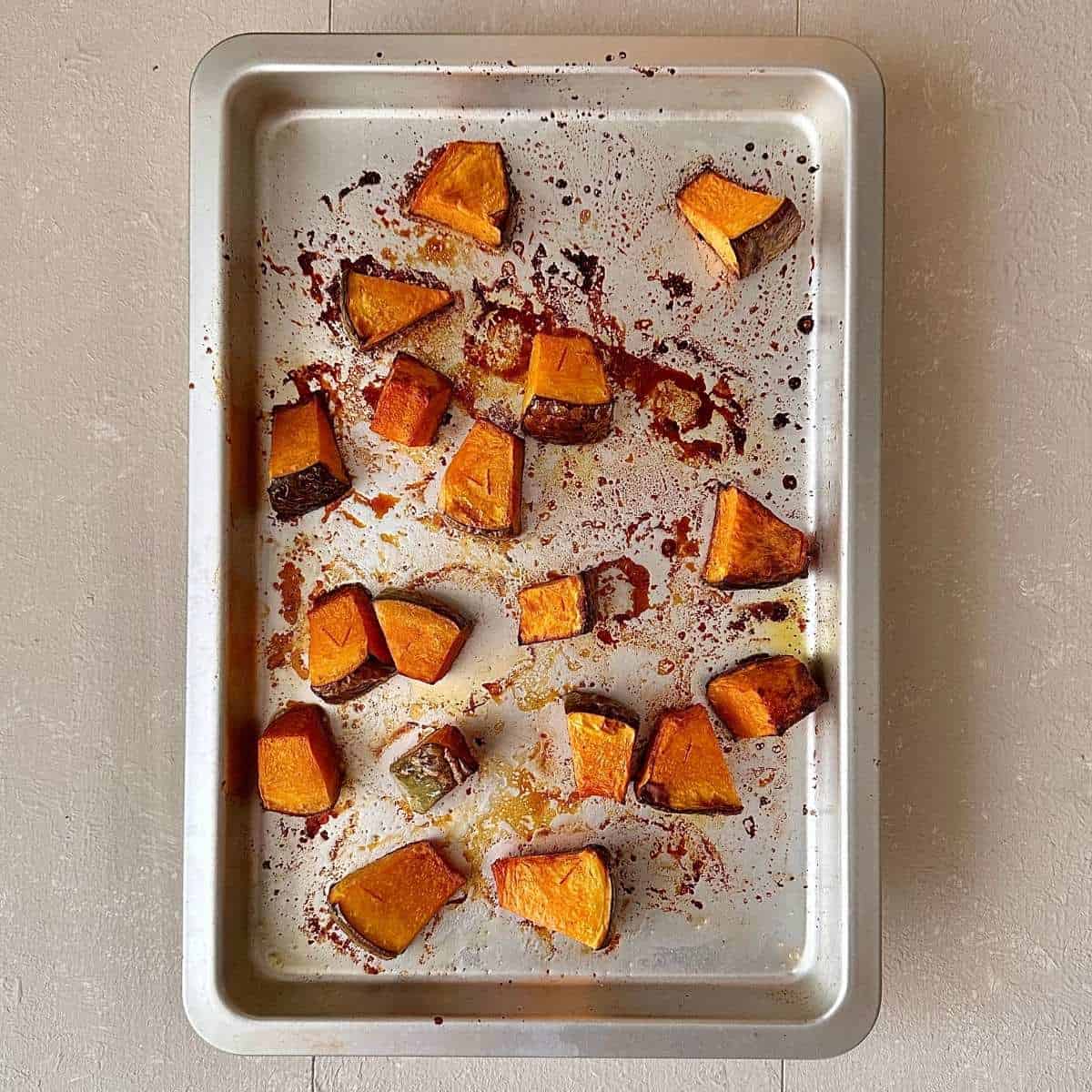
- Preheat the oven to 180ºC.
- Cut the pumpkin into large dice and place it onto a baking tray.
- Coat the pumpkin with the mirin, sesame oil and salt and pepper.
- Roast in the oven for 20 minutes, or until a knife can easily pierce the pumpkin.
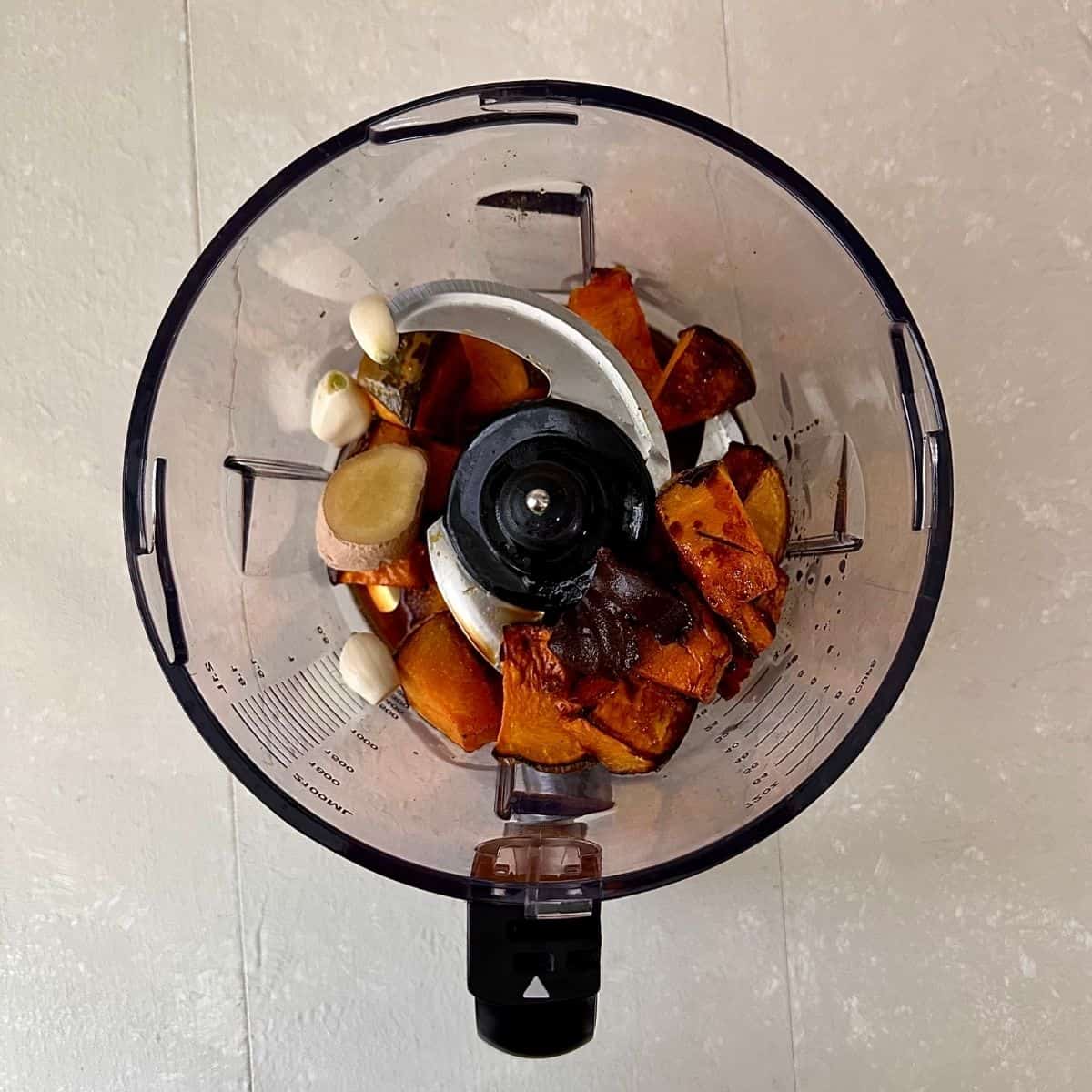
- Peel the garlic and wash the ginger, no need to peel.
- Add the pumpkin, garlic, ginger, miso paste, soy sauce, rice vinegar and 100ml of vegetable stock.

- Blend to a smooth puree.
Prepare the Garnishes
- Wash the spring onion, bok choy and radishes.
- Defrost the edamame in cold water and drain.
- Cut the bok choy in half lengthwise.
- Slice the radish thinly.
- Slice the spring onion wafer-thin, starting with the green end. Separate the green and white parts
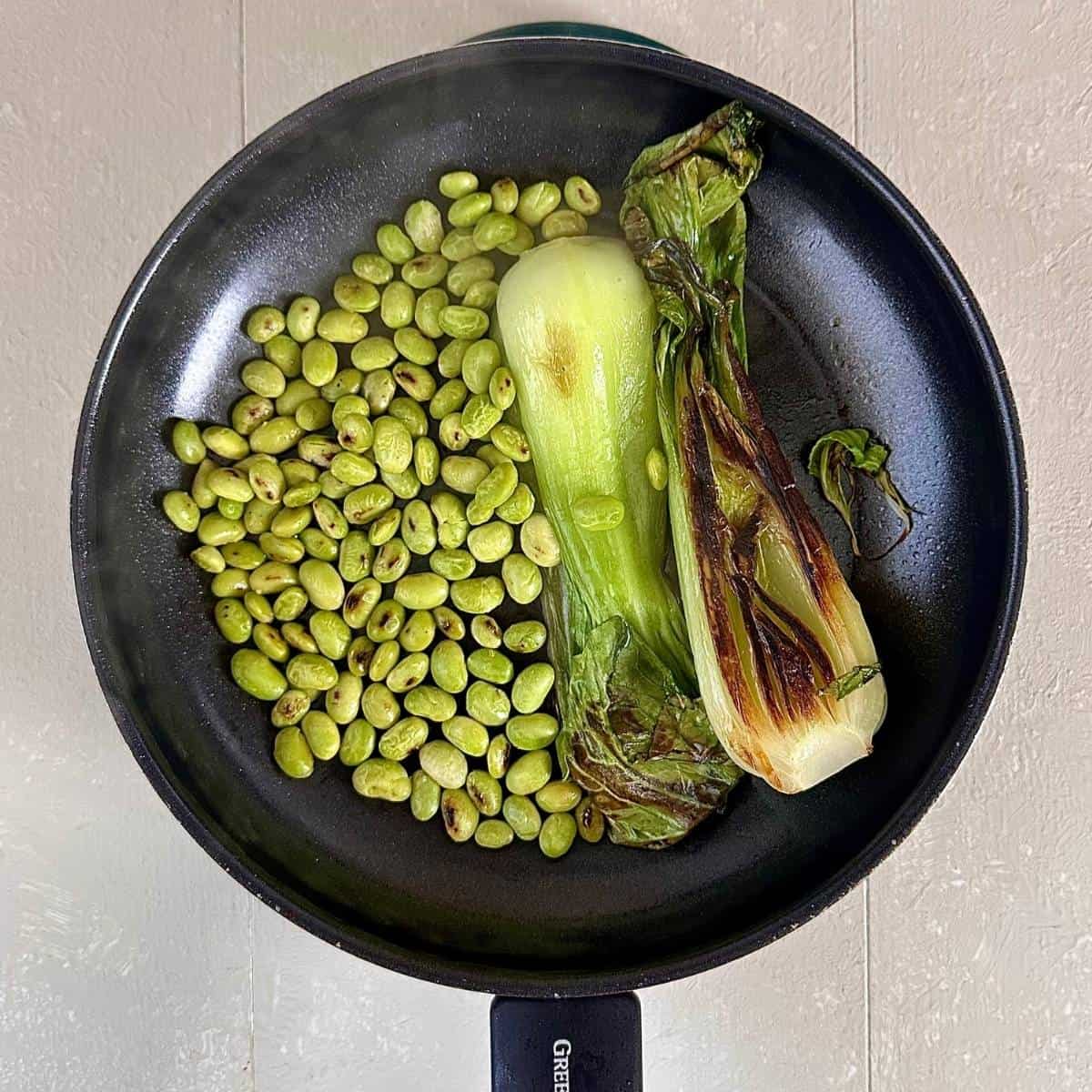
- Heat a frying pan over medium heat and add sesame oil. Sear the bok choy cut-side down.
- Once the bok choy starts to brown, add the edamame. Once it starts to brown, add a bit of water and quickly cover with a lid to steam the vegetables.
- Take off the heat and set aside. The vegetables will cook in the remaining steam.
Assembly
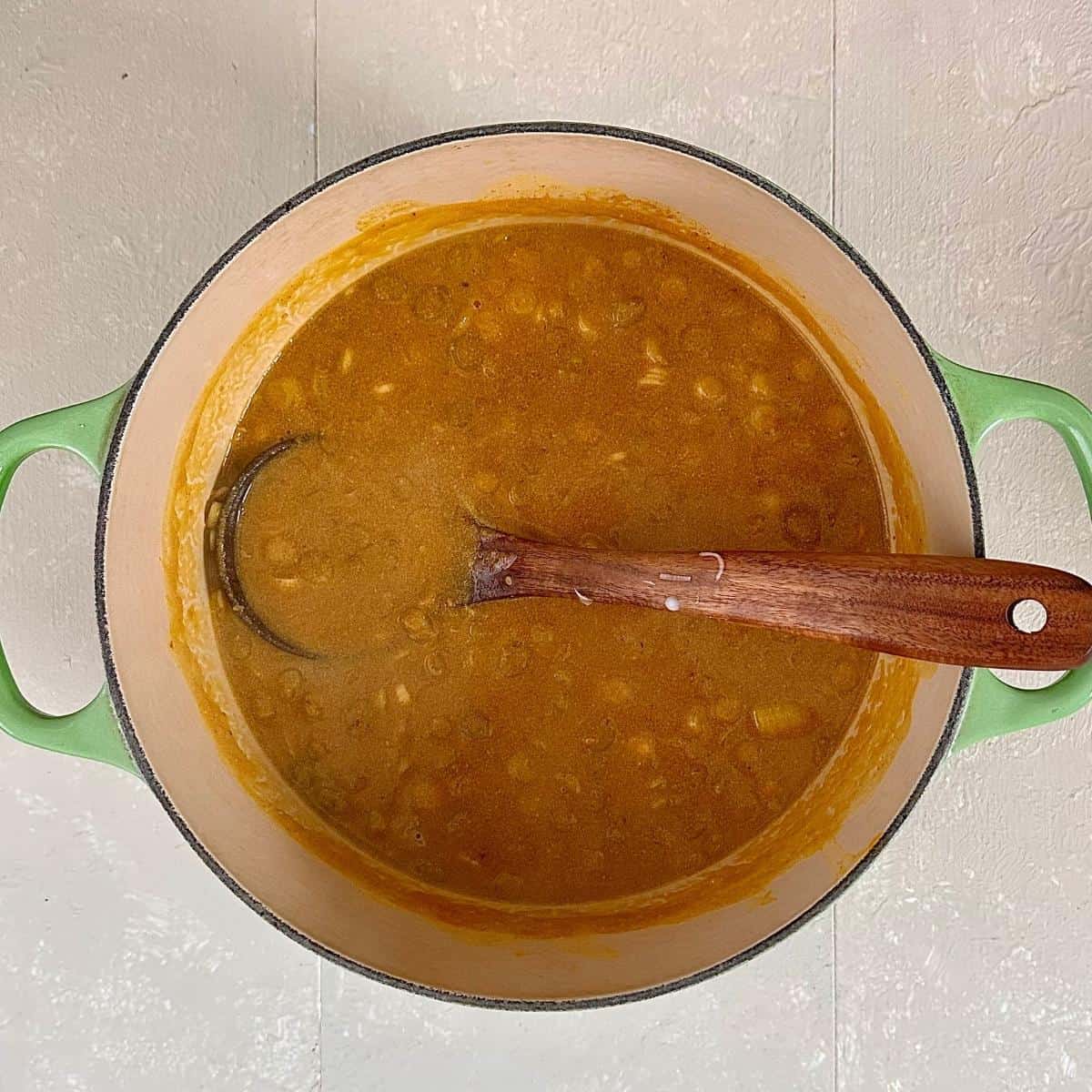
- In a pot, add the pumpkin puree and the remaining vegetable stock.
- Bring to a rapid boil and then reduce to medium-low heat.
- Add the green part of the sliced spring onion and the soya milk.
- Simmer and stir for one minute.
- Adjust the seasoning to your taste.
- Cook the ramen noodles according to the instructions on the packet.
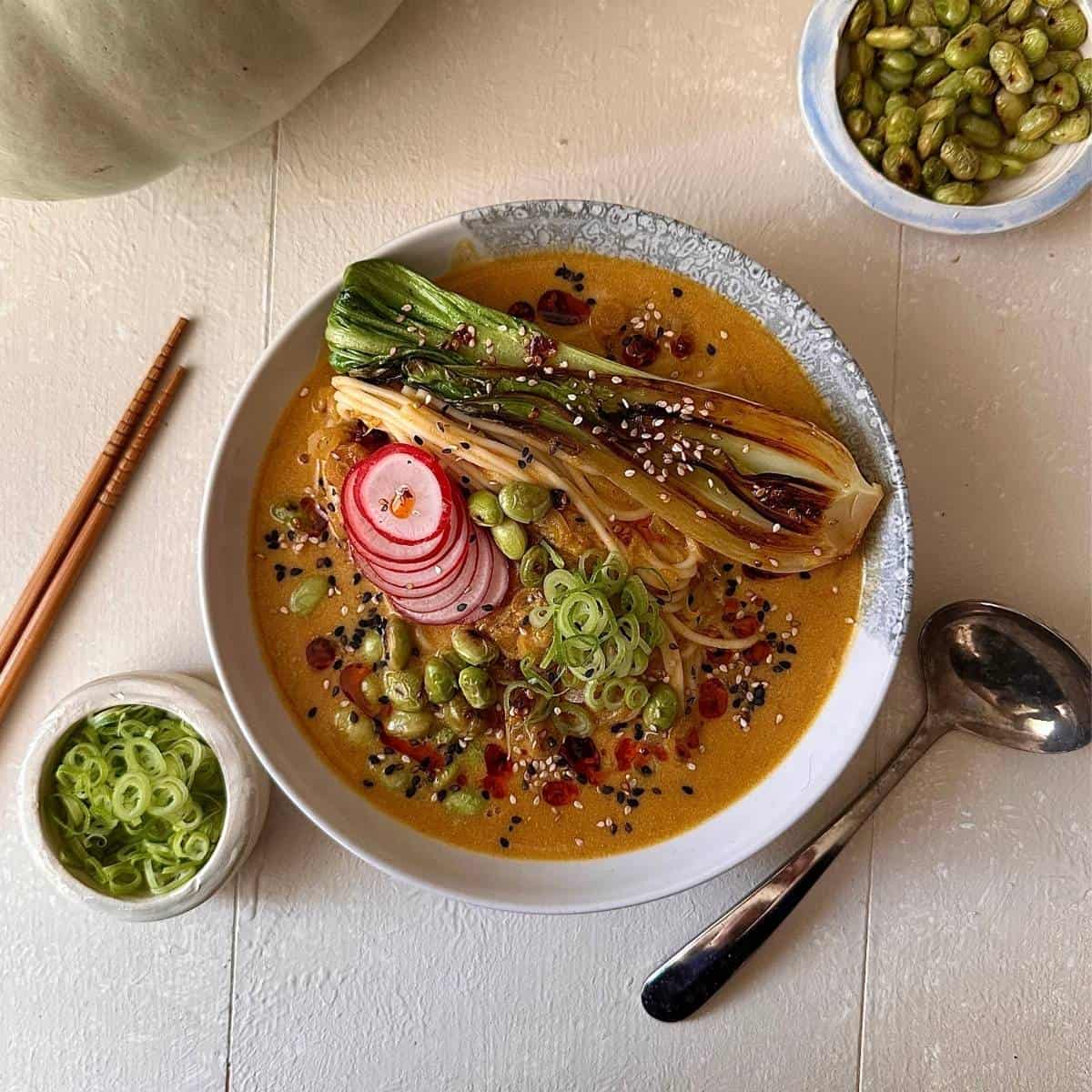
- Add the noodles to a bowl.
- Top with the pumpkin broth, then add the bok choy, edamame, spring onion, and radish.
Substitutions & Variations
You can replace the crown prince pumpkin with red kuri, kabocha, or any other pumpkin you have on hand.
You can use any type of miso, except hatcho, red, or barley miso. Red miso has a very strong flavour profile, and it doesn't work well with this recipe. Saikyo miso is a bit sweeter, and since the crown prince pumpkin is already sweet, I would recommend it.
You can replace mirin with a bit of sake.
Sesame oil can be used with any oil, except mustard oil.
The garnishes can be entirely replaced with whatever you have or would like to add. For example, eggs or tempeh, spinach or nori.
Soya milk can be replaced with oat milk, although it will alter the taste.
I have used vegetable stock; you can use dashi if not vegan.
Variations
A coconut milk-flavoured broth also works well, so instead of soya milk, add coconut milk.
Equipment
Equipment you will need for this recipe:
- Digital scales are recommended for accuracy of measurement.
- A baking tray to roast the pumpkin.
- A blender or food processor to make the broth puree.
Storage
The ready broth, cooked garnishes, and raw garnishes can be stored in the fridge for up to three days. Cook the noodles fresh, though.
The pumpkin puree can be stored in the fridge for up to three days. It can also be portioned and frozen for up to three months for later use.
Chef's Tips
To reduce the time spent making this recipe. I roast the pumpkin first, then chop the garnishes while it's roasting.
You can leave the skin on the pumpkin; it's edible!
Don't boil the pumpkin broth; bring it to a rapid boil, then immediately turn the heat down to medium-low, add the spring onion and soya milk, and turn off the heat. The pumpkin broth thickens quite a lot, so we don't want all the stock to evaporate.
FAQs
Yes, it is vegan ramen. I have used vegetable stock instead of dashi (a Japanese cooking stock typically made from fish and used in broths). Umami flavours come from the miso and soy-based seasoning instead.
Bok choy and spring onion are my favourites, but you can use pak choy, sweet corn, mushrooms, spinach or morning glory (also known as water spinach).
A basic white miso is best, as it adds depth of umami without being too strong, unlike red miso.
Yes. You can just make the puree and either keep it in the fridge or portion it and freeze it. The fully prepared broth can also be stored in the fridge and reheated when you are ready to make your ramen. The broth doesn't freeze well due to the soya milk.
Cook the noodles fresh.
No, unfortunately, the soya milk in the broth doesn't freeze well. When reheated, it splits.
📖 Recipe

Veggie Ramen with Miso and Pumpkin Broth
Ingredients
Ramen
- 425 g Crown prince pumpkin weight with seeds removed
- 1 tablespoon Mirin
- Blackpepper, a pinch
- ½ teaspoon Salt
- 10 g Garlic
- 10 g Ginger
- 2 tablespoon Sesame oil
- 600 ml Vegetable stock
- 1 tablespoon Shiro (white) Miso
- 1 tablespoon Soya sauce
- 2 tablespoon Rice Vinegar
- 150 ml Soya milk
- 400 g Ramen noodles
Garnish
- 60 g Edamame frozen
- 200 g Bok Choy
- 100 g Spring onion
- 4 Pink baby Radish
Instructions
Ramen
- Preheat the oven to 180ºC
- Cut the pumpkin into large chunks. Transfer to a baking tray.
- Add salt, black pepper, mirin, and 1 tablespoon of sesame oil to the pumpkin, and mix well. Roast in the oven for 20 minutes, or until you can easily insert a knife into the pumpkin.
- Peel the garlic and wash the ginger.
- Add the roasted pumpkin to a food processor/blender. Follow with the garlic, ginger, miso, soya sauce, rice vinegar and 100 ml of vegetable stock. Blend until you have a smooth puree.
The Garnish
- Wash the spring onion, bok choy, and radish, and pat them dry.
- Defrost the edamame in cold water and drain.
- Cut the bok choy in half, lengthwise, and set aside.
- Cut the radish into thin slices.
- Slice the spring onions wafer-thin, starting from the green side. Separate the green and the white parts.
- Heat the pan over a medium-high heat. Add sesame oil, then sear the boy choy, cut-side down. Once it starts to brown, add the edamame and a pinch of salt. Once they begin to char, add a little water and quickly cover to steam the vegetables. Turn off the heat and set aside, covered. The bok choy will cook in the remaining steam.
Assembly
- Cook the ramen noodles according to instructions on the packet.
- In a pot, add the pumpkin puree and the remaining vegetable stock and bring to a rapid boil while stirring. Reduce the heat to medium-low and add the green part of the spring onion and the soya milk. Stir and simmer for one minute, then adjust the seasoning to your taste.
- Add the noodles to the soup bowls. Top with ramen broth, then add the bok choy, edamame, radish, and spring onion. At this point, you can add whatever other garnish or protein you would like. Serve hot.
Nutrition
NOTES
Related Recipes
Looking for other recipes like this? Try these:

Food Safety
- Wash your hands regularly while preparing, handling and cooking food.
- Wipe down countertops and high-contact points regularly.
- If you cook meat and fish, do not use the same utensils on cooked food that previously touched raw meat. Use separate chopping boards for meat and fish. Wash your chopping boards immediately after use.
- Cook food thoroughly to a minimum internal temperature of 165 °F (74 °C).
- Don't leave food at room temperature for extended periods (more than 2 hours).
- Store food correctly.




Leave a Reply