

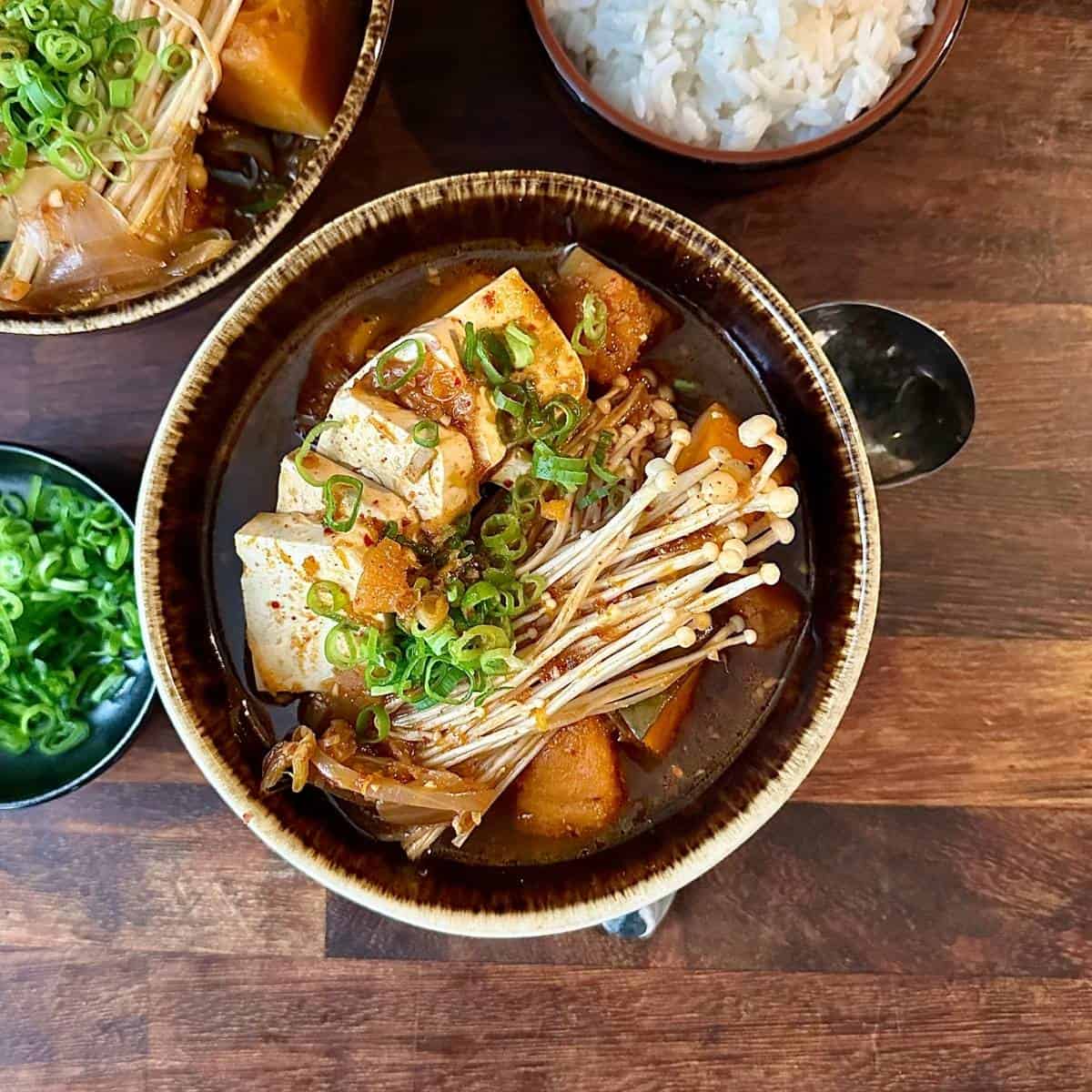
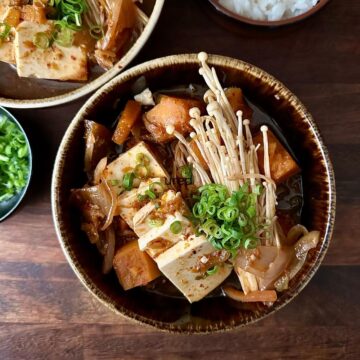
The Korean word jjigae translates to "stew" on Western menus, but think of this recipe as halfway between soup and stew - lots of solid ingredients in a broth, and substantial enough for a main meal with a side of rice. This vegan kimchi jjigae is built around sweet crown prince pumpkin, silky tofu, delicate enoki mushrooms, and the deep umami and spice of fermented kimchi, gochujang, and gochugaru. It is warming, spicy and rich in plant protein and gut-friendly probiotics. Nourishing and deeply comforting; what more could you ask for?
If you enjoy bold, broth-led comfort dishes like this, you might also like my veggie ramen for a noodle based take on the same layered umami.
Why You'll Love this Veggie Kimchi Jjigae
- Deep umami flavours from the fermented kimchi, gochujang and soy sauce.
- Naturally sweet balance from the crown prince pumpkin.
- Plant protein from the tofu.
- Light like a soup, but substantial enough to be a meal on its own.
- Gut-friendly thanks to the fermented kimchi.
- Vegan and dairy-free with distinctive Korean flavours.
Jump to:
Key Ingredients & Notes
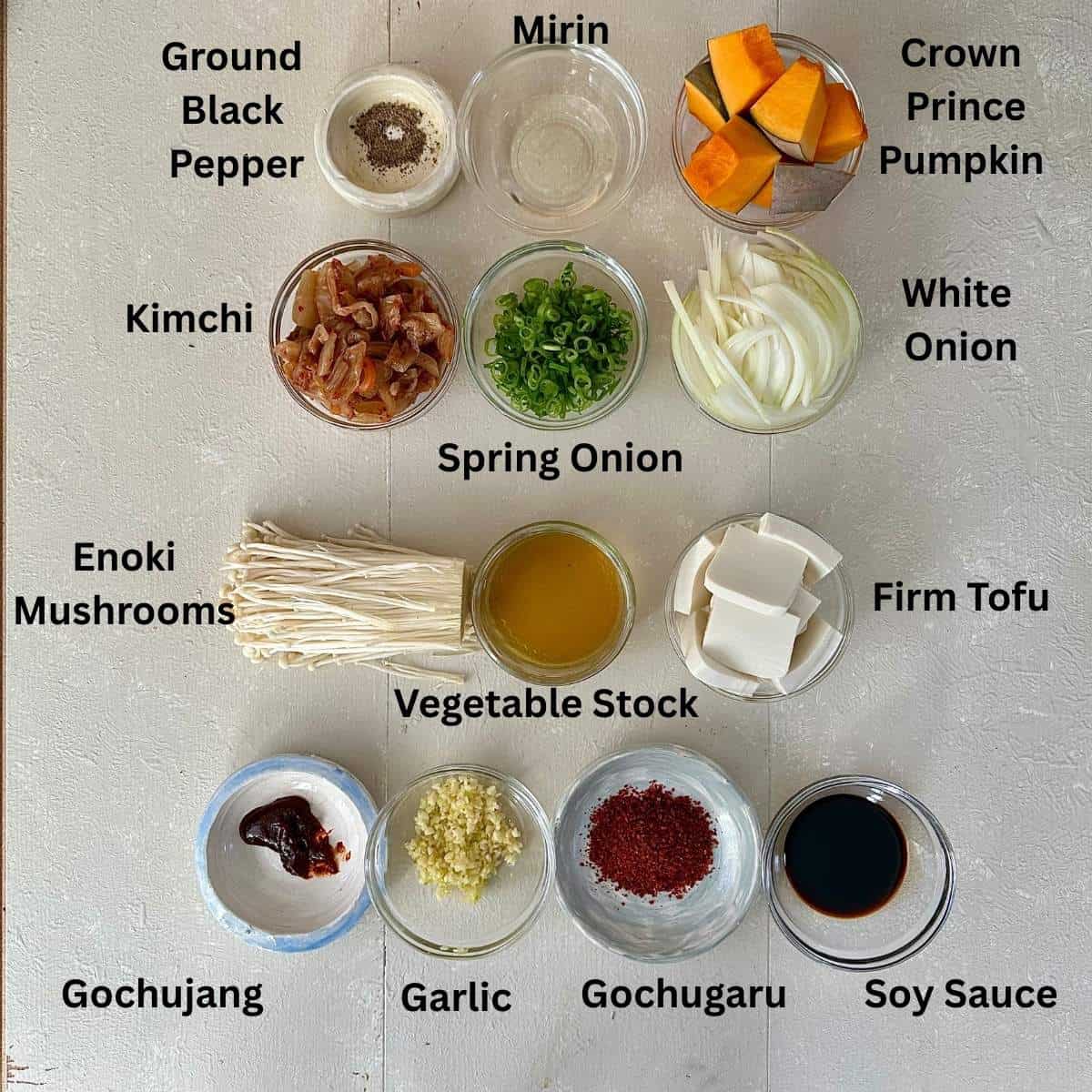
- Mirin - A traditional Japanese cooking wine made from rice, rice koji (fermented rice) and alcohol. It is sweet and adds a delicate depth of umami.
- Kimchi - Fermented cabbage and carrots. Low-calorie but flavour intense. It is tangy and spicy, and the fermentation makes it deeply savoury (umami-rich) as well. Kimchi is naturally probiotic, supporting gut health. Also try my Kimchi white bean stew.
- Crown Prince Pumpkin - Jjigae comes in many forms, often made with pork or beef, but can be vegetarian or vegan. I love Crown Prince Pumpkin for its naturally sweet flavour and melt-in-the-mouth texture.
- White onion and spring onion - These add a base layer of flavour. The sweetness of the white onion complements the crown prince pumpkin. Spring onion is a common addition to jjigae.
- Enoki mushrooms - these delicate mushrooms add visual elegance to this dish. Their flavour is gentle, savoury and does not compete with the kimchi and other flavours. They carry the broth well, too.
- Vegetable stock - Forms the foundation of the broth. You can make your own vegetable stock, or use stock cubes.
- Firm tofu - commonly found in jjigae, this adds a plant protein to the dish and provides a cooling contrast to the spicy broth.
- Gochujang, garlic, gochugaru, and soy sauce - together, they give the broth its lovely savoury spiciness. Gochujang and gochugaru are Korean chilli ingredients. Gochujang is a thick, fermented chilli paste made from red chilli powder, glutinous rice, fermented soy bean and salt. Gochugaru is a sun-dried chilli flakes ground to a powder. Used together, they give a spectrum of chilli flavour - not just heat (gochugaru alone) but also fermented sweetness (gochujang)
See the recipe card for quantities.
How to Make Vegan Kimchi Jjigae
Prepare the ingredients (see the ingredients photo above):
- Finely slice the onion.
- Finely slice the spring onions. Separate the green parts from the white parts.
- Remove the bottoms of the enoki mushrooms and separate them into smaller bunches.
- Cut the tofu into rectangular slabs 1cm thick.
- Finely chop the garlic.
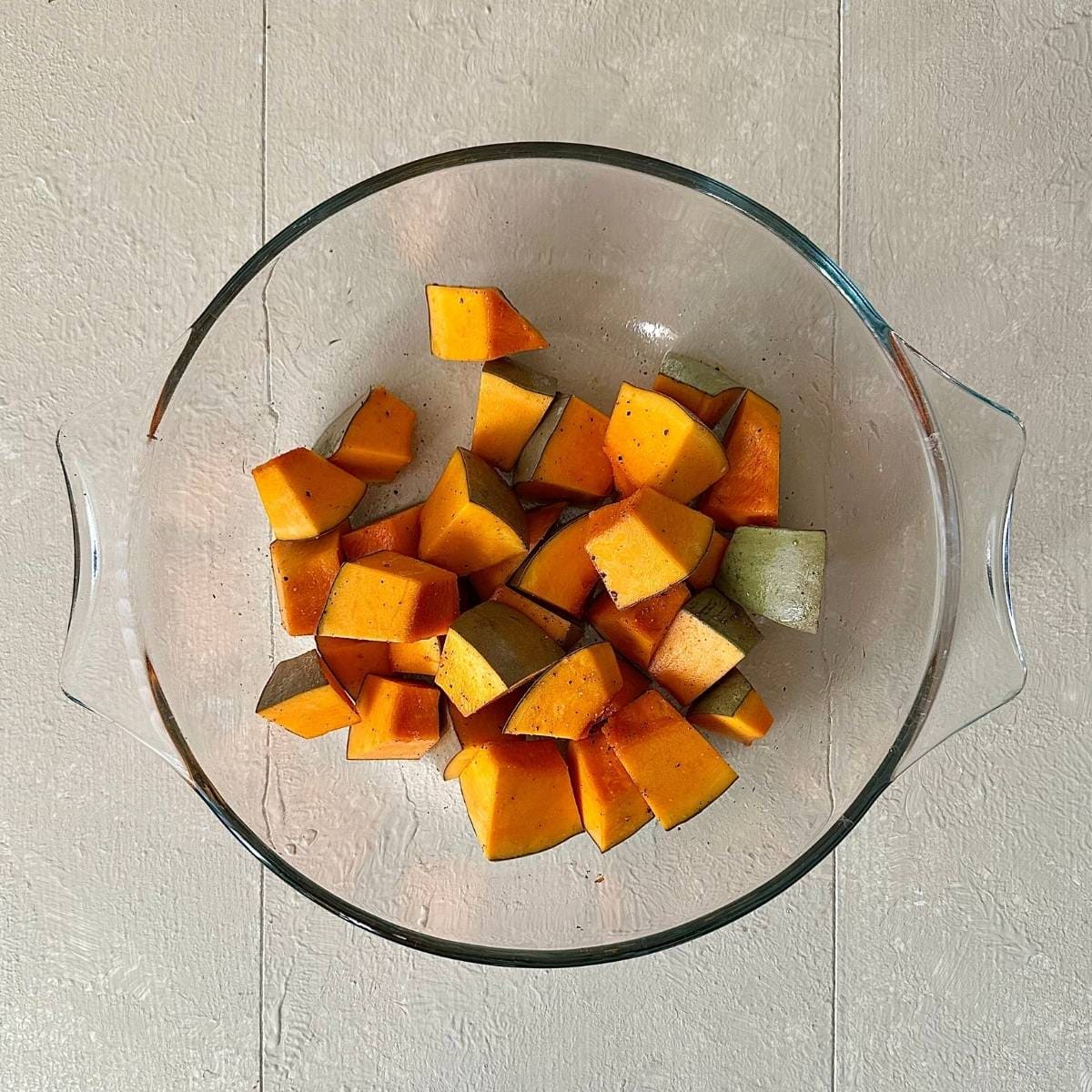
- Cut the crown prince pumpkin into small chunks and place them into a bowl.
- Marinate the pumpkin with mirin and black pepper. Set aside.
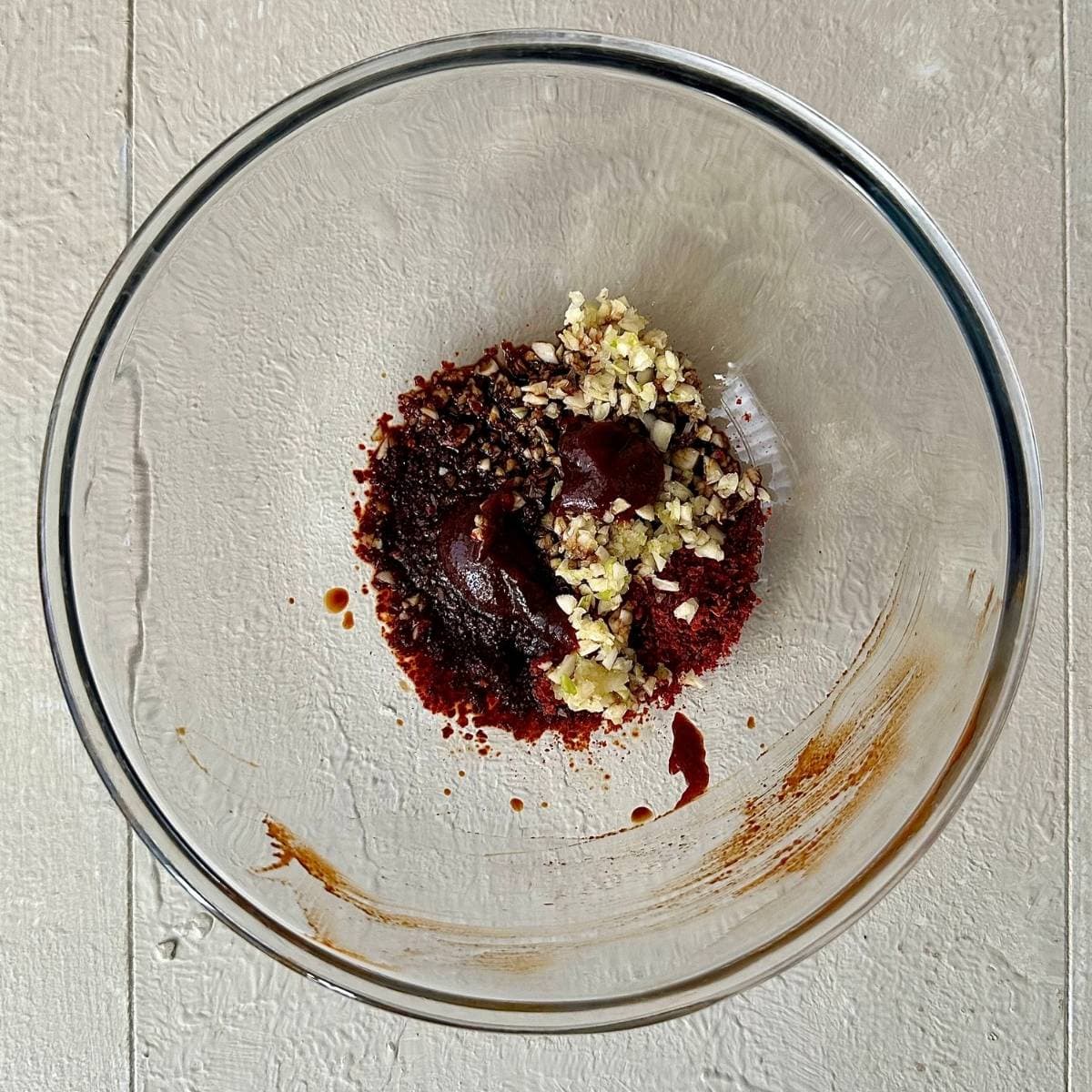
- In a bowl, add the finely chopped garlic, soy sauce, gochujang and gochugaru. Mix together.
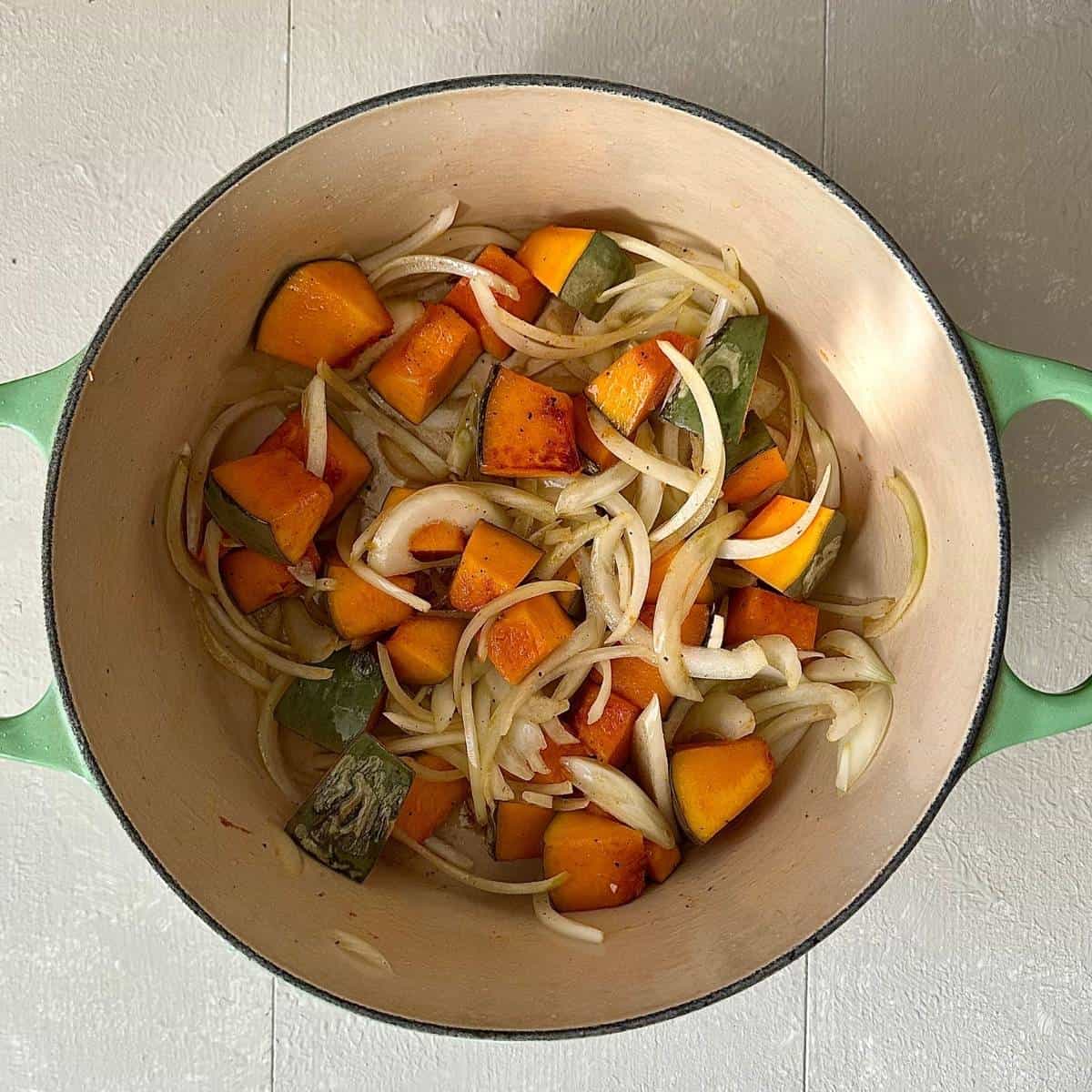
- In a heavy-bottomed pot, heat the oil over a medium heat. Cook the marinated pumpkin for about 5 minutes until it browns slightly.
- Add the sliced onion and sauté for a further 5 minutes, until soft.
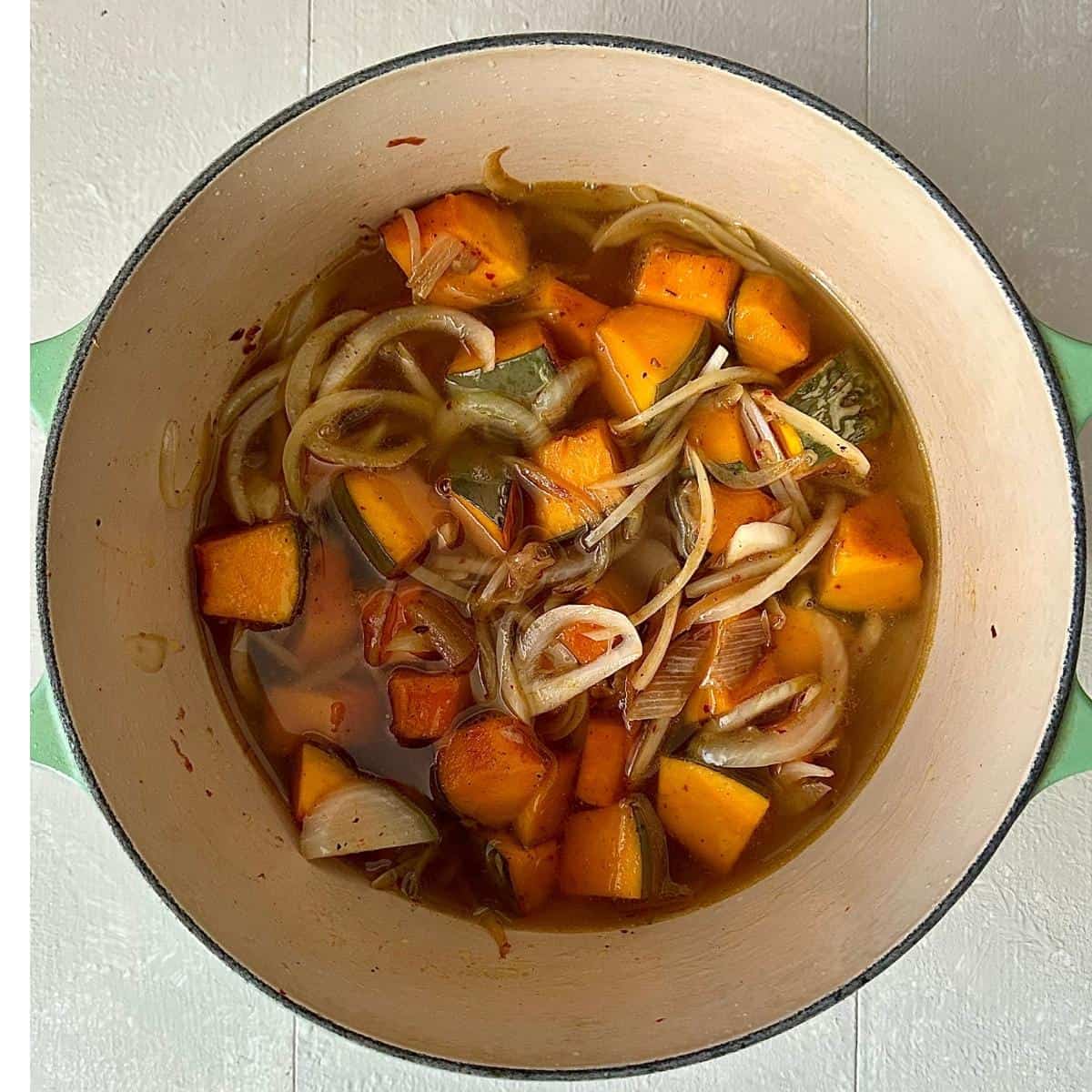
- Next, add the kimchi and sauté for 2 minutes.
- After 2 minutes, add the vegetable stock. Cover and bring to a boil.
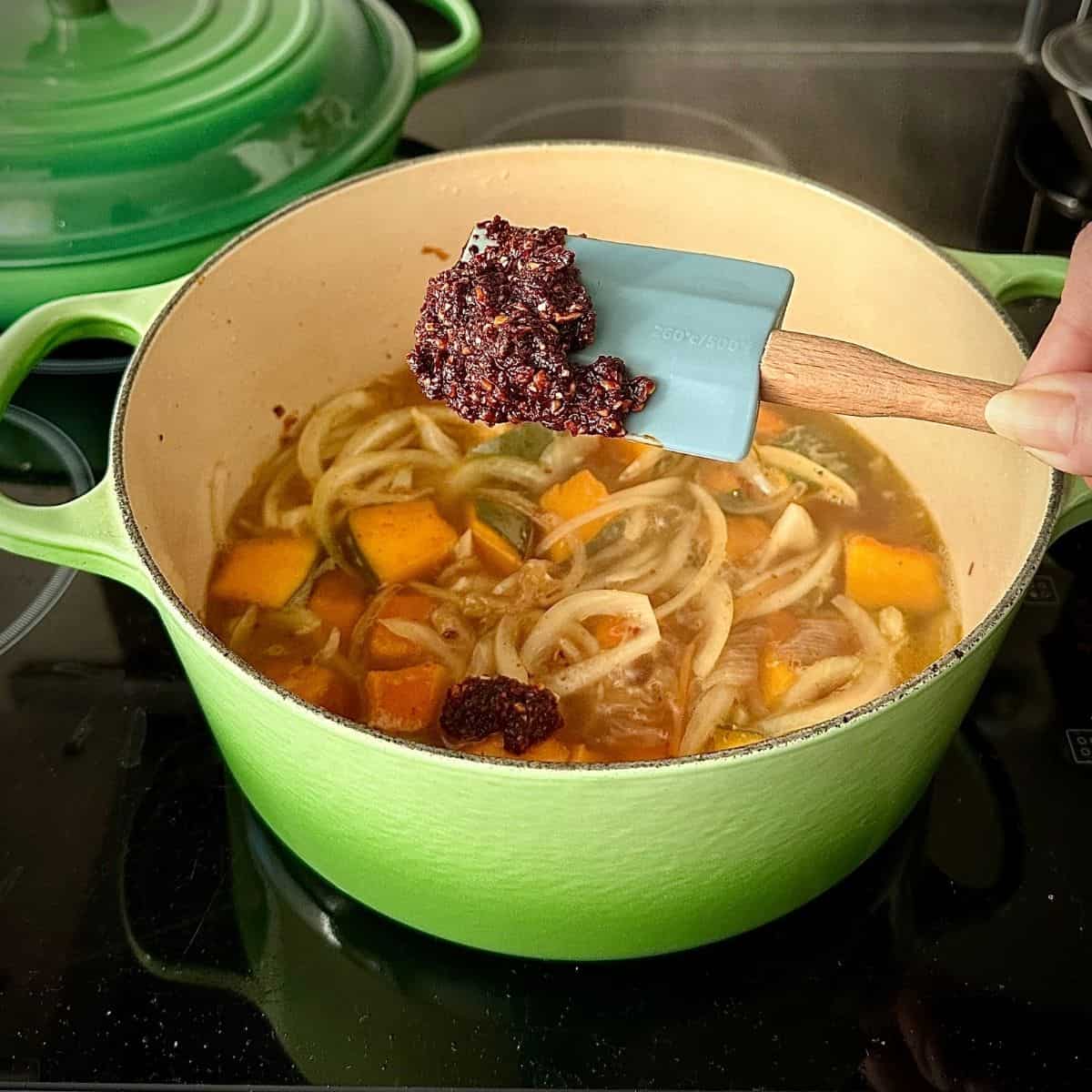
- Once boiling, reduce to a simmer and add the jjigae base.
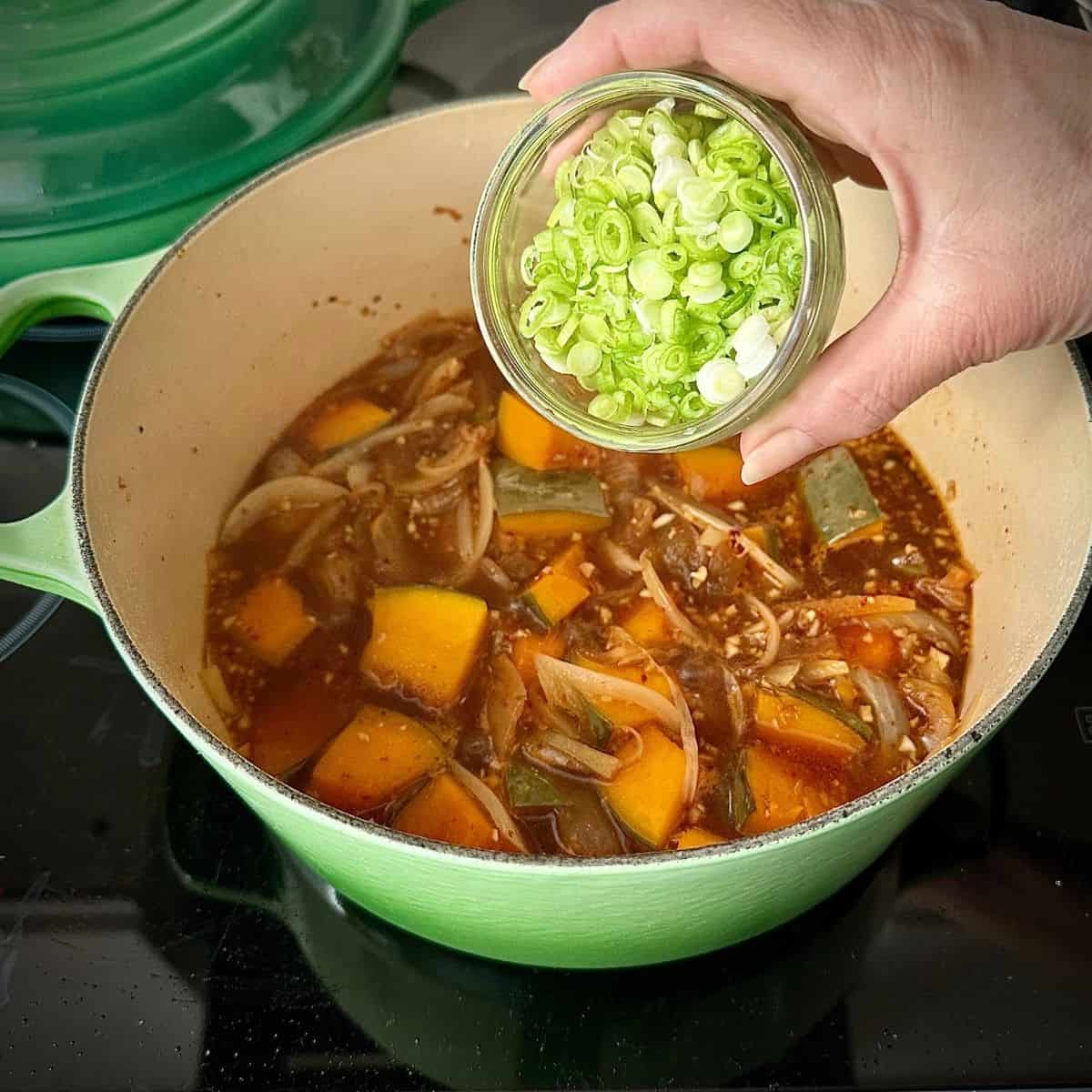
- Then add the white part of the chopped spring onion.
- Reduce to a simmer.
- Cook for 5 minutes, or until the pumpkin is soft and a knife can be inserted into it.
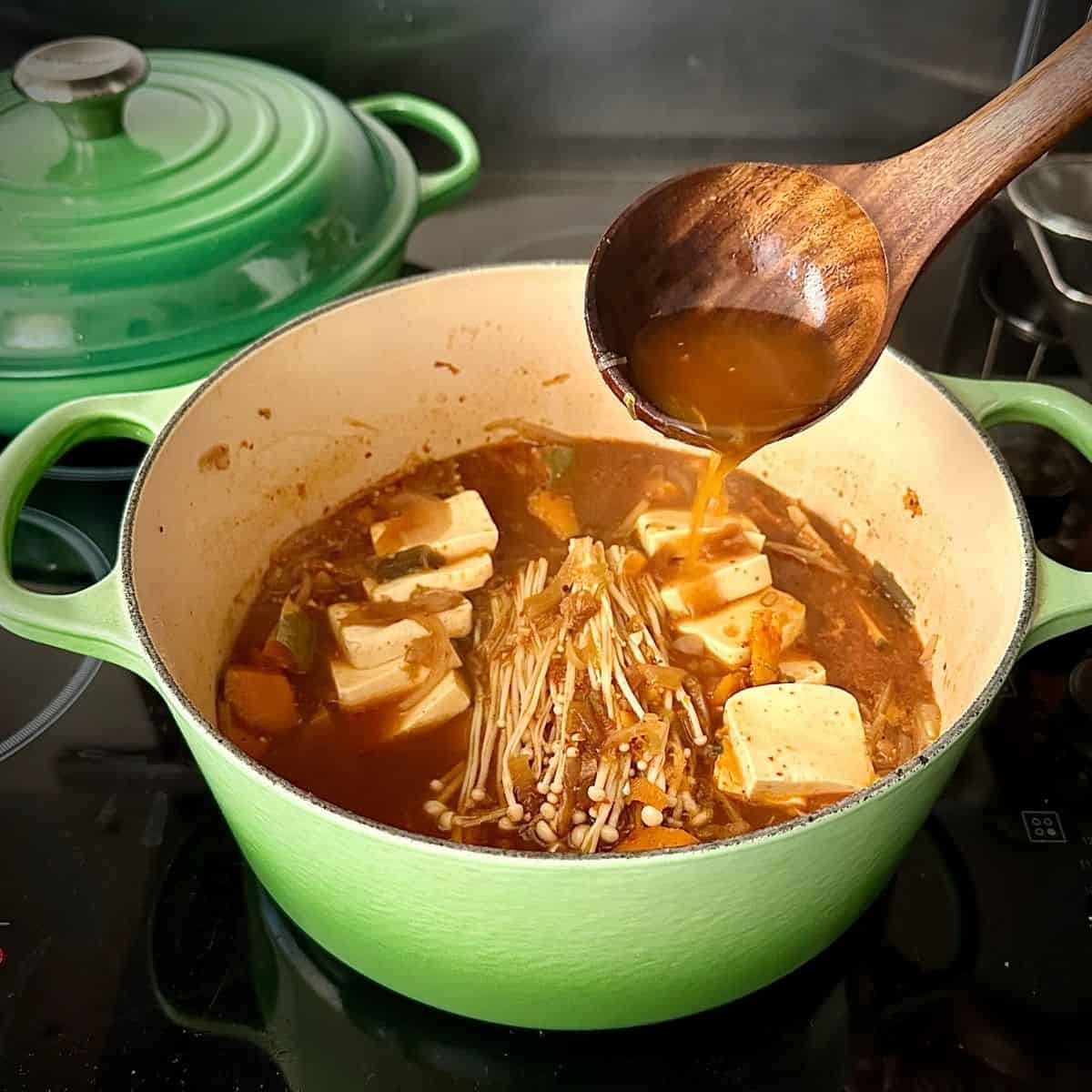
- Finally, add the tofu and cook, covered, for 5 minutes. Then add the mushrooms; they are delicate, so turn the heat off and let them cook in the residual heat.
- Spoon some hot stock over the mushrooms to add flavour.
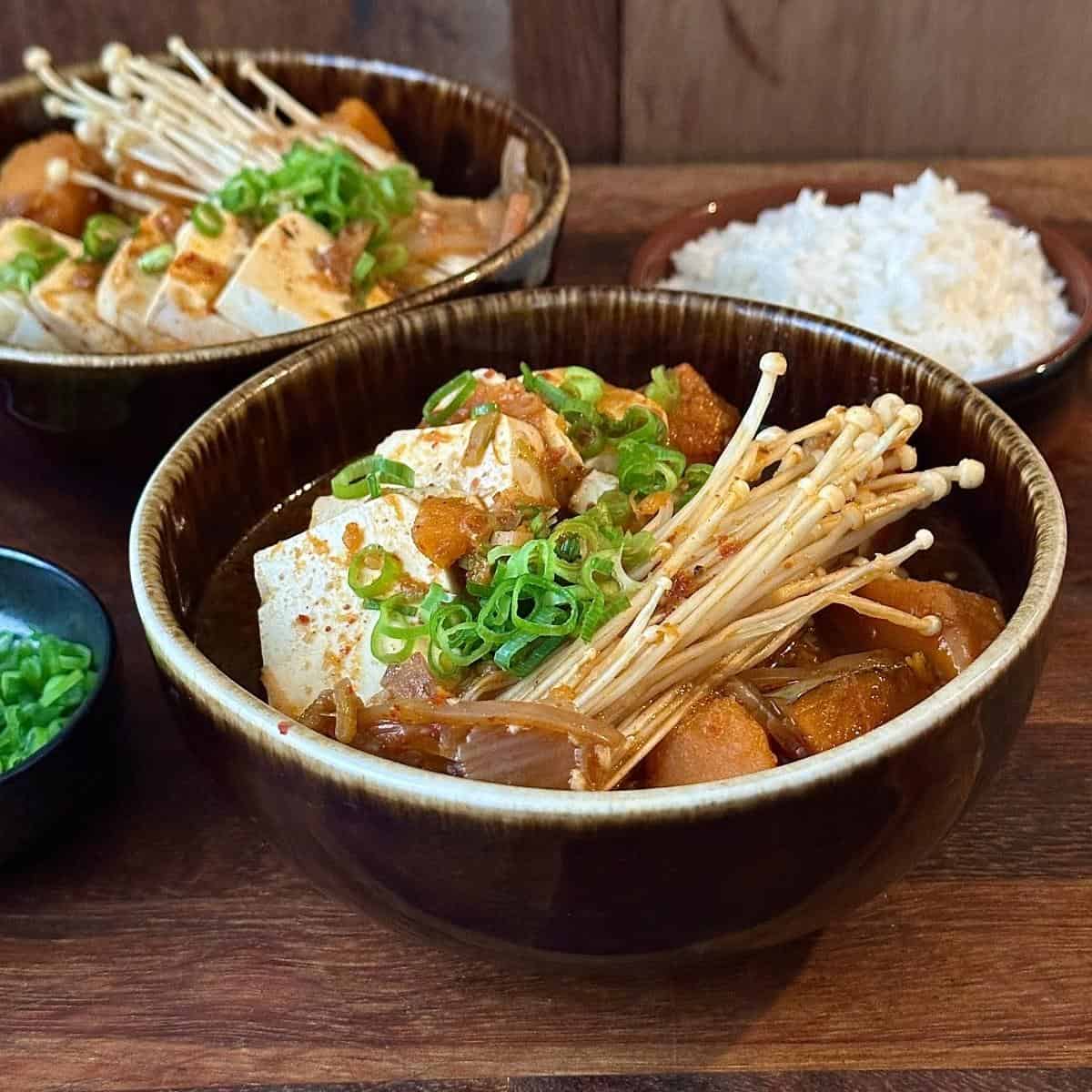
- To serve, spoon some of the stock and pumpkin into a bowl, then layer with the tofu and finally the enoki mushrooms.
- Garnish with the green parts of the chopped spring onion.
- Serve hot with steamed rice.
Substitutions
Crown Prince pumpkin can be replaced with Red Kuri squash or any other pumpkin or squash; the taste will change a bit, as Crown Prince is sweeter than most pumpkins. The idea behind adding pumpkin, besides its flavour, is to provide something substantial to replace pork or beef.
You can replace enoki mushrooms with either chestnut, white button, or oyster mushrooms. The cooking time for these mushrooms will be a bit longer, so you can put them in the same time as the tofu. I love the aesthetic of enoki mushrooms, though.
I have used tofu as the protein; you can replace that with boiled eggs. Just boil the eggs for 7 minutes, cool, peel, and halve them, then add them directly into your bowl.
Variations
If you want to make this soup a bit more substantial, you can add some boiled noodles.
Although gochujang is a classic jjigae ingredient, if you prefer, you can try this recipe with red miso, substituting the gochujang's spice for the miso's umami.
Equipment
This soup is best made in a clay pot (ttukbaegi), which actually enhances the dish's quality thanks to its physical properties. I didn't have one (and I doubt many of you do either), so I used a heavy-bottom cast-iron pot. You can make it in a stainless steel pot, too. What matters with this dish is steady, even heat and good heat retention.
Storage
This jjigae is best eaten fresh, but you can store it in the fridge in an airtight container for up to three days. Before consuming, bring it to a rapid boil and serve immediately.
Top Tip
Enoki mushrooms are delicate, so add them right at the end and turn off the heat immediately, letting them cook gently in the residual heat. Pour the hot stock over the mushrooms to add flavour.
If you want to peel the squash (which is not required), just bake it at 180ºC for 5 minutes, and the skin will be easier to peel.
FAQs
Kimchi jjigae is a beloved Korean comfort food dish. It is a stew/soup made with fermented kimchi, simmered in a rich, spicy broth and accompanied by tofu, spring onions and perhaps mushrooms or pork. In this vegan version, I have used Crown Prince pumpkin, firm tofu, and enoki mushrooms as the solids.
In Korean, "jjigae" means stew, whereas "guk" means soup. Admittedly, this dish could pass as either. Characteristics that make it more stew-like than soup-like include a high ratio of solids to liquid, in this recipe - pumpkin, tofu, kimchi, and enoki mushrooms. It has a concentrated, intensely flavoured broth, and it is traditionally served with rice, making it a main dish, not a starter.
Yes, my version of kimchi jjigae is vegan. If you use vegetable stock cubes, make sure you check the ingredients are vegan.
Kimchi jjigae is a cacophony of flavours and a delight to the palate. Its distinguishing feature is its deep, savoury umami flavours from the broth and kimchi, with sweet elements from the pumpkin to balance. The Gochujang and gochugaru give it some spicy heat.
From a nutritional standpoint, kimchi jjigae offers a lot. The probiotic benefit comes from the kimchi. It is relatively low in fat but very flavourful and filling. The tofu introduces a good helping of plant protein, too. Enoki mushrooms, kimchi cabbage, garlic, and spring onions provide micronutrient benefits. One thing to be aware of, though, is the sodium content, as there are a few salty elements in this recipe.
Yes, reduce the amount of gochugaru, the Korean chilli that provides the main heat in the dish.
An essential accompaniment to kimchi jjigae is hot, steamed rice to mix into the stew. This soaks up the broth, cools it down, and makes it a meal in itself.
Related Recipes
If you like stews and broths, check out these recipes of mine:

📖 Recipe
Veggie Kimchi Jjigae (Vegan Korean Kimchi Stew)
Equipment
Ingredients
Pumpkin
- 450 g Crown prince pumpkin seeds removed
- 1 tablespoon Mirin
- One pinch Ground black pepper
Other components
- 2 tbsp Olive Oil
- 100 g Kimchi
- 140 g White onion
- 60 g Spring onion five nos
- 100 g Enoki mushroom
- 300 g Firm tofu
- 750 ml Vegetable stock
Jjigae base
- 1 tablespoon Gochugaru
- 2 tablespoon Soya sauce
- 1 teaspoon Gochujang
- 10 g Garlic
Instructions
Pumpkin
- Wash, pat dry and cut the pumpkin into small chunks. No need to peel the skin.
- Marinate the pumpkin with the mirin and black pepper. Set aside.
Other Solid Ingredients
- Peel and thinly slice the onion.
- Wash, pat dry and finely slice the spring onion. Separate the white and green parts into separate bowls.
- Remove the bottom part of the enoki mushrooms and separate into smaller bunches.
- Remove the tofu from the packaging, drain the water and transfer to a chopping board. Cut the tofu block lengthwise, then cut into about 1cm slabs.
Jjigae Base
- Finely chop the garlic.
- In a bowl, add the gochugaru, gochujang, chopped garlic and soya sauce. Mix to combine.
Cooking
- In a heavy-bottomed pot, heat the oil over medium heat. Cook the marinated pumpkin for about 5 minutes, until it starts to take on a bit of colour.
- Reduce the heat to medium, add the sliced onions, and sauté for about 5 minutes, until soft.
- Now add the kimchi and saute for a minute or two. Then add vegetable stock, cover and bring to a boil.
- Once it comes to a boil, lower the heat to a simmer. Now add the jjigae base and the white part of the spring onion. Continue to simmer, covered, for about 5 minutes, or until the pumpkin is soft and can be cut through with a knife.
- Now add the tofu and mushrooms. Turn off the heat and simmer, covered, for 5 minutes over the dying heat.
- Serve hot, garnished with the rest of the spring onions and sticky rice.
Nutrition
Food Safety
- Wash your hands regularly while preparing, handling and cooking food.
- Wipe down countertops and high-contact points regularly.
- If you cook meat and fish, do not use the same utensils on cooked food that previously touched raw meat. Use separate chopping boards for meat and fish. Wash your chopping boards immediately after use.
- Cook food thoroughly to a minimum internal temperature of 165 °F (74 °C).
- Don't leave food at room temperature for extended periods (more than 2 hours).
- Store food correctly.




Karen Yoshida says
I didn’t have pumpkin, so I use butternut squash and instead of enoki I use ordinary mushrooms. And the stew was delicious, specially on a cold day. Imagine if I had the pumpkin. I think it would be even better 😋
Chef Tripti says
Well there's always the next time