

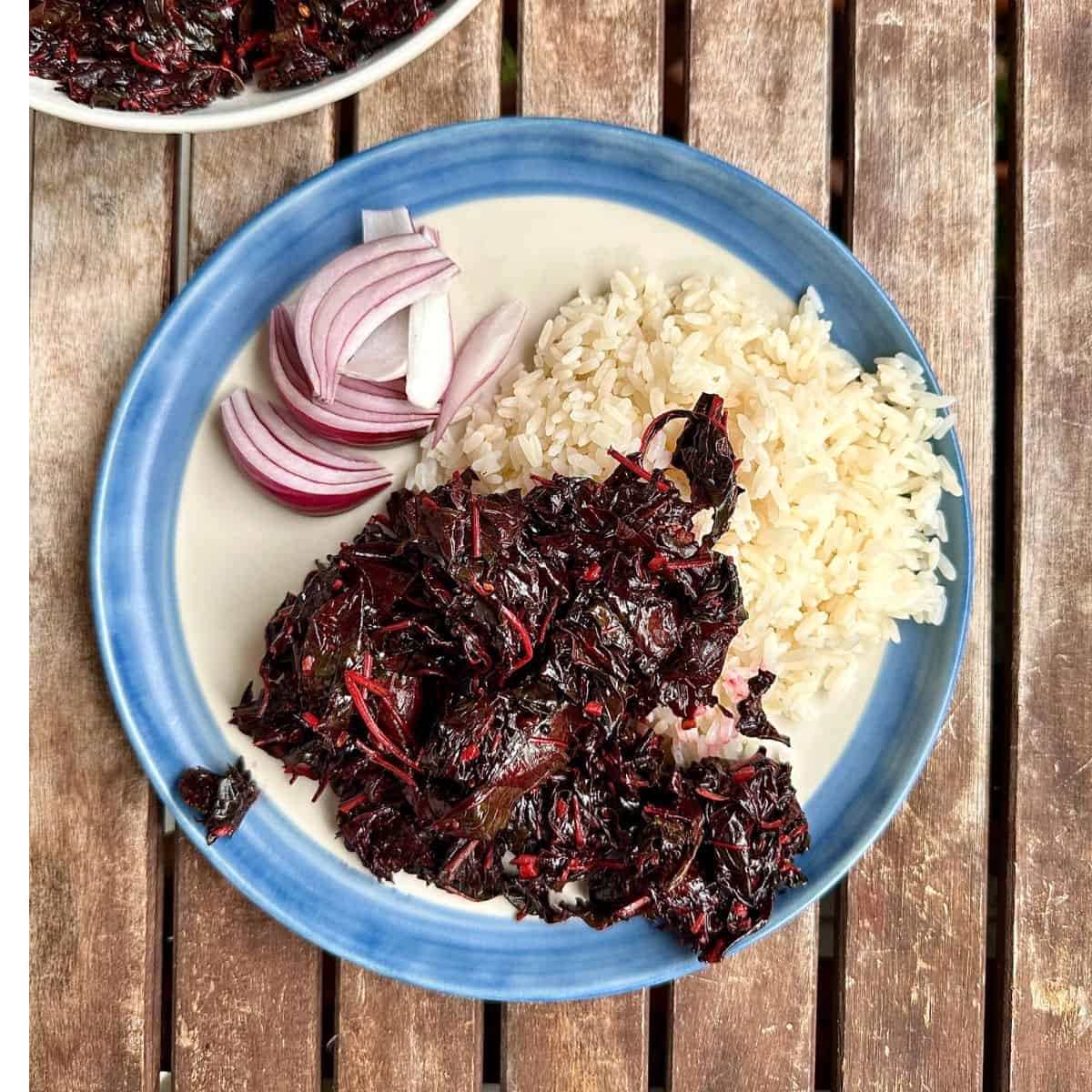
Lal saag with steamed rice is my absolute favourite quick meal. Lal saag means red leafy vegetables; it's the Indian name for red amaranth leaves. I absolutely love it stir-fried with garlic and panchphoran. Panchphoran is a mix of five whole spices. Red amaranth is also known as red spinach, chaulai and laal shaak.
Panchphoran is a spice mix of five whole spices: fennel, black mustard seeds, cumin, fenugreek, and nigella seeds. Although it's most commonly used in eastern India, a few other states use it too. Panchphoran, mustard oil, and kala namak together give this saag a distinct flavour base.
It's easy to make, just a few ingredients and one pan. Nothing goes to waste as the stems and leaves go into the pan. You can eat it as a quick meal served with rice, though it's commonly served as a side.
Why You'll Love Lal Saag
- Panchphoron tempering - five spices in one hit!
- Kala namak seasoning - black salt gives a distinctive savoury, slightly sulphurous depth. Much more interesting than ordinary salt, and with less sodium.
- Nothing wasted - leaves and stems go in.
- Easy cooking - quick cover-and-wilt with a splash of water. This dish is ready in 20 minutes.
- Five ingredients, one-pan recipe: amaranth, garlic, mustard oil, panchphoran, and kala namak.
- Naturally vegan and gluten-free. All ingredients are plant-based and gluten-free.
Jump to:
Key Ingredients & Notes
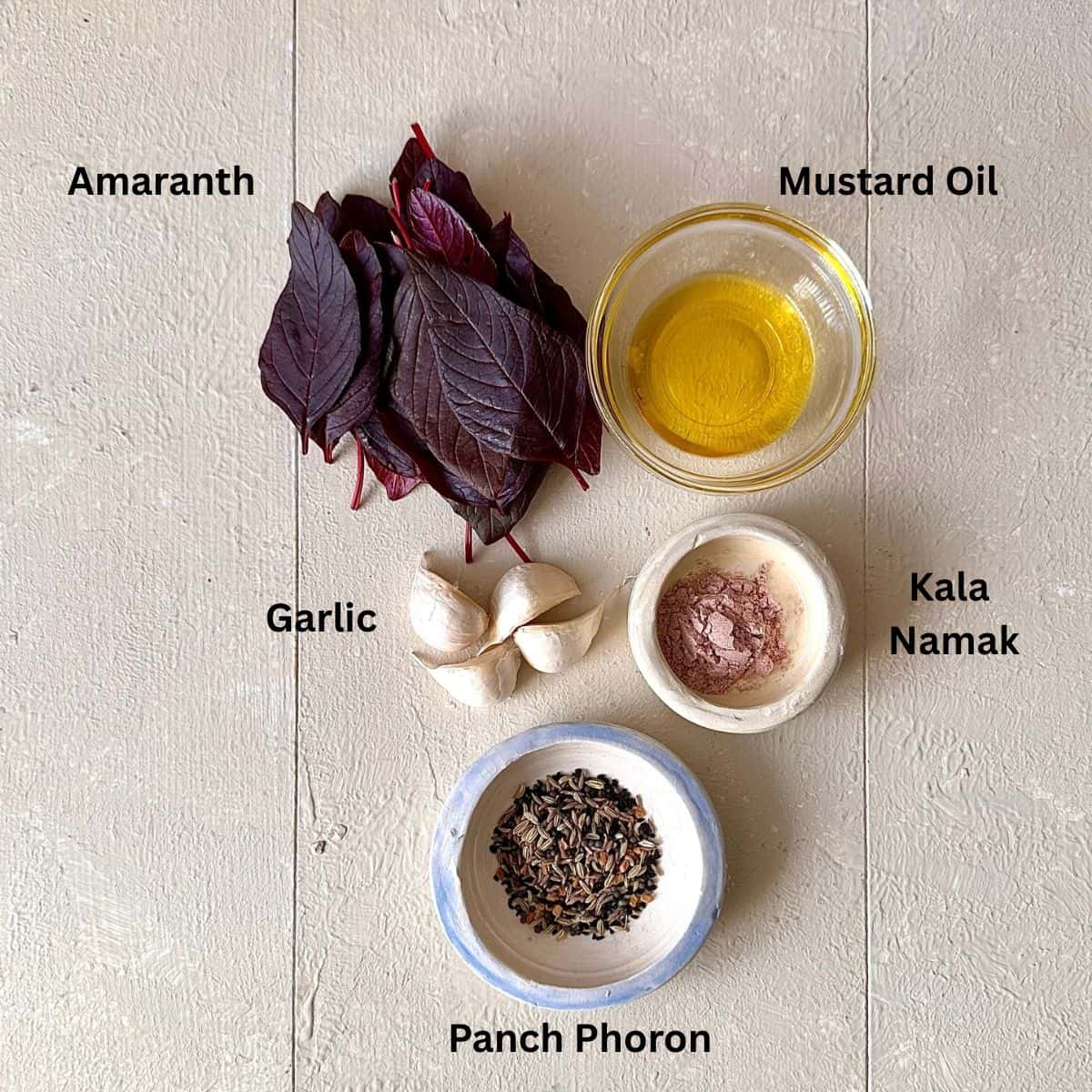
- Amaranth - you can grow this in your garden or buy it at Asian grocers as chaulai or lal saag (Hindi for "red greens"). Amaranth tastes mild, sweet, and earthy. When cooked, it wilts, like spinach.
- Mustard oil, pungent and peppery, forms the flavour base of the recipe. In the UK, bottles may say "for external use only" because of its auric acid content, but it's widely used in Asian cooking. Look for food-grade mustard oil (blended with rapeseed oil)
- Garlic, Kala Namak & panch phoran - give the amaranth more character, along with the mustard oil. For the Panch phoran, see my video explanation below.
See the recipe card for quantities.
How to Make Lal Saag
- Wash the amaranth and remove any flower heads.
- Roughly chop the leaves and finely chop the stems.
- Peel and finely chop the garlic.
- Heat the mustard oil over medium heat.
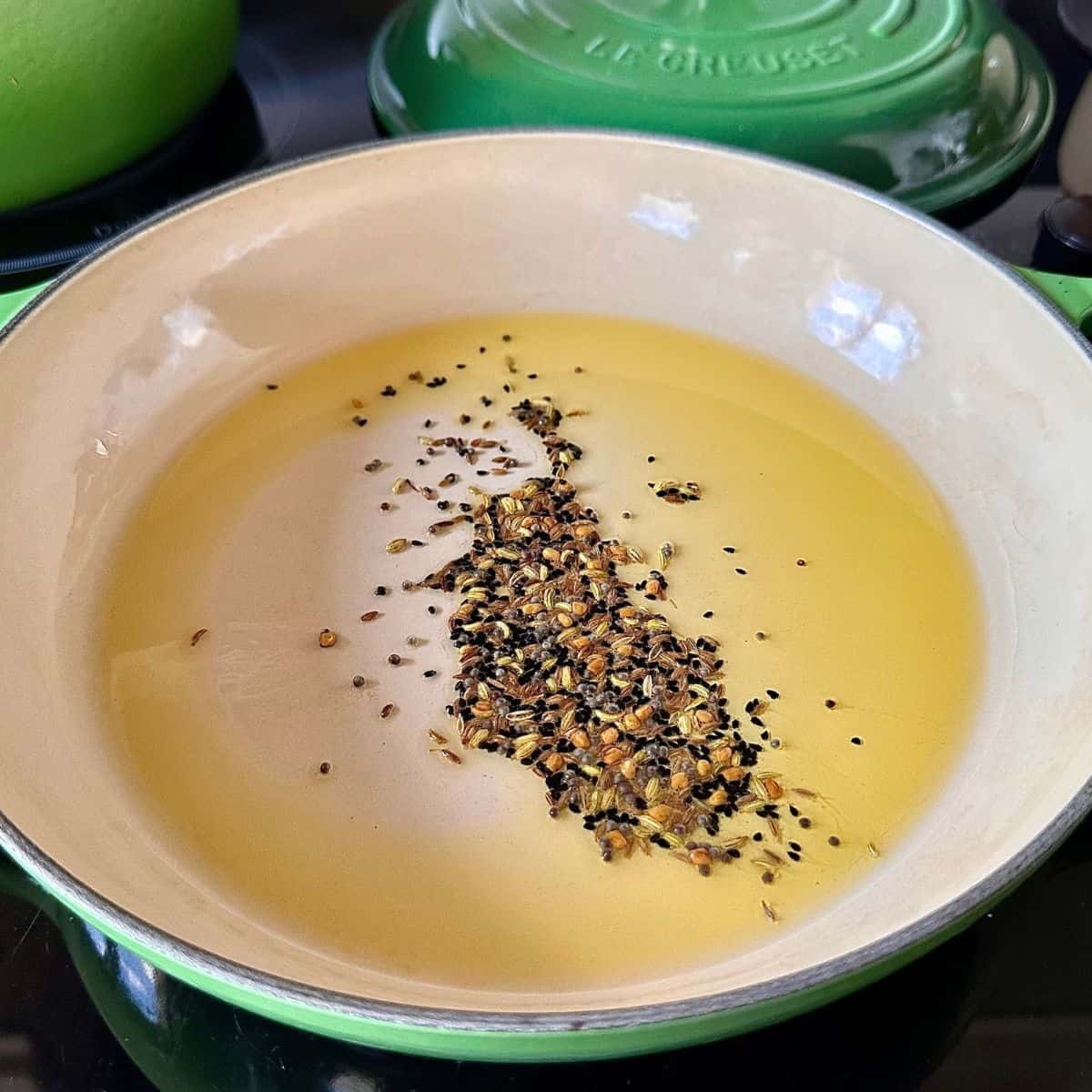
- When the oil is very hot, add the panchphoran. Let it sizzle for a couple of seconds and then add the garlic. Be careful not to burn the Panchphoran.
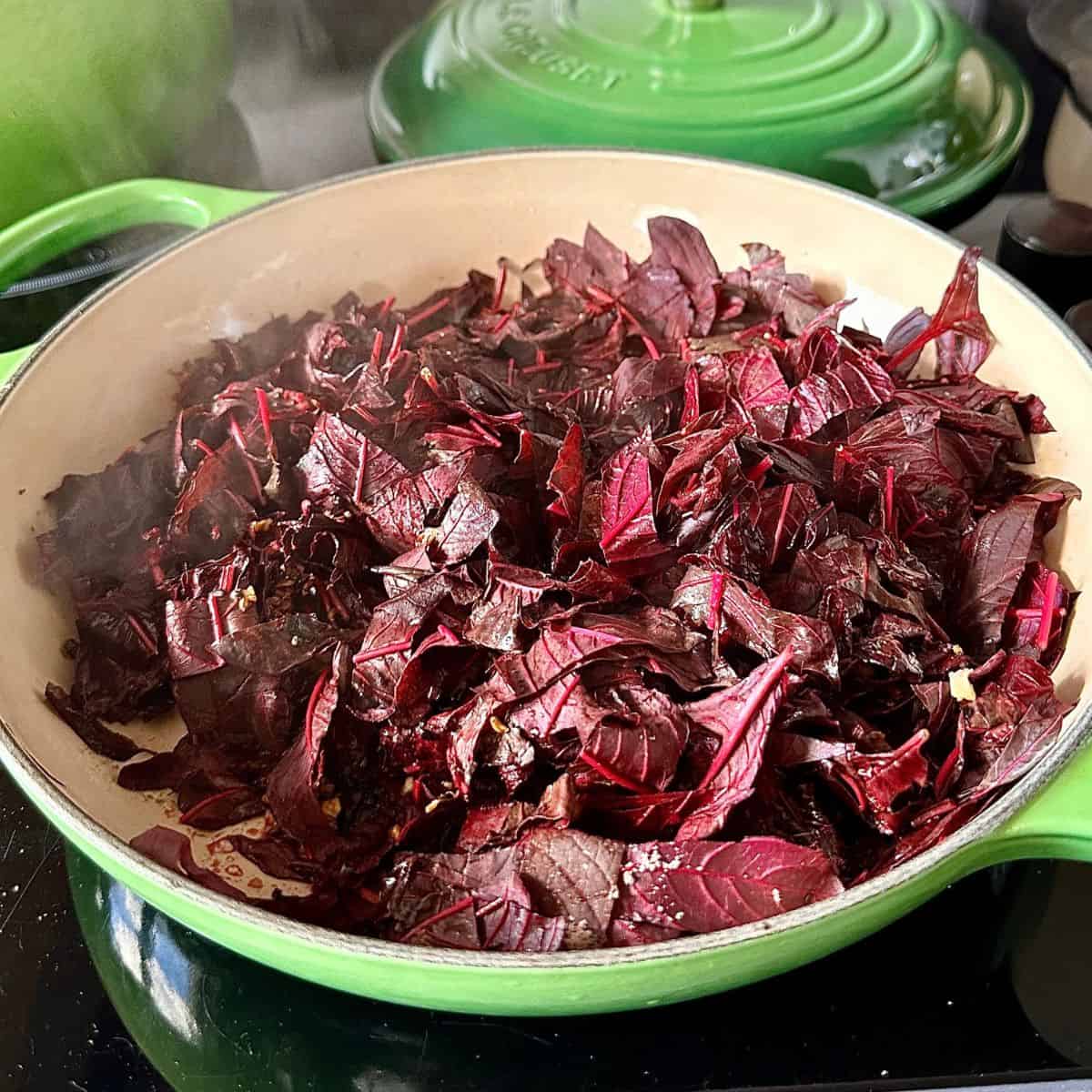
- Add the chopped amaranth leaves and Kala Namak.
- Stir, add a dash of water, cover immediately, and steam the leaves for a few minutes.
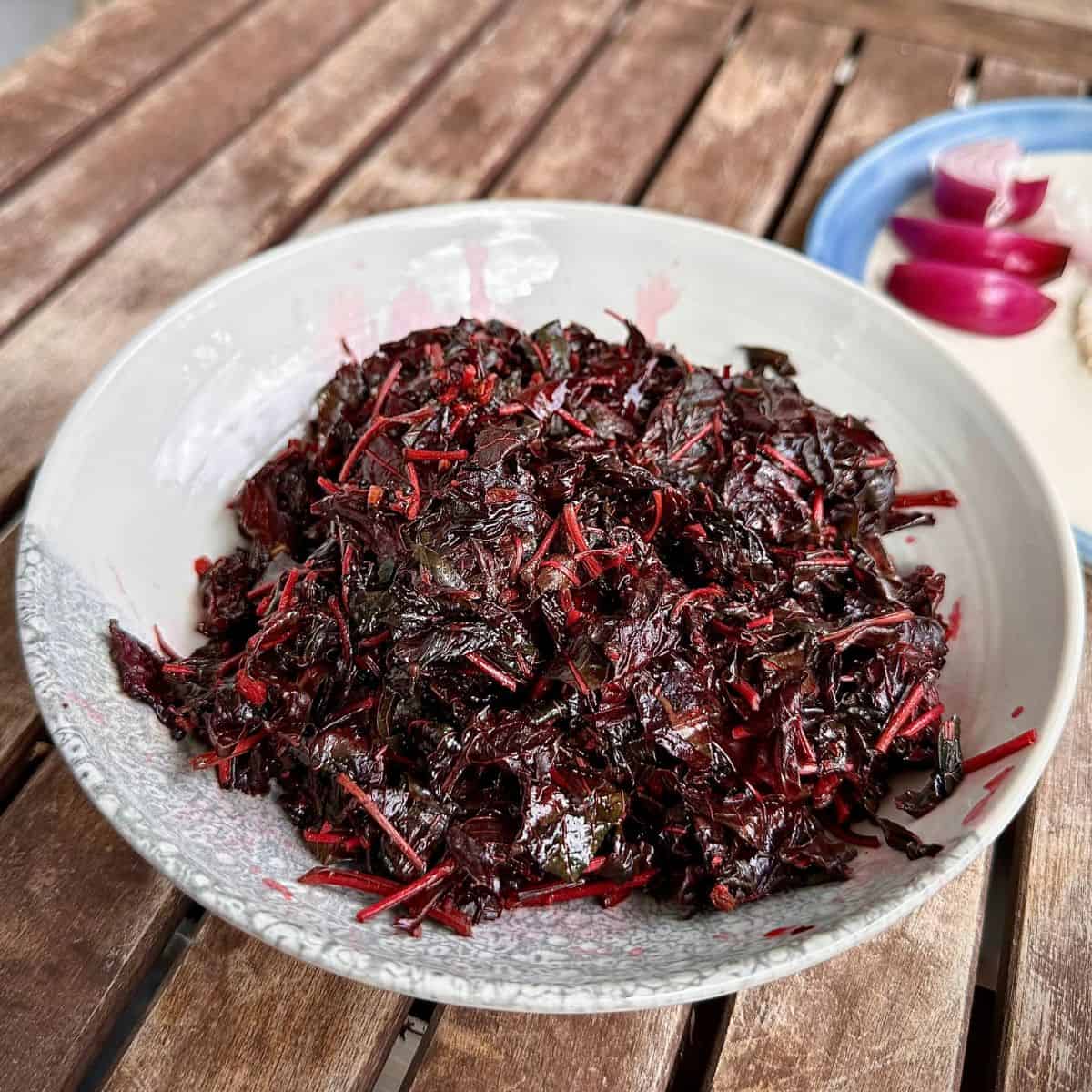
- The amaranth is cooked when it has wilted like cooked spinach.
Substitutions & Variations
- Mustard oil- you can replace this with toasted sesame oil or any oil of your choice. Mustard oil adds pungency to this recipe; bear in mind you'll lose some flavour.
- Panchphoran - this adds the key flavour, but if you don't have it, you can make your own mix with equal parts fennel seeds, black mustard seeds, cumin, fenugreek, and nigella seeds. If you don't have all of them, use what you have. Otherwise, you can use cumin.
- Kala namak- You can replace this with regular salt.
- Make it spicy -You can use chopped green chilli for a little heat and more flavour.
- Add onions - you can add onions for more flavour. Just fry them before the garlic and after the panchphoran.
- If you are making this as your main meal and would like to add protein, fried scrambled eggs work well.
Equipment
For this recipe, you need:
- A large pot - a casserole is ideal.
- Measuring spoons and digital scales for accurate measurements.
Storage
As with all stir-fry, this is best eaten fresh. However, you can store this in the fridge in an airtight container for up to three days. Reheat in a microwave or using a steamer.
I do not recommend freezing.
Recipe Tips
- Wash the amaranth thoroughly, as it often carries grit.
- When amaranth is young, you can cut it just above the first two leaves. Once the flowers start to appear, pick only the leaves, as the flowers aren't edible because of their texture.
- Chop the stems finer than the leaves so they finish cooking at the same time.
- Make sure all your prep, chopping the amaranth and garlic, is done before you start cooking, since it's really fast and you will not have time to stop.
- You only need to temper the panchphoran briefly - be careful, as it can burn easily.
- When you add the water, put the lid on immediately and leave it on so the leaves wilt properly in the steam. You only need a dash of water to create steam and stop the leaves from burning.
- Best served immediately.
FAQ
Both come from the same plant family; however, grain comes from plants bred for grain, and the leaves come from plants bred for tender, edible leaves. Some people may be more familiar with amaranth grain, available in health food stores.
Leaves can be eaten raw in salads, but go for young, tender leaves. The taste is mild and earthy. Cook larger, older leaves and stems.
As a warm-weather crop, it is grown and harvested in the UK over summer and early autumn. I got at least four crops from my plants. They keep on giving. Asian grocers carry imported amaranth year-round.
No. Both start with rock salt, but kala namak is heated with other ingredients such as charcoal. This gives kala namak its distinctive sulphurous egg-like aroma and pinkish colour when ground. They are not interchangeable. Himalayan pink salt would give this lal saag saltiness without the savoury depth.
📖 Recipe
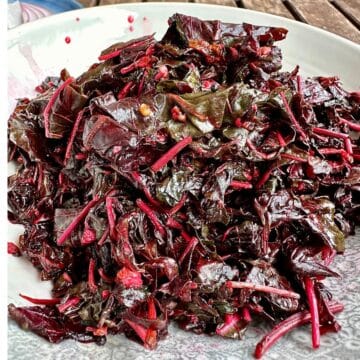
Lal Saag (Stir-fried Red Amaranth Leaves)
Equipment
- Measuring spoons
- Large pot A casserole is ideal
Ingredients
- 250 g Amaranth leaves
- 15 g Garlic
- 2 tablespoon Mustard oil
- 1 teaspoon Panchphoran
- 1 teaspoon Kala namak
Instructions
- Thoroughly wash the amaranth leaves, then pat them dry. Check for flower buds and remove them.
- Roughly chop the leaves and finely chop the stems.
- Peel and finely chop garlic.
- In a pan (preferably with a lid), heat mustard oil until it's really hot and panchoran. Let it sizzle for a couple of seconds, then add garlic and fry for a minute. Be careful with panchphoran; if the pan is too hot, it will burn and become bitter.
- Add chopped amaranth, leaves and stems, followed by Kala namak. Stir once, then add a dash of water, cover immediately, and cook for a few minutes. You will know it's cooked when the amaranth leaves become limp, like spinach.
- Remove the lid, stir and serve immediately with steamed rice.
More Quick and Easy Meal Ideas
This lal saag is quick and easy to make. Here are more quick and easy meal ideas for you.




Leave a Reply