

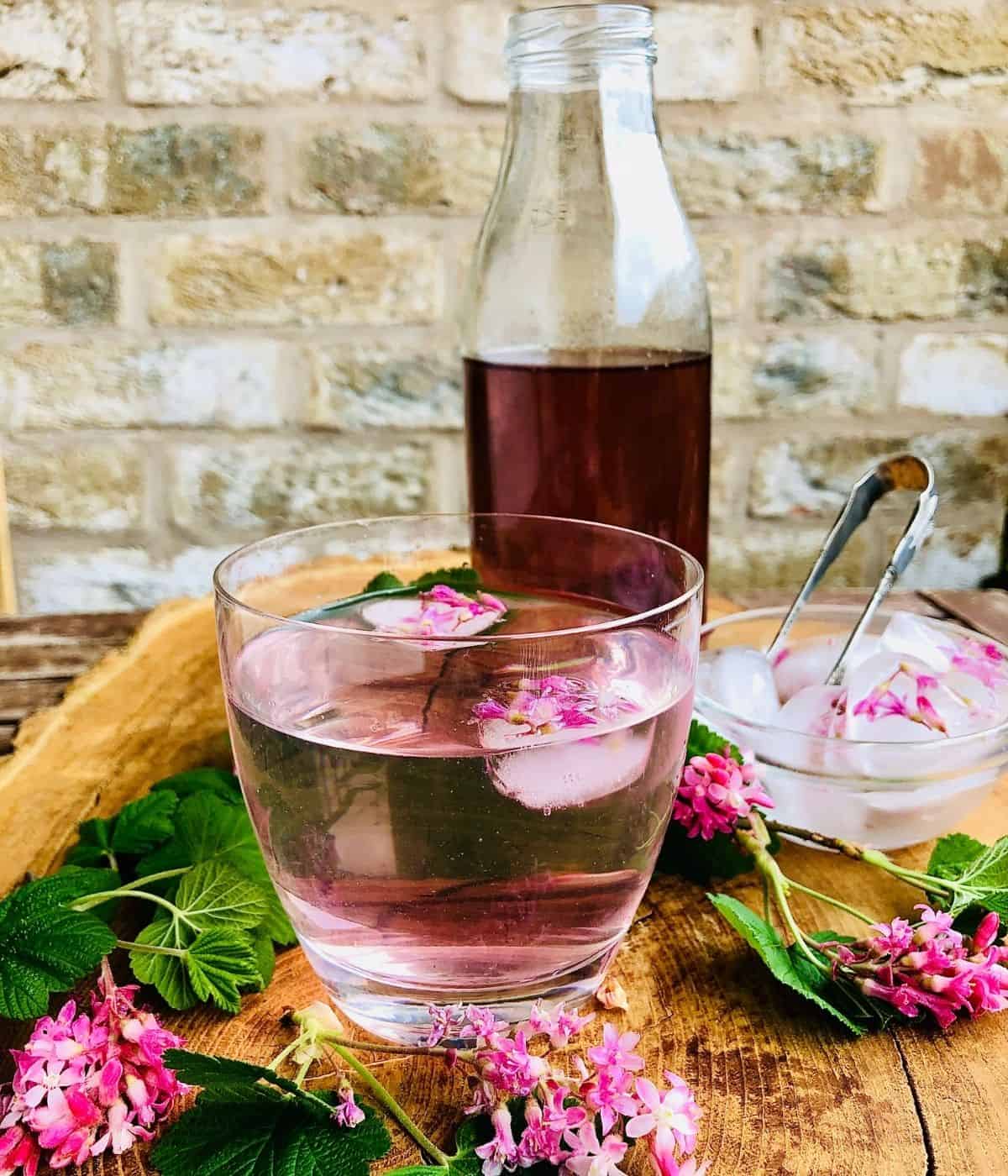
Springtime is one of my favourite times of the year. Nature is slowly awakening; the air is full of beautiful fragrances from different blossoms, a feast for the eyes. One such blossom is the flowering currant. It is gorgeous to look at, and its scent is sweet and heady. Flowering currant is an ideal ingredient for a cordial. Enjoy the subtle flavours of this wildflower-based drink and transport yourself to a warm summer's day in a country garden as you sip away.
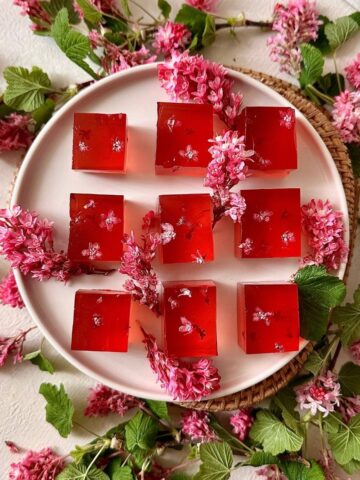
Flowering currant (Ribes sanguineum) is one of the earliest edible blossoms of spring, appearing from March to May in gardens and hedgerows. The bright pink flowers carry a delicate floral aroma with a subtle hint of blackcurrant. Traditionally, they are infused into syrups or cordials, capturing the fleeting fragrance of early spring in a drink. Use your flowering currant cordial to make my flowering currant jelly dessert.
As summer approaches and fruits begin to appear, there will be more opportunities for foraging ingredients for seasonal drinks. You might also enjoy this elderflower cordial or a refreshing kala khatta wild blackberry mocktail.
What Is Flowering Currant, and How To Identify It
Flowering currant is a popular garden plant because it blooms relatively early in spring, with beautiful pink colours and an aromatic scent. It grows as a bush up to three metres high and broad, and can function as a hedge. Later in the summer, it produces fruit. The flower is what we are interested in for this cordial. The flowers have a more pleasant flavour than the fruit.
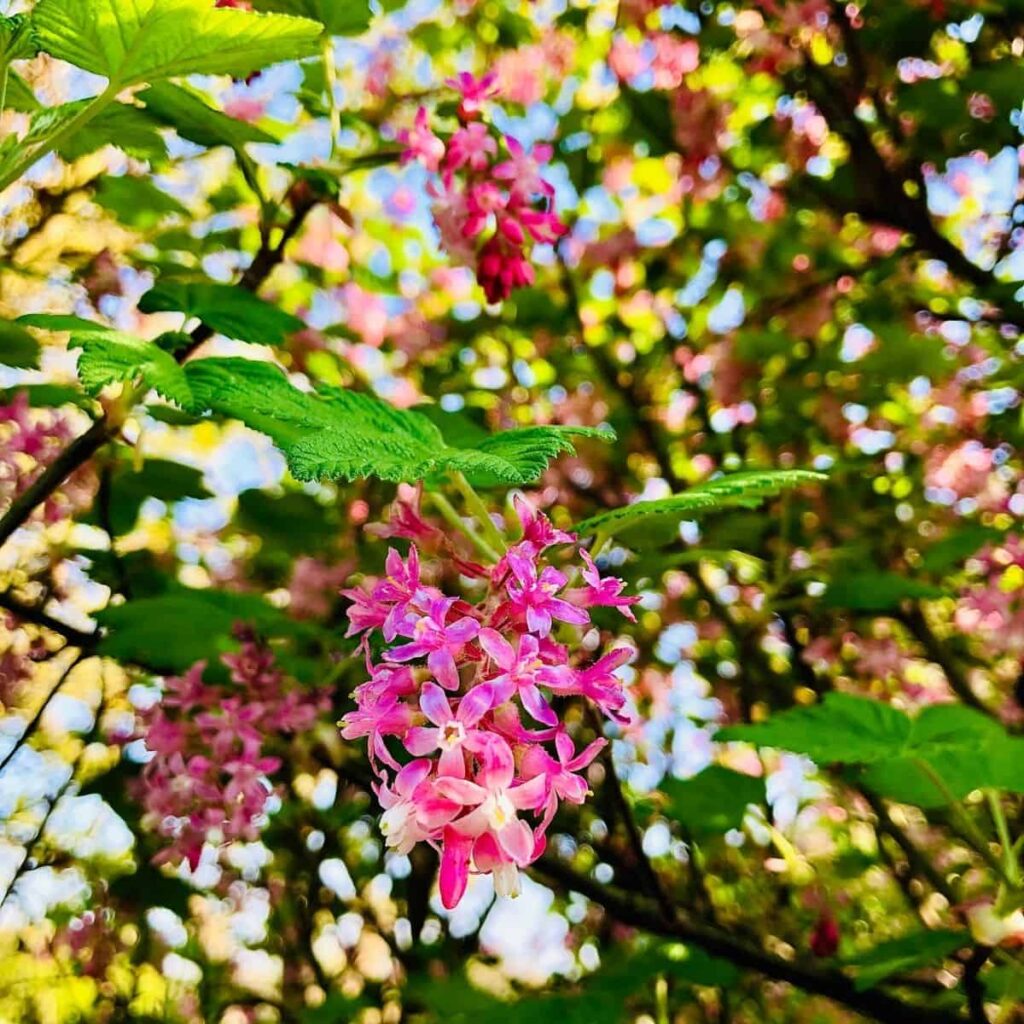
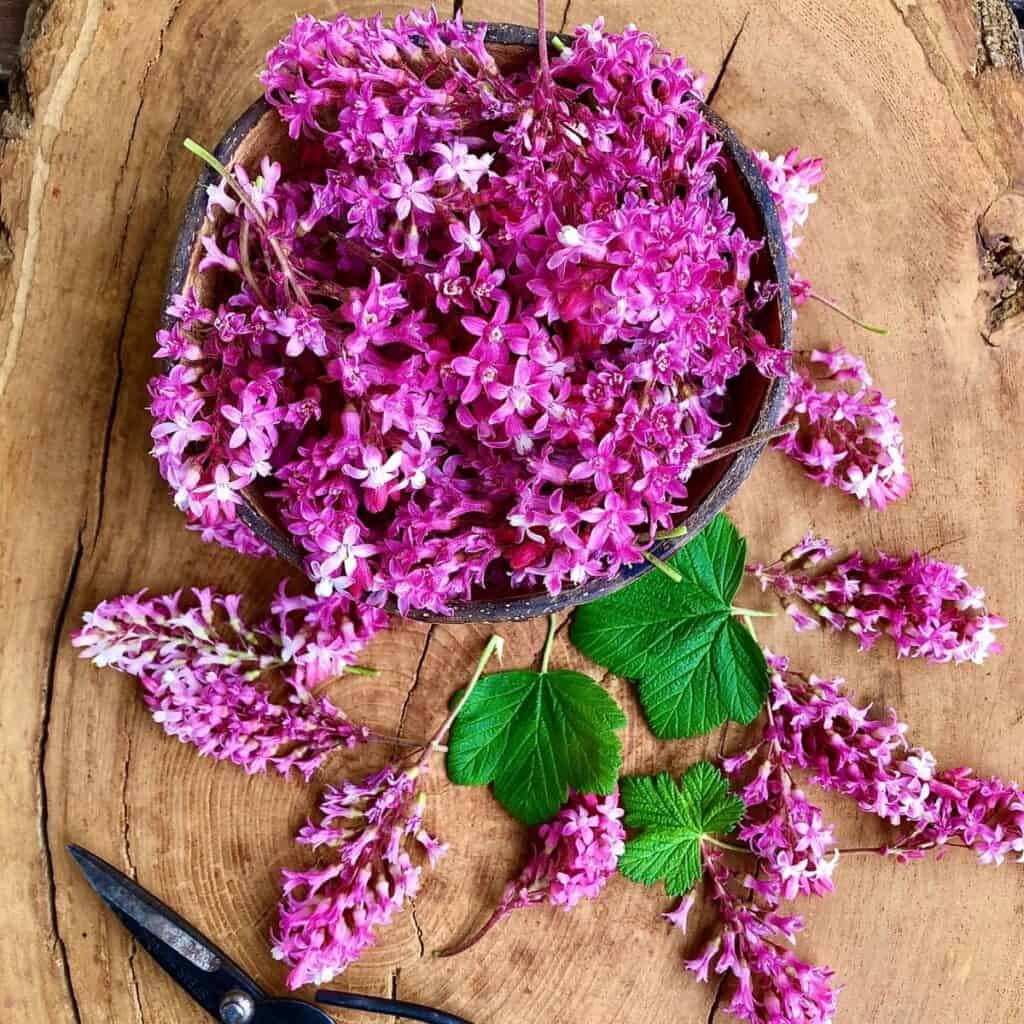
The flowers dangle down in bunches of five to thirty flowers. The individual flowers are five to ten millimetres long with five petals, and the leaves are broad, with five lobes. The oval berries appear in summer/autumn, are blue/black, and measure about one centimetre. The berries can be used to make syrups and jams or in pies.
As with any foraging, be very confident with your identification. Be especially careful with berries. Do not consume anything unless you are sure you have correctly identified it.
What To Do With Flowering Currant Flowers
Making flowering currant cordial is not the only way to use this edible flower. They can be used in several other ways:
- Use in a sorbet or granita.
- Flowering current jello (recipe coming soon!)
- A liqueur made from flowering currant.
- A floral vinegar.
- Make a soothing tea.
- Raw flowers in a salad.
- Freeze into decorative ice cubes.
Jump to:
Flowering Currant Cordial Ingredients
- Flowering current flowers
- Castor sugar
- Water
See the recipe card for quantities.
How To Make Flowering Currant Cordial
Check your flower heads and remove any bugs.
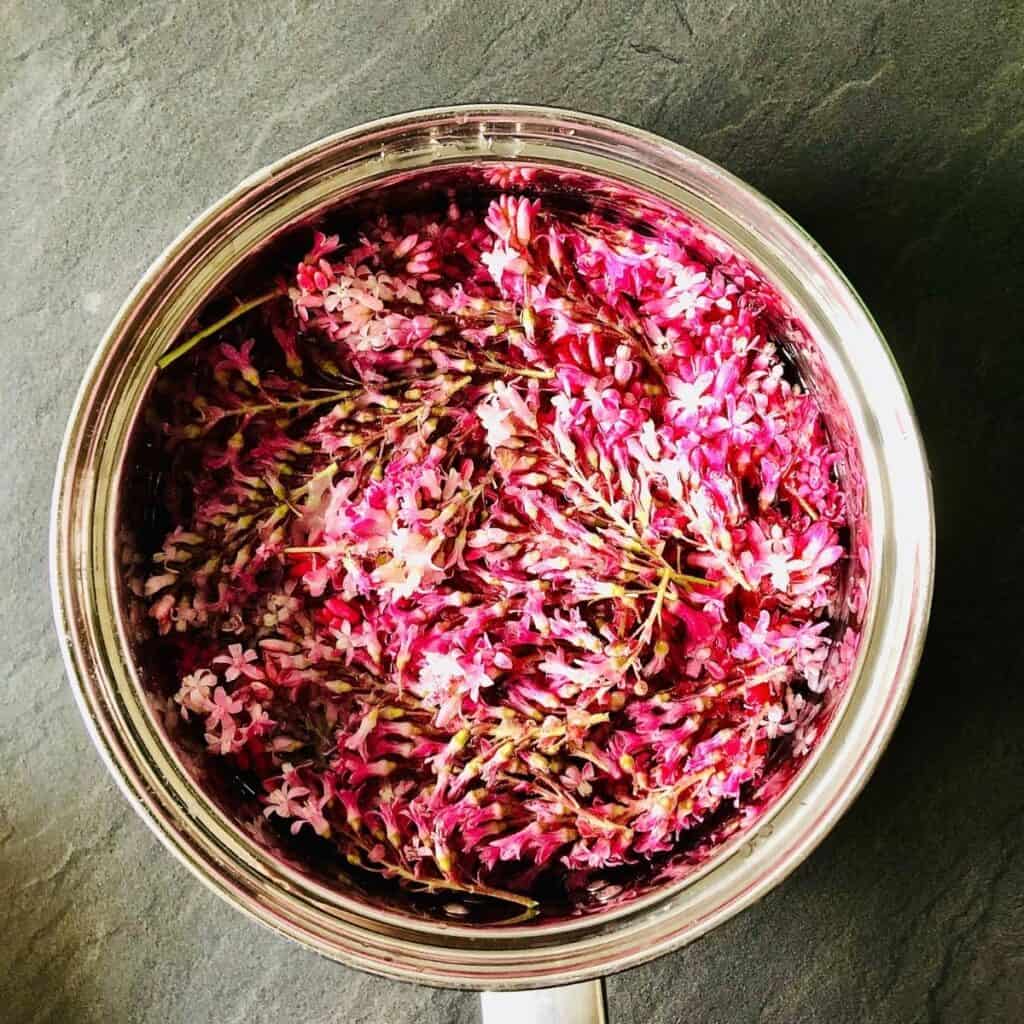
- In a pan over medium heat, add the caster sugar to the water and stir until all of the sugar has dissolved.
- Add the flowering currant flower heads and bring to a simmer for approximately 15 minutes, until it reaches a syrupy consistency.
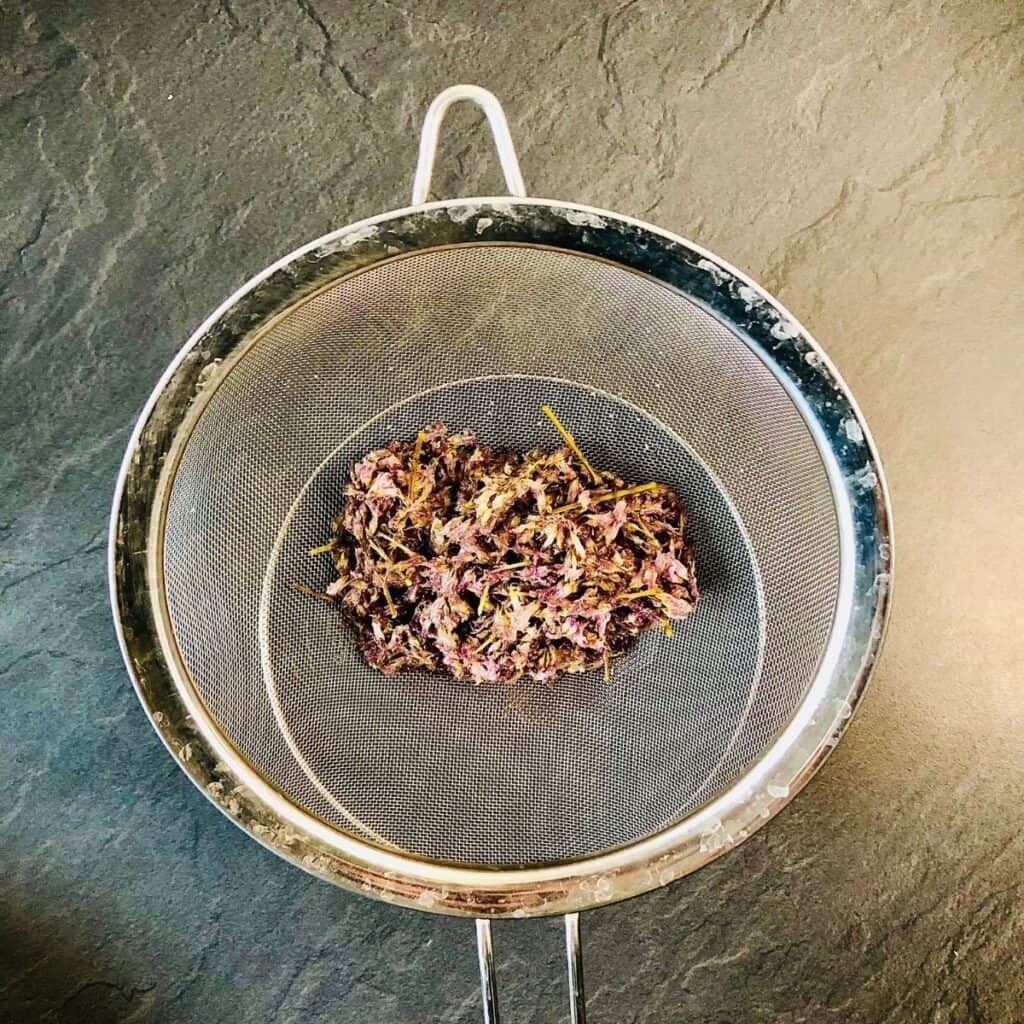
- Then separate the syrup and flowers by passing the contents through a fine-mesh sieve or a muslin cloth.
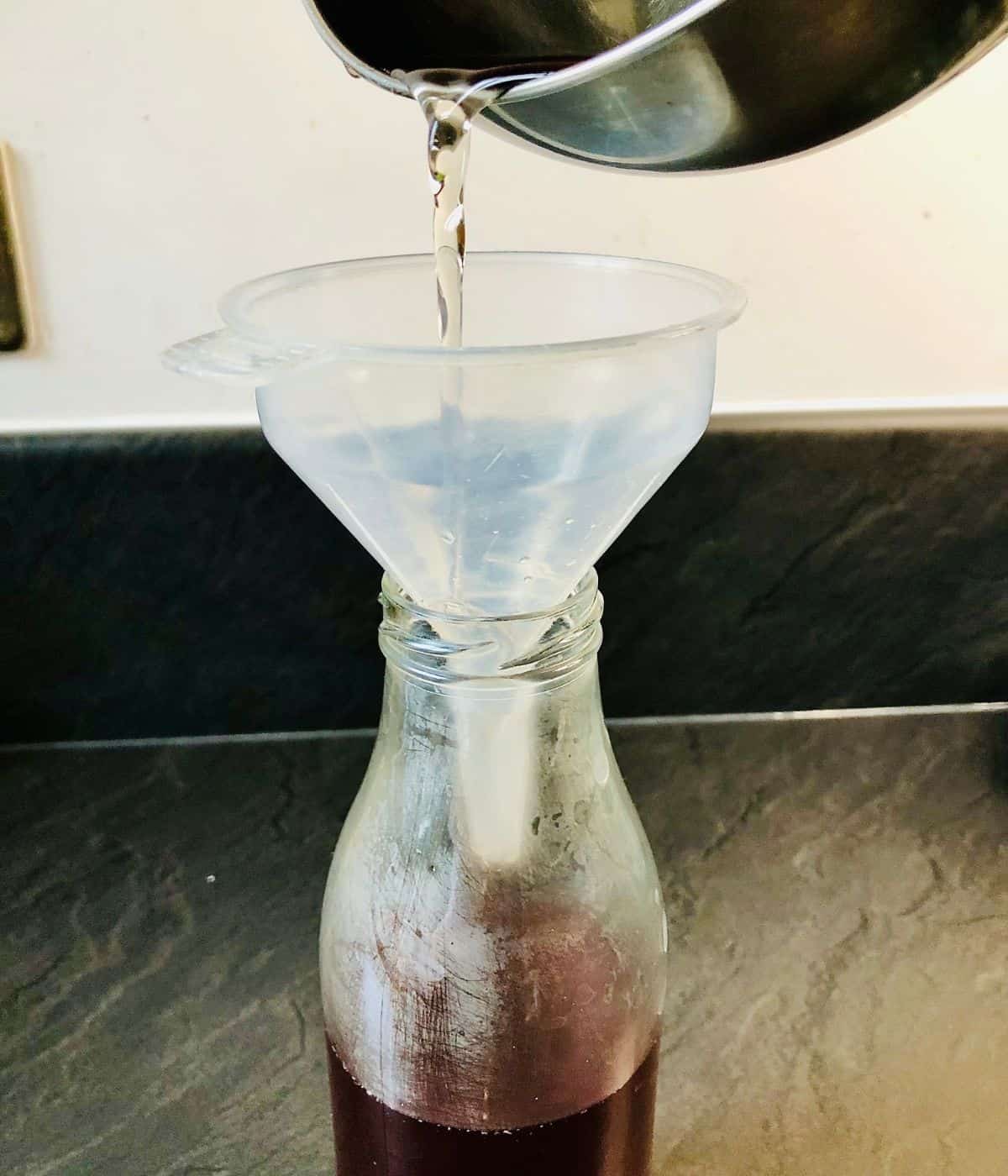
- Transfer the syrup to your sterilised bottle(s).
Refrigerate the cordial. Dilute to taste with water or sparkling water.
Equipment
You will need to source a glass bottle to decant the cordial into.
Storage
The cordial should last about three months in the fridge.
Chefs Tip
Ensure the bottles and funnel (if using one) in which you store this flowering currant cordial are sterilised; otherwise, you run the risk of mould forming quickly.
FAQs
Yes, the flowers (Ribes sanguineum) are edible and have a delicate floral flavour. They are a versatile foraged ingredient, ideal for cordials, sorbet, granita and even in salads.
Flowering currant typically blooms between March and May. It is one of the earliest flowering shrubs of spring.
📖 Recipe
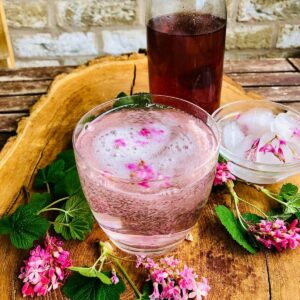
Flowering Currant Cordial
Equipment
- Sieve
- 600 ml bottle or jam jar
Ingredients
- 80 Flowering currant flower heads
- 300 gms Castor sugar
- 300 ml Water
Instructions
- Wash the bottle in hot soapy water and place it in the oven at 100ºC to sterilise for at least 30 minutes.
- In a pan over medium heat mix the sugar and water until all the sugar is dissolved.
- Check flowers for any bugs and leaves and remove them.
- Add the flowers to the sugar syrup and simmer for about 15 minutes until it is syrupy.
- Pass the syrup through a fine-mesh sieve or muslin cloth to separate the liquid and the flowers.
- Transfer into a sterilised bottle, seal and refrigerate. If you are using a funnel, make sure to sterilise it as well.
- To use, simply mix with cold water or sparkling water and add ice cubes and enjoy.
Oli says
Great use for flowering currants!
Chef Tripti says
They are just about coming up now.
Emily Kane says
So tasty and refreshing
Chef Tripti says
It is isn't it. We are slowly coming into flowering currant season again.