

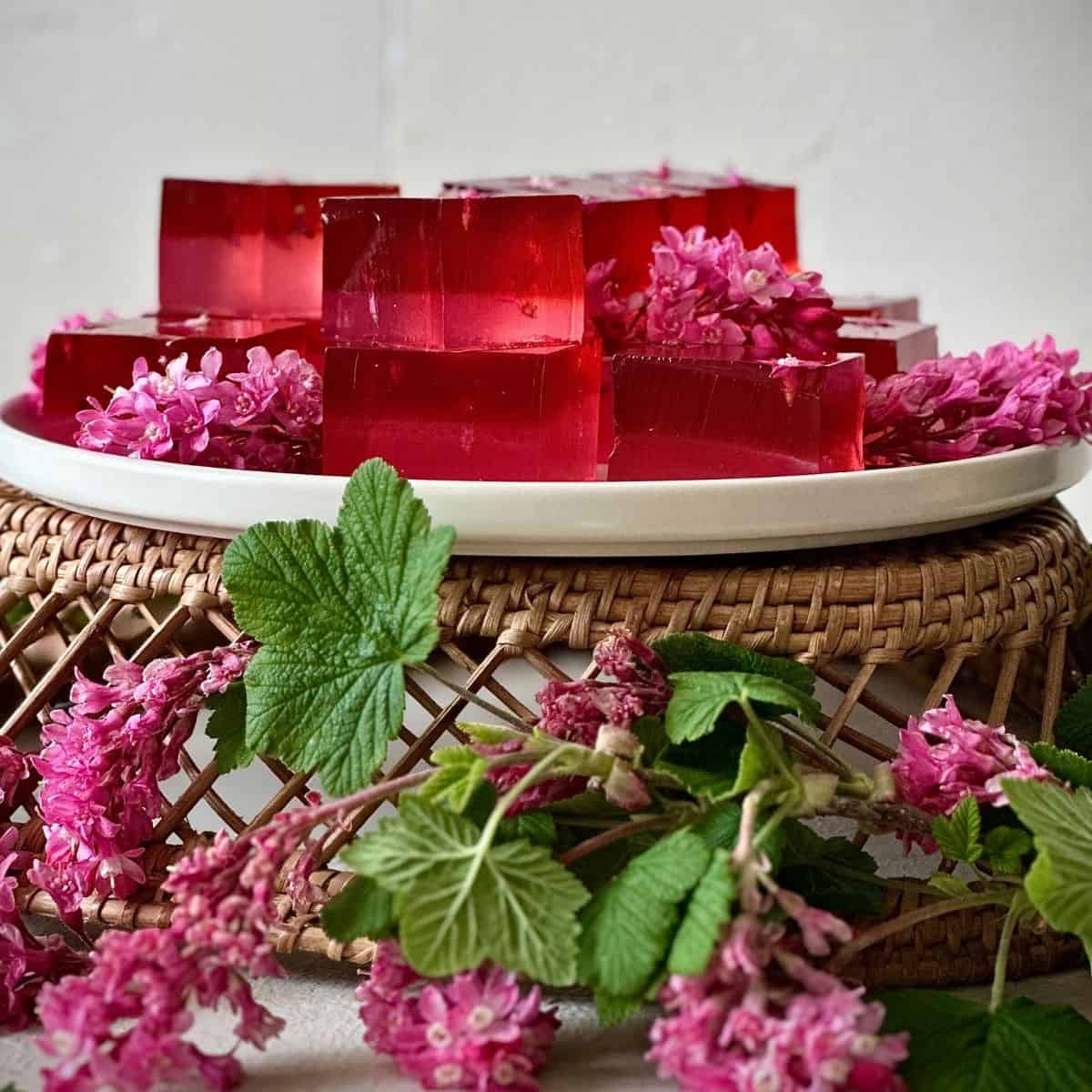
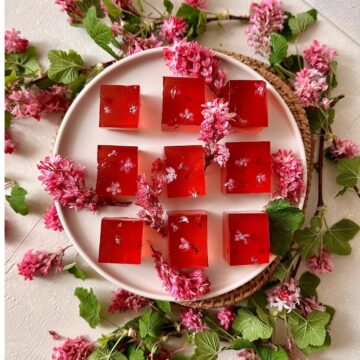
If you are looking for a seasonal way to use flowering currant cordial, this layered flowering currant jelly dessert is a light, floral and elegant spring dessert. Made with a flowering currant layer and topped with black raspberry liqueur jelly, it has a delicate berry depth that makes it feel special enough for entertaining.
Jump to:
Why You'll Love This Flowering Current Jelly
- A creative way to use flowering currant cordial.
- A beautiful make-ahead dessert for spring.
- Light floral flavour with a berry-laced top layer.
- Elegant enough for entertaining.
- Naturally vegan thanks to agar agar.
- A grown-up jelly dessert with a delicate, seasonal twist.
Ingredients
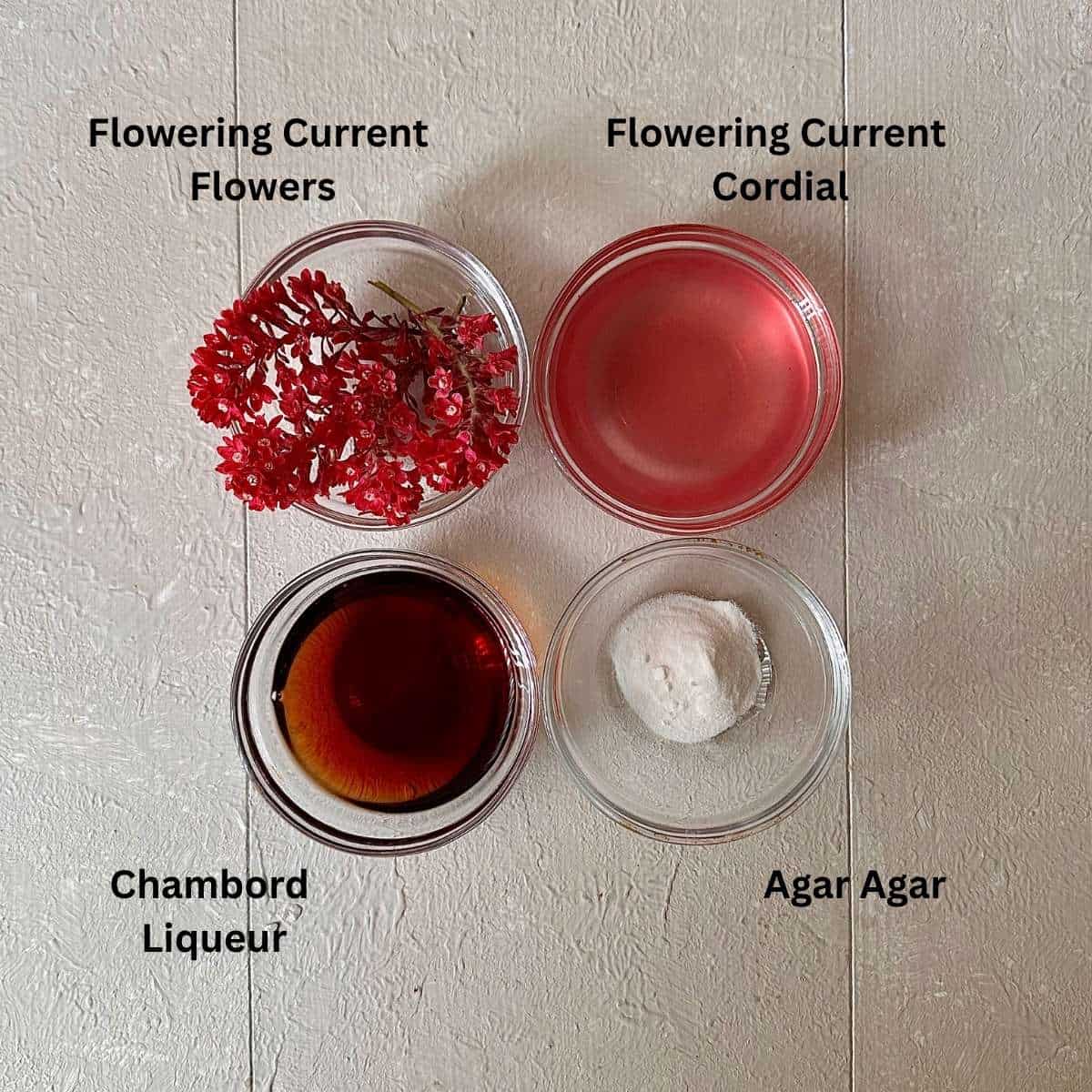
- Flowering currant flowers - These edible flowers can be used raw in salads, drinks and desserts. They have a sweet, slightly resinous flavour. Here, they add a delicate spring garnish.
- Flowering currant cordial - This is the key ingredient in the jelly, giving it its distinctive floral flavour and pale pink colour. It is easy to make at home. You can find my flowering currant cordial recipe here.
- Chambord raspberry liqueur - This black raspberry liqueur adds a richer berry flavour and a subtle boozy note to the top layer.
- Agar agar - Agar agar is the vegan setting agent used in this jelly. It creates a clean set and works well for layered desserts.
See the recipe card for quantities.
How to Make Layered Flowering Current Jelly Dessert
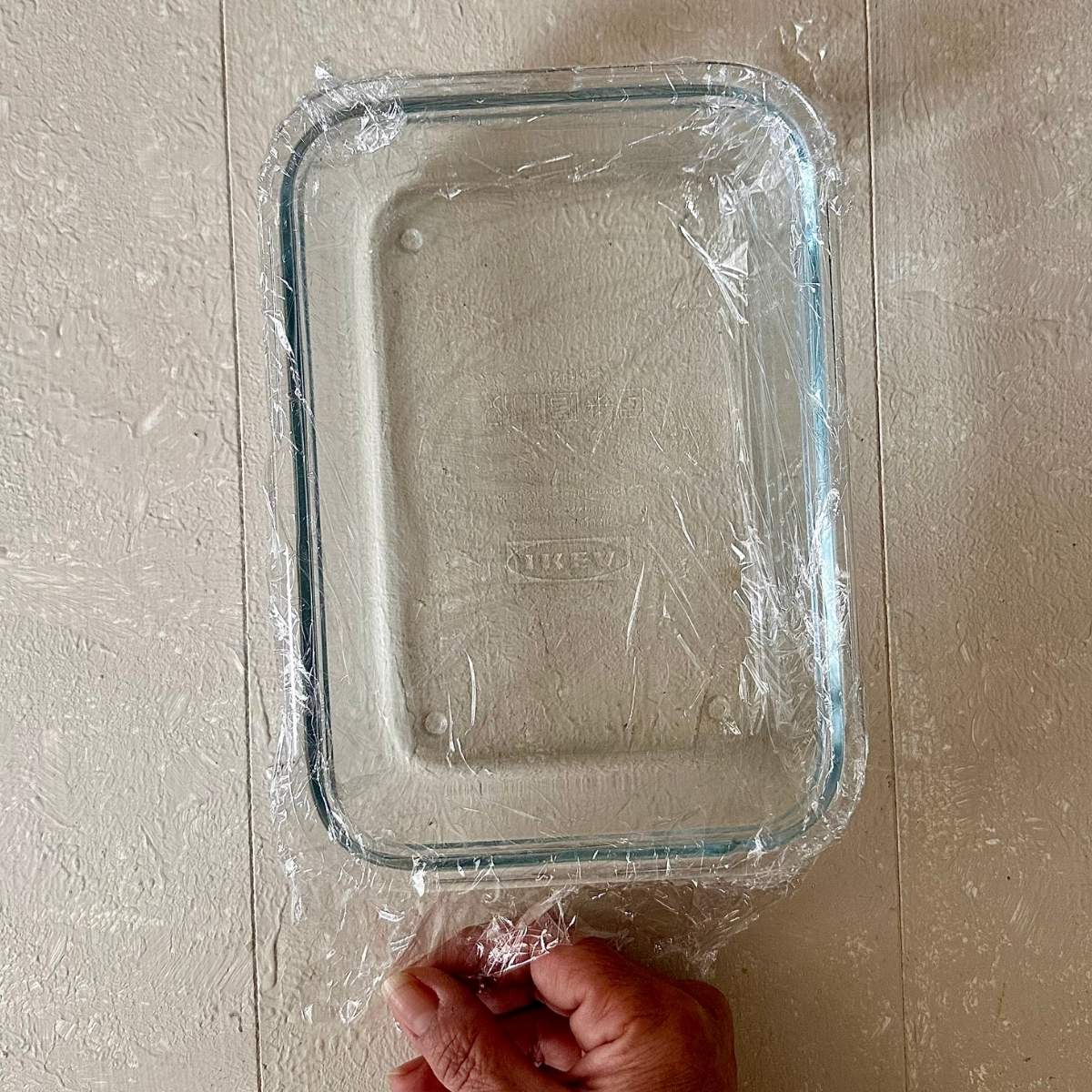
- Line the dish or container with cling film, smoothing it out so there are no wrinkles or air bubbles. This will help you turn out the jelly neatly once it has set.
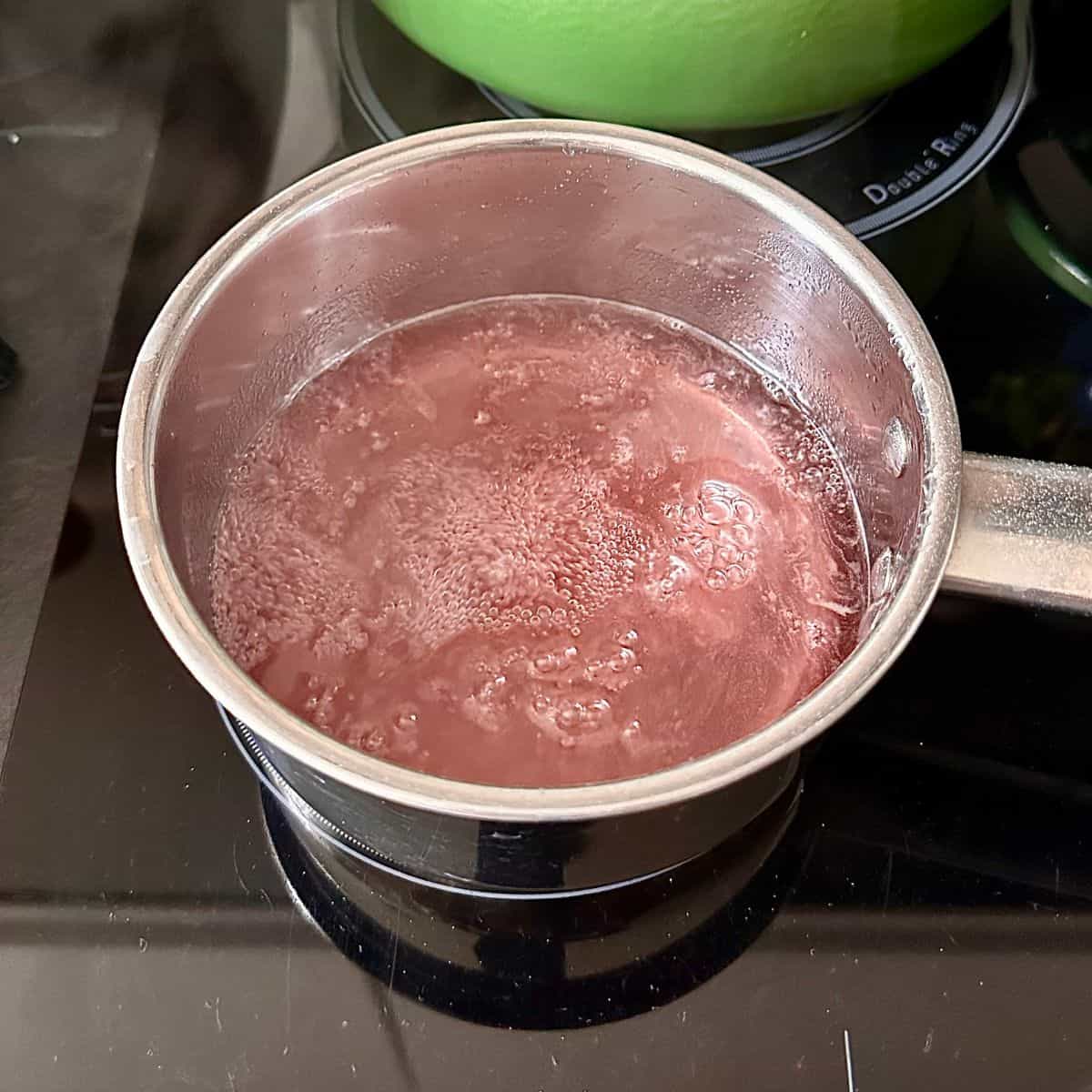
- Add 300ml of flowering currant cordial and the agar agar to a saucepan and whisk well to combine.
- Bring to the boil, then reduce the heat and simmer for 1 minute, whisking continuously.
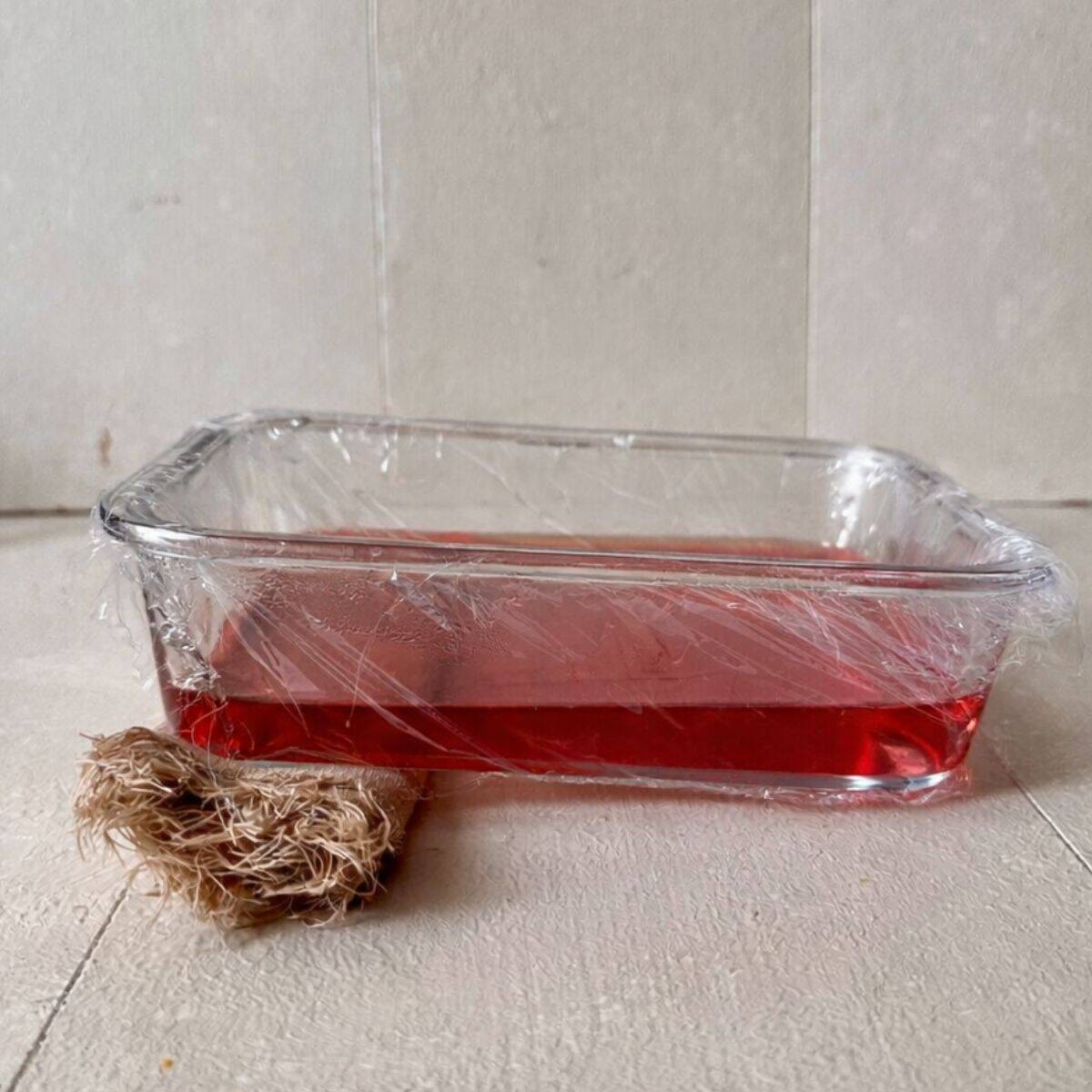
- Pour the jelly into the prepared container.
- Place a rolled-up towel or napkin underneath one side of the container so the jelly sets at an angle.
- Leave at room temperature for 10 to 15 minutes.
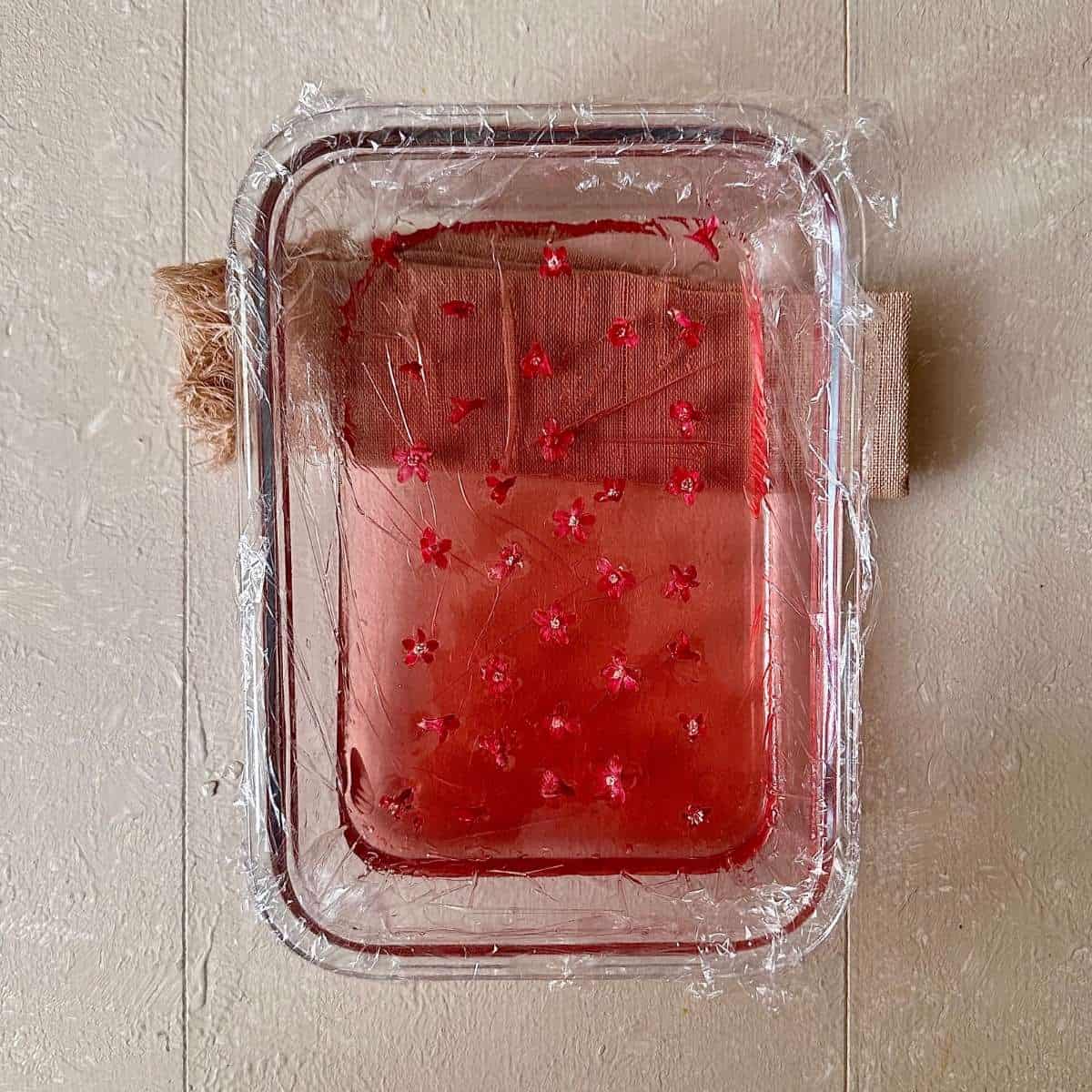
- When the surface is just beginning to set, gently press individual flowering currant flowers into the jelly.
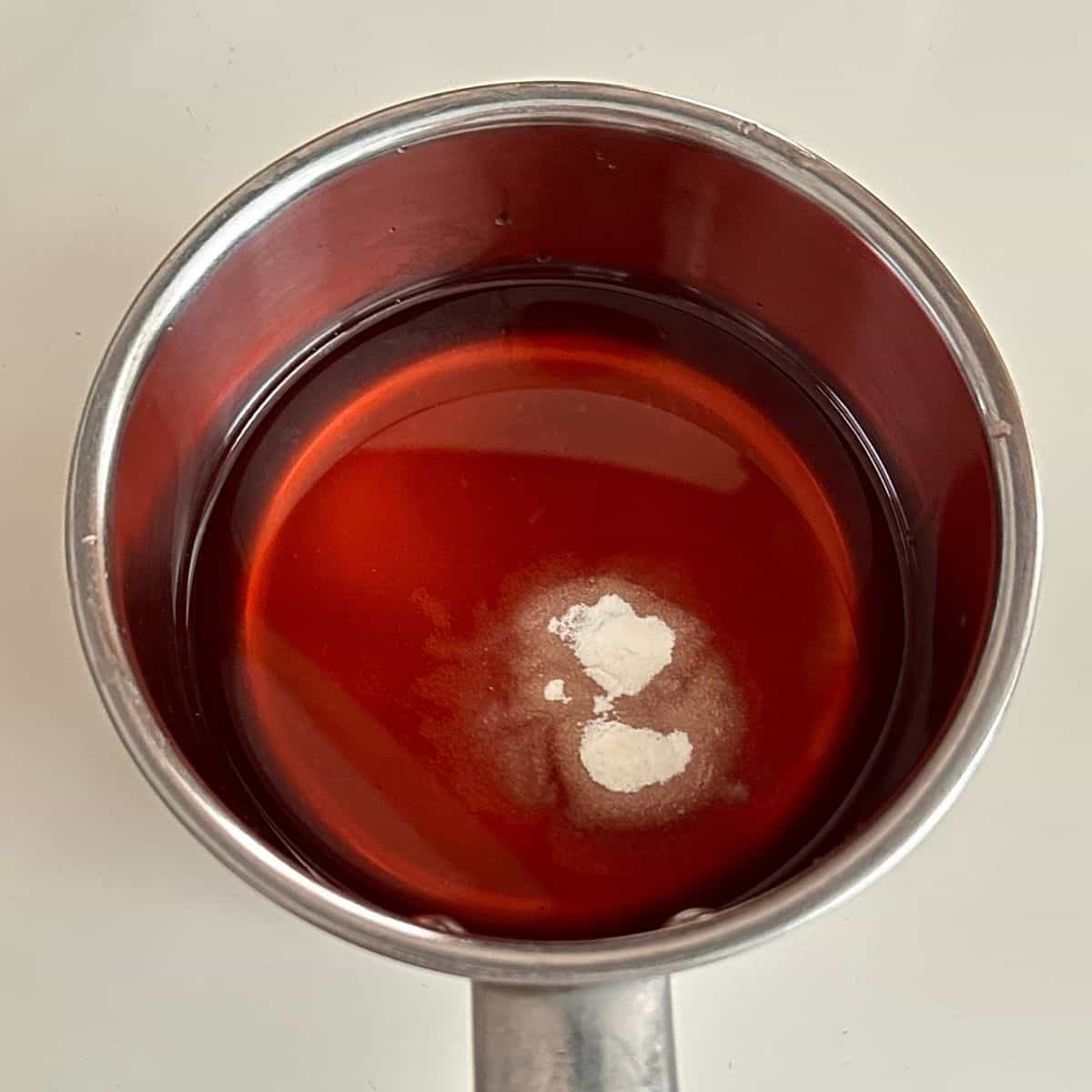
- Add the remaining 300ml of flowering currant cordial, the Chambord and the agar agar to a saucepan. Whisk well to combine.
- Bring to the boil, then reduce the heat and simmer for 1 minute, whisking continuously.
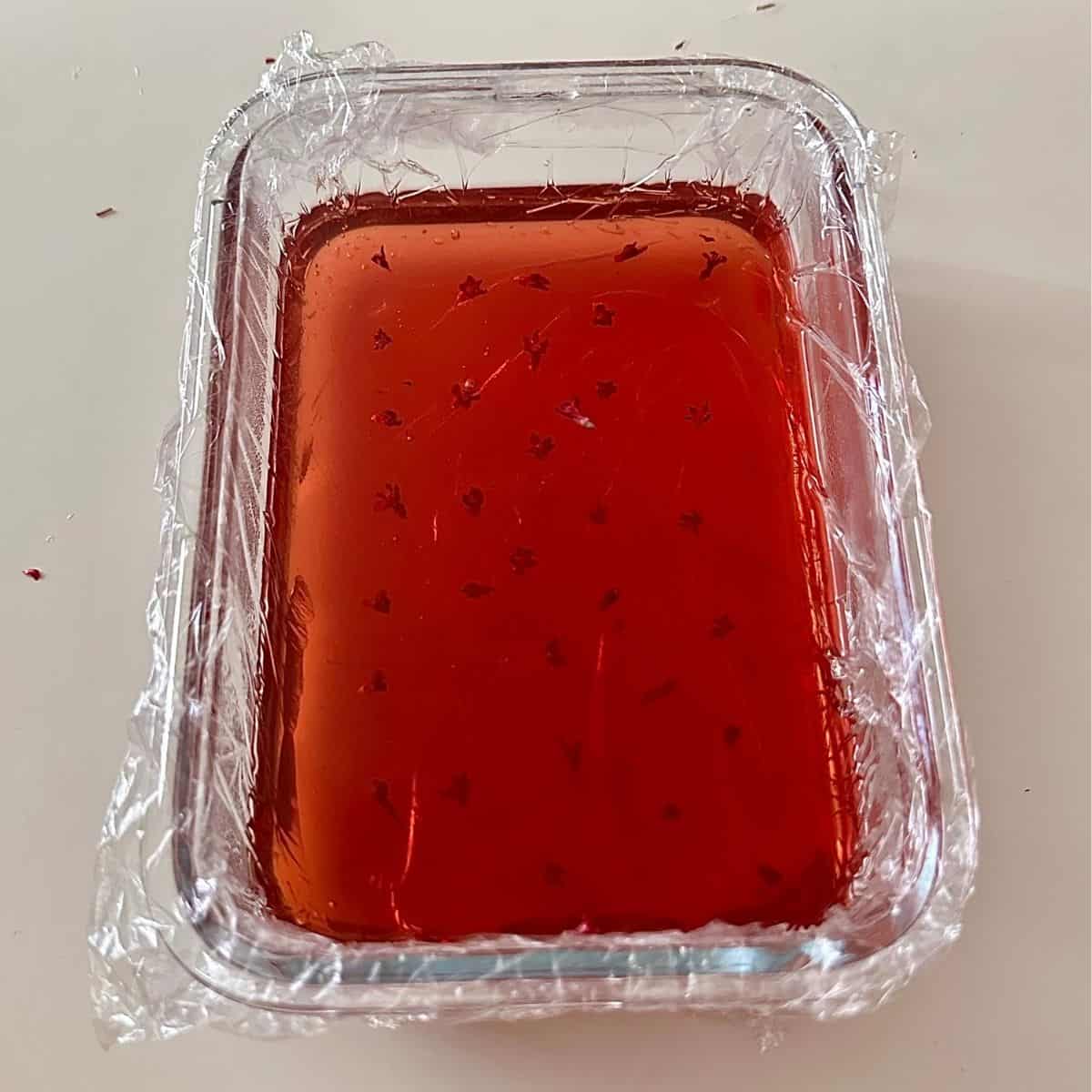
- Remove the towel or napkin from underneath the dish, then carefully pour in the second jelly layer.
- Leave to set partially for 10 to 15 minutes.
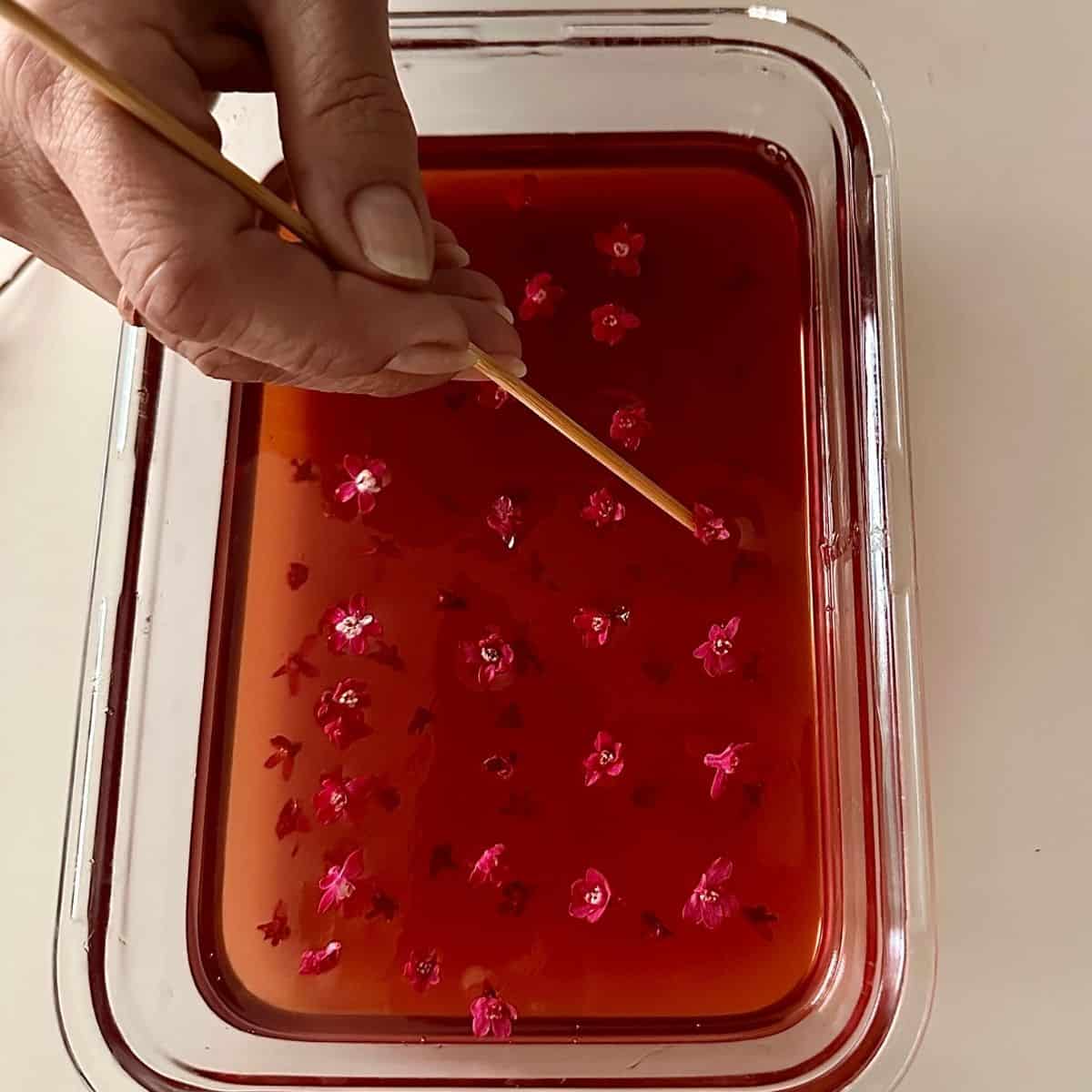
- Add flowering currant flowers to the top of the partially set jelly.
- Leave for 30 minutes, then transfer to the fridge and chill until fully set.
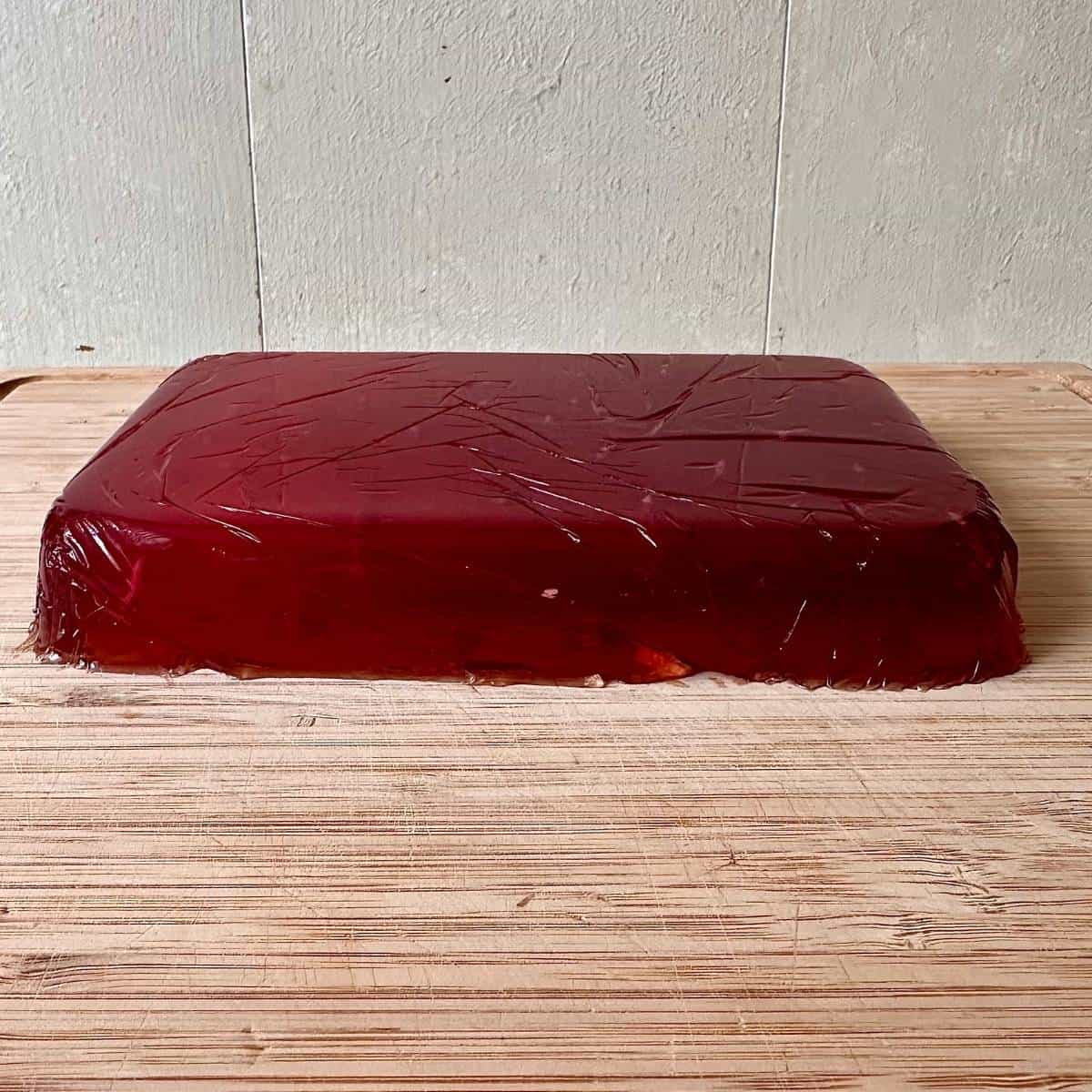
- Once fully set, turn out the jelly. Remove the cling film.
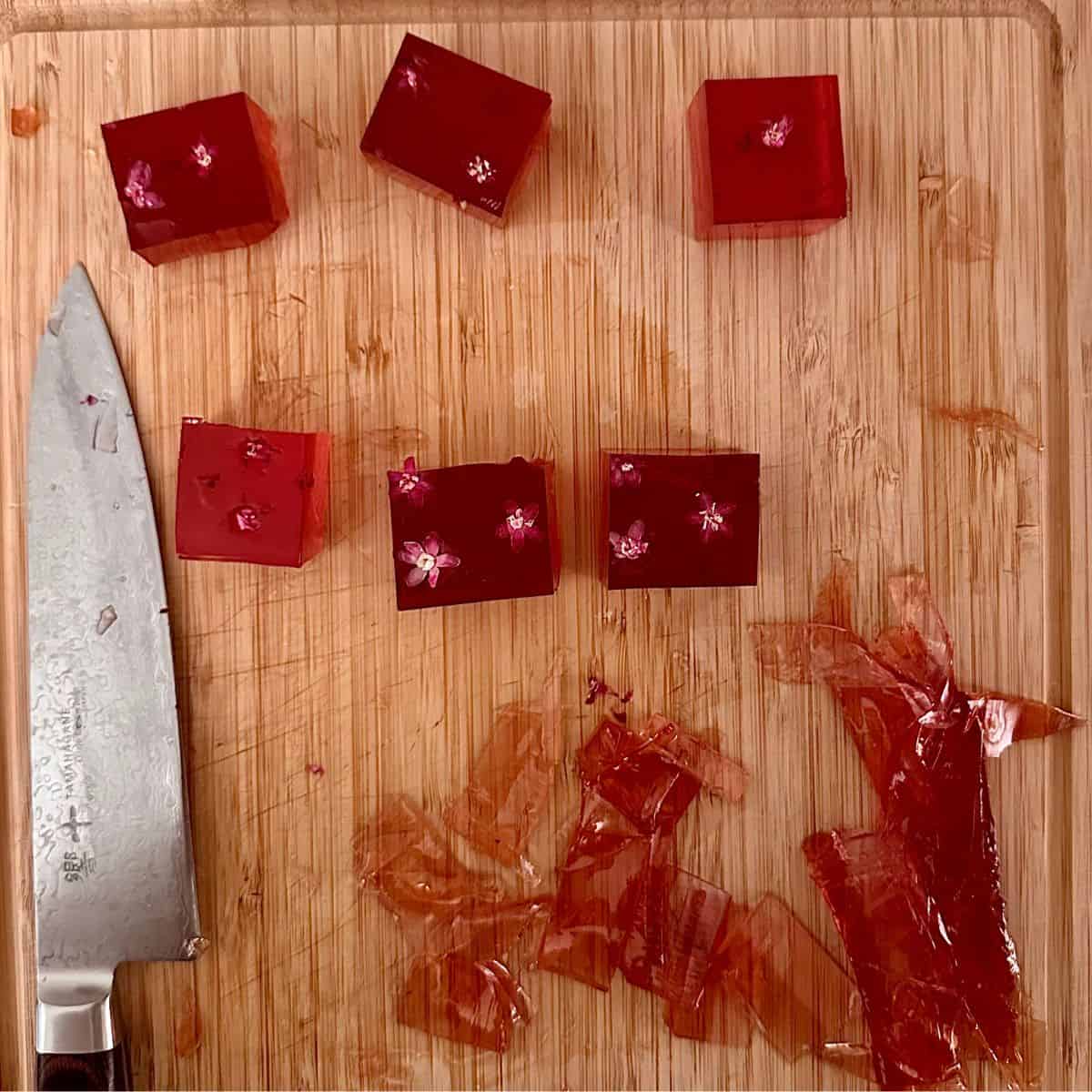
- Cut into 1-inch squares.
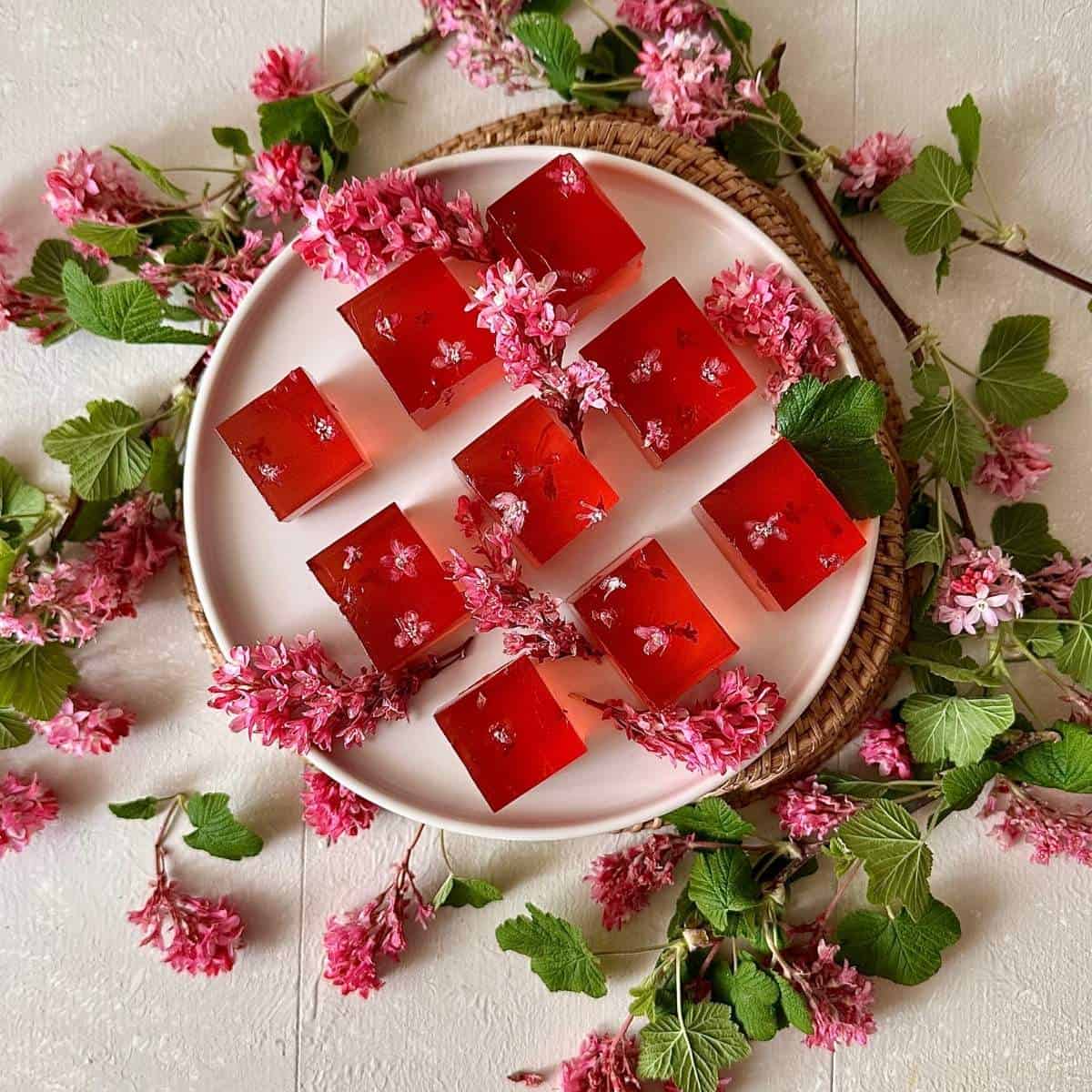
- Flowering current serving suggestion.
Substitutions & Variations
Agar Agar
- You can replace the agar agar with gelatine, but the method will need to be adjusted. Use about 10g powdered gelatine for this quantity. Mix the gelatine thoroughly into the flowering currant cordial before heating gently. Unlike agar agar, gelatine does not need to be boiled, and should only be warmed enough to dissolve. It also sets more slowly, so allow extra chilling time for each layer before adding the next. If you plan to decorate the jelly with flowers, watch the setting closely so you add them at the right moment
Black Raspberry Liqueur
- Chambord works beautifully here, but you can swap it for raspberry liqueur, crème de cassis, gin or vodka depending on the flavour you want. Gin will give a more botanical note, while vodka keeps the flavour cleaner and lets the flowering currant stand out. For an alcohol-free version, omit the liqueur and use more flowering currant cordial, or replace it with pomegranate juice for a deeper colour and fruitier flavour.
Decoration
- Decorate with flowering currant blossoms for a natural finishing touch, or use other edible flowers to suit the season. For a more decorative look, a little edible gold dust adds a subtle shimmer.
Equipment
You will require the following equipment for this recipe:
- A suitable container for the jelly to set in. I use a 1-litre capacity glass dish
- Hand whisk.
- Cling film.
- Digital scales.
Storage
Store the jelly in an airtight container in the fridge for up to 3 to 5 days.
Freezing is not recommended, as the texture can change once thawed. However, if needed, you can freeze it in an airtight container for up to 1 month. After defrosting, the jelly may lose its smooth texture and release some liquid.
Chefs Tips
- We use cling film so that the set jelly comes out of the container easily. If you want to set it in small bowls or a silicone mould, this process is not required.
- Agar agar is fairly forgiving. If the jelly does not set properly, or the two layers do not attach well, you can usually remelt it and try again. This can happen if the agar agar was not simmered for long enough, or if the first layer was too warm or too cold when the second layer was added.
FAQ
Yes, flowering currant flowers are edible. They are often used in syrups, jellies and desserts, and can also be eaten raw in salads. As with all foraged ingredients, it is important to identify them correctly and never guess. Only pick flowers from areas you know have not been sprayed or contaminated.
Flowering currant has a light but distinctive floral flavour. Its taste is delicate, slightly sweet and gently resinous, making it a good choice if you want to capture the flavour of spring in a syrup, jelly or dessert.
Agar agar is a plant-based setting agent made from red seaweed and is often used in place of animal-derived gelatin. It works in a similar way to gelatine, but is completely vegan.
Yes, you can, but the jelly will no longer be vegetarian or vegan. The texture will also be different. Agar agar gives a firmer set, while gelatine creates a softer, more delicate wobble.
📖 Recipe
Layered Flowering Currant Jelly Dessert
Equipment
- 1 Glass or any fridge safe container with 1 litre capacity
- Cling film
Ingredients
Flowering currant jello
- 300 ml Flowering currant cordial
- 1 teaspoon Agar agar powder
Flowering Currant and Black raspberry liquer jello
- 300 ml Flowering currant cordial
- 50 ml Chambord black raspberry liquer
- 1 teaspoon Agar agar
Instructions
Flowering currant jelly
- Line a container with cling film.
- Add the flowering currant cordial and agar agar to a saucepan and whisk well.
- Bring to a boil, then reduce the heat to a simmer and whisk continuously for 1 minute.
- Pour into the prepared container and leave to set at room temperature for 10 to 15 minutes. Prop up one side so the jelly sits at an angle.
- When the surface is just beginning to set, press in the flowering current flowers for decoration.
Flowering Currant and Black Raspberry Liqueur Jelly
- Add the flowering currant cordial, black raspberry liquor and agar agar to a saucepan. Whisk to combine.
- Bring to a boil over medium-high heat, whisking continuously. Reduce the heat and simmer for 1 minute.
- Remove the support from under the container and pour in the second layer of jelly.
- Leave to set at room temperature for 10 to 15 minutes, then decorate with flowering current flowers.
- Leave for 30 minutes, then chill until fully set.
- Turn out, cut into 1-inch squares and serve.
More floral and foraged recipes to try
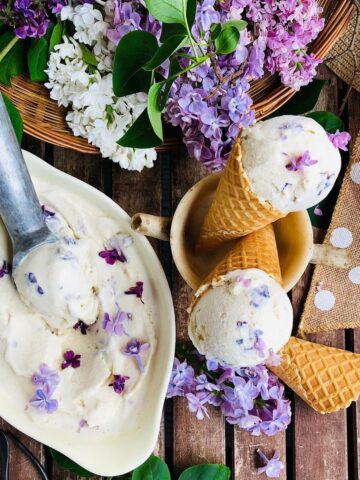
If you enjoy cooking with seasonal flowers and foraged ingredients, here are a few more recipes that celebrate the spring and early summer.
Food Safety
- Wash your hands regularly while preparing, handling and cooking food.
- Wipe down countertops and high-contact points regularly.
- If you cook meat and fish, do not use the same utensils on cooked food that previously touched raw meat. Use separate chopping boards for meat and fish. Wash your chopping boards immediately after use.
- Cook food thoroughly to a minimum internal temperature of 165 °F (74 °C).
- Don't leave food at room temperature for extended periods (more than 2 hours).
- Store food correctly.
Leave a Reply