

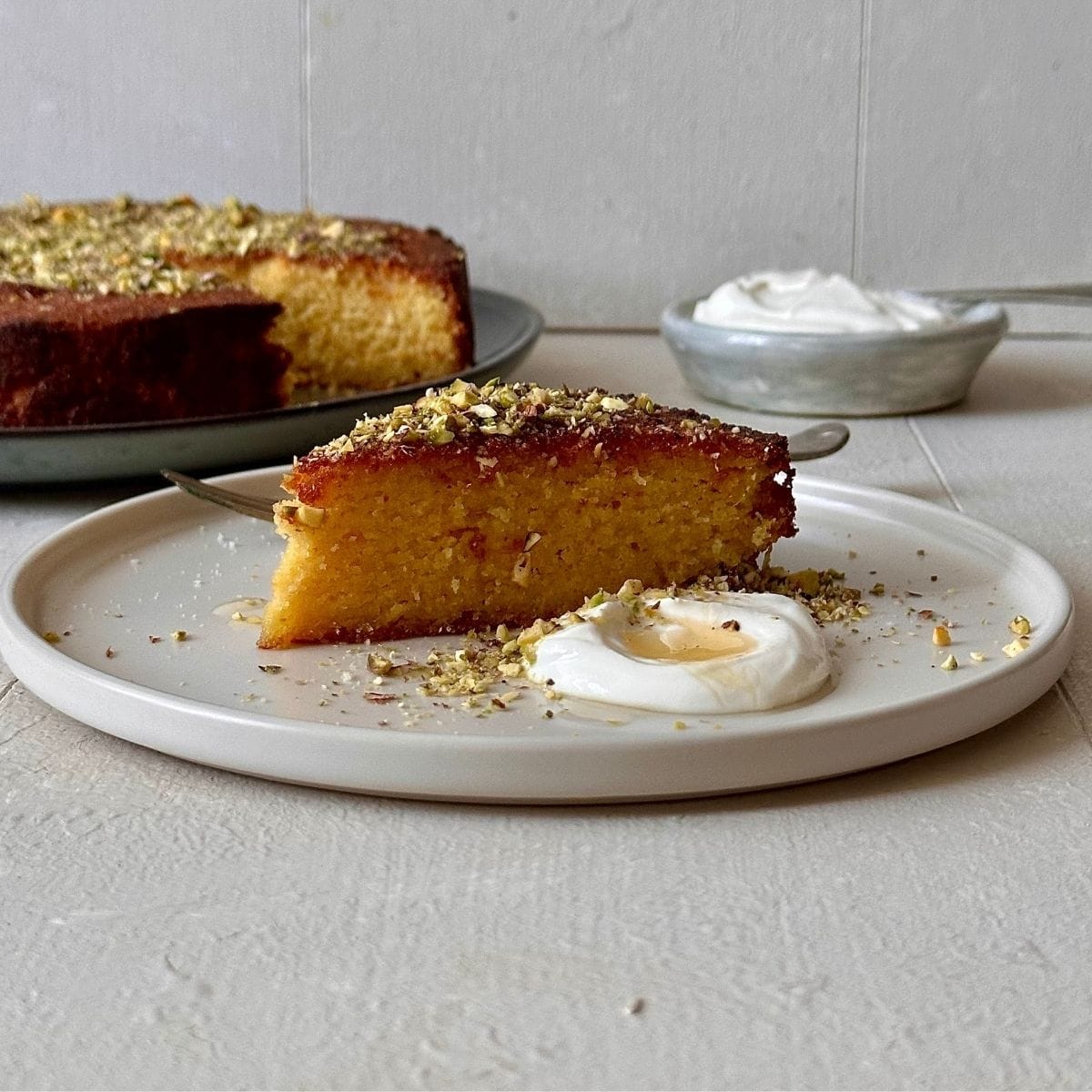
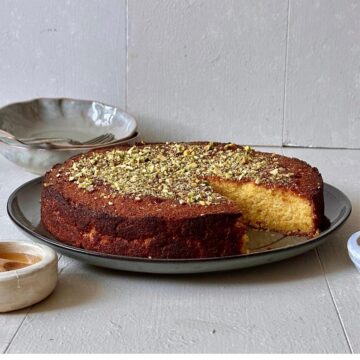
This orange almond polenta cake is a low-waste recipe that makes the most of something we often throw away: orange peel. The real fragrance of an orange is held in its skin, where the citrus oils give this cake its bright flavour and golden colour. Once the orange peel is boiled, the bitterness softens, leaving behind a beautiful orange aroma that works perfectly with ground almonds and fine polenta. The result is a moist, naturally gluten-free orange polenta cake with a tender crumb, a deep citrus flavour, and a little less going in the bin.
You can also use orange peel to make candied orange peel , a lovely sweet treat!
Why You'll Love This Orange Almond Polenta Cake
- Naturally gluten-free when made with gluten-free baking powder.
- Moist and tender, thanks to the ground almonds, butter and orange peel.
- A beautiful low-waste bake, using orange skins that might otherwise be thrown away.
- Full of real orange flavour, because the citrus oils in the peel are blended into the cake.
- Lighter than a traditional flour-based cake, with fine polenta giving a golden colour and gentle texture.
- Lovely as dessert or afternoon cake, served plain or with crème fraîche, orange blossom honey and pistachios.
Jump to:
Key Ingredients & Notes
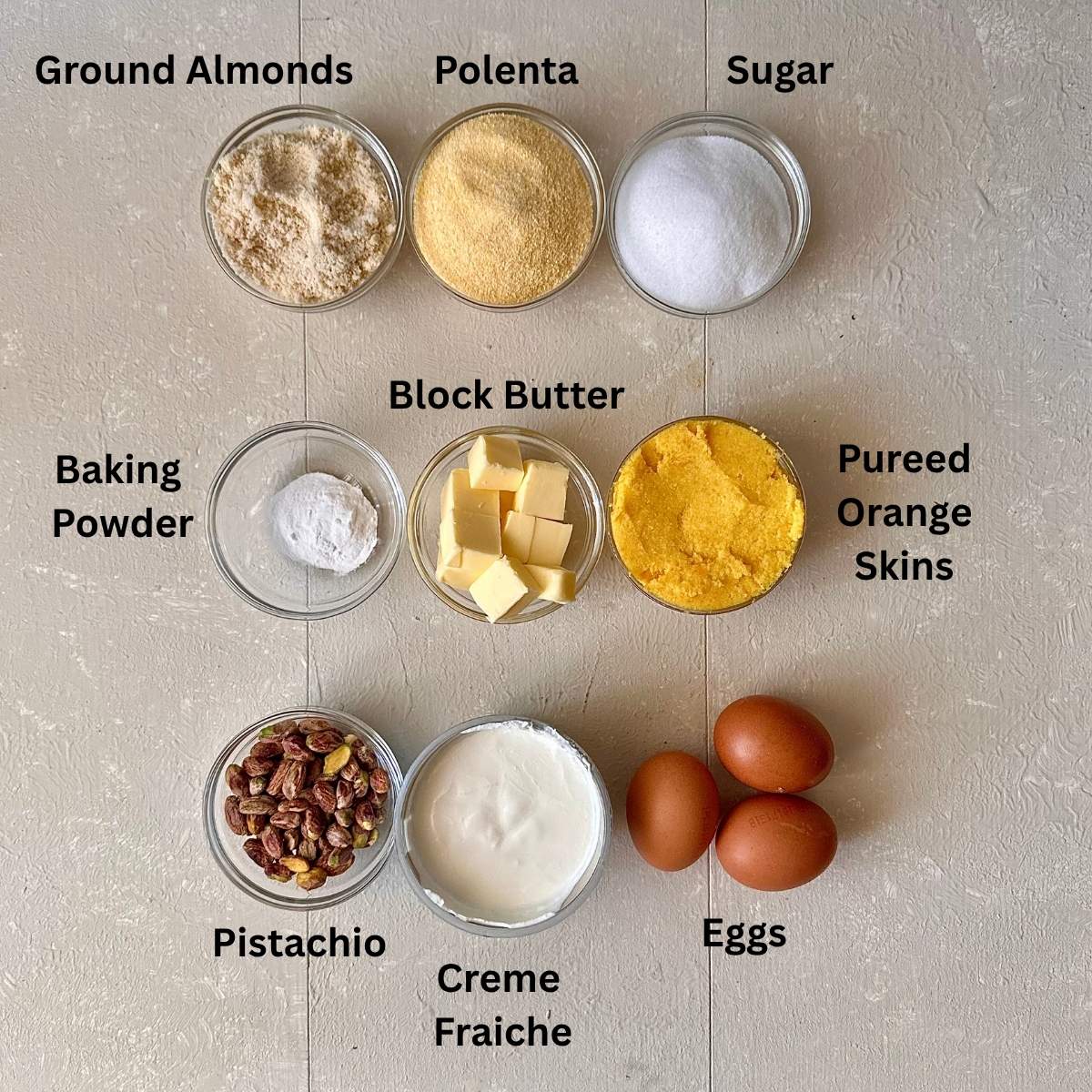
- Orange skins - The orange skins are the heart of this cake. Instead of throwing them away after juicing, they are boiled, blended and added to the batter. This gives the cake its deep orange flavour, golden colour and moist crumb.
- Fine polenta - Polenta gives the cake a gentle texture and golden crumb. Use fine polenta rather than coarse polenta, as coarse polenta can make the cake feel gritty. Polenta is naturally gluten-free, but check the packet if baking for someone with coeliac disease.
- Ground almonds - Ground almonds add moisture, richness and structure. They help give this orange almond polenta cake its tender crumb, so I would not leave them out unless you have tested a replacement.
- Sugar and eggs - Sugar balances the slight bitterness of the orange peel, while the eggs help bind the cake and give it structure.
- Unsalted block butter - Use unsalted block butter rather than spreadable butter. Let it soften at room temperature before mixing so it creams properly with the sugar.
- Baking powder - Baking powder helps lift the cake. Use gluten-free baking powder if you want the cake to be fully gluten-free.
- Pistachios - Pistachios are optional, but they add colour, texture and a lovely nutty finish.
- Crème fraîche - Crème fraîche is optional, but it works beautifully when serving this cake as a dessert. Its slight tang balances the sweetness and citrus flavour.
- Orange blossom honey or orange blossom water - Orange blossom adds a gentle floral note that works well with the orange and crème fraîche. Use orange blossom honey for serving, or add a very small amount of orange blossom water if you want a more fragrant finish.
See the recipe card for quantities.
How to Make Orange Almond Polenta Cake
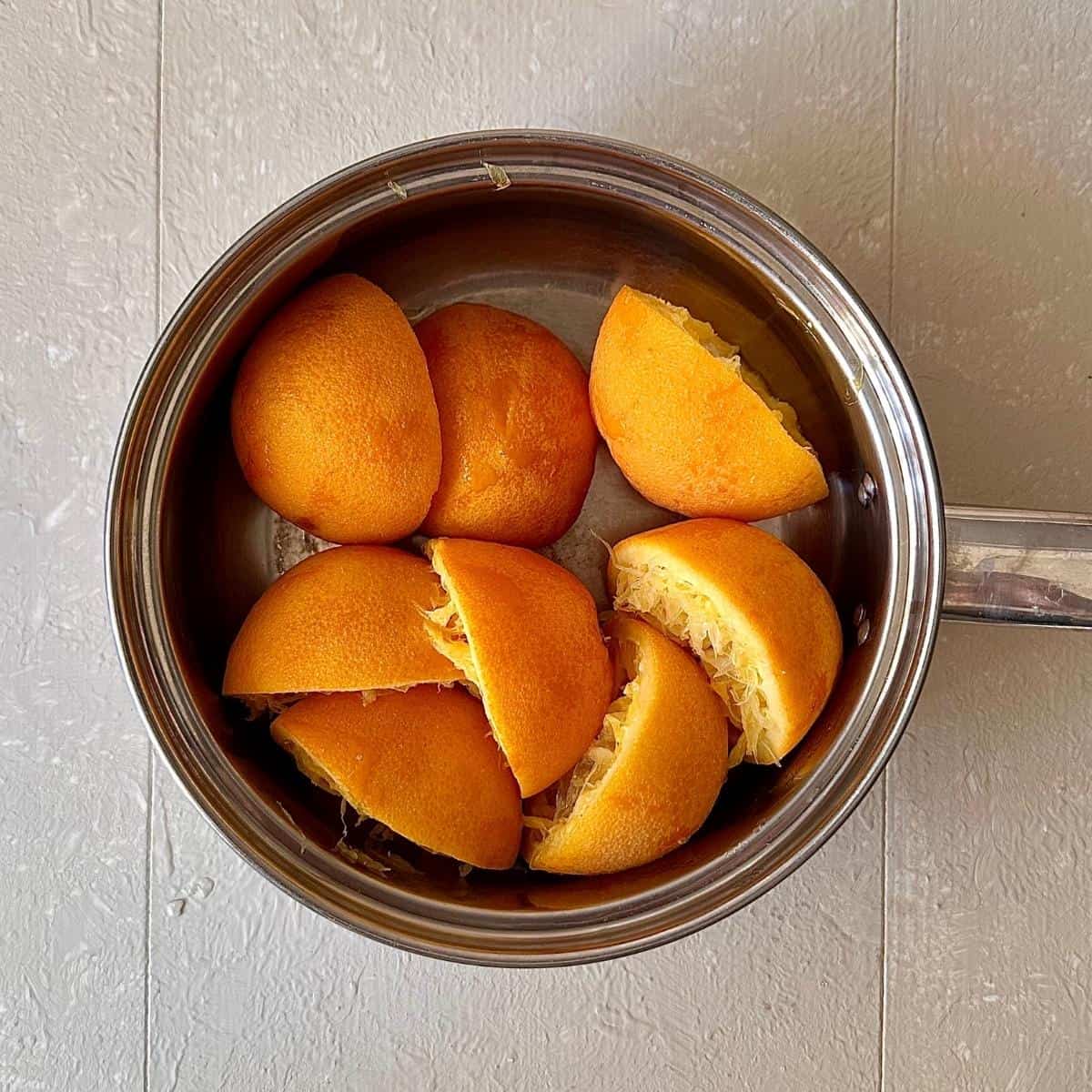
- Place the orange skins in a saucepan and cover with cold water.
- Bring to the boil. Immediately drain the water and then refill the saucepan with cold water. Again, bring to the boil and drain.
- Cover once more with cold water and bring to a boil. Reduce the heat and simmer for 15 minutes.
- Drain and set aside to cool.
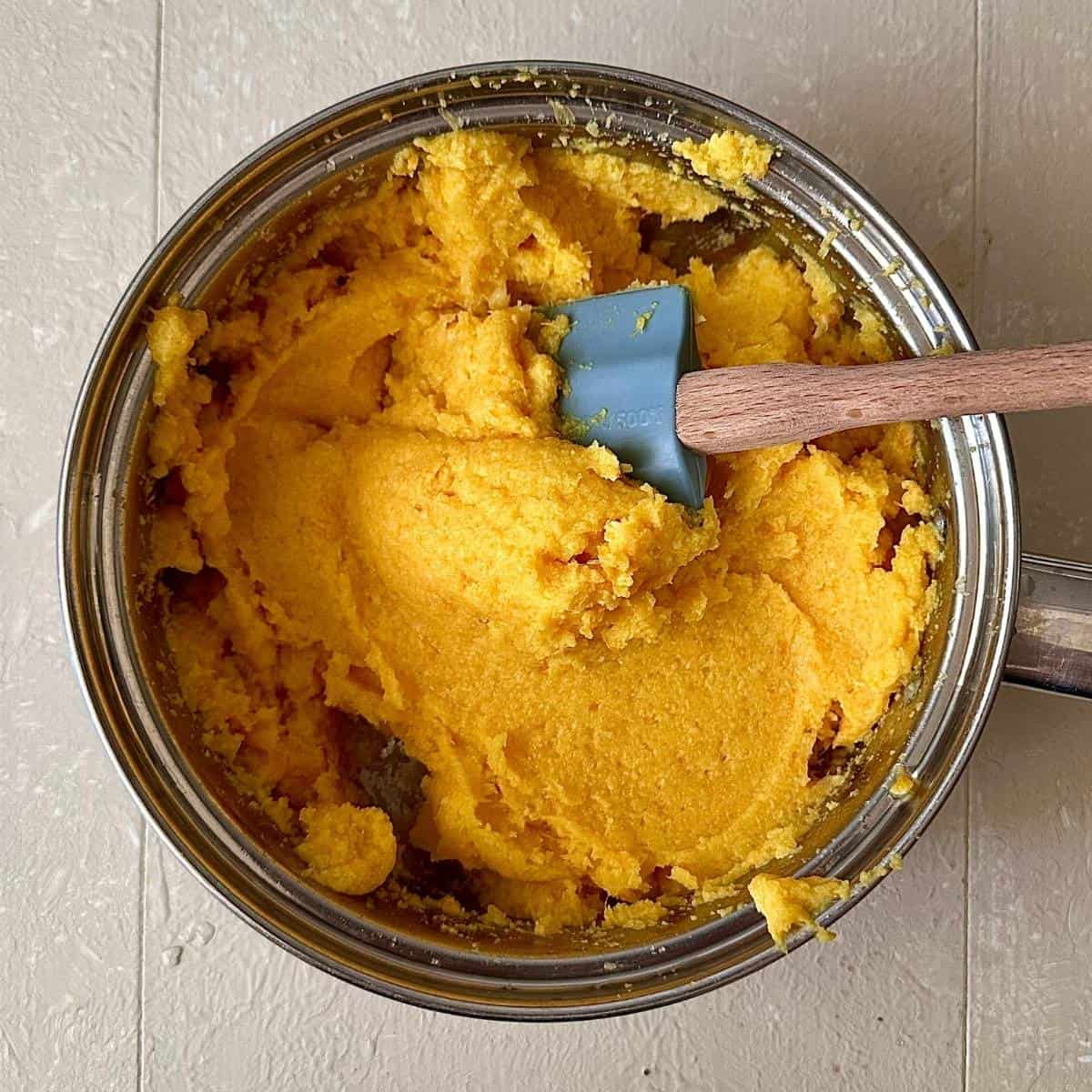
- Blend the orange skins to a smooth paste in a food processor.
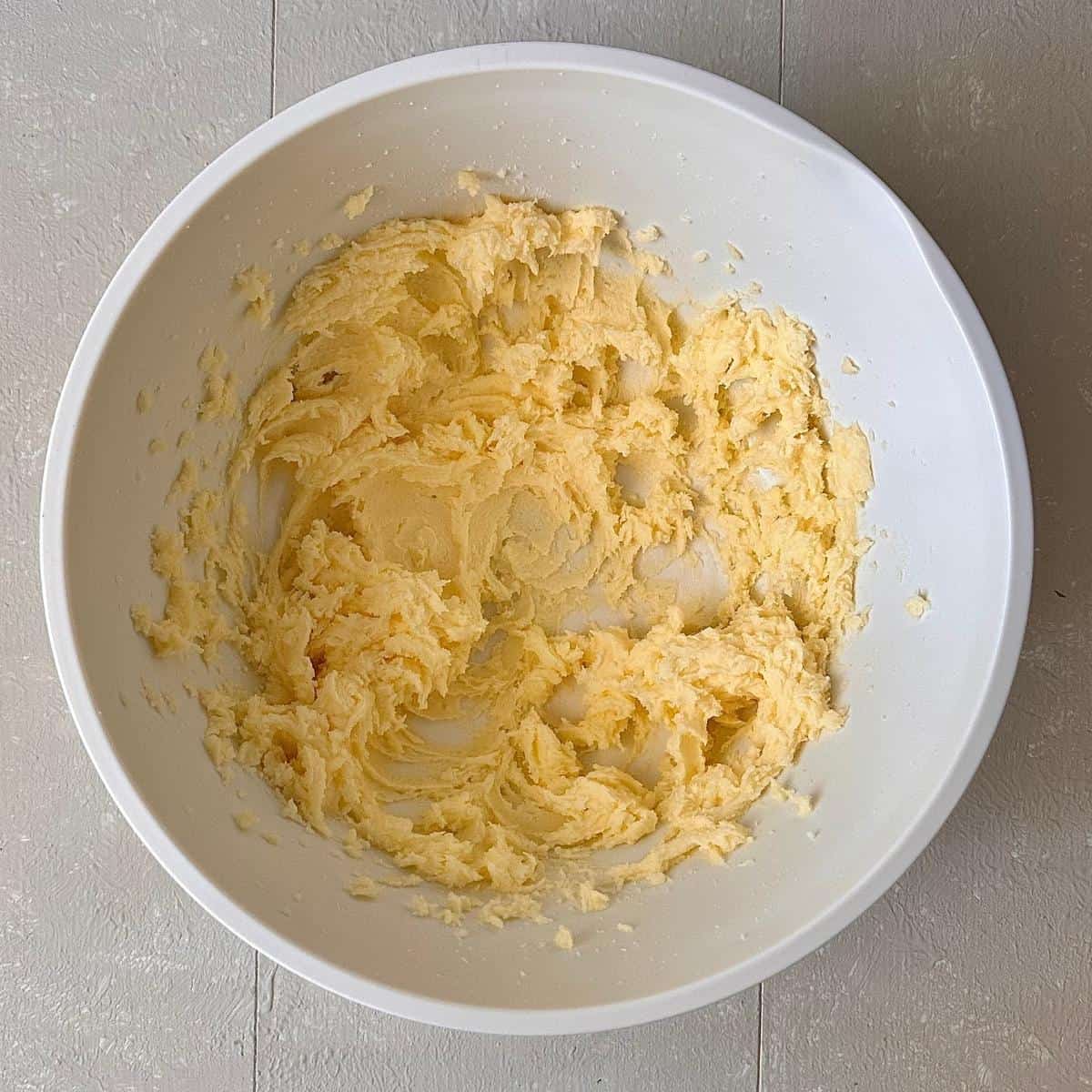
- Mix the butter and sugar in a mixing bowl until light and pale.
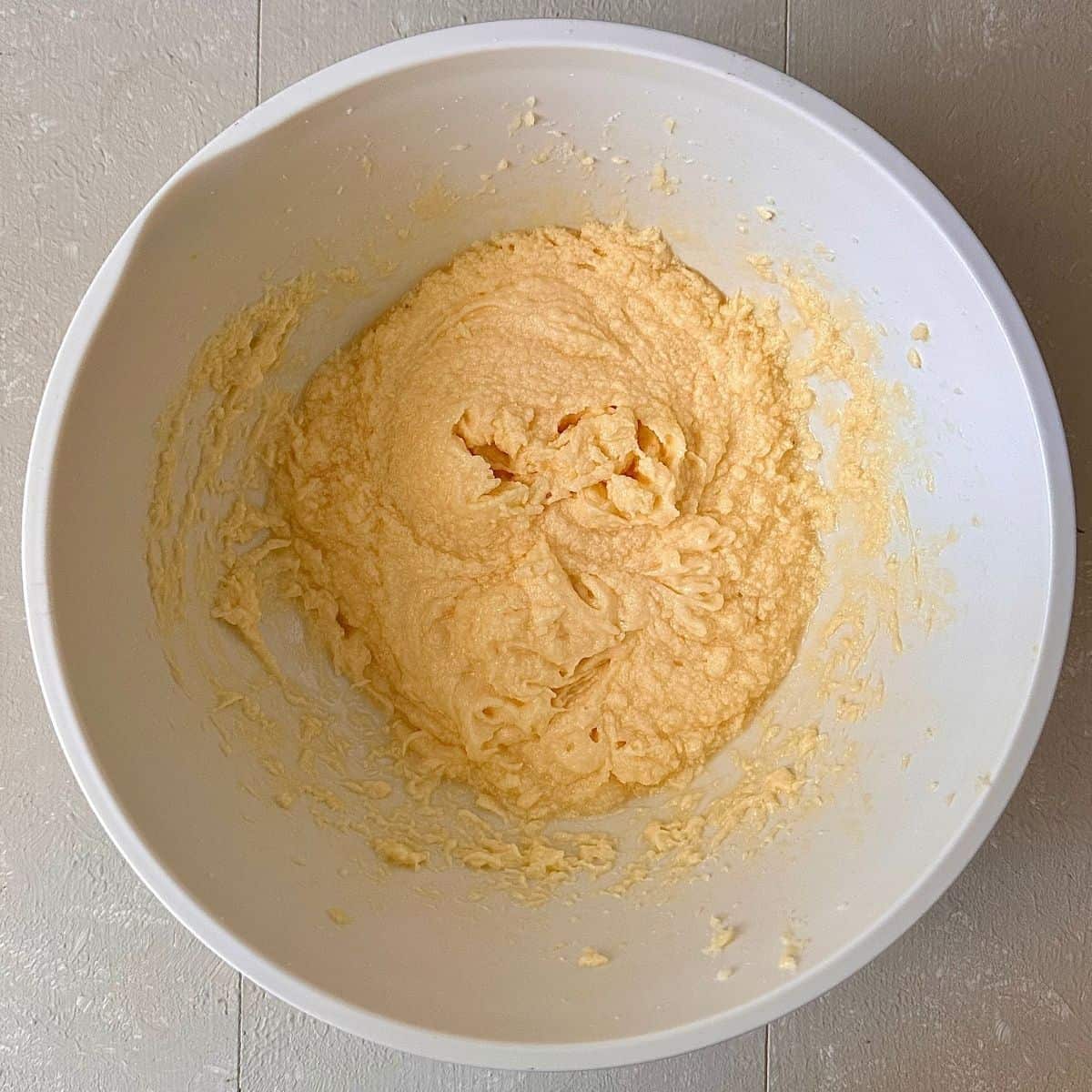
- Add the eggs one at a time, whisking well between each addition.
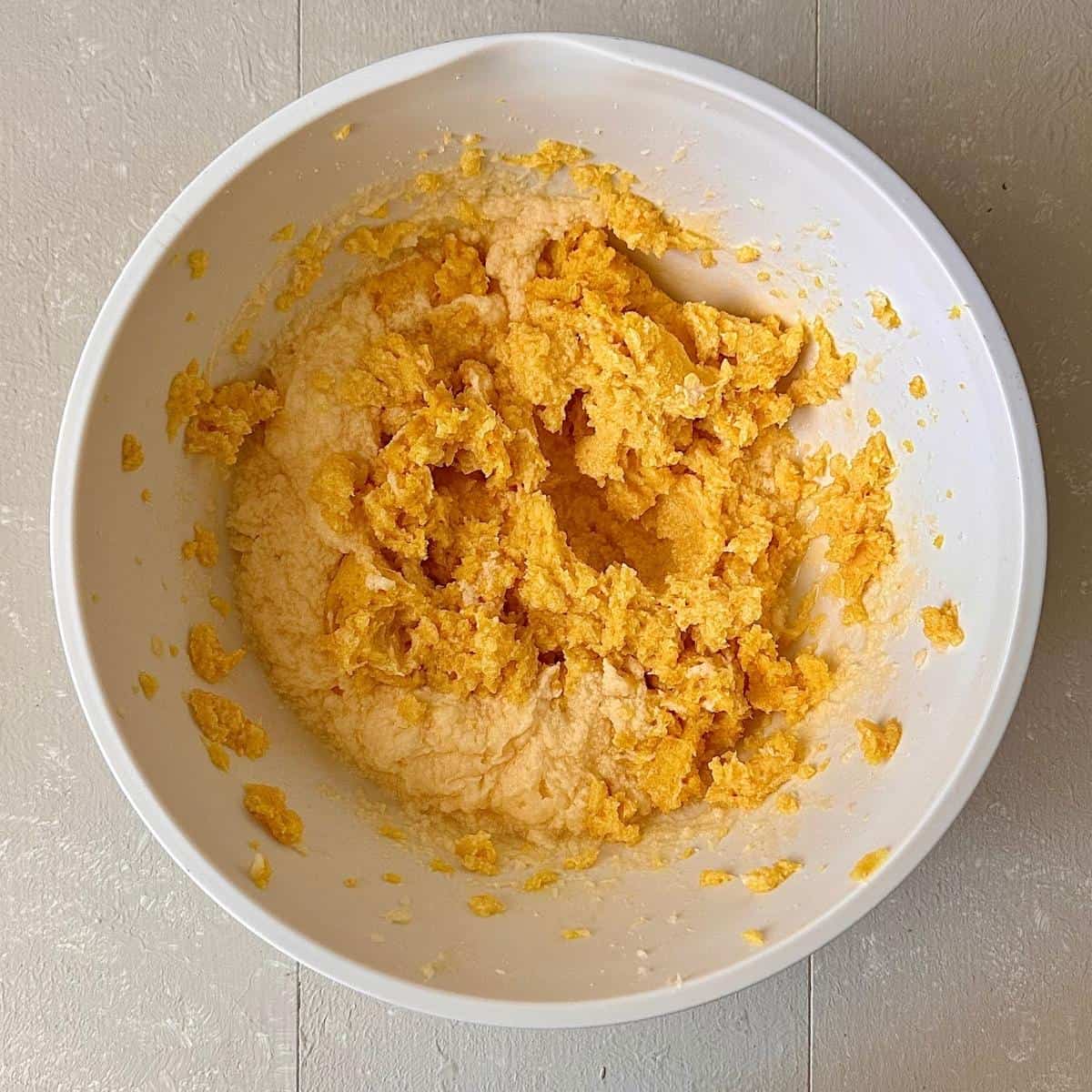
- Add the orange paste and mix to combine.
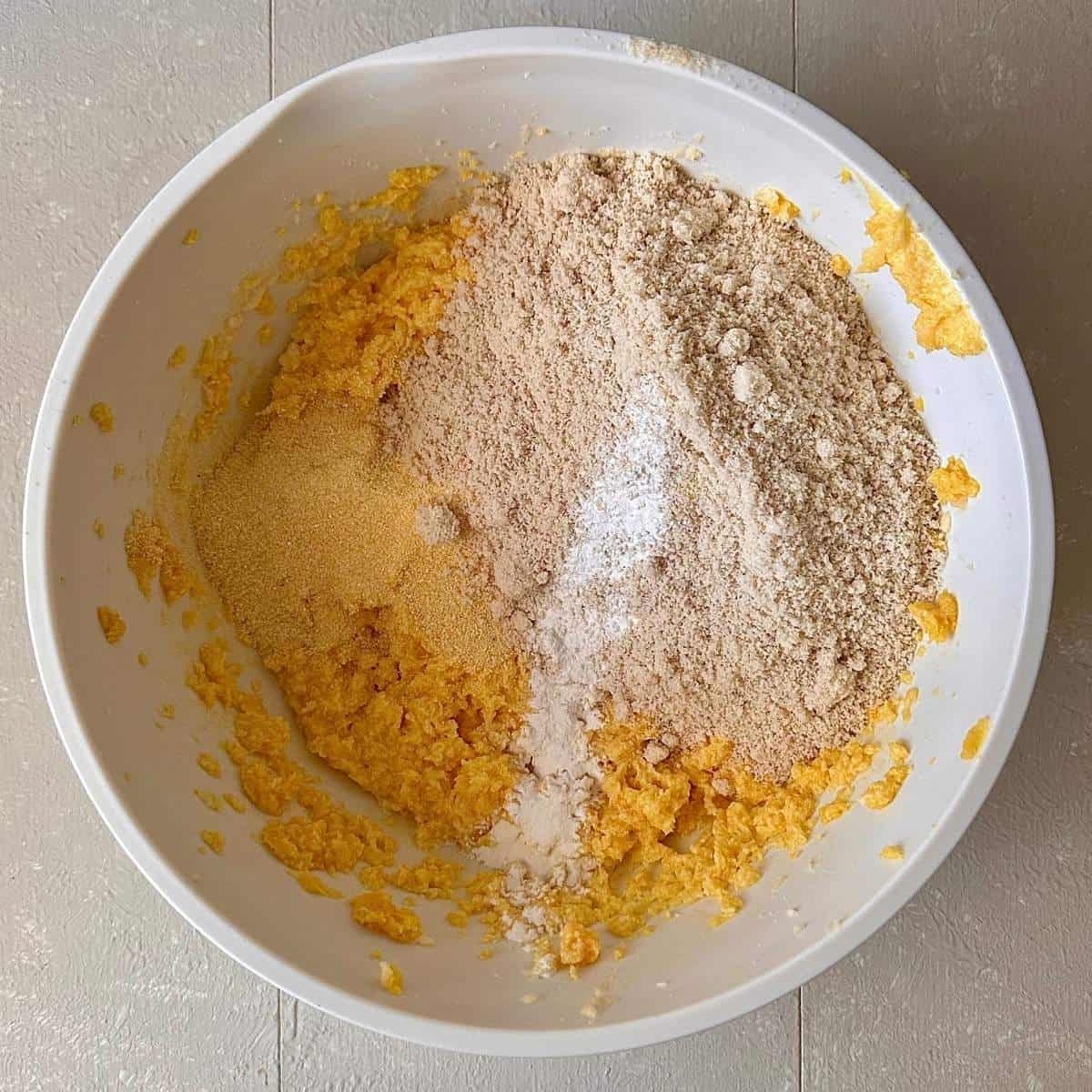
- Add the polenta, ground almonds, and baking powder, then fold into the batter with a spatula, ensuring no dry patches remain.
- Preheat the oven to 180ºC.
- Grease a baking tin with butter and line it with parchment paper.
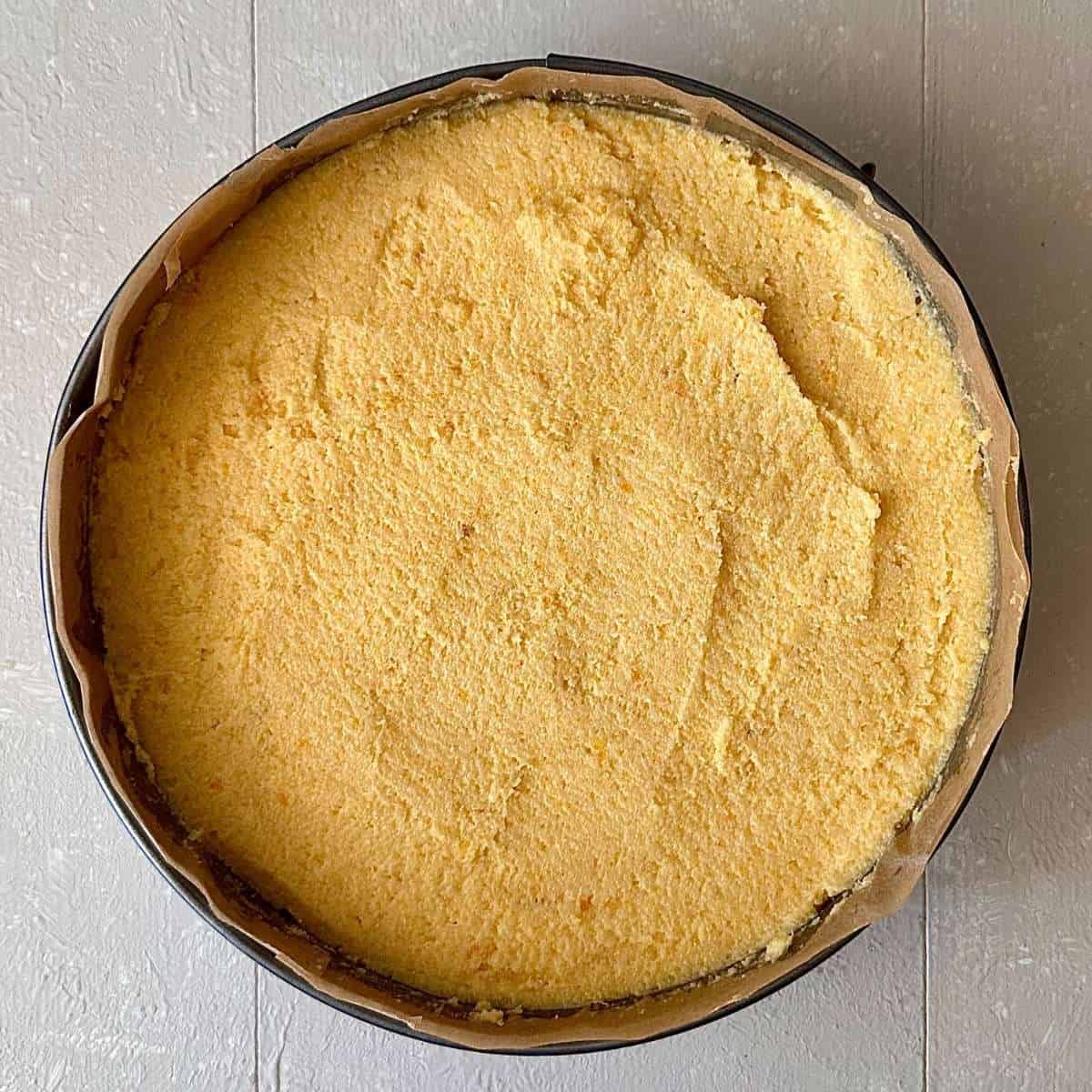
- Spoon the mixture into the tin and spread evenly.
- Bake in the oven for 45 - 50 minutes.
- Ensure it is baked through by inserting a wooden skewer. If it goes out clean with no batter on it, the cake is cooked through.
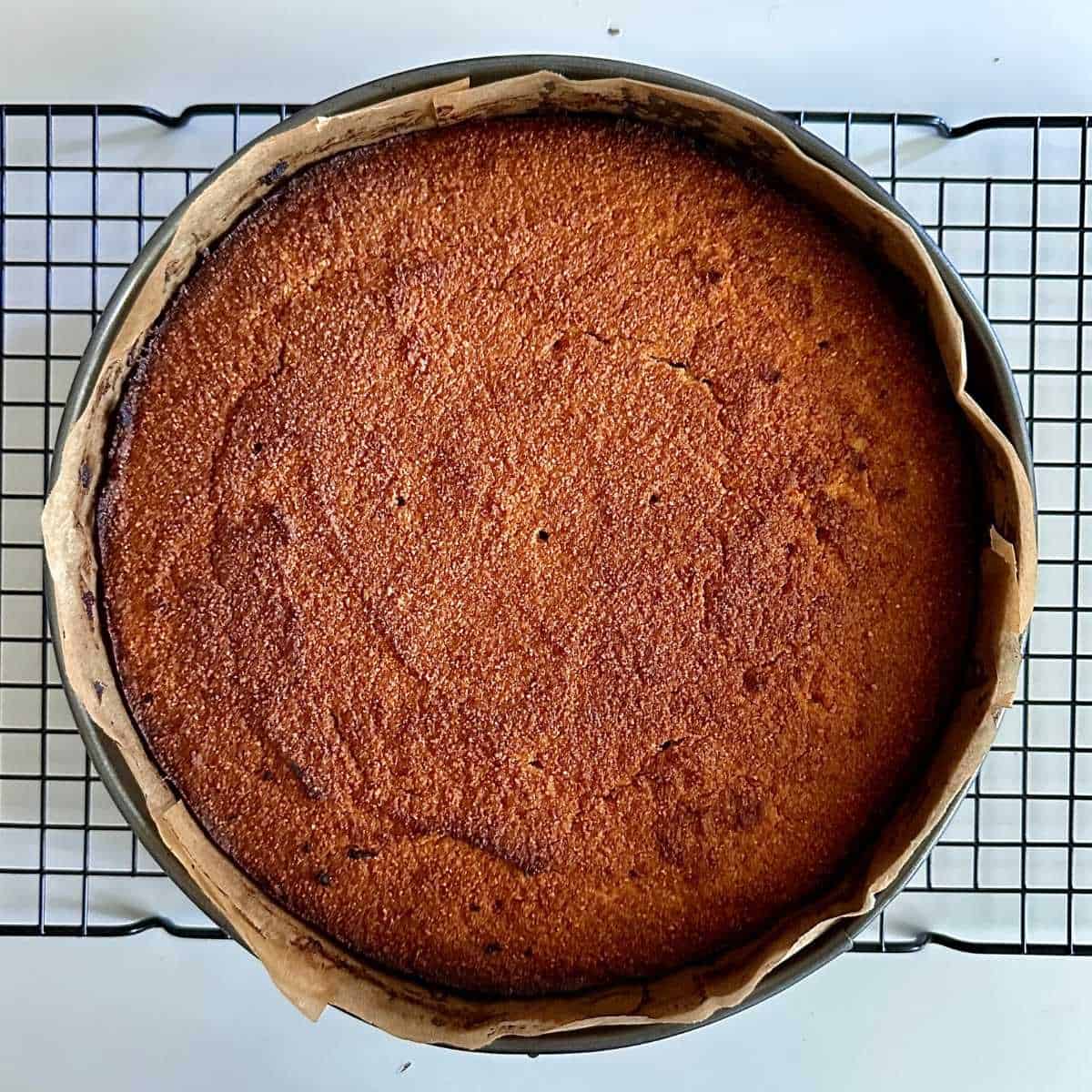
- Transfer the tin to a wire rack and allow the cake to cool down.
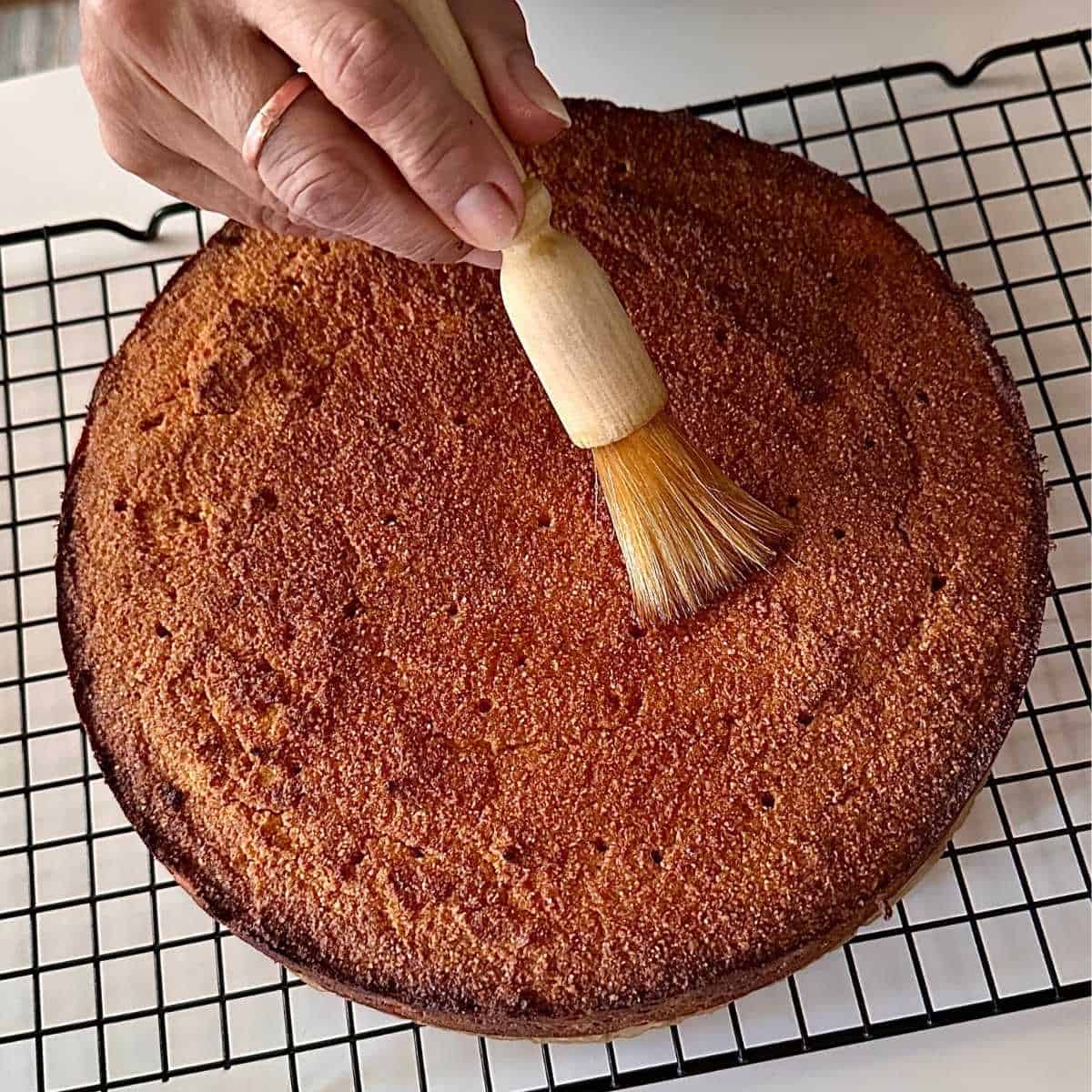
- Mix the honey with 20ml of boiling water until dissolved.
- Pierce the top of the cake all over with a toothpick and brush the watered-down honey all over the cake. The small holes will let it soak into the cake.
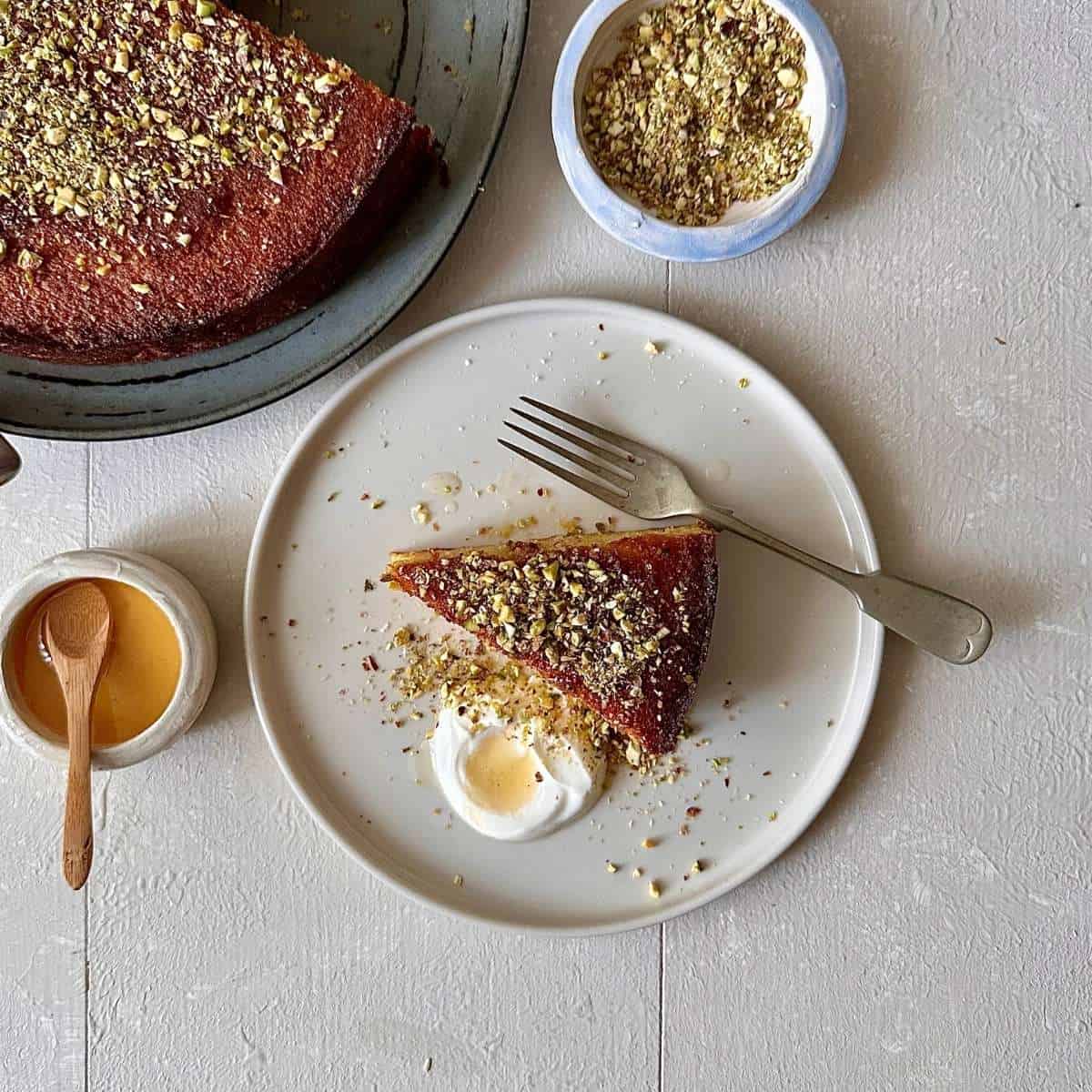
- Scatter with chopped pistachios and serve with creme fraiche and extra honey.
Substitutions & Variations
Use lemons or a mix of citrus
You can replace some of the orange peel with lemon peel for a sharper citrus flavour. A mix of orange and lemon works well, but I would keep orange as the main flavour so the cake stays rounded rather than too sharp.
Try blood oranges
Blood oranges work beautifully when they are in season. They give the cake a slightly deeper citrus flavour and a warmer colour.
Add orange blossom
For a more floral finish, add a small splash of orange blossom water to the honey syrup, or serve with orange blossom honey.
Swap the pistachios
If you do not have pistachios, use flaked almonds or leave the nuts off the top. Do not remove the ground almonds from the cake batter unless you have tested an alternative, as they are important for the texture.
Serve it differently
Crème fraîche balances the sweetness of the cake, but you could also serve it with Greek yoghurt, thick coconut yoghurt or a spoonful of softly whipped cream.
Make it more dessert-like
Serve the cake warm with crème fraîche, honey and chopped pistachios. For afternoon tea, serve it plain with a cup of tea or coffee.
Do not make it vegan by guessing
This recipe relies on eggs, butter and ground almonds for structure and moisture. A vegan version would need proper testing, not a straight swap.
Equipment
Here is the equipment you will need for this recipe:
- Digital scales for accurate ingredient measurement.
- A blender or food processor to create a paste from the orange peel.
- Hand or electric whisk to mix together the cake mix.
- 12-inch baking tin.
- Parchment paper.
- Saucepan.
- Spatula to fold in dry ingredients.
Storage
This cake can stay on the counter top in a cake stand covered with a lid for upto three days, or refrigerate, covered for upto 5 days.
I haven't tried freezing it, however like most cakes it can be frozen for upto three months. Insure it's tightly wrapped or in an airtight container. Defrost in the fridge overnight and consume within three days. Do not freeze again. You can microwave it for a bit to bring it to room temperature.
Chef's Tips
- Boil the orange peel properly - boil and drain it twice, then simmer it a third time until soft. This removes the harsh bitterness from the peel while keeping the fragrant orange oils that give the cake its deep citrus flavour.
- Use softened butter - the butter into small cubes and let it come to room temperature before you start. Soft butter creams more easily with the sugar, giving the cake a better texture.
- Use fine polenta - Fine polenta gives the cake a softer crumb. Coarse polenta can make the texture feel gritty.
- Do not over-bake - Bake until the cake is golden, and a skewer inserted into the centre comes out clean. Overbaking can make almond and polenta cakes dry out.
- Add the syrup while the cake is warm - Brush the honey syrup over the cake while it is still warm, so it soaks in properly.
- Let the cake cool before slicing - This cake is delicate while warm. Let it cool before cutting so the crumb has time to set.
FAQ
Polenta is made from ground corn, usually yellow maize. It can be used in cakes as an alternative to wheat flour, making the cake gluten-free. It gives the cake texture and a golden colour. For this orange polenta cake, use fine polenta.
Yes, you can. Just quarter the oranges and boils mention in the instructions. Cool and puree. Weigh the puree, use the same amount as mentioned in the recipe. You may ned up with left overs. Or weigh the puree first and adjust the rest of the recipe accordingly. Be careful though, in baking a tiny change in weight or process will change the end result.
You can, but you will need to experiment and adjust the amount of polenta. In addition to flavour, the ground almond helps bring the cake together. If you commit it, the cake's texture will noticeably change. Again, be mindful of the importance of using the stated measurements for each ingredient.
Unwaxed oranges are best for this recipe because the peel is boiled, blended and added to the cake. If you only have waxed oranges, scrub them well under warm water before using. Avoid using oranges with damaged, heavily treated or bitter-tasting skins.
📖 Recipe
Orange Almond Polenta Cake
Equipment
- 12 inch Baking tin
- Measuring spoons
Ingredients
- 4 nos Oranges
- 225 gms Butter
- 200 gms Sugar
- 3 nos Eggs
- 100 gms Polenta
- 225 gms Ground Almond
- 1 teaspoon Baking powder
- 2 tablespoon Orange blossom honey optional
- 10 gms Chopped Pistachio optional
Optional to serve
- 200 gms Creme Fraiche
- 2 tablespoon Orange blossom honey
- 15 gms Pistachio Chopped
Instructions
- If you are using juiced orange skin, you should have about 341 gms or so orange skin left over from four medium sized oranges. If youre using whole oranges, zest and juice your oranges, you can save it for another recipe. Fel free to add the zest in the cake recipe.
- Place the orange skins in a saucepan and cover with cold water. Bring to the boil, then drain. Repeat once more with fresh cold water. Cover the orange skins with cold water again. Bring to the boil, then reduce the heat and simmer for 15 minutes, or until soft. Drain and set aside to cool.
- Blend the cooled orange skins in a food processor or blender until smooth.
- Grease and line a cake tin with baking parchment. Preheat the oven to 180°C fan.
- In a mixing bowl, whisk the butter and sugar until light and pale.
- Add the eggs one at a time, beating well after each addition.
- Add the orange paste and mix until combined.
- Add the polenta, ground almonds and baking powder. Fold with a spatula until combined and no dry patches remain.
- Spoon the mixture into the prepared tin and spread evenly. Bake for 45-50 minutes, or until golden and a skewer inserted into the centre comes out clean.
- Leave the cake in the tin for 10-15 minutes, then transfer to a wire rack.
- Mix the honey with 20ml boiling water until dissolved.
- Pierce small holes over the warm cake with a skewer or toothpick, then brush over the honey syrup and let it soak in.
- Scatter with chopped pistachios, if using. Serve plain or with crème fraîche, extra honey and more pistachios.
More Cake Recipes
Need some cake inspiration? Here are a few for you to try, whether you want something fruity, rich, no-bake or celebration-worthy.
Food Safety
- Wash your hands regularly while preparing, handling and cooking food.
- Wipe down countertops and high-contact points regularly.
- If you cook meat and fish, do not use the same utensils on cooked food that previously touched raw meat. Use separate chopping boards for meat and fish. Wash your chopping boards immediately after use.
- Cook food thoroughly to a minimum internal temperature of 165 °F (74 °C).
- Don't leave food at room temperature for extended periods (more than 2 hours).
- Store food correctly.

Oli says
Amazing! Would never have thought you could make such a delicious cake from orange skin! And gluten free too. Thanks for the recipe!
Elspeth says
I made this cake at the weekend and everyone who tasted it wants the recipe 🙂 Polenta isn't available in the shops where I live so I used plain gluten free flour instead. I shall certainly be making this cake again.