

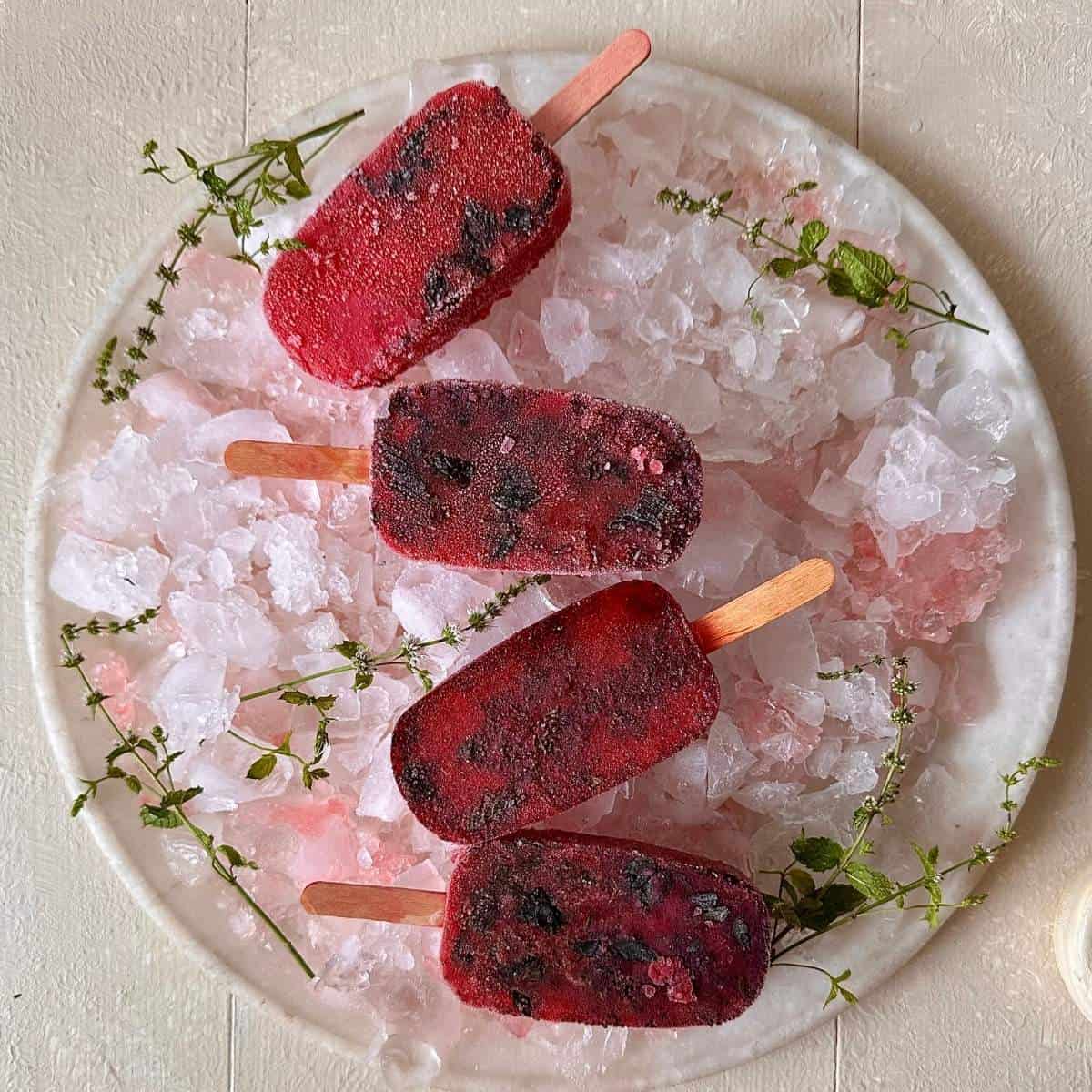
When summer temperatures rise, few things are more refreshing than an ice lolly. These homemade rose and basil seed popsicles are sweet, floral, and cooling, with fresh mint and a pinch of kala namak balancing the rose syrup's sweetness.
Soaked basil seeds add a soft, gently gelatinous texture and a small amount of dietary fibre. The popsicles are water-based and naturally dairy-free, although they are still best enjoyed as a sweet frozen treat rather than presented as a health food.
Rose syrup is especially popular in India during the summer, where it is commonly mixed with water or milk to make cooling drinks and used to flavour desserts such as falooda and kulfi. Its fragrant floral flavour works particularly well here with fresh mint and the subtle savoury note of kala namak.
Jump to:
Key Ingredients & Notes
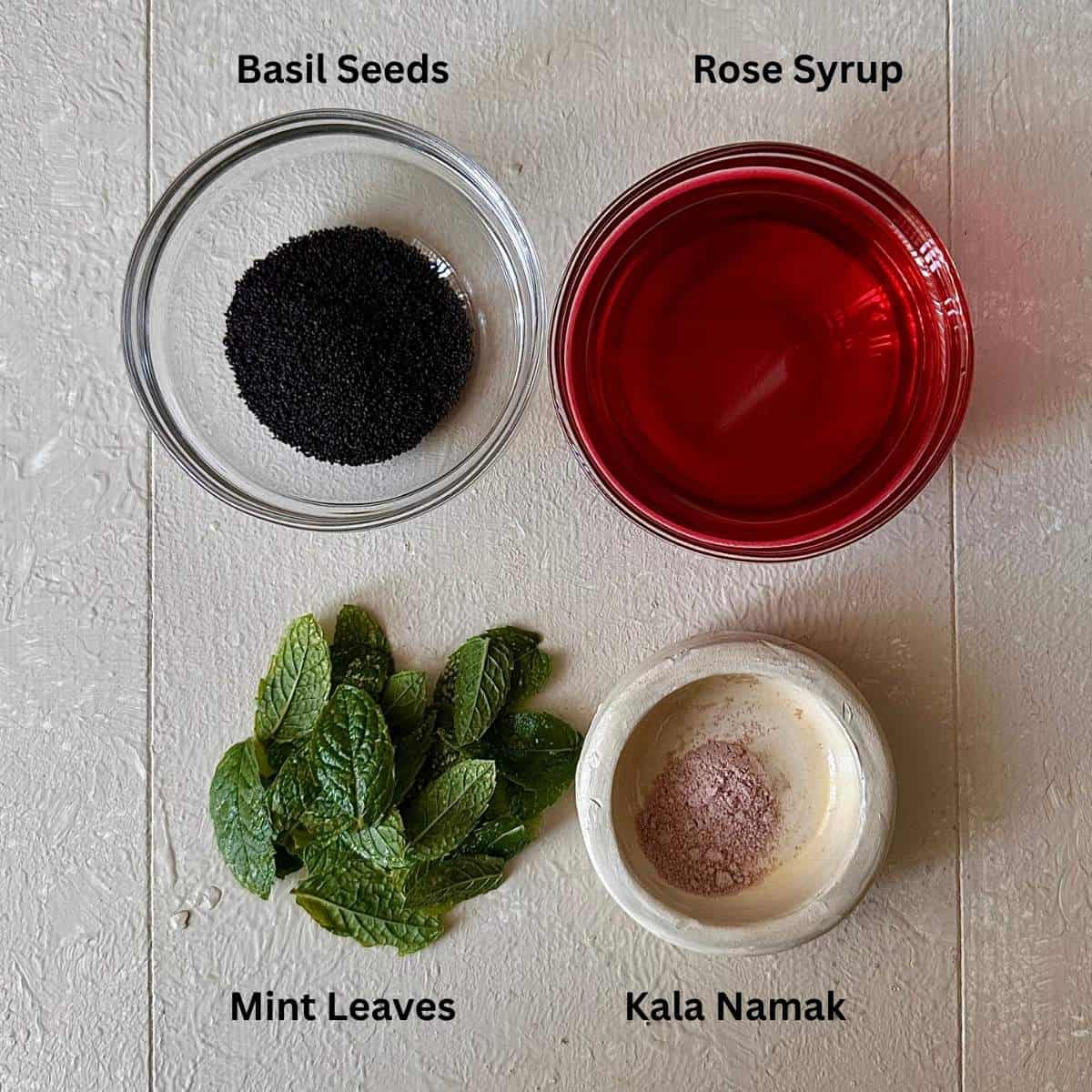
- Basil seeds - also known as sabja seeds, tukmaria seeds, or falooda seeds. When soaked in water, they swell and develop a soft, translucent coating.
- They provide texture and a small amount of dietary fibre, although the amount per popsicle will be modest.
- Rose syrup - Rose syrup gives the popsicles their sweetness, floral flavour and colour. Different brands vary considerably in strength and sugar content, so taste the mixture before freezing.
- This recipe contains more syrup than water, so that the finished popsicles will be distinctly sweet. Adjust the ratio if your syrup is especially concentrated.
- Mint leaves - Fresh mint adds a cooling note and helps prevent the rose syrup from tasting overly sweet or perfumed.
- Kala namak - Kala namak, also known as black salt, has a salty, savoury and slightly sulphurous flavour. A small amount helps balance the sweetness of the rose syrup.
- Use it sparingly because too much can overpower the floral flavour
See the recipe card for quantities.
Why You'll Love These Rose and Basil Seed Popsicles
- Sweet and floral: Rose syrup gives the popsicles their distinctive fragrance, colour and flavour. Like your floral flavours? Give my elderflower and strawberry popsicles a go
- Refreshing summer treat: Fresh mint provides a cooling contrast to the sweet syrup.
- Unusual flavour balance: Kala namak adds a subtle, salty, savoury note.
- Interesting texture: Soaked basil seeds develop a soft, gelatinous coating.
- Quick to prepare: The mixture takes only a few minutes to assemble before freezing.
- Naturally dairy-free: The recipe contains no milk, cream or yoghurt.
- A little added fibre: Basil seeds contribute a modest amount of dietary fibre.
Instructions
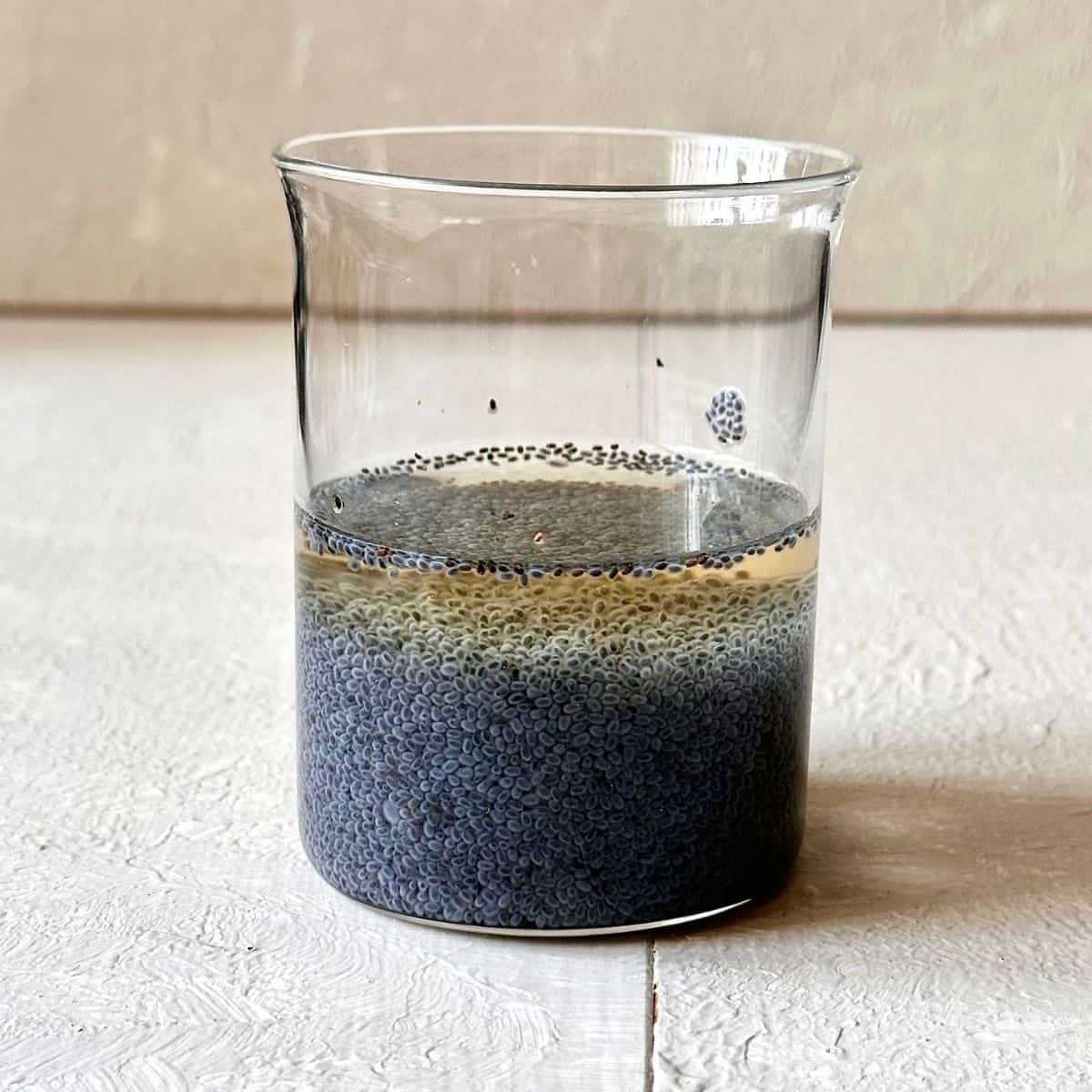
- Place the basil seeds in a small bowl with the water. Leave them to soak for 10-15 minutes, until they swell and develop a soft, gel-like coating.
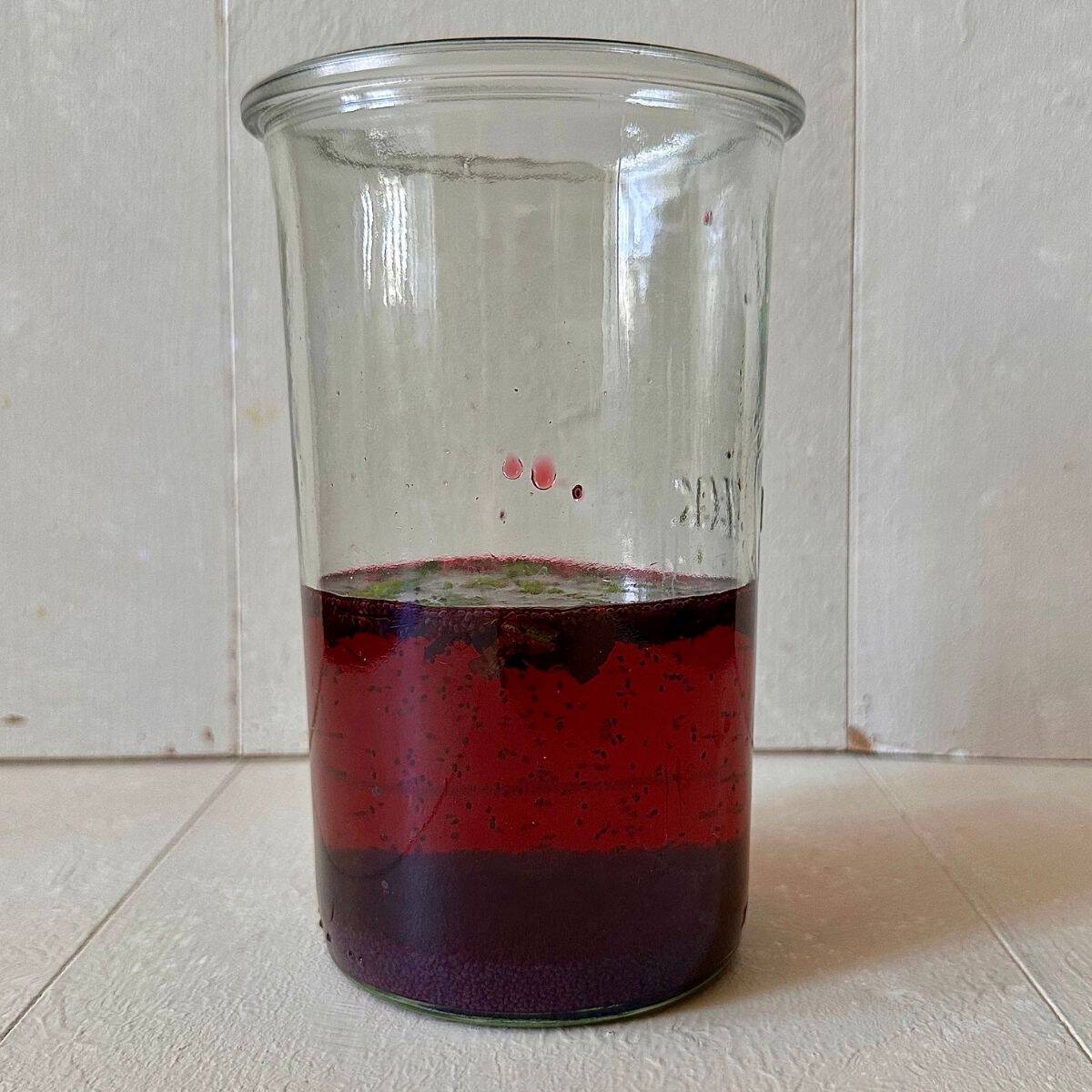
- Pour the rose syrup into a jug. Add the kala namak (black salt) and stir until combined.
- Stir the soaked basil seeds, along with any remaining soaking water, into the rose syrup mixture.
- Finely slice or gently tear the mint leaves and stir them through the mixture.
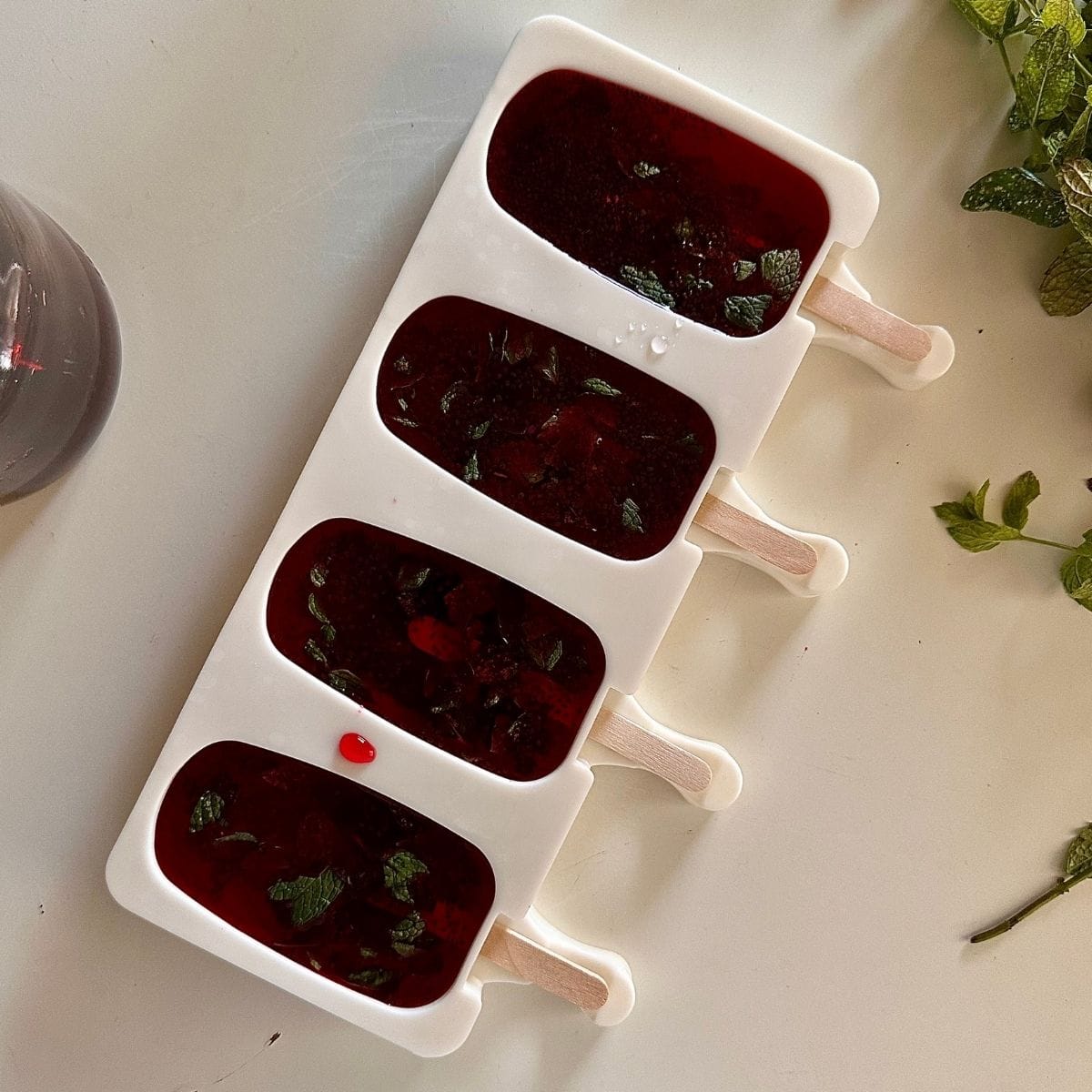
- Pour the rose and basil seed mixture evenly into the popsicle moulds ( with the stick already in ), leaving a little space at the top for expansion.
- Freeze for at least 6 hours, or preferably overnight, until completely solid.
- Once frozen, gently pull out the popsicle and serve immediately.
Substitutions & Variations
- Leave out the kala namak: The popsicles will still work, but they will taste sweeter and less complex.
- Use ordinary salt: Replace the kala namak with a very small pinch of fine salt. It will balance the sweetness but will not add the same distinctive flavour.
- Add lemon or lime juice: A small squeeze of citrus can sharpen the rose flavour and cut through the sweetness.
- Replace the mint: Use lemon balm for a softer citrus-herbal flavour.
- Make them less sweet: Reduce the rose syrup and increase the water. Bear in mind that this may make the popsicles harder and icier.
- Add fruit: Try raspberries, strawberries or pomegranate arils, all of which pair well with rose.
- Leave out the basil seeds for a smoother rose-and-mint popsicle.
- Use chia seeds instead: Chia seeds can work in a pinch, but they hydrate more slowly and create a slightly different texture.
- Add extra mint: Use a little more for a fresher flavour, but do not add so much that it overwhelms the rose.
- Make mini popsicles: Pour the mixture into smaller moulds for quicker freezing and smaller portions.
Equipment
I highly recommend investing in lolly moulds for this recipe. It makes life much easier!
Storage
Keep the popsicles frozen in their moulds until needed.
I would suggest eating within one month to enjoy them at their best.
Recipe Tips
- Soak the basil seeds first: Let them fully swell before adding them to the mixture. Dry seeds will not hydrate evenly once frozen.
- Taste before freezing: The mixture should taste slightly sweeter and more intense than you want it to, because freezing dulls both sweetness and flavour.
- Use kala namak sparingly: Its sulphurous flavour can quickly overpower the rose. Measure it rather than adding it by eye.
- Bruise the mint gently: Lightly crush the leaves to release their oils without shredding them into large, frozen pieces.
- Stir before pouring: Basil seeds settle quickly, so stir the mixture immediately before filling each mould.
- Leave room at the top: Allow a little space for expansion as the popsicles freeze.
- Freeze overnight: Four to six hours may be enough, but overnight freezing gives a firmer, cleaner result.
- Release them gently: If you're using a silicone mould, no need to run it underwater, gently pull the sides and the lolly will be released.
FAQs
These rose popsicles have a sweet, floral, fragrant flavour. In this recipe, fresh mint adds a cooling note, while kala namak provides a subtle, salty, savoury contrast.
Kala namak is a type of rock salt, also known as black salt, mined in the Himalayas. It is famous for its sulphurous, eggy flavour and smell and is widely used in Asian cuisine. When whole, the salt is "black", but when ground, it has a pink colour. It has lower sodium content than regular salt and is used in Ayurveda for its digestive properties.
I have used it in this recipe to balance the sweetness of the rose syrup.
No, they have a mild, almost neutral flavour. I use them for the soft texture they provide and also their health benefits.
Yes, Sabja seeds are basil seeds. Other names are sweet basil seeds, tukmaria seeds or falooda seeds.
Yes. Soaking allows the basil seeds to develop their soft outer coating and gives them a more pleasant texture. Don't add dry basil seeds directly to the mould; soak them first as directed in the method. Let them thicken fully also to discourage sinking in the mould.
No, not as a direct substitute. Rose water can provide some fragrance, but no sweetness, colour or body.
📖 Recipe
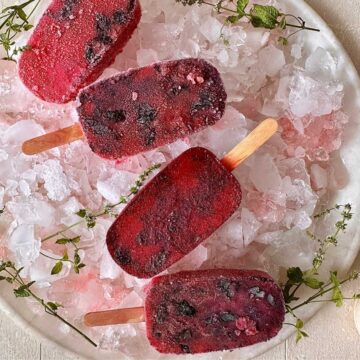
Rose and Basil Seed Popsicles
Equipment
Ingredients
- 200 ml Rose syrup
- 1 tablespoon Basil seeds
- 100 ml Water
- ¼ teaspoon Kala namak
- Mint leaves
Instructions
- Add the basil seeds to a small bowl and pour over the water. Stir well, then leave to bloom for 10-15 minutes, until the seeds develop a gel-like coating.
- Pour the rose syrup into a jug. Add the kala namak and tear in the mint leaves.
- Add the bloomed basil seeds and their soaking water. Stir thoroughly to distribute the seeds evenly.
- Place the lolly mould on a tray so it remains level. Pour the mixture evenly between the moulds, leaving a little space at the top.
- Insert the lolly sticks and freeze for at least 6 hours, preferably overnight, until completely firm.
- To release the popsicles, briefly run the outside of the mould under lukewarm water. Serve immediately, with a very light dusting of kala namak if desired.
More Refreshing Summer Recipes
Looking for more ways to cool down? Try these refreshing summer recipes, from fruity frozen treats to floral drinks made for warm days.
Food Safety
- Wash your hands regularly while preparing, handling and cooking food.
- Wipe down countertops and high-contact points regularly.
- If you cook meat and fish, do not use the same utensils on cooked food that previously touched raw meat. Use separate chopping boards for meat and fish. Wash your chopping boards immediately after use.
- Cook food thoroughly to a minimum internal temperature of 165 °F (74 °C).
- Don't leave food at room temperature for extended periods (more than 2 hours).
- Store food correctly.
Leave a Reply