

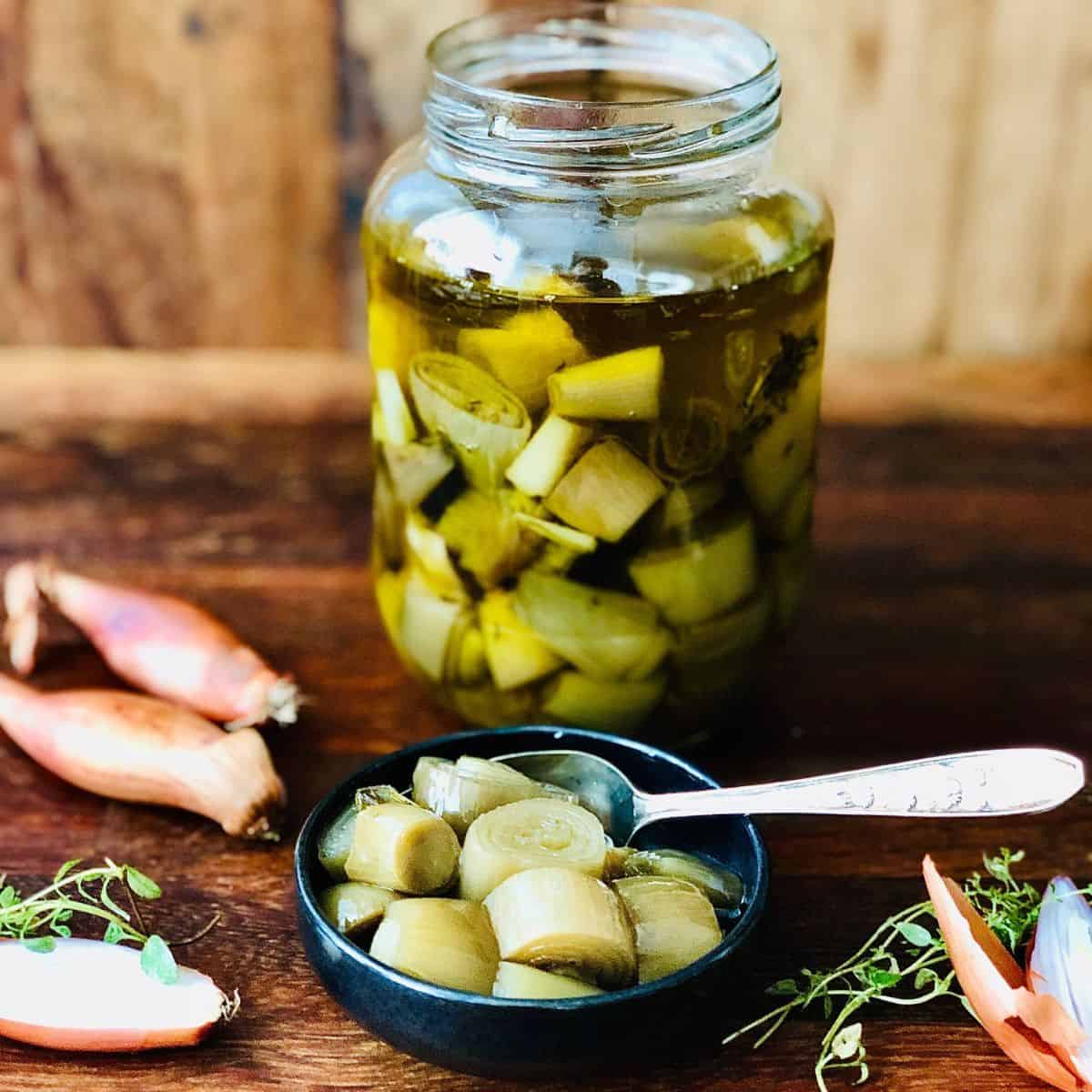
If you are a confit garlic and tomato fan, you must try this confit shallot recipe. Slow-cooking the shallots in olive oil transforms their taste and texture into something sweet and tender, and they will last for two months or more in the refrigerator. As a condiment, they can accompany many dishes and be a beautiful addition to your grain bowls, tacos or even toast. One of my favourite things is to turn the confit shallots into a puree and add them to my toast with either cheese or pan-fried mushrooms.
Ingredients
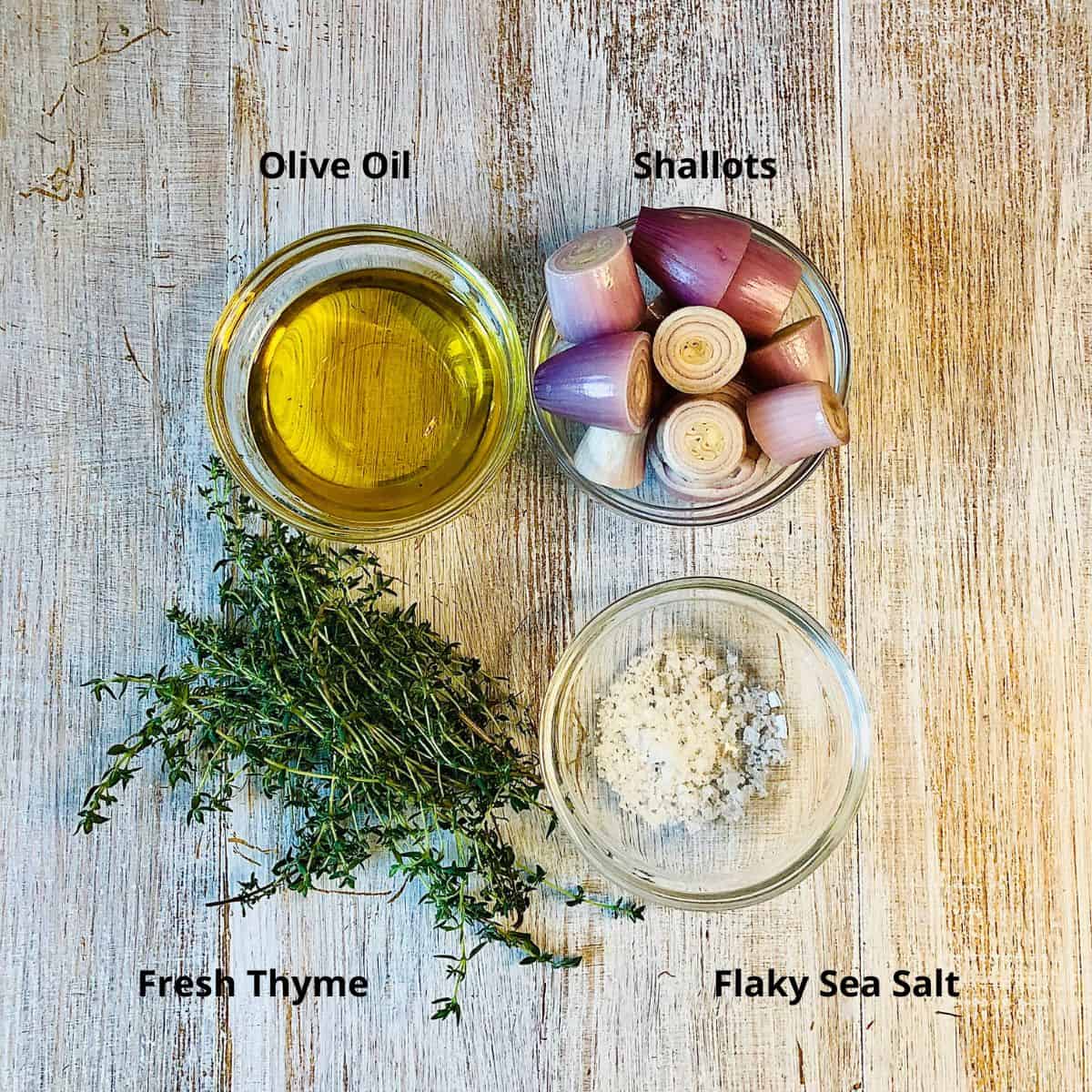
- Olive oil
- Shallots
- Fresh thyme
- Flaky sea salt
See the recipe card for quantities.
Instructions
First, sterilise the jar where you intend to store the confit shallots by washing it in warm soapy water and placing it in the oven at 100ºC for thirty minutes.
Prepare the shallots by cutting off the head and tail and peeling them. Cut the shallots into slices about the thickness of your finger.
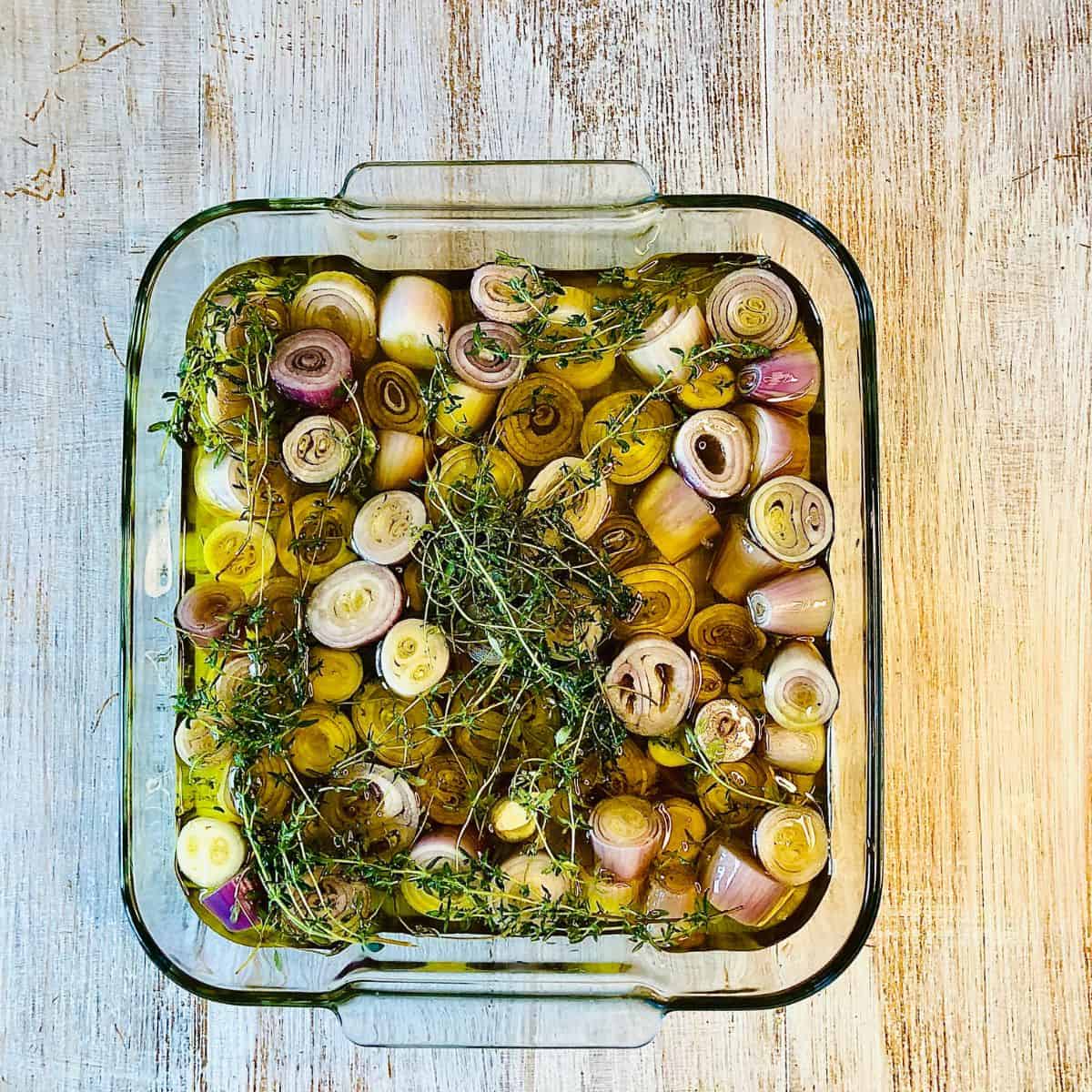
Place the shallots into an oven-proof baking dish and cover with olive oil. Add the sea salt and thyme. Cook for 60 minutes in the oven at 120ºC
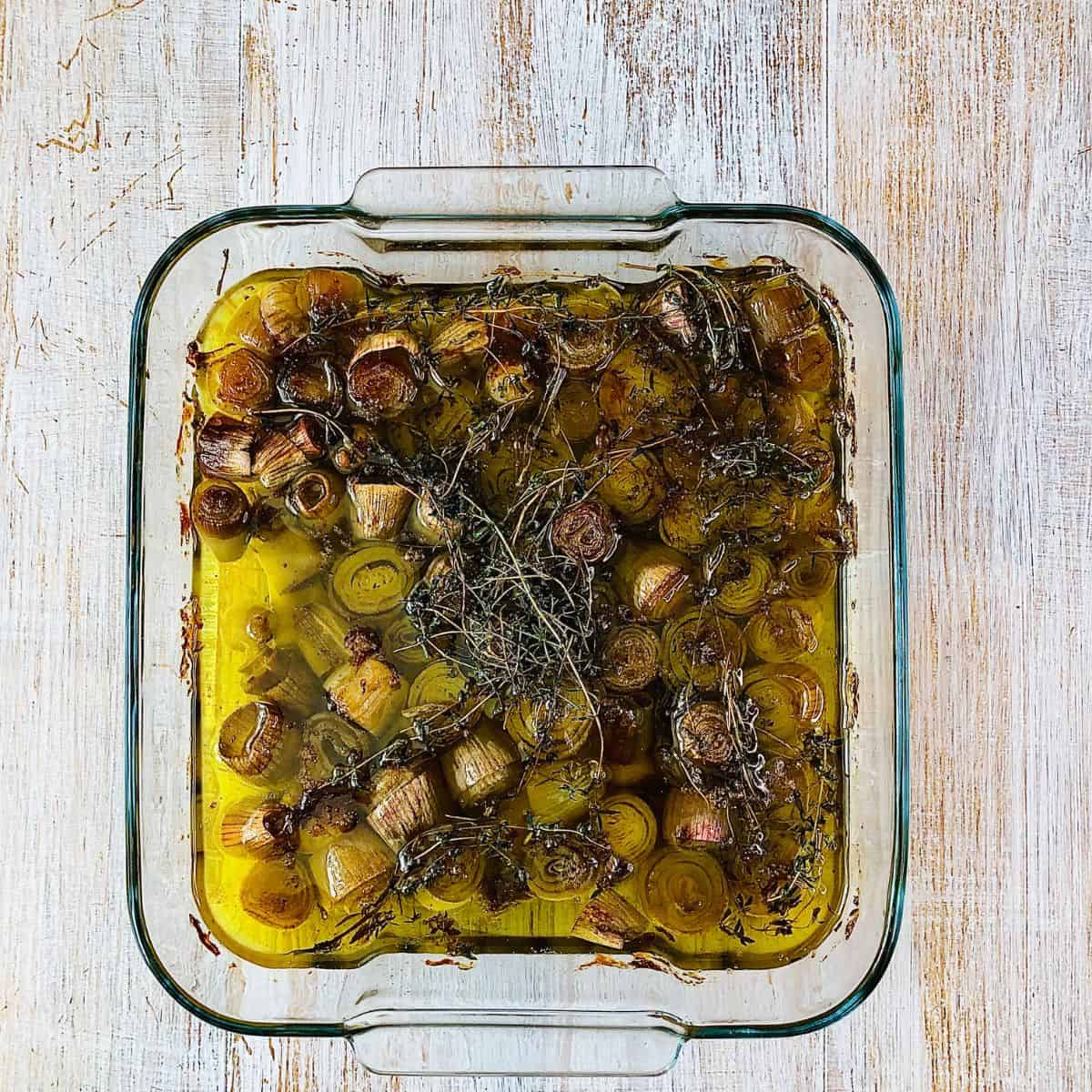
After one hour, the shallots should be soft and translucent. They should be soft enough to break with the back of a fork. If they are not soft, pop them back in the oven for approximately 20 more minutes.

Once done, remove from the oven and remove the thyme. Transfer to a sterilised jar and cover with olive oil.
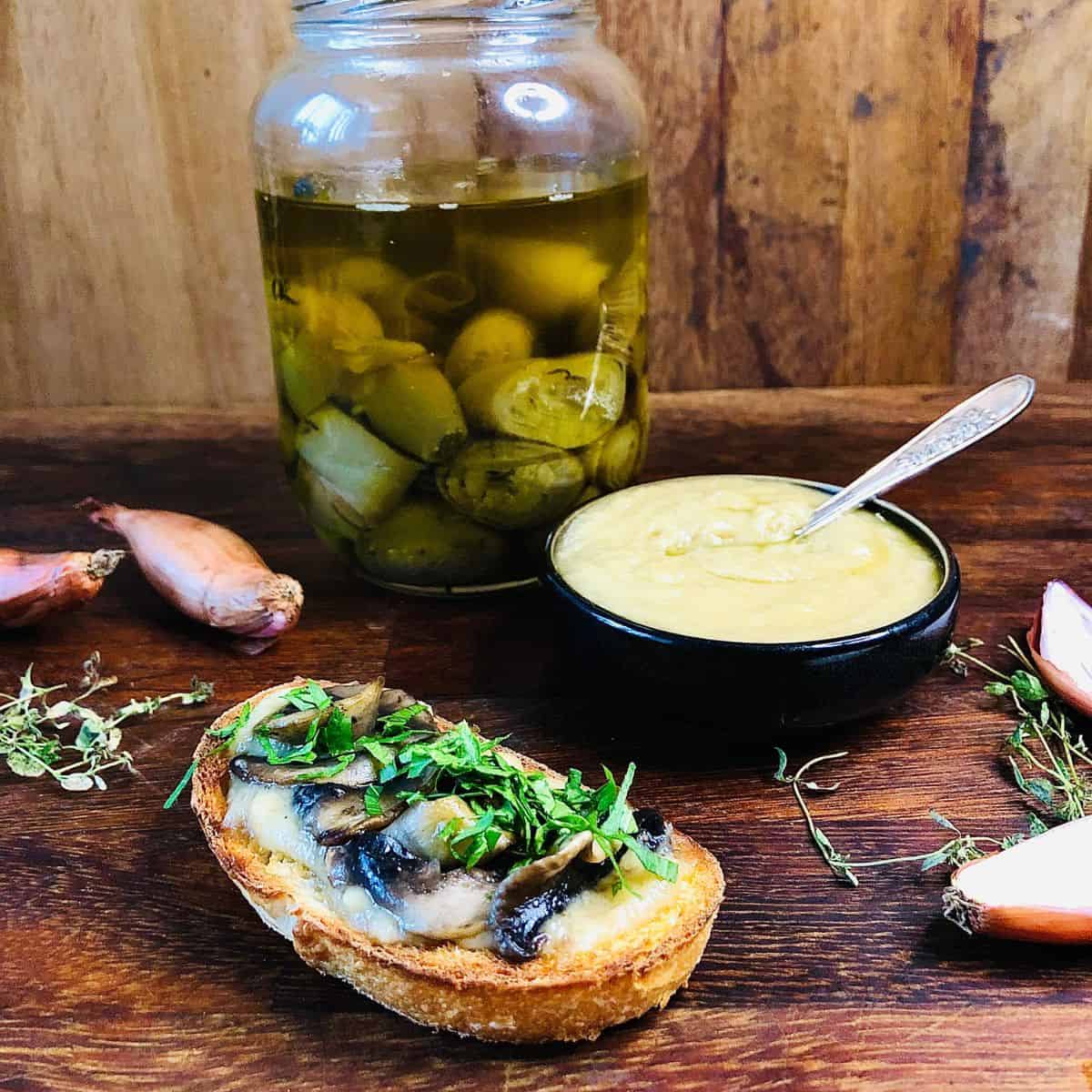
Serving suggestion. Pureed confit shallots and fried mushrooms on a sourdough slice.
Variations
I have used thyme as an aromatic for slow-cooking the shallots. Why not try other herbs or spices like rosemary, dried chillies and black peppercorn?
Equipment
I reuse sterilised old jars. I like to save glass jars to use again. It is essential to sterilise them before use by washing them in warm soapy water and then placing them in the oven at 100ºC for thirty minutes.
Storage
Once cooked, transfer the shallots and oil to a clean jar or airtight container, cool quickly, then store in the fridge.
Keep fully refrigerated and use within 4 days. For longer storage, freeze in small portions. Once defrosted, use immediately; discard any unused portion.
Do not store at room temperature. Do not keep it on the counter, in a cupboard, or treat it like a preserved condiment.
Always use a clean spoon to remove the shallots, and discard the batch if it smells odd, bubbles, ferments, grows mould, or has been left out for more than 2 hours.Homemade
Homemade condiments that have not been canned carry a risk of botulism. The risk may be low, but there is a risk.
Top Tips
To preserve the shallots, ensure they are completely covered with olive oil in the jar and use a clean, dry spoon each time you take some.
📖 Recipe
Confit Shallots
Equipment
- 600 ml Jam jar with lid
Ingredients
- 500 gms Shallots
- 300 ml Olive oil
- ½ teaspoon Flaky sea salt
- 5 gms Fresh thyme
Instructions
- Wash the jam and lid in hot soapy water and sterilise in the oven at 100ºC for 30 minutes
- Cut the heads and the tails of the shallots. Peel them whole and then slice them about the thickness of your finger.
- Place the shallot pieces into an oven-proof baking dish and cover with olive oil.
- Add sea salt and thyme.
- Pre-heat the oven to 120ºC.
- Place the tray in the oven and cook for 60 minutes.
- After one hour, the shallots should be soft and translucent. They should be soft enough to break with the back of a fork. If they are not soft, pop them back in the oven for another 20 minutes approximately.
- Once done, remove from the oven and remove the thyme.
- Transfer the confit shallots into the jam jar and cover with olive oil.
- Refrigerate once cooled.
Nutrition
NOTES
FAQ
Confit (pronounced con-fee) means "to preserve". It is a slow-cooking process in fat or oil at low temperatures rather than frying at higher temperatures. Initially a method for cooking and preserving meat in its fat, it can also be used to cook vegetables in oil and fruit in a sugar solution.
Other popular ingredients to confit are tomatoes and garlic. Please look at my confit heirloom tomato recipe. Other vegetables can be slow-cooked in oil, too, such as root vegetables like carrots and potatoes, as can mushrooms. I also have a recipe for a candied orange peel that uses the confit cooking method.
You can use vegetable oil; however, you will lose the earthy flavour benefits of olive oil, so I strongly recommend using extra virgin olive oil.
Yes, you can reuse the olive oil, so don't be tempted to dispose of it after making your confit shallots. It will be infused with the aroma of the shallots and thyme, enhancing its flavour. Use it for salad dressings or roasting veggies. I'm all about the sustainable use of foods, and olive oil can keep giving after its first use!
Shallots are popular with chefs because they are not as fiery as onions and have a sweeter taste.
Food Safety
- Wash your hands regularly while preparing, handling and cooking food.
- Wipe down countertops and high-contact points regularly.
- If you cook meat and fish, do not use the same utensils on cooked food that previously touched raw meat. Use separate chopping boards for meat and fish. Wash your chopping boards immediately after use.
- Cook food thoroughly to a minimum internal temperature of 165 °F (74 °C).
- Don't leave food at room temperature for extended periods (more than 2 hours).
- Store food correctly.



Leave a Reply