

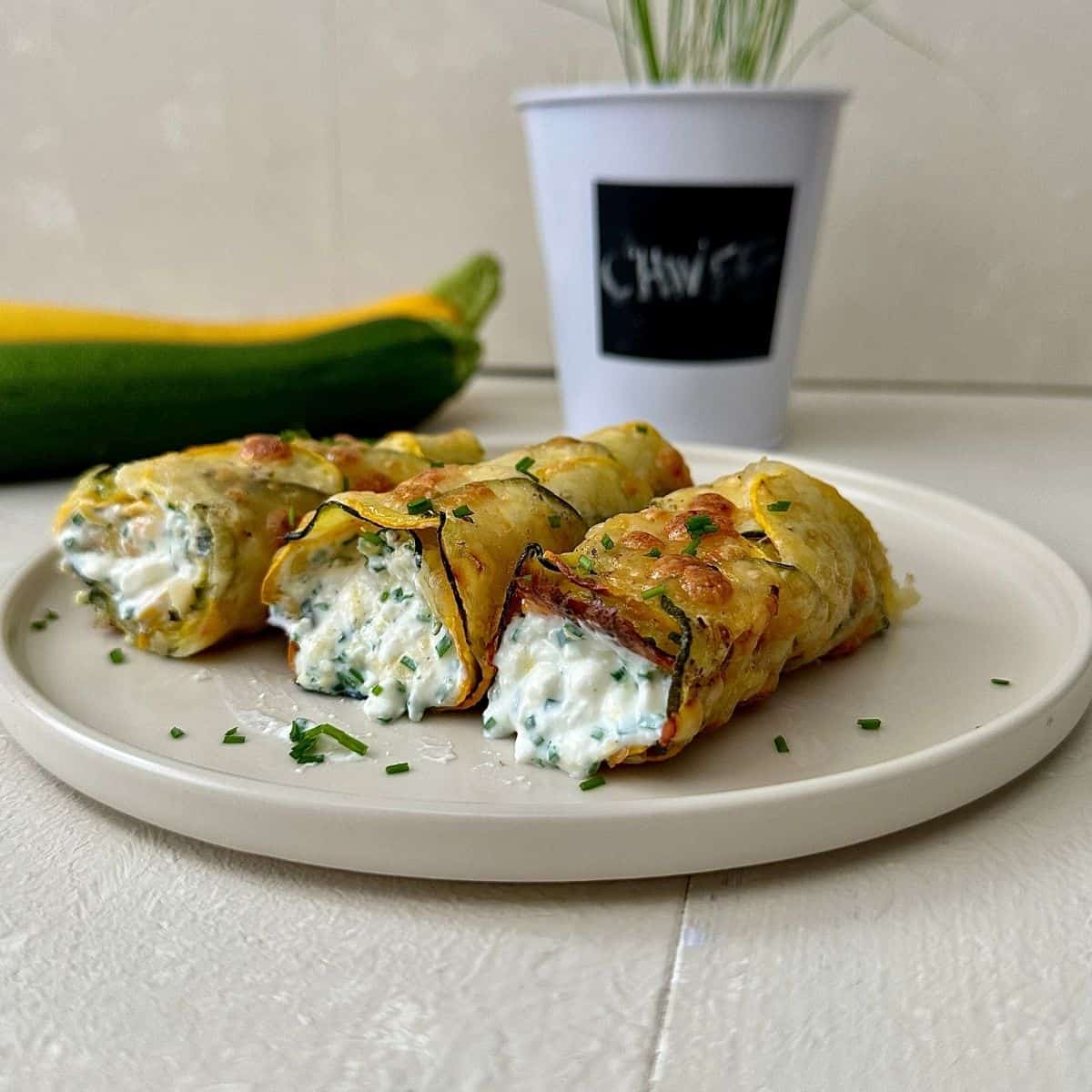
This cottage cheese wrap is made without flour, using a baked courgette (zucchini) and cheese instead. It's naturally low-carb, gluten-free and packed with protein - a lighter alternative to traditional wraps, but extremely tasty. It's perfect for a light summer lunch, especially if, like me, you end up with a glut of courgettes.
What I love about this courgette (zucchini) approach is how it creates a really solid alternative to the classic flatbread. The melted cheese binds the thinly sliced courgette together, forming a flexible, savoury base that holds beautifully when filled with the cottage cheese and chives filling and rolled.
Jump to:
Why You'll Love These Cottage Cheese Wraps
- A clever no-flour wrap using vegetables instead of grains. Packed with flavour.
- Light, yet satisfying, with a high-protein filling. For another high protein snack, take a look and my smashed edamame toast.
- A creative way to use courgette (zucchini) in season. Definitely a courgette upgrade! Also check out my creamy courgette pasta sauce for another courgette upgrade.
- Hold together like a classic wrap, without feeling heavy.
Key Ingredients & Notes
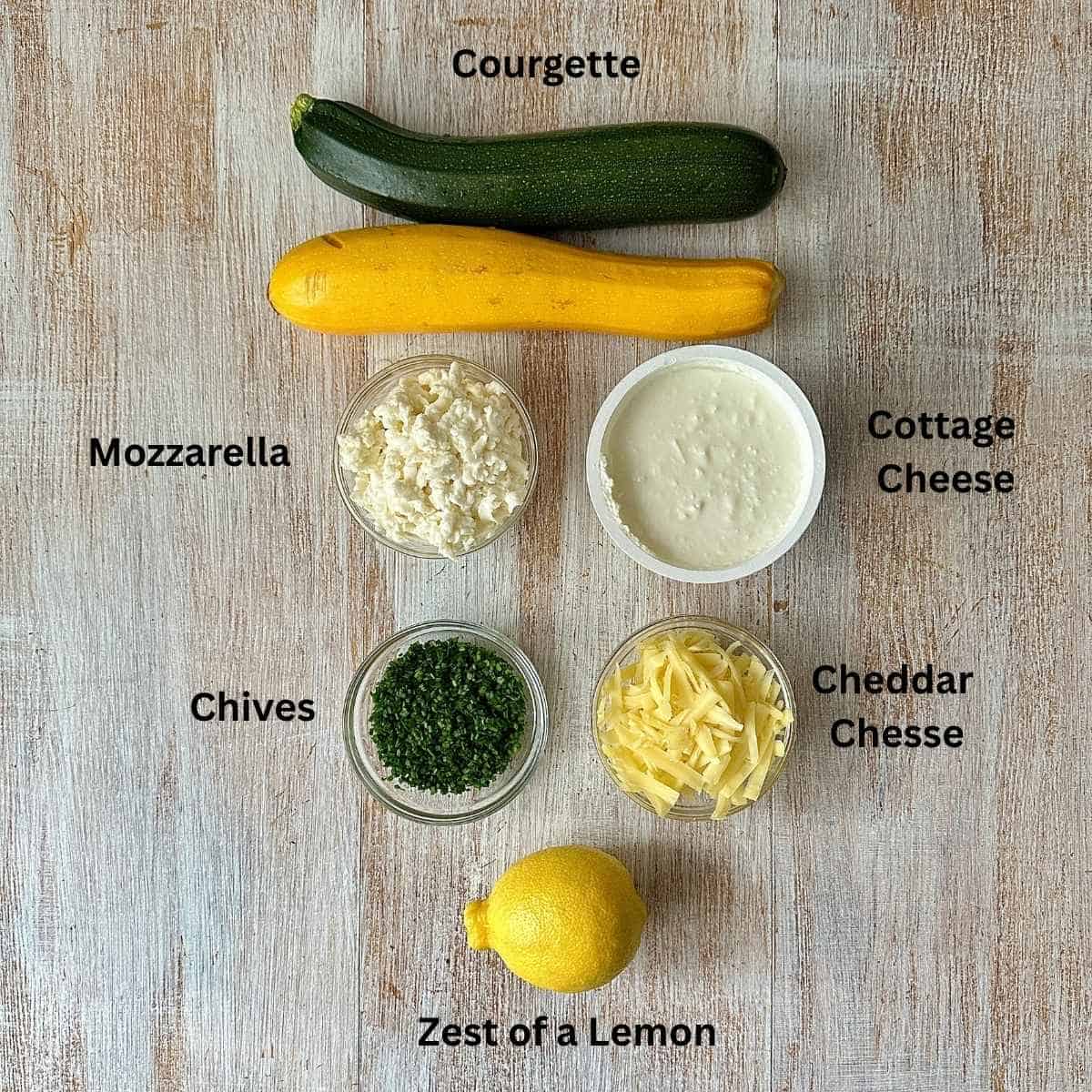
- Courgette (zucchini), cheddar cheese & Mozzarella cheese - By thinly slicing the courgette, layering it, and then baking with the grated cheese, a solid, very cheesy wrap sheet forms.
- Cottage cheese - An ideal, light filling for this wrap, that is high in protein.
- Chives - Bring a subtle allium note to the cottage cheese filling without overpowering it.
- Black pepper, salt and lemon zest- Seasoning for the cottage cheese filling that brightens and lifts its flavour.
See the recipe card for quantities.
How To Make Cottage Cheese Wrap with a Courgette (Zucchini) Base
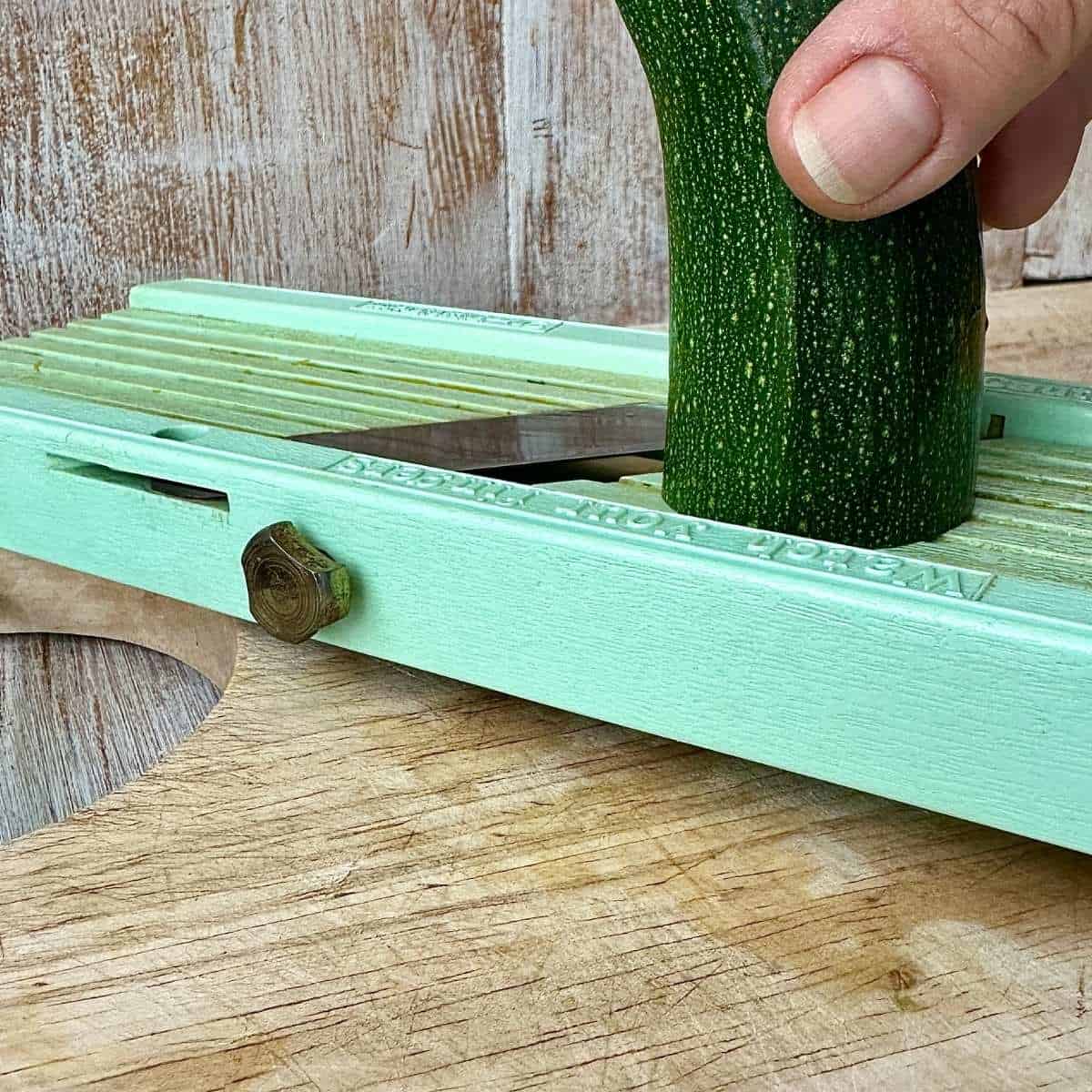
- Cut the end off the courgette and slice with a mandolin slicer.
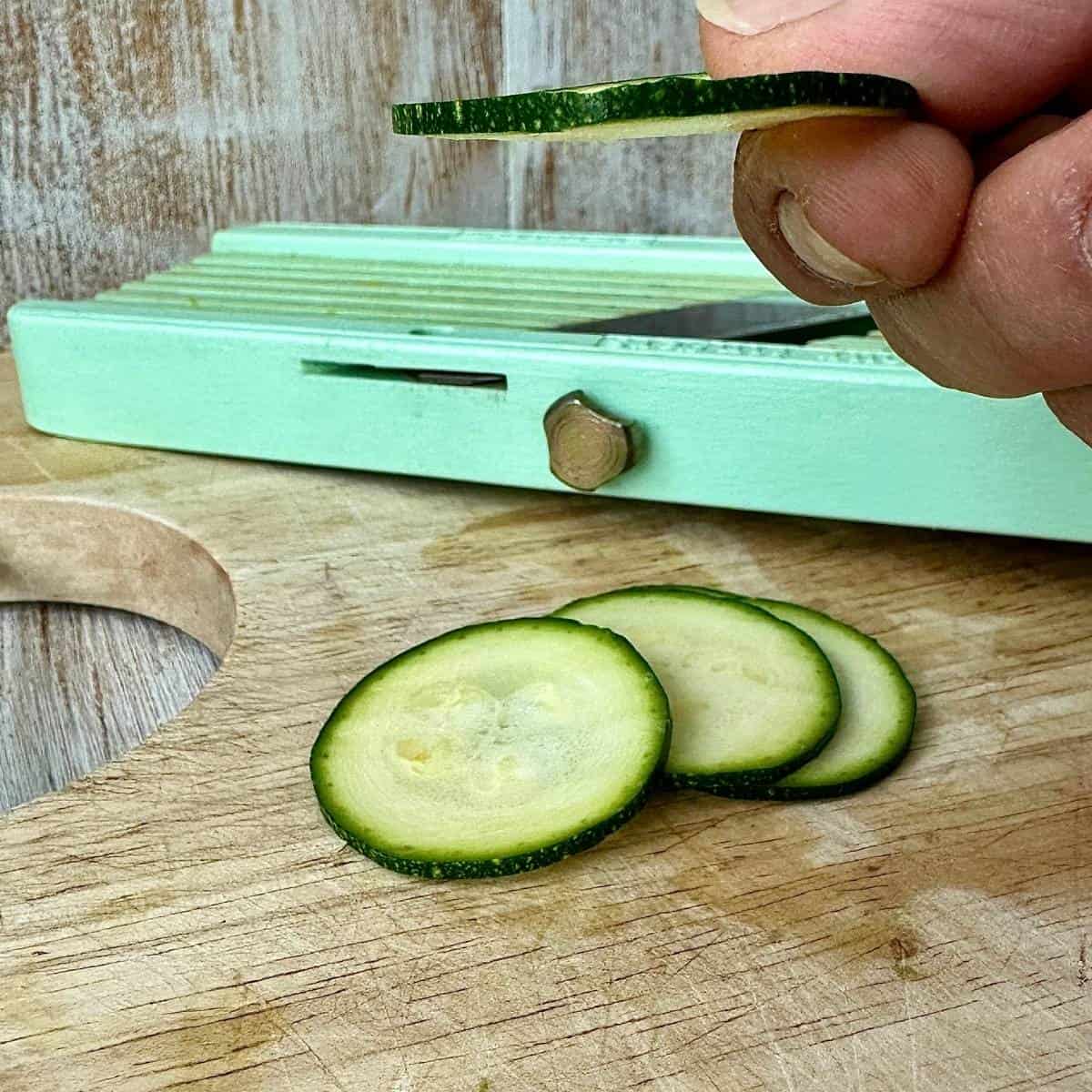
- Aim for slices about 3mm (⅛ inch) thick.
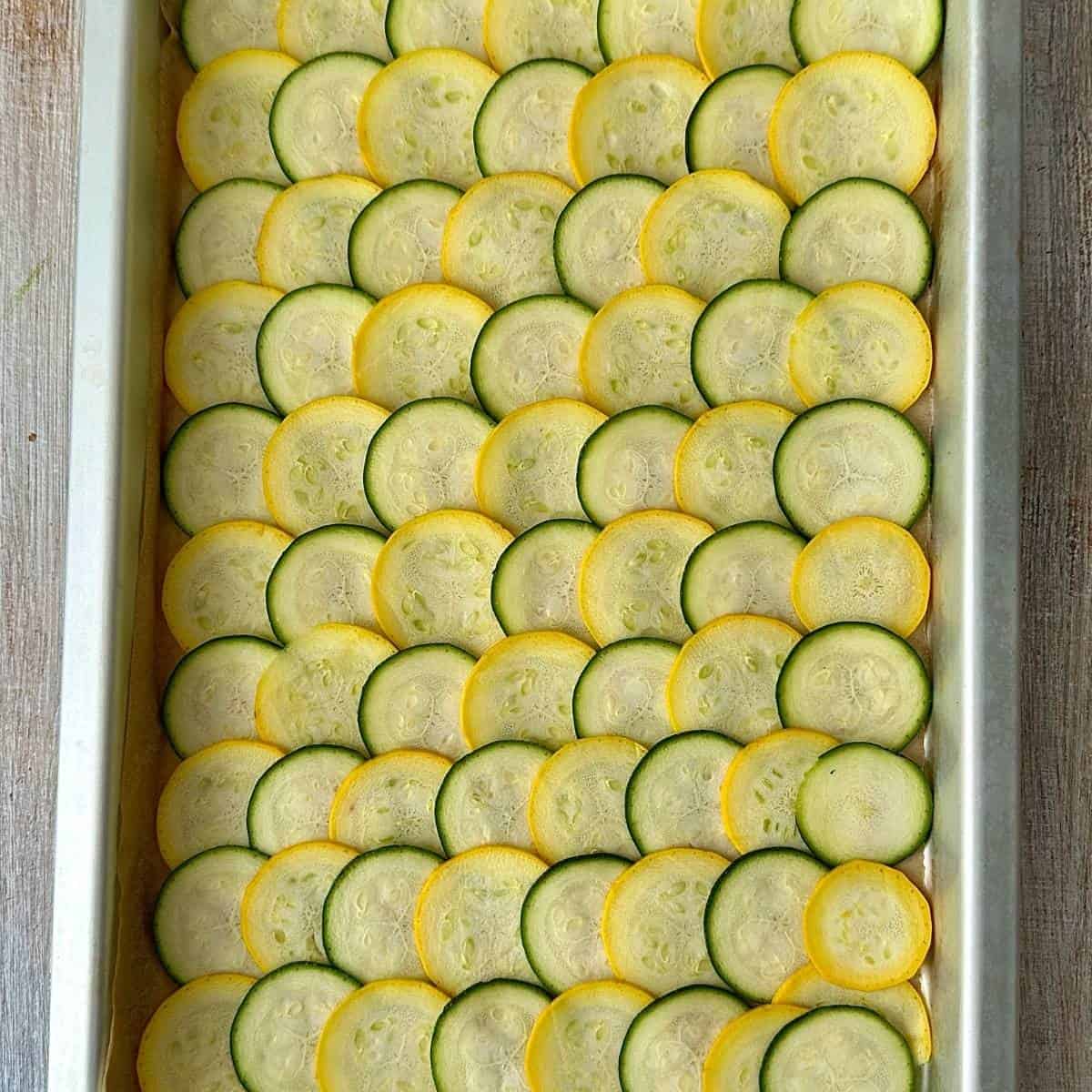
- Grate the mozzarella and cheddar cheese.
- Preheat the oven to 170ºC.
- Line a baking tray with parchment paper.
- Neatly arrange the courgettes in rows, overlapping each other.
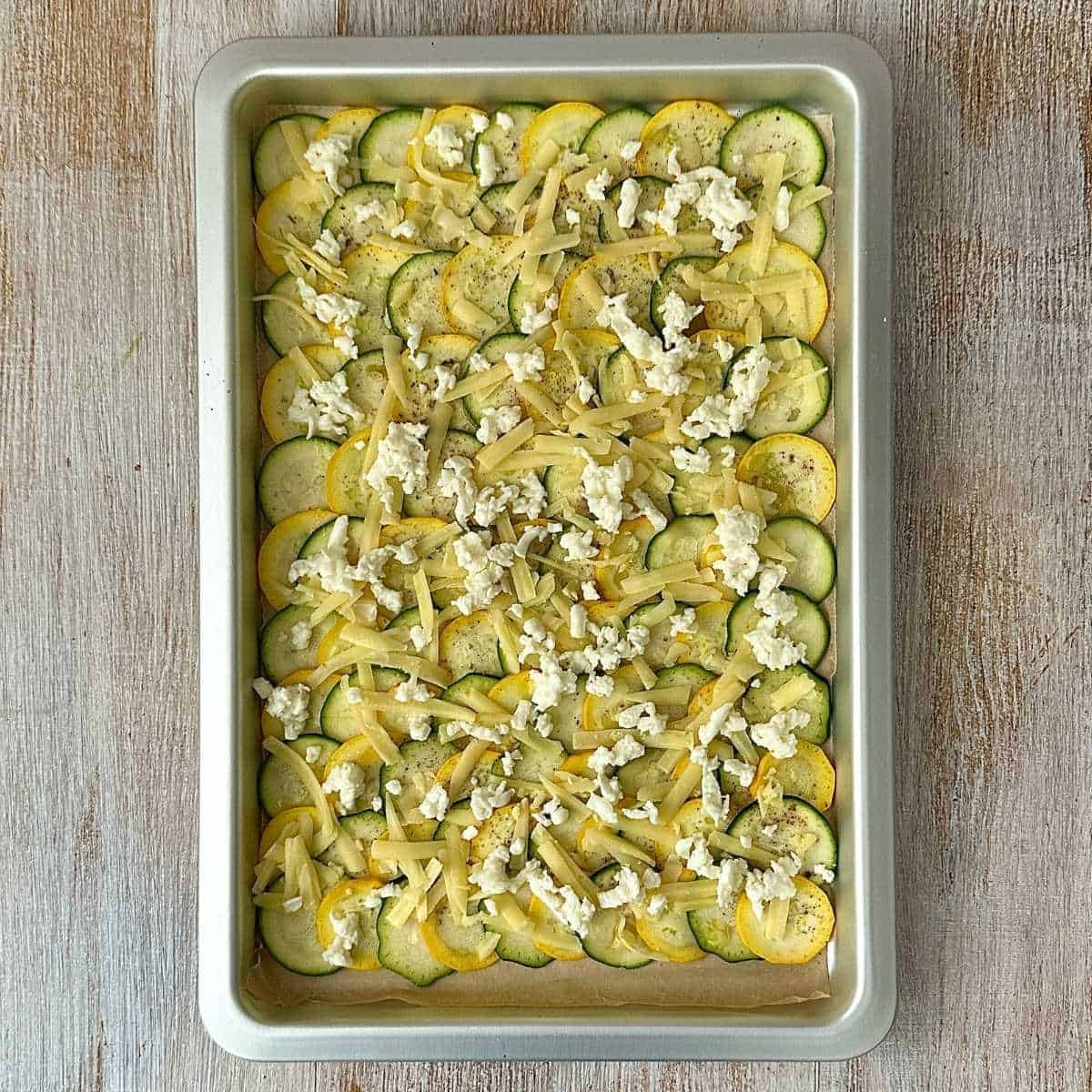
- Season the courgette slices with salt and pepper.
- Sprinkle the grated cheddar and mozzarella onto the courgette slices.
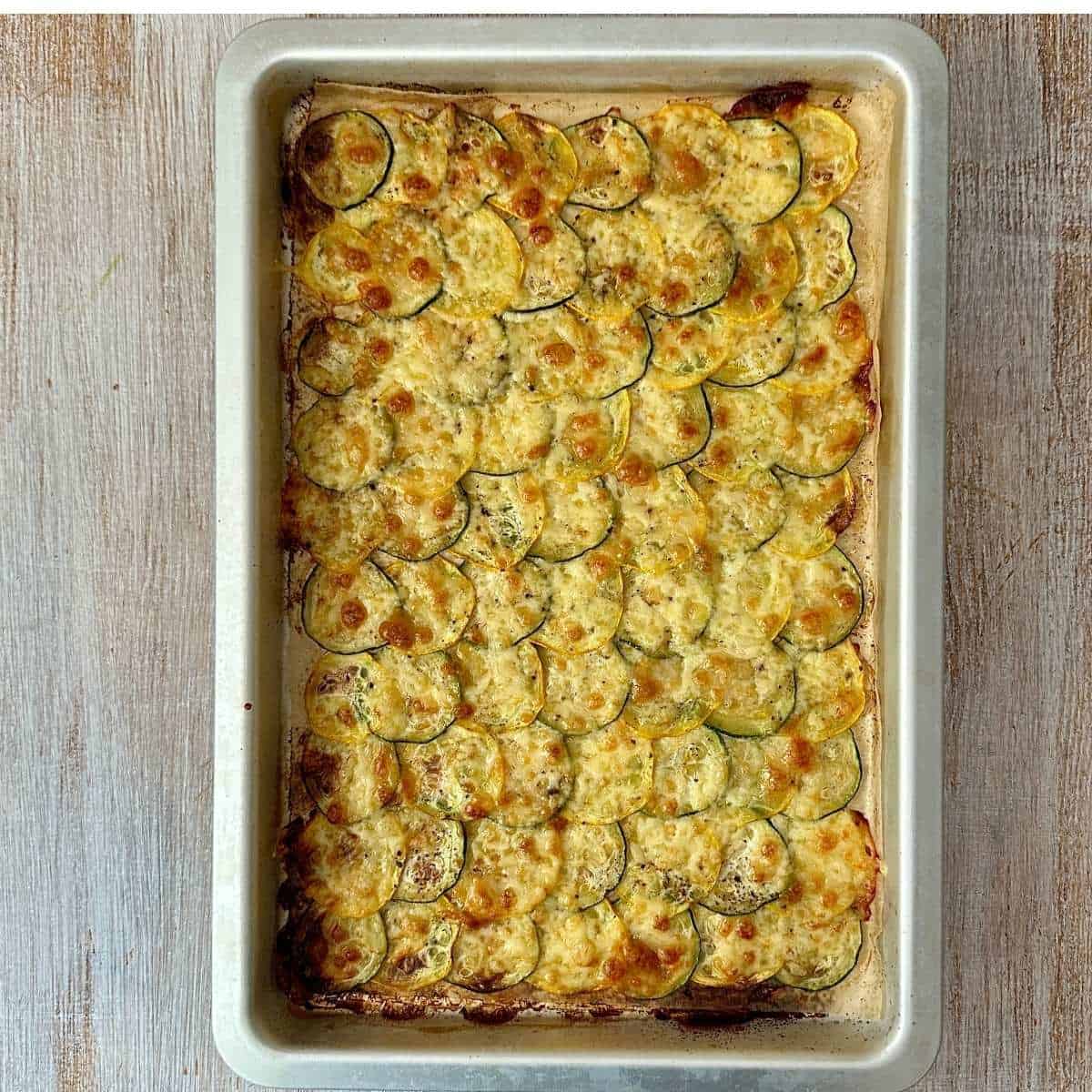
- Bake in the oven for 20 minutes, or until the cheese has melted and is golden brown.
- Remove from the oven and set aside to cool down.
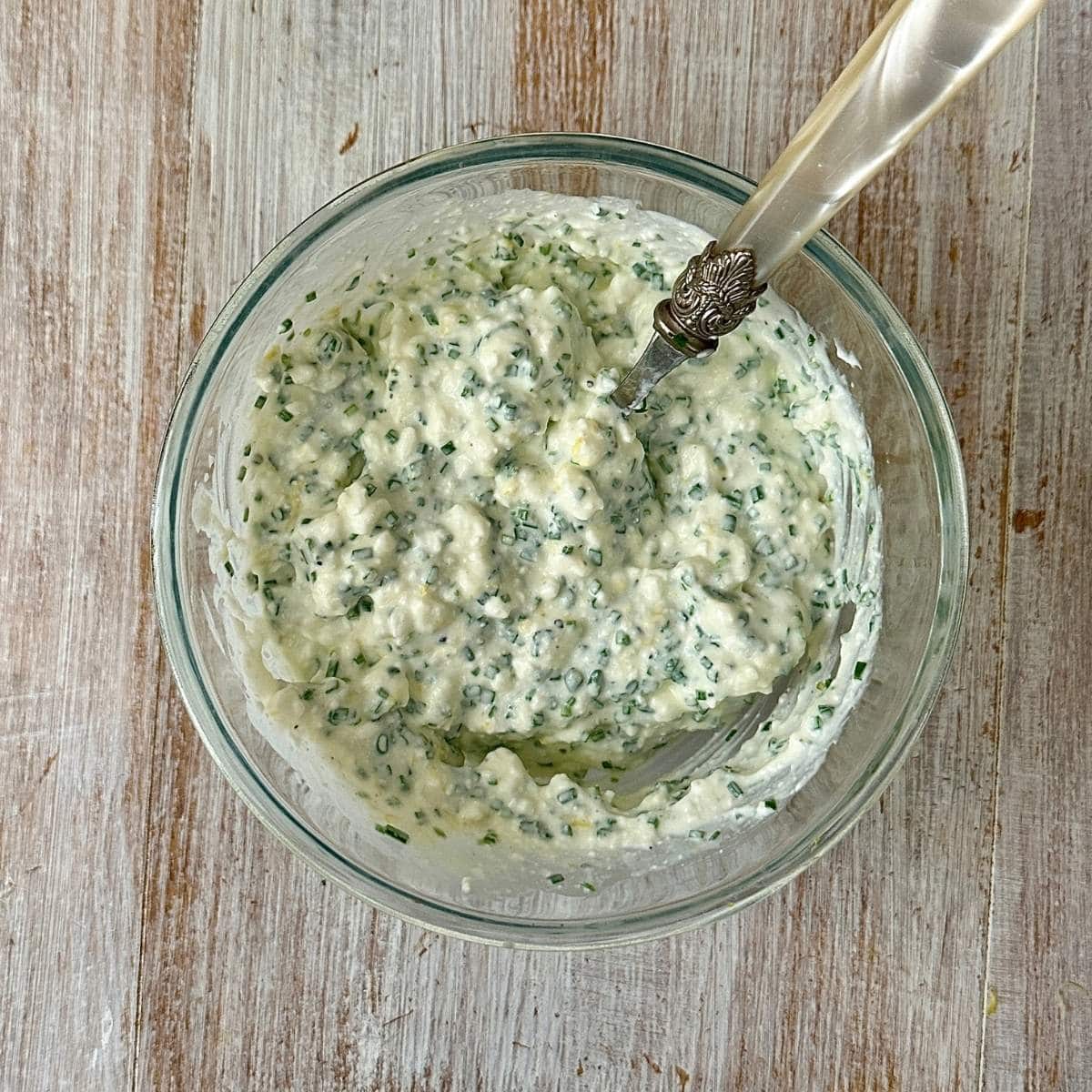
- Finely chop the chives with a sharp knife.
- Empty the cottage cheese into a bowl and add the chives, salt & pepper, and lemon zest. Mix to combine.
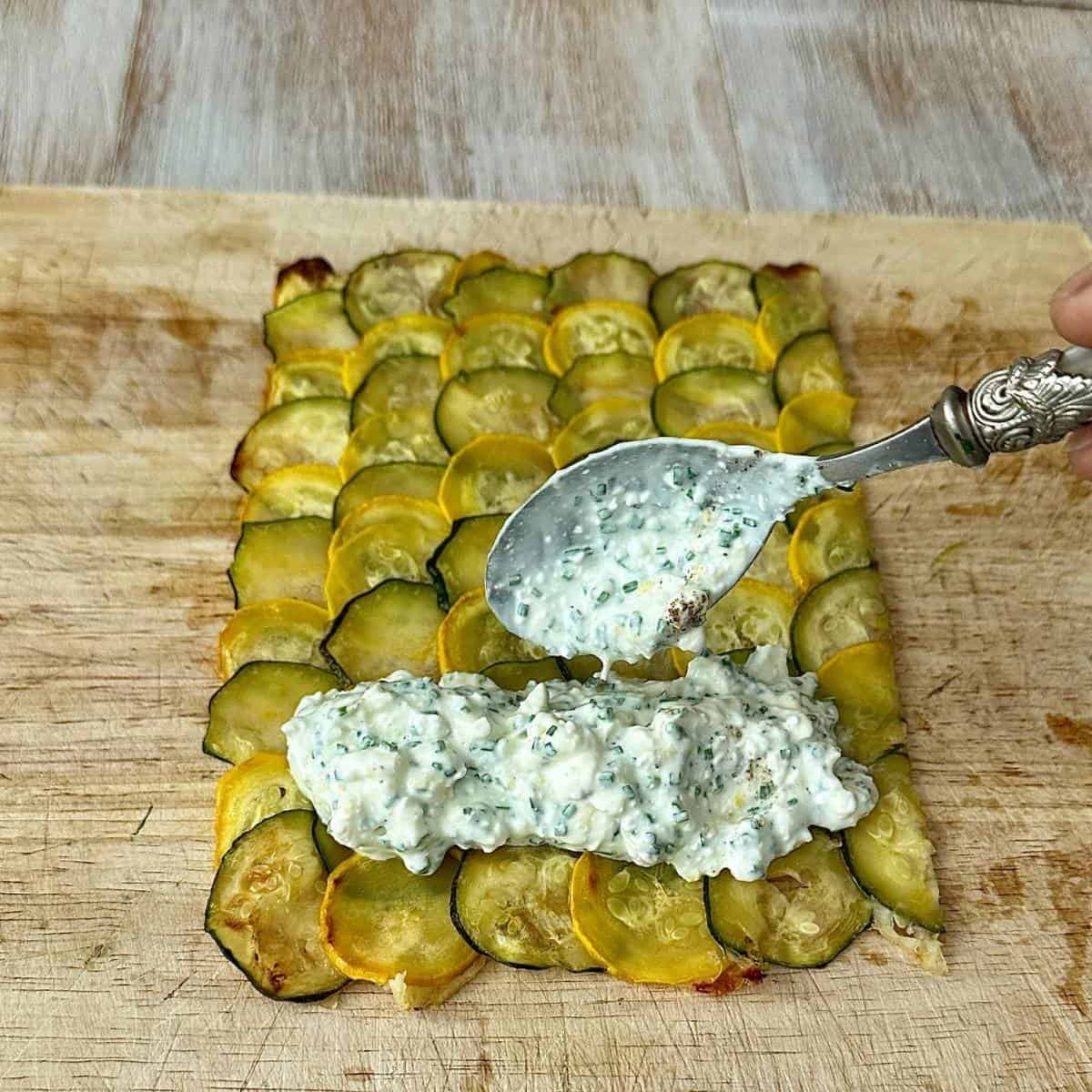
- Cut the wrap sheets in half to get 4 wraps. Turn the wrap sheets over so that the golden-brown side faces down.
- Add the cottage cheese filling to one end.
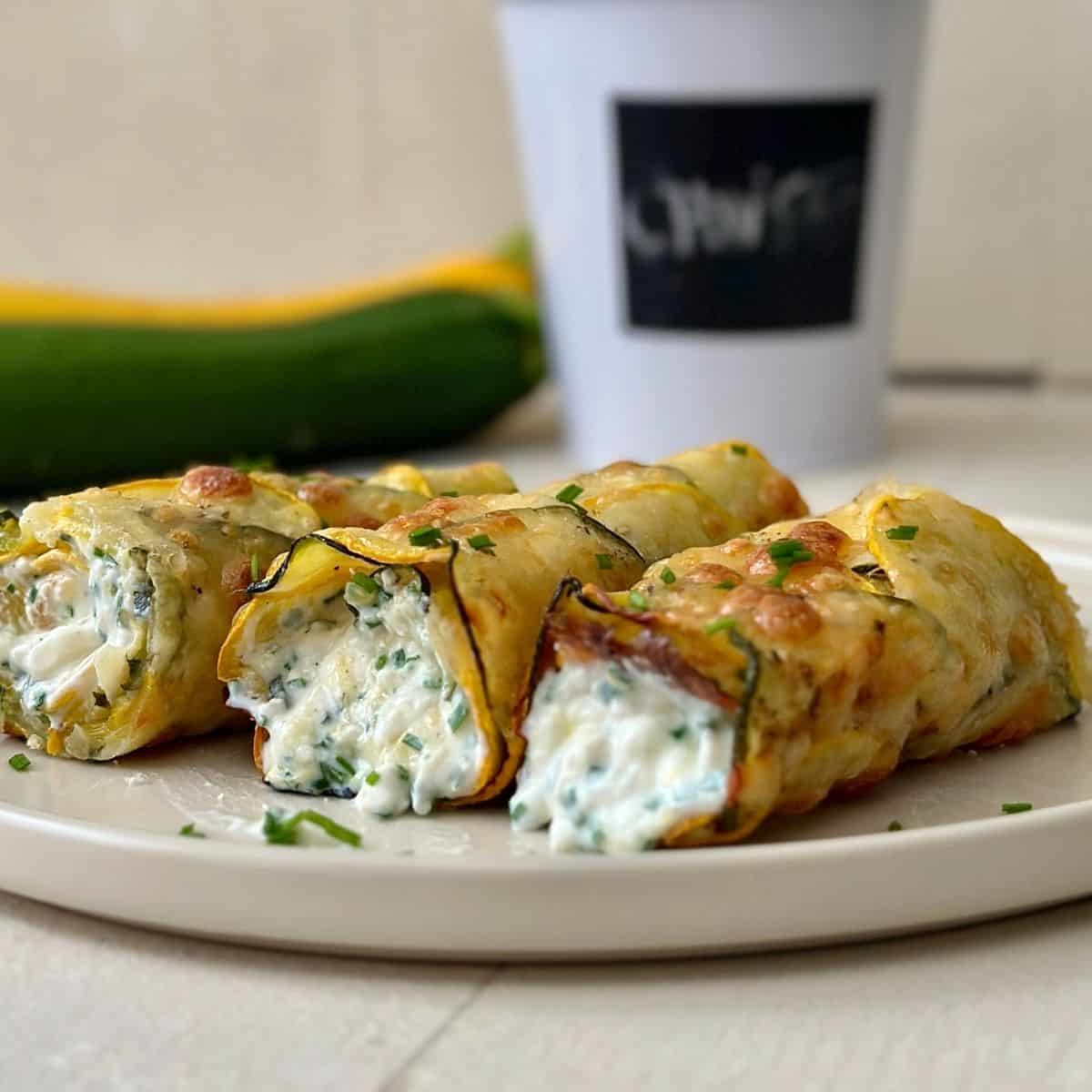
- Roll the courgette wrap sheet to encase the cottage cheese.
Substitutions & Variations
Cheese Options
- You can replace the Mozzarella with a mild melting cheese or scamorza, smoked or unsmoked. The cheddar can be substituted with Gruyere or a mature hard cheese for a deeper flavour.
Filling Variations
- Cottage cheese- You can use cream cheese instead.
- Add dill, parsley or mint to the cottage cheese as an alternative to chives. Basically, any soft herb to your taste can be used.
- For a spiced version, add cumin, chilli flakes or smoked paprika.
- If not vegetarian, you can add smoked salmon.
Courgette Alternative
- You can use squash; however, it will not be as flexible and will need to be cooked longer.
- Thinly sliced Aubergine works, although it will need to be cooked longer.
Flavour Additions to the Wrap Sheet
- Sprinkle finely grated garlic or herbs along with the grated cheese.
- Sprinkle chilli flakes with the grated cheese for some warmth.
Dairy-Free Option
- Plant-based cheeses can work, but may not melt and bind the courgette slices in the same way. Choose those labelled for melting. You may also not get the golden-brown colour in the oven, and thus need to pop it under the grill.
Equipment
- Mandolin slicer - this will enable you to cut very thin slices of courgette with ease. I recommend you buy a mandolin slicer for your kitchen as it makes slicing so much easier.
- Two Baking trays - Used to bake your courgette wraps in.
Storage
These wraps can be stored for up to 3 days. They cannot be frozen.
Chef Tips
- If at all possible, use a mandolin slicer to slice the courgette. You will get even slices in a fraction of the time it would take to use a knife. Thin slices of around 3mm (⅛ inch) are important so that the courgette wrap sheet is flexible enough to roll.
- Make sure that you overlap the courgettes in the baking tray. This creates a continuous sheet and, combined with the "glue" of melted cheese, ensures the courgette wrap holds together.
- Cut the courgette sheets in half before adding the filling to create four smaller wraps, rather than one big wrap. Cutting the wrap while it's rolled will be quite challenging. If you do cut it, use a sharp knife and avoid a sawing motion.
- Do not salt the courgette in advance; it will release a lot of moisture, and you will end up with a soggy wrap.
FAQs
It has not bound properly. For this to happen, ensure that the courgette is sliced thinly (3mm), overlaps on the baking tray so that a continuous sheet forms with no gaps, and has a good cover of grated cheese.
Good melting cheeses are best. Mozzarella adds stretch, and cheddar adds structure and flavour. Others to try are Fontina, Monterey Jack, Gruyère, and Taleggio. Avoid aged cheeses like Parmesan.
Make sure the baked courgette and cheese wrap sheet has cooled before you roll it, so it does not come apart.
Courgettes have high water content. Slicing the courgette thinly and evenly will ensure that the water evaporates off when baked. Add salt only when it's arranged on the tray, and you're ready to add the cheese and bake. Salt releases the moisture from the courgettes, which is why we add it just before baking.
📖 Recipe

Cottage Cheese Wrap - No Flour, Courgette Base
Equipment
- Baking trays
Ingredients
Courgette Wrap
- 500 g Courgettes (zucchini)
- 125 g Mozzarella cheese
- 130 g Cheddar cheese
- 1 teaspoon Olive oil
- Salt and pepper to taste
Cottage cheese filling
- 300 g Cottage cheese
- 15 g Chives
- 1 teaspoon Salt
- 1 teaspoon Black pepper
- 1 Lemon For the zest
Instructions
Courgette wrap
- Thoroughly wash the courgettes (zucchini) and pat dry. Cut the top and bottom off. Using a mandolin slicer, slice the courgettes thinly and of similar thickness, about ⅛ inch thick.
- Grate the mozzarella and cheddar cheese.
- Preheat the oven to 170ºC (fan-assisted oven)
- Line the baking trays with parchment paper or a silicone mat. Neatly arrange the sliced courgette in overlapping rows. See the video. Repeat in the other tray.
- Season with salt and pepper. Sprinkle the mozzarella and cheddar cheese evenly over the courgettes on both trays.
- Bake in the oven for 20 minutes or until the cheese has melted and is golden brown.
- Once cooked, remove from the oven, and set it aside to cool.
Cottage cheese filling
- Thoroughly wash and pat dry the chives. Finely chop the chives with a sharp knife.
- Transfer cottage cheese to a bowl. Add salt and pepper, the zest of a lemon, and the chopped chives. Mix to combine.
Assembly
- Cut the courgette wrap sheets in half to get four smaller wrap sheets.
- Add the cottage cheese and chives filling to one end and then roll the wrap to seal. Serve immediately.
Nutrition
NOTES
Other Light and Fresh Meal Ideas
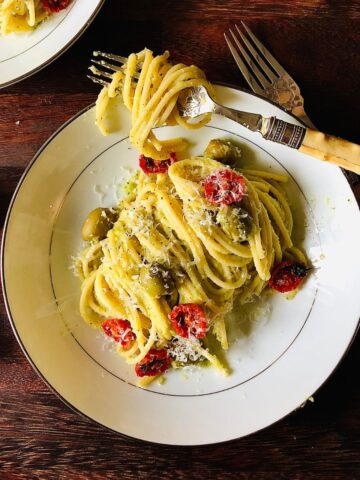
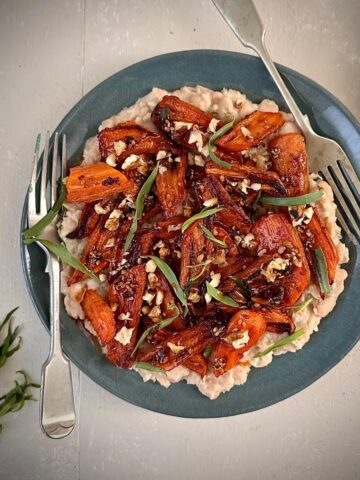
If you're looking for lighter, vegetable-forward dishes, here are a few more ideas to try.
Food Safety
- Wash your hands regularly while preparing, handling and cooking food.
- Wipe down countertops and high-contact points regularly.
- If you cook meat and fish, do not use the same utensils on cooked food that previously touched raw meat. Use separate chopping boards for meat and fish. Wash your chopping boards immediately after use.
- Cook food thoroughly to a minimum internal temperature of 165 °F (74 °C).
- Don't leave food at room temperature for extended periods (more than 2 hours).
- Store food correctly.


Oli says
Such a good idea, so versatile!