

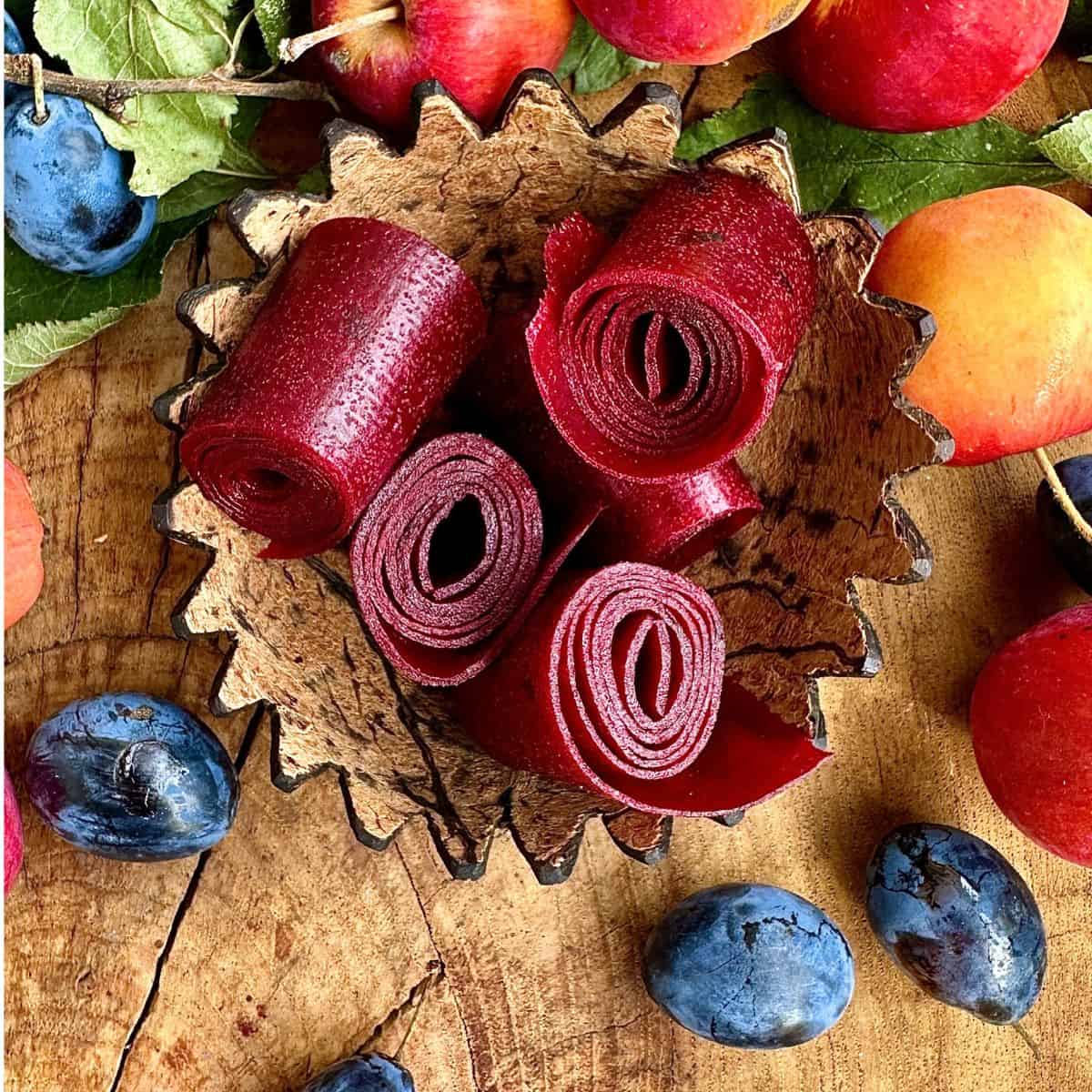
It's late summer, and the trees are laden with ripe fruit, ready to pick and turn into something delicious. This fruit leather recipe uses crab apples and damsons from trees in my neighbourhood. Neither crab apples nor damsons are easy to find in shops, so you'll need to forage them. See substitutions and variations below for some shop-bought fruit alternatives.
Fruit leather is simply fruit and sugar reduced, formed into a sheet, and dried in the oven until firm and bendable. This version uses pectin-rich crab apples, ideal for a bendy, rollable fruit leather, and deep purple damsons, giving intensely fruity, tart and chewy strips- a real sweet treat.
Just three ingredients are required for this fruit leather recipe, and no dehydrator is needed because the fruit leather is oven-dried.
Jump to:
Why You'll Love This Damson and Crab Apple Fruit Leather Recipe
- Use seasonal, wild ingredients - free and straight from nature's table.
- Only three ingredients: crab apples, damsons, and sugar.
- No dehydrator is required - drying is done on a low heat in the oven.
- No de-stoning of the damsons is required.
- Lightly sweetened only - lets the intense fruity tartness of the damsons stay front and centre.
- Another way to use up your crab apple/damson glut beyond jelly and fruit butter.
- Naturally vegan and gluten-free.
KEY Ingredients & Notes
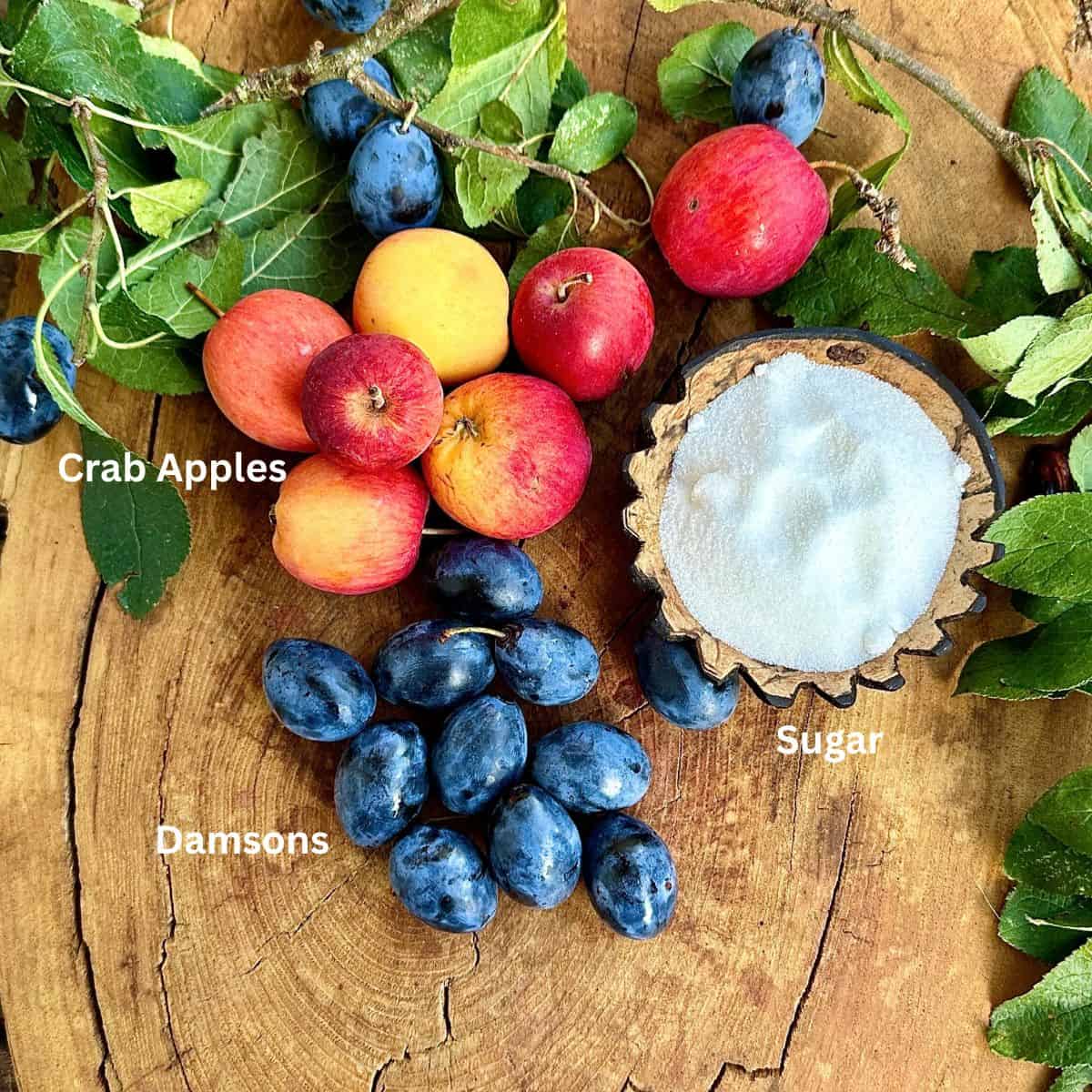
- Crab apples - small, round apples that are extremely tart. Not really meant to be eaten on their own. Very high in pectin, so excellent for jams. They lend themselves well to making fruit leather.
- Damsons - Small, oval plums with a deep purple/black colour. High in pectin, and again, great for making a fruit leather.
- Sugar - Adds sweetness to the fruit leather and acts as a softener and binder, working with the fruit's natural pectin. The sugar tames the intense tartness of the two main ingredients, but also brings out their fruitiness.
See the recipe card for quantities.
Notes on Foraging Crab Apples & Damsons
Both ripen and are ready to pick from August onward in the UK. You can find these fruit trees in a wide variety of settings, from woodland edges and old orchards to hedgerows and parks.
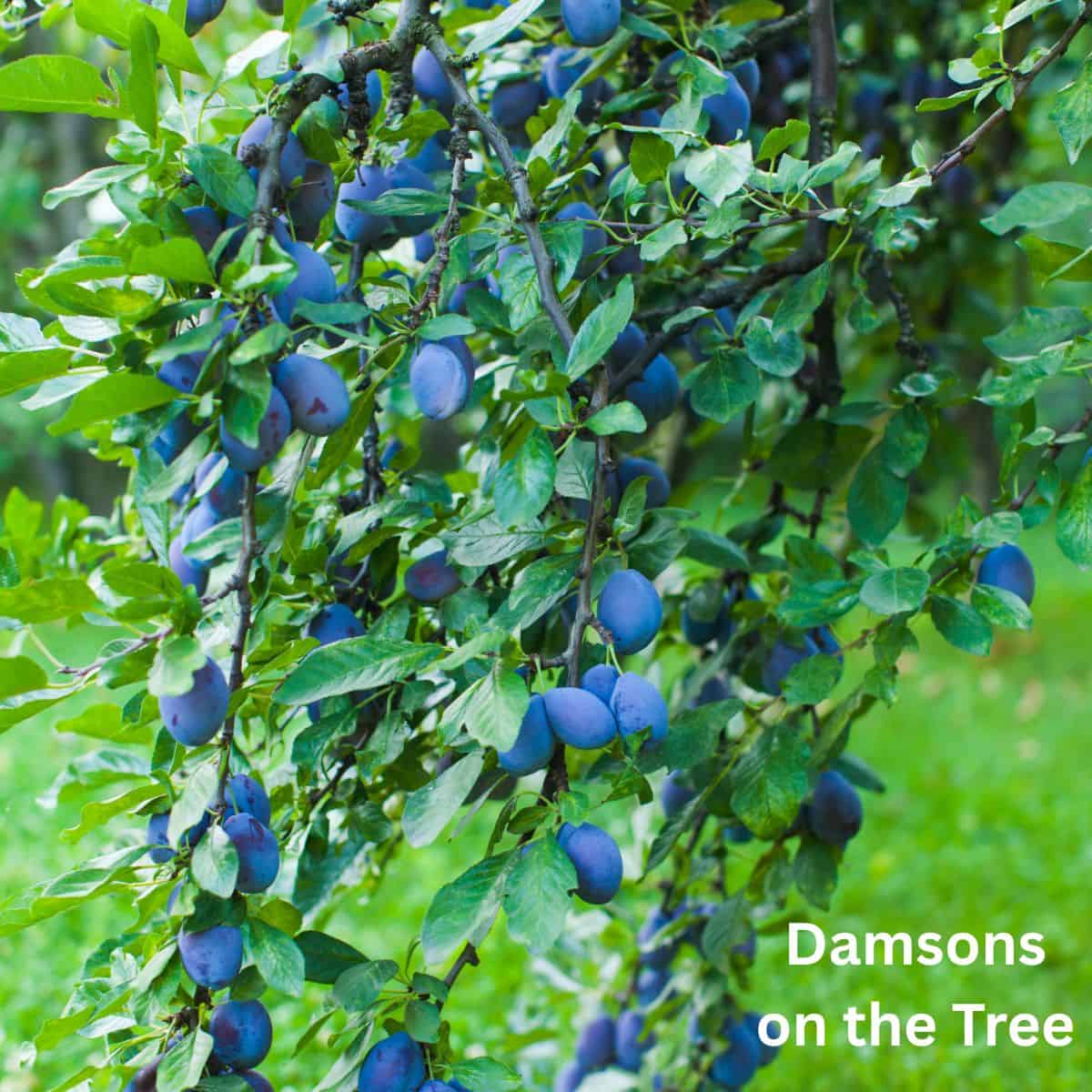
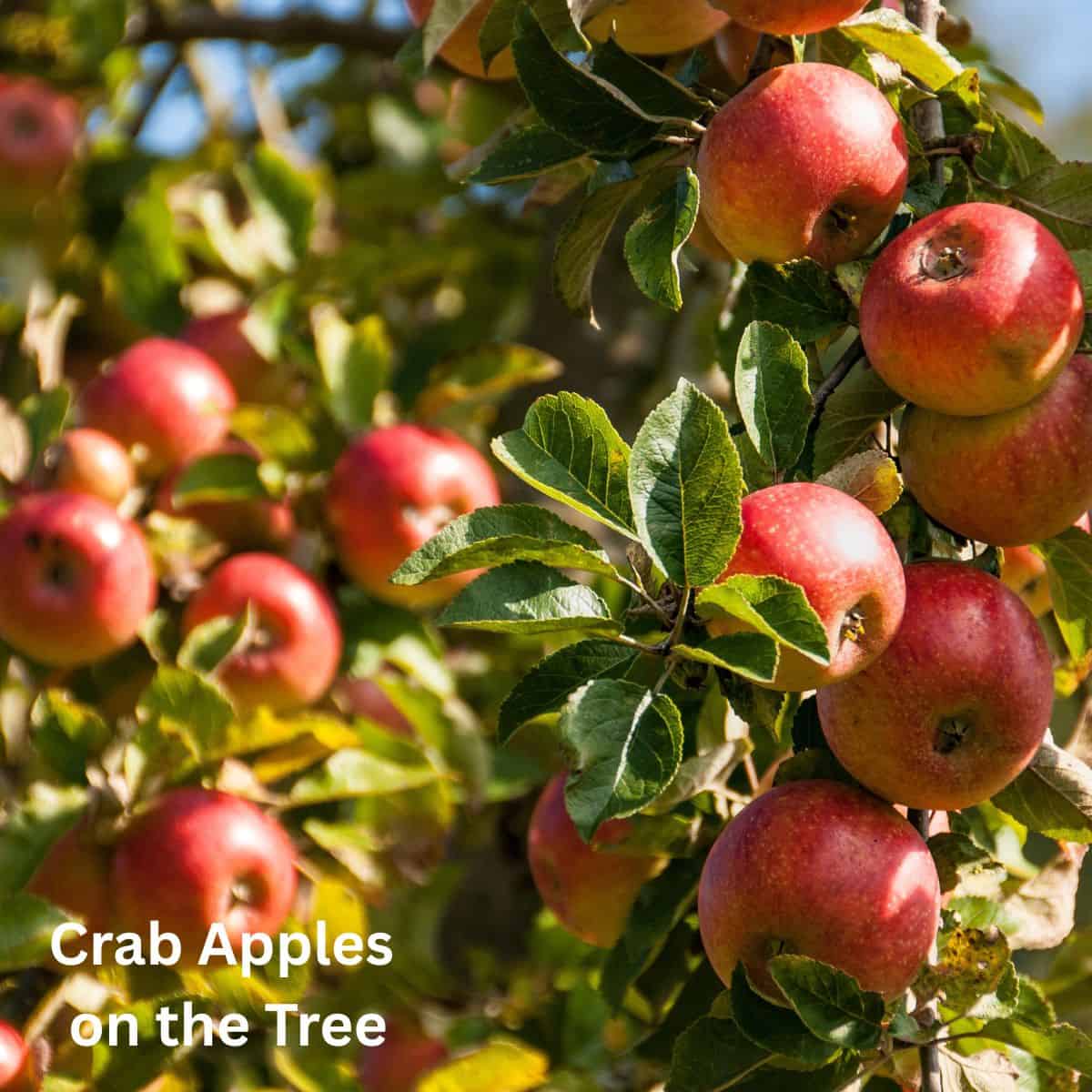
As with all foraging, be 100% sure about what you are picking. Use a good foraging guide or plant ID app, or ideally both together, like me.
Avoid picking in high-pollution areas, such as near main roads or next to sprayed fields.
Only take what you are likely to use up and don't over forage.
How to Make Damson and Crab Apple Fruit Leather
- Core the crab apples to remove the toxic pips.
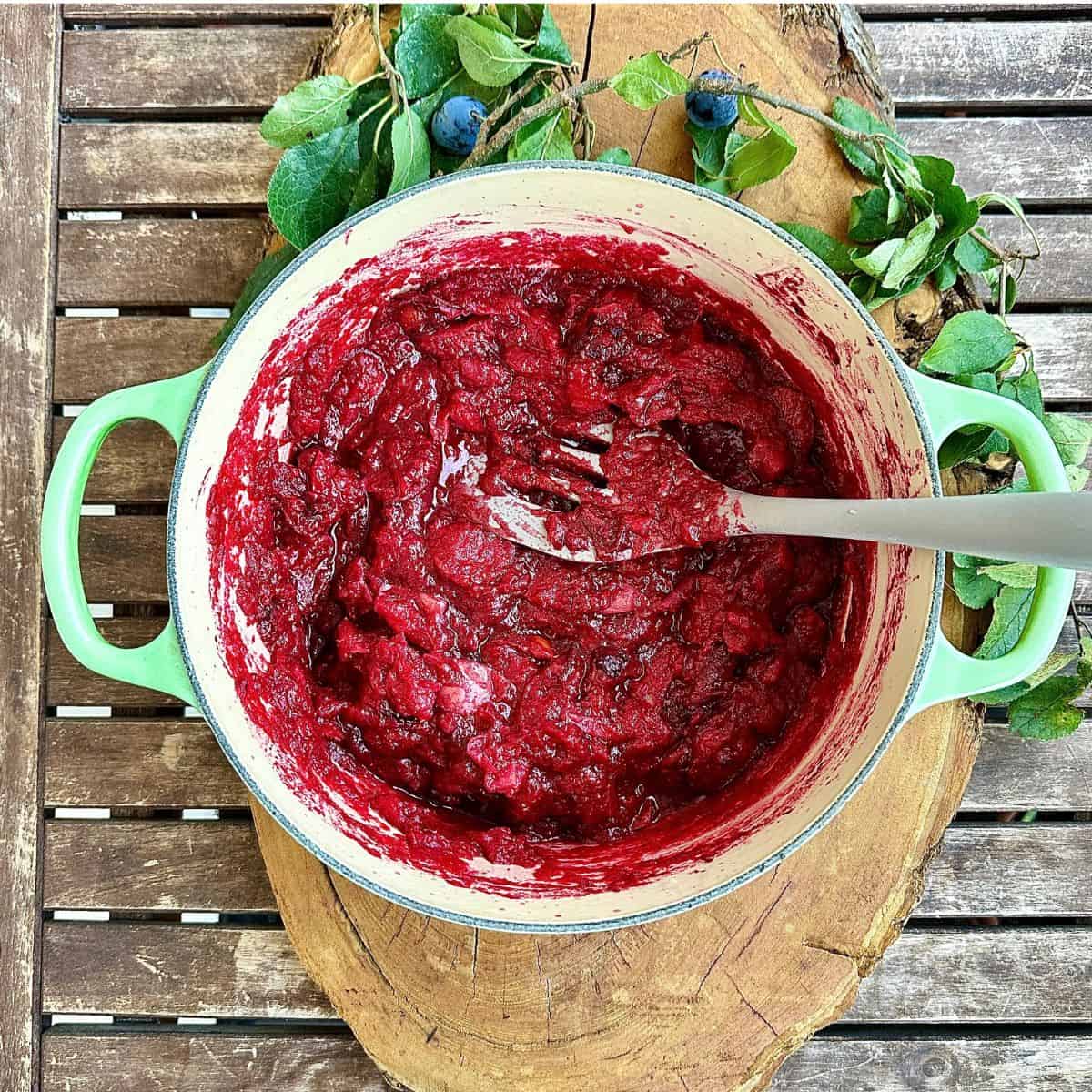
- Put the cored crab apples, damsons and water into a heavy-bottomed pot and bring to a boil.
- Reduce to a simmer and cook for 30 minutes, covered, or until the fruit is cooked (the fruit will be soft and mushy - see the photograph)
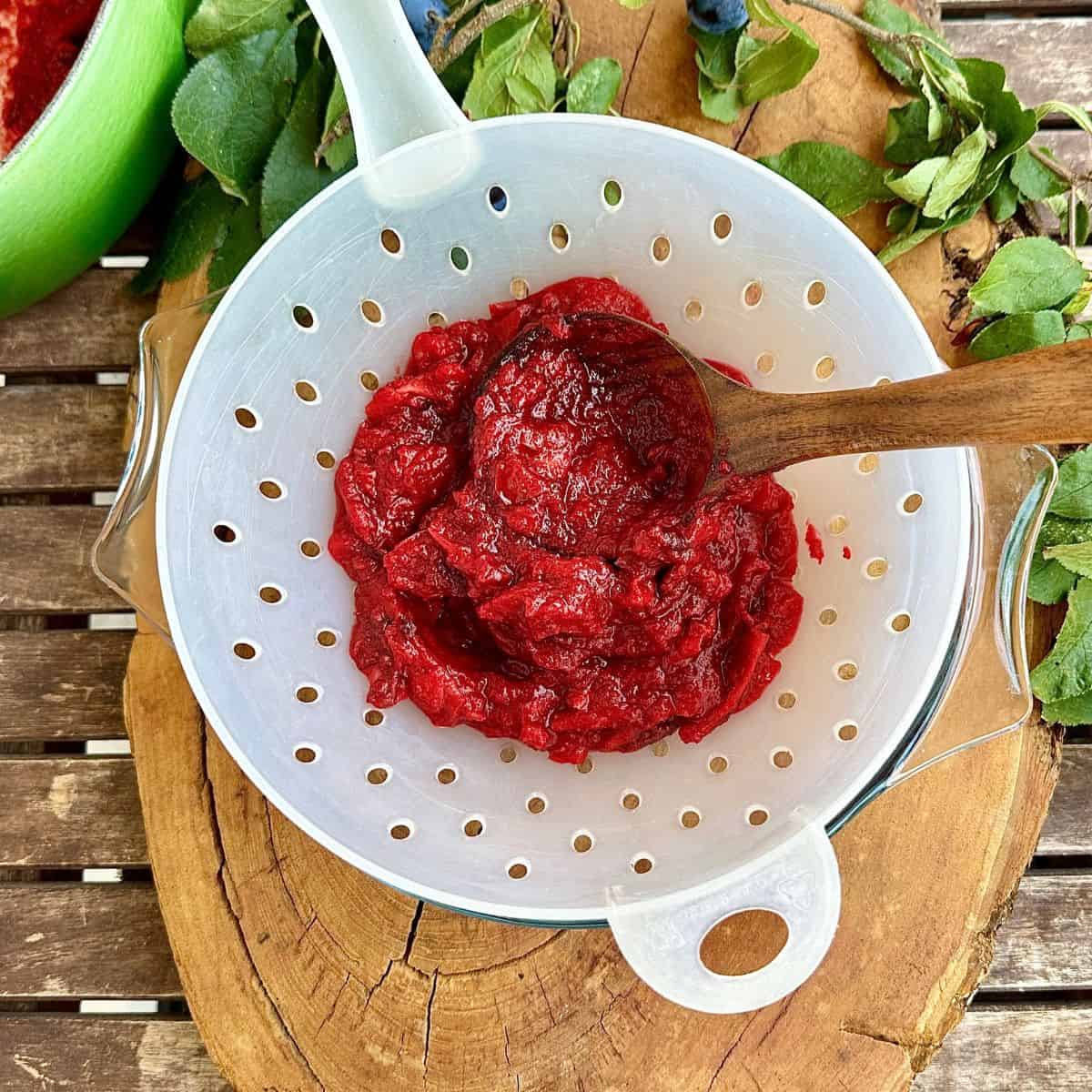
- Pass the cooked damsons and crab apples through a colander to extract the fruit pulp. Examine the pulp and remove any stray stones.
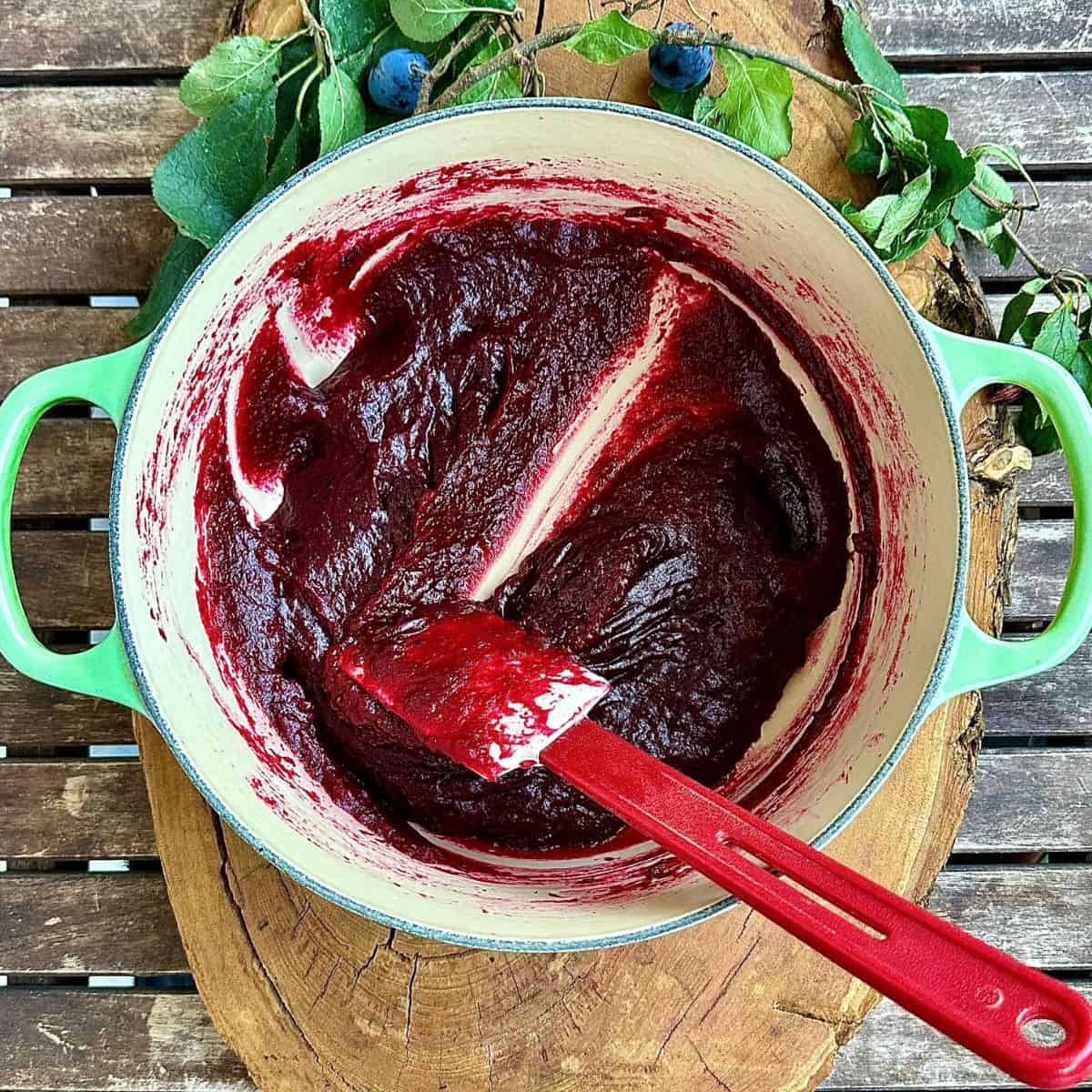
- Return the pulp to the large, heavy-bottomed pot and add the sugar.
- Bring to a boil, then reduce and simmer for 30 minutes. Stir often to prevent it from sticking to the bottom of the pot.
- The pulp will thicken. Use the pan-base test (see recipe tips) to know when its cooked.
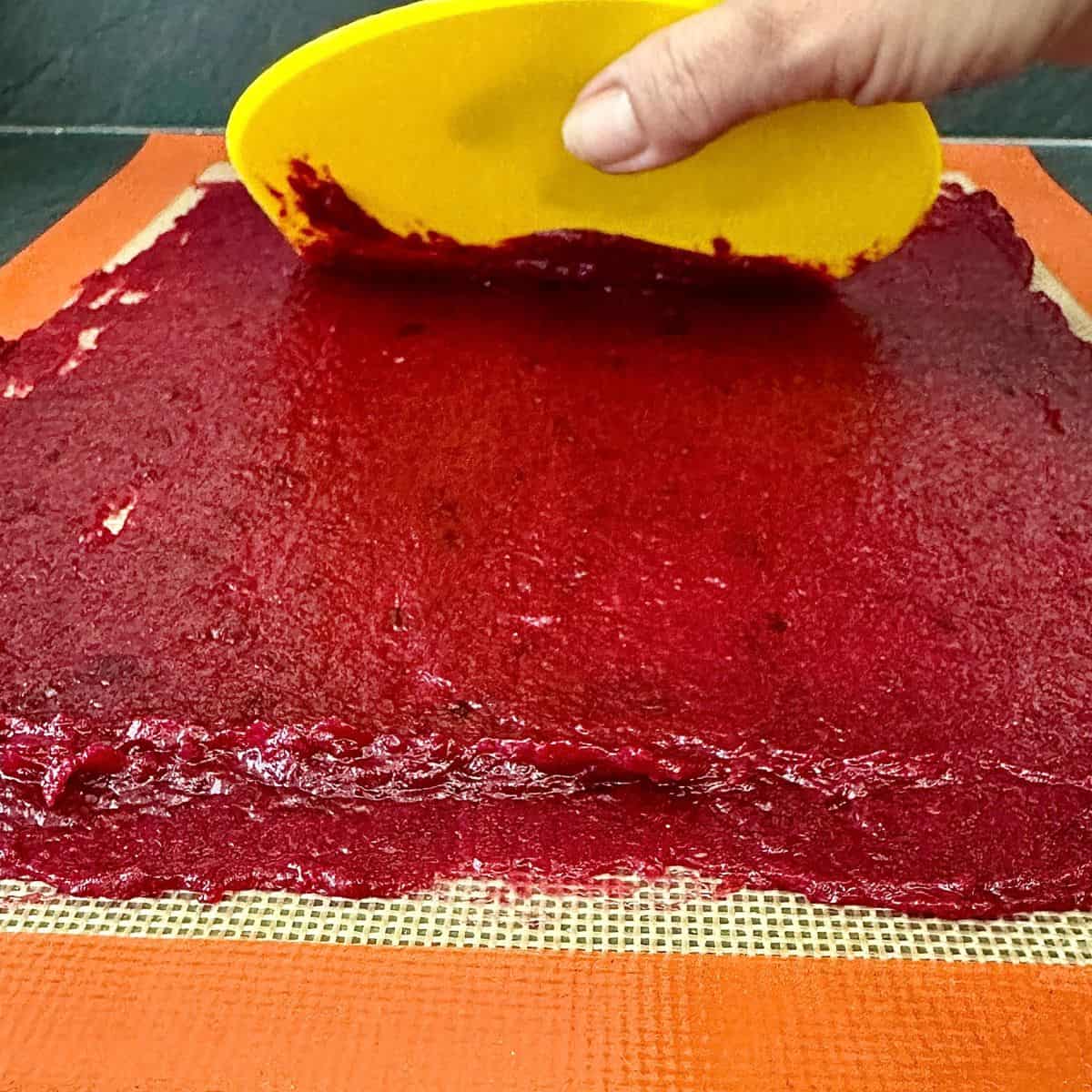
- Spread the thickened pulp evenly onto a silicone mat. Spread to a thickness of about 3- 4 mm.
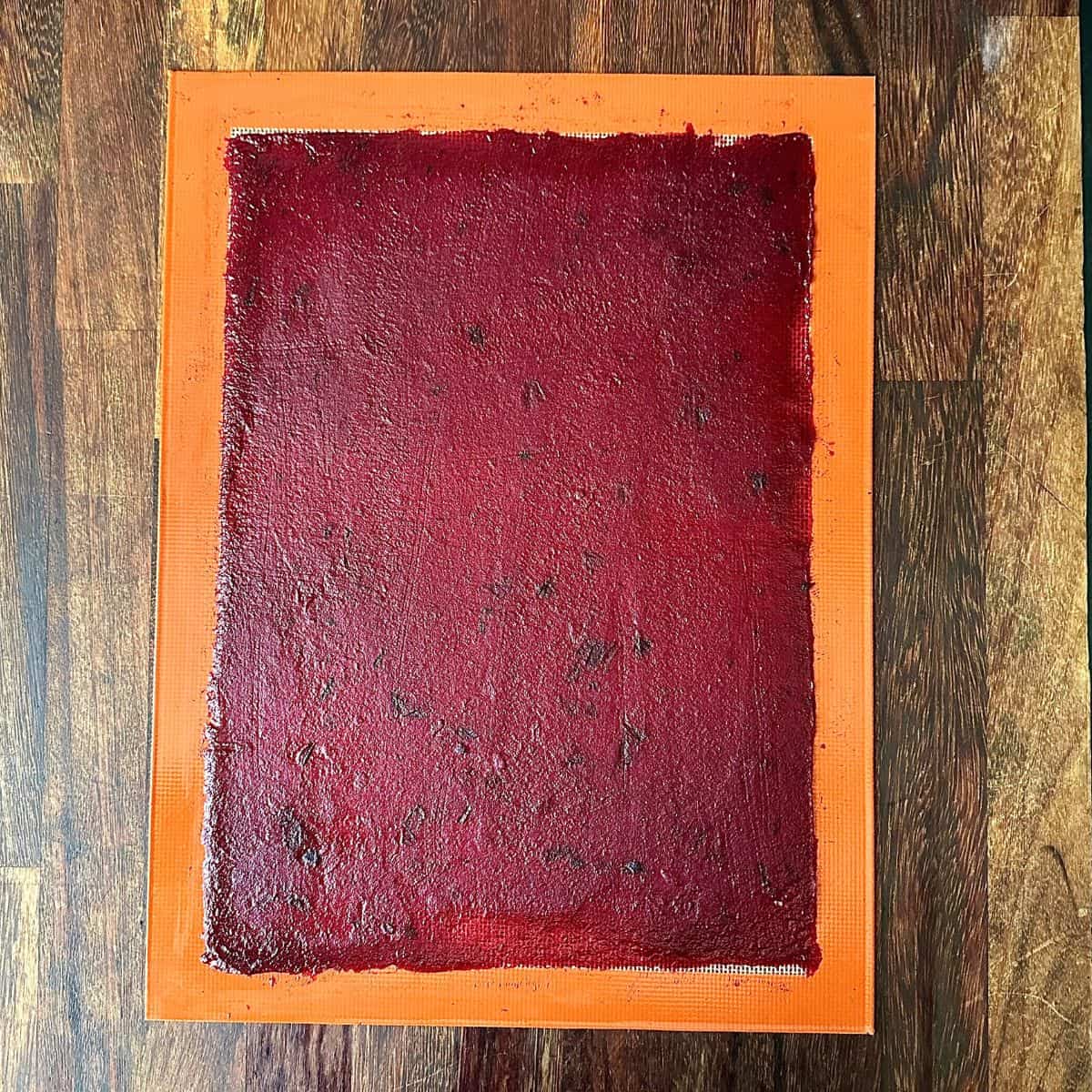
- Preheat the oven to 60ºC.
- Place in the oven and cook for 1 hour until the sheets are dry to the touch.
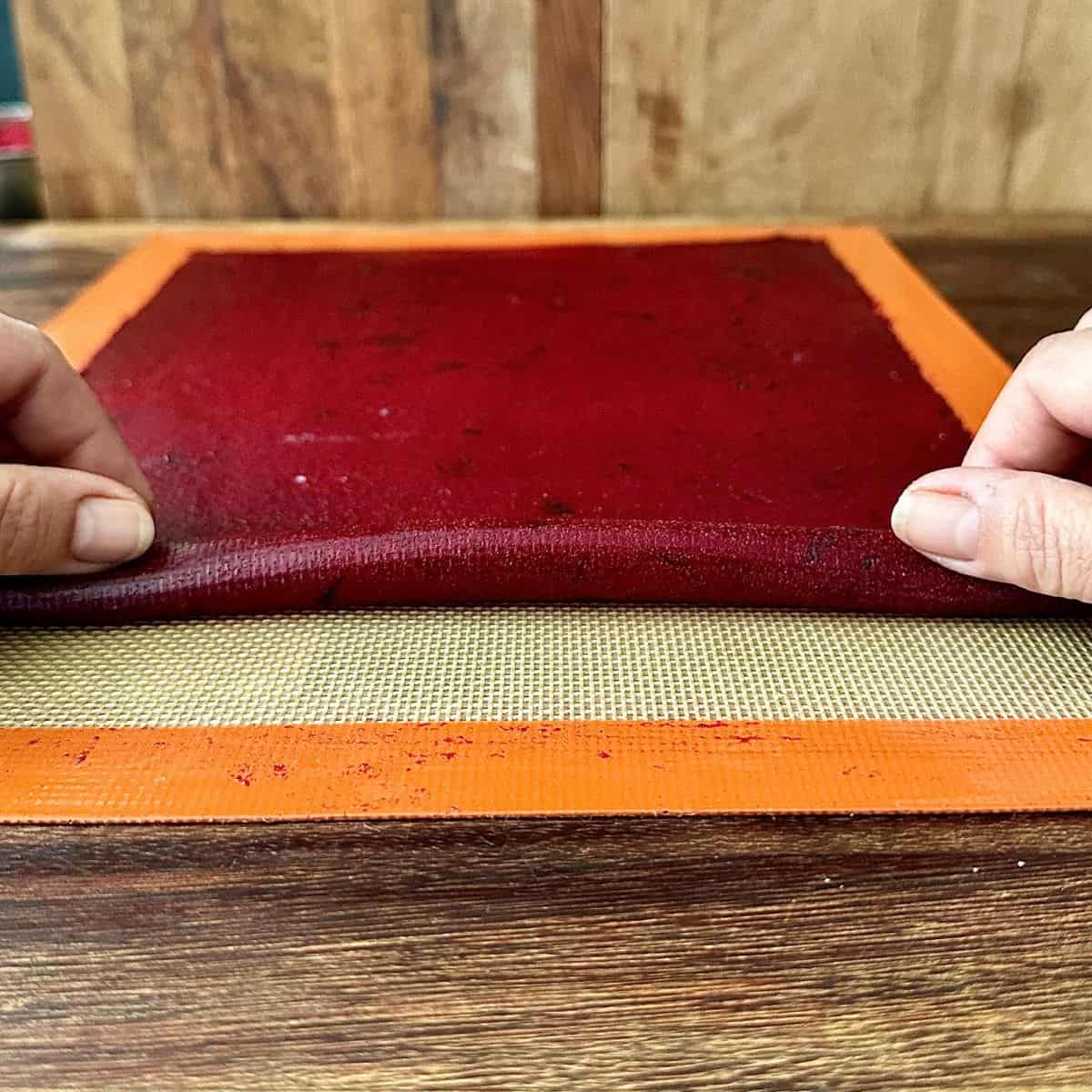
- Peel the sheet away from the mat and roll it up.
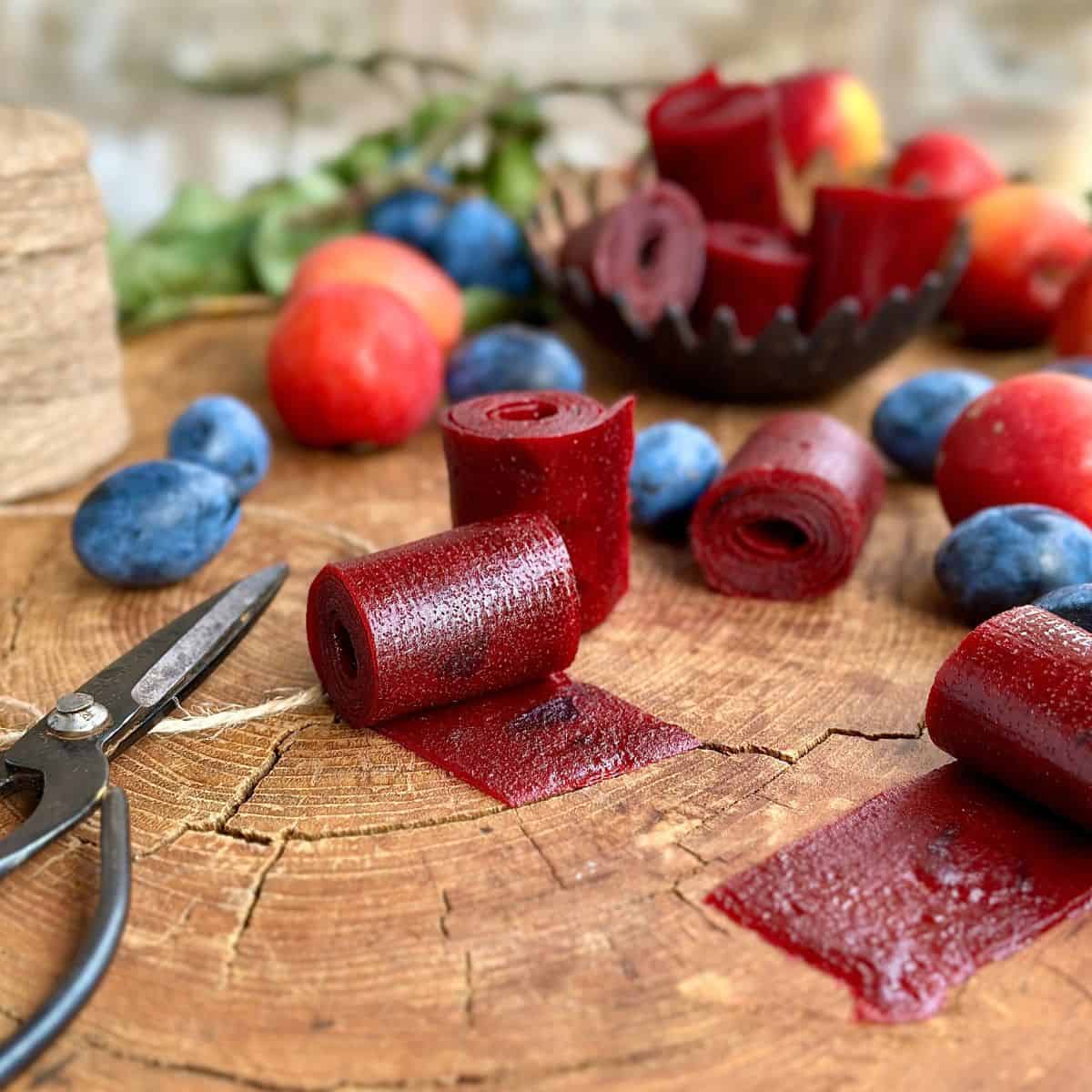
- Transfer the rolled-up fruit leather to a chopping board and slice into 2.5cm (1-inch) rolls, making them bite-sized.
Substitutions & variations
Damson Swaps
You can swap the damsons for any plum and use the same method. Plums are sweeter and less sharp, so you may want to reduce the sugar.
Crab Apple Swaps
You can swap the crab apples for cooking apples; they're also sharp and high in pectin. You can also use dessert apples, but the leather may take longer to cook and dry, as dessert apples contain less pectin.
Flavourings
You could add a spice element by mixing in ground cinnamon, star anise, or ginger during the hob reduction.
Equipment
To make this fruit leather recipe, you will need:
- Two silicone mats to spread and dry the fruit leather on. The fruit leather peels off the silicone mat easily. You can also use parchment paper laid into a baking tray/sheet pan.
- A colander to squeeze the pulp through in order to separate the stones.
- A ladle or other suitable tool to squeeze the pulp through the colander.
- A bench scraper or other suitable tool to spread the pulp evenly onto the silicone mat.
Storage
Cool completely before storing, and store in an airtight container for up to three months at room temperature.
If storing, make sure they don't touch each other, or else they may stick together. If you stack them, separate each layer of rolls with parchment paper.
Fridge storage will extend the life of these fruit leathers.
Unlike shop-bought products, these fruit leathers have no stabilisers or preservatives, so the storage recommendations are guidelines only. Be vigilant for signs the fruit leather is going off :
- Visible mould.
- Sticky or wet patches that were not there before.
- Fermented or alcoholic smell.
Recipe Tips
- The crab apples should be firm, not soft. If using red crab apples like mine, try to pick them when they are almost red all over. Core them to remove the toxic pips.
- Be sure to check your strained pulp for any stray damson stones, particularly if you use a colander with larger holes than a sieve.
- Use a heavy-bottomed pot to avoid sticking during the reduction.
- Pan-base test to assess if the puree is ready: Drag a spoon across the pan base - if the line holds for a second before the puree closes over it, it's ready. See the method photo above. You will see that the puree is also glossy - another indication it is ready.
- Taste before spreading the puree, and add more sugar at this stage if you want. You will need to cook it further, as sugar releases water.
- Try your best to spread the puree evenly.
- 60ºC is low for an oven. Check that your oven can actually go that low.
- Make sure the centre is dry to the touch. If it is tacky, it needs more time, so return it to the oven and check at intervals. If it won't peel from the silicone mat, it's not dry enough - give it more time.
- If it's brittle or cracked, you spread it too thin, dried it too hot, or left it too long.
- Cutting: Use kitchen scissors or a sharp knife to cut the 1-inch strips.
FAQ
Yes. At the same temperature, the drying time may vary.
Yes. You can use any apples; the flavour and cooking time may change, though.
You want a smooth puree and for it to be thick before you spread it onto the silicone mats. Also, in this recipe we mix the sugar after passing it through a colander to remove stones. The sugar needs time to release all the water.
The ideal dehydration temperature is 60-65ºC. If your oven does not go this low, you can do the following:
Prop the door open: 5- 10 cm (2-4 inches) with a rolled-up silicone mat or a wooden spoon.
Use a fan: Place a small house fan near the propped-open door to force air circulation in the oven. Airflow is important with dehydration.
Use an oven thermometer: Use it to monitor the temperature and keep it around 60ºC.
No. It should be completely dry. This lets you store it for a long time.
Of course. The cooking times will change, not the flavour.
📖 Recipe
Damson and Crab Apple Fruit Leather
Equipment
- 2 Silicone mat
- Colander
Ingredients
- 400 g Damsons
- 600 g Crab apples cored weight
- 100 g Sugar
- 200 ml Water
Instructions
- Thoroughly wash the damsons and crab apples and pat dry.
- Core the crab apples to remove the pips.
- In a heavy-bottomed pot, add cored crab apples, damson and water. Bring to a boil, over high heat, then simmer for 30 minutes, covered, or till the fruit is cooked.
- Pass the fruit through a colander and press down with a ladle to extract the pulp. Check the passed fruit pulp for any damson stones that may have escaped.
- Bring the fruit pulp back to the pot and add sugar. Bring to a boil, then reduce the heat and simmer for 30 minutes, stirring often to prevent sticking to the bottom of the pan. Continue stirring and cooking till the fruit pulp thickens and reaches a coating consistency.
- Transfer the thickened fruit pulp onto the silicone mats and spread evenly to a thickness of about 3-4 mm.
- Preheat the oven to 60ºC
- Place the mats in the oven and dry for about 1 hour.
- Once the fruit pulp sheets are dry to the touch, peel them away from the silicone mat and roll them. Transfer them onto a chopping board and cut them into 2.5 cm-wide rolls.
- Store in an airtight container at room temperature.
More Sweet TREATS
For those of you with a sweet tooth, here are some more sweet treats you may like to make:

Food Safety
- Wash your hands regularly while preparing, handling and cooking food.
- Wipe down countertops and high-contact points regularly.
- If you cook meat and fish, do not use the same utensils on cooked food that previously touched raw meat. Use separate chopping boards for meat and fish. Wash your chopping boards immediately after use.
- Cook food thoroughly to a minimum internal temperature of 165 °F (74 °C).
- Don't leave food at room temperature for extended periods (more than 2 hours).
- Store food correctly.

Leave a Reply