

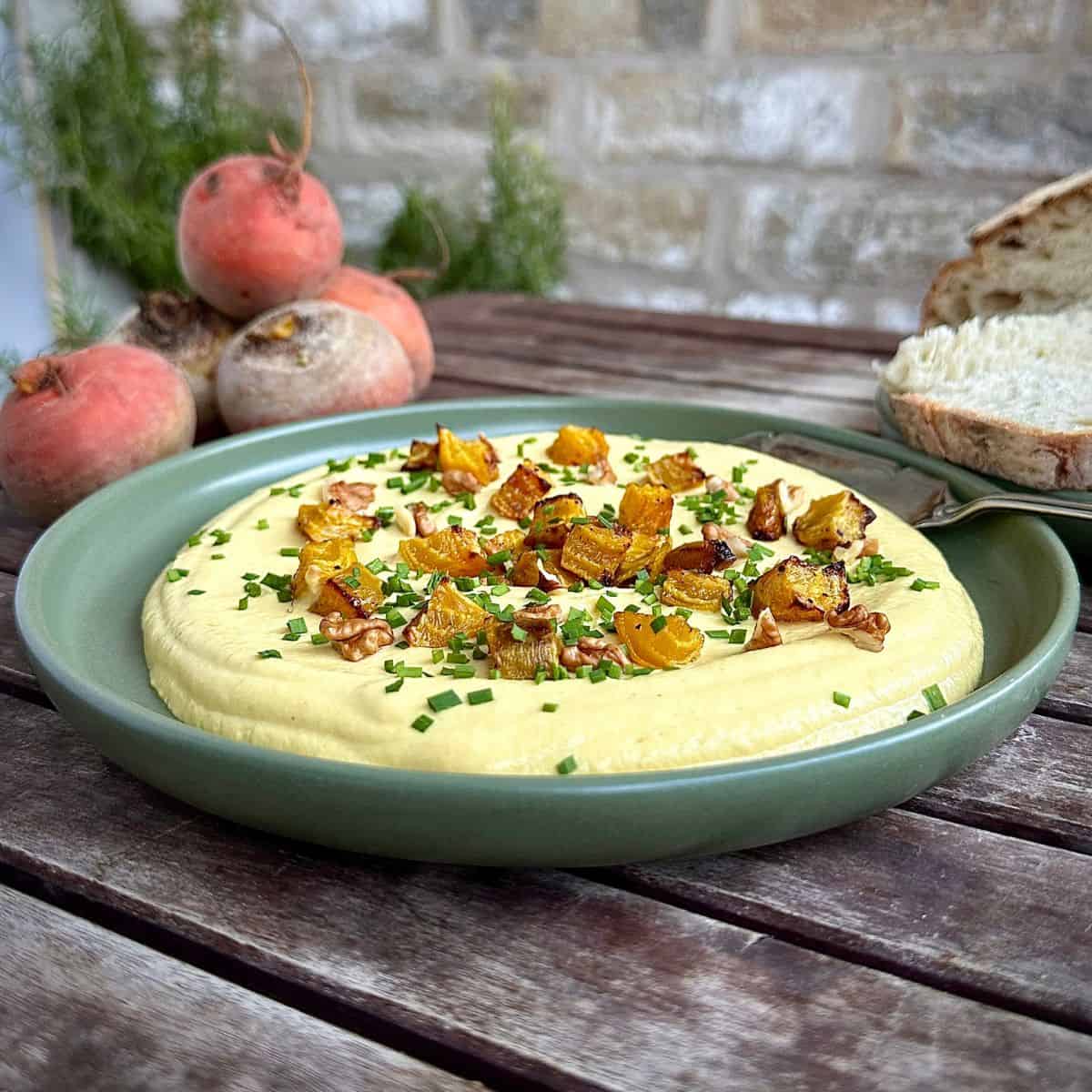
If you are looking for a high-protein snack or an easy dip to serve at a party, this golden beetroot dip needs to be added to your menu. It has the savoury depth of a classic cheesy dip without any cheese and is entirely dairy-free. Soft tofu is the secret ingredient, giving you a silky, plant-based dip, packed with clean protein.
This versatile beetroot dip is perfect for:
- Party appetisers: Serve in a bowl surrounded by crunchy crudités.
- Healthy snacking: Pair it with pita or crackers.
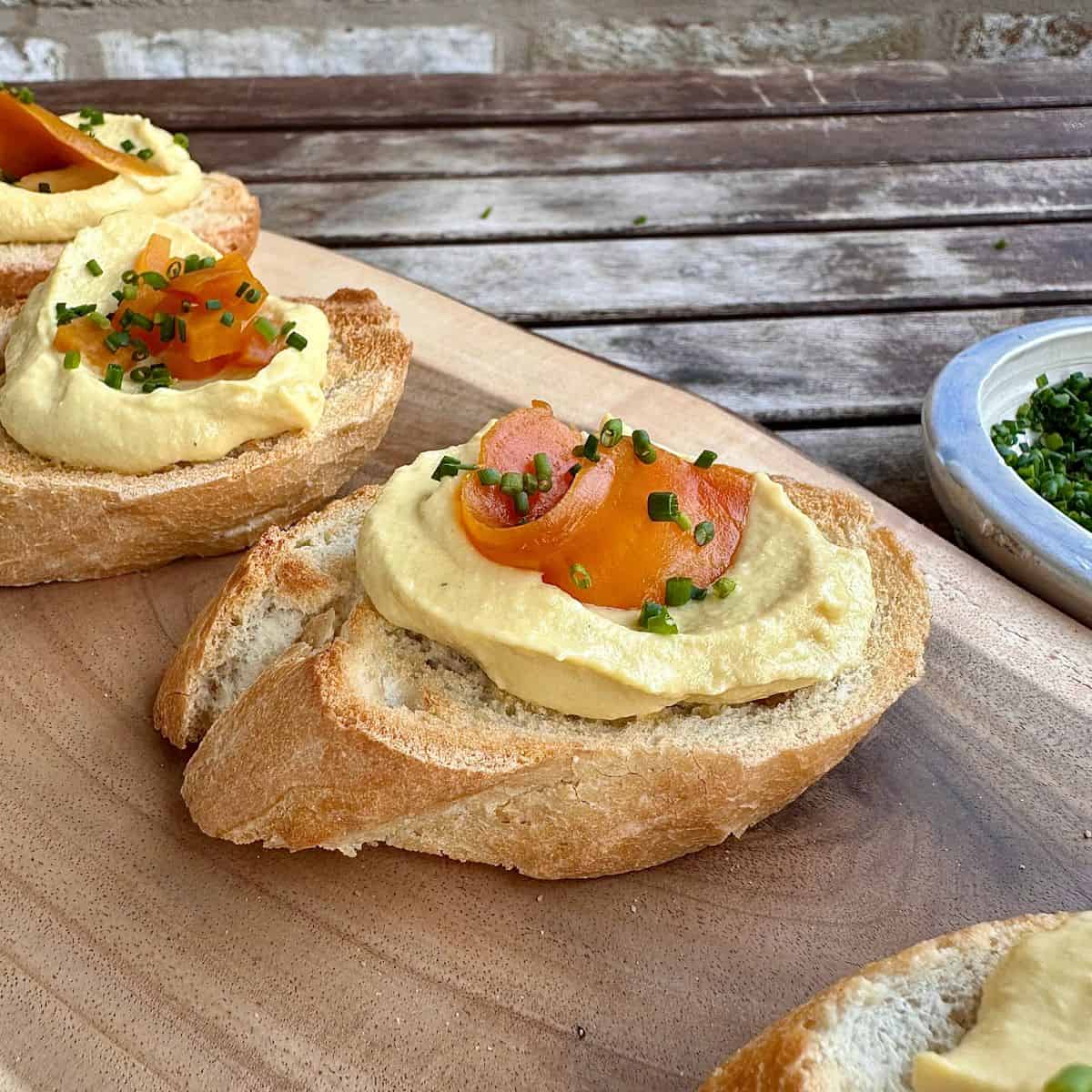
- Easy finger food: Slather it generously on toasted crusty bread.
The earthy golden beets give this dip its attractive bright colour and natural sweetness, while the nutritional yeast, garlic, and lemon juice create an irresistible tangy, cheesy flavour.
Like your beetroot? Try my other golden beetroot recipe: Golden beetroot tart with mascarpone.
Why You'll Love golden beetroot dip with soft tofu
- A savoury cheese-like dip with soft tofu giving a creamy, smooth blend.
- A good source of clean plant protein, thanks to the addition of soft tofu.
- Easy, quicker roasting of the beetroot with the dice-and-marinate method.
- A great alternative dip for those who can't eat legumes, nuts, or beans, which many other dips are made from.
- Vegan and gluten-free (check the labels on the brand of tofu and nutritional yeast you buy, though).
Jump to:
Key Ingredients & Notes
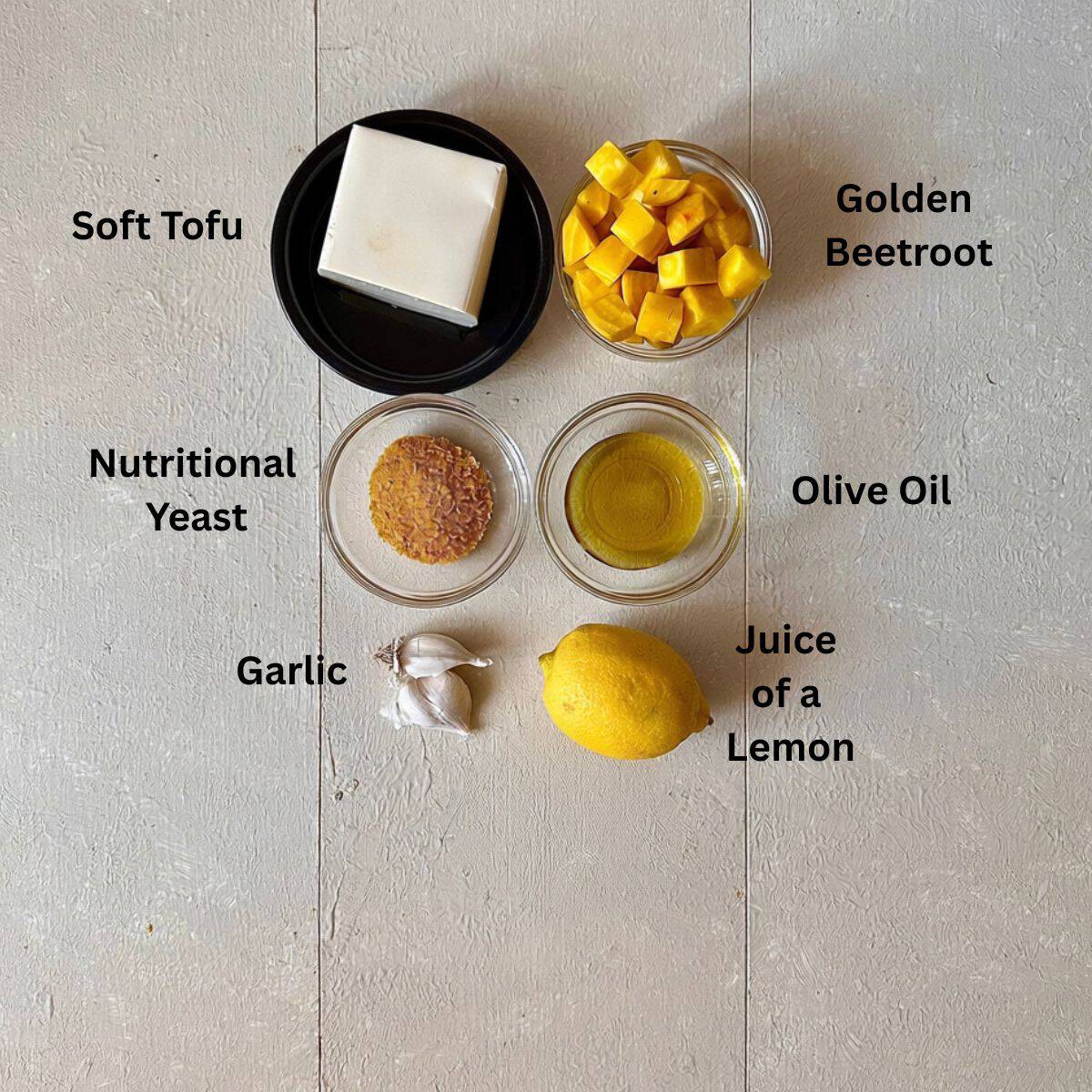
- Golden beetroot - A milder, less sweet alternative to red beetroot.
- Soft (silken) tofu - makes the dip velvety and rich and adds a good measure of clean plant protein.
- Nutritional yeast - for savoury flavour. An alternative to cheese, meaning this is a vegan dip.
- Garlic, lemon, sea salt, olive oil, black pepper - create the dip's core flavour base. Garlic gives savoury depth, and the lemon juice and sea salt make the flavours pop.
- Walnut, chives - optional garnishes.
See the recipe card for quantities.
How to Make golden beetroot dip with soft tofu
- Preheat the oven to 200ºC.
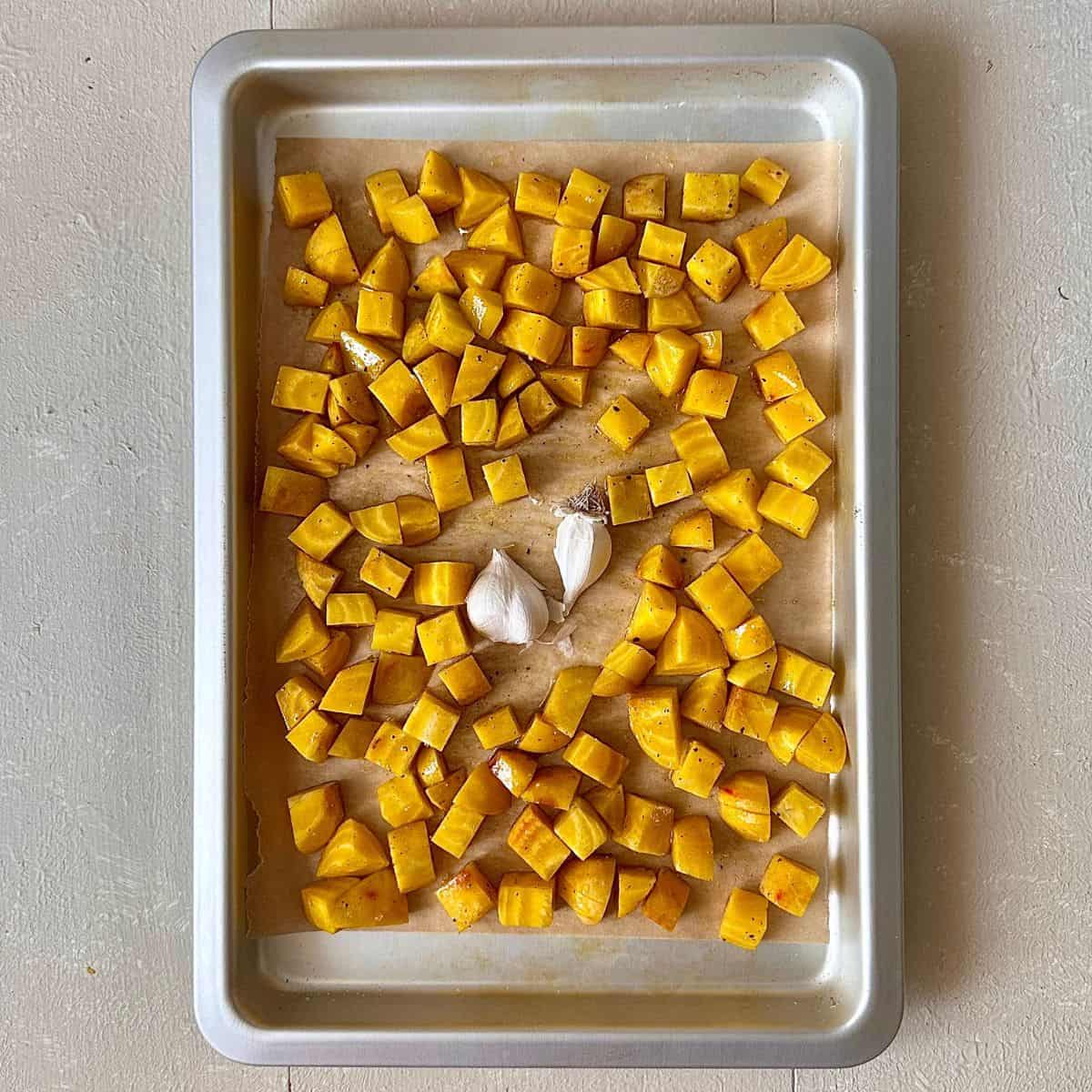
- Peel the beetroot and cut into small dice.
- Marinate in the olive oil, salt and pepper.
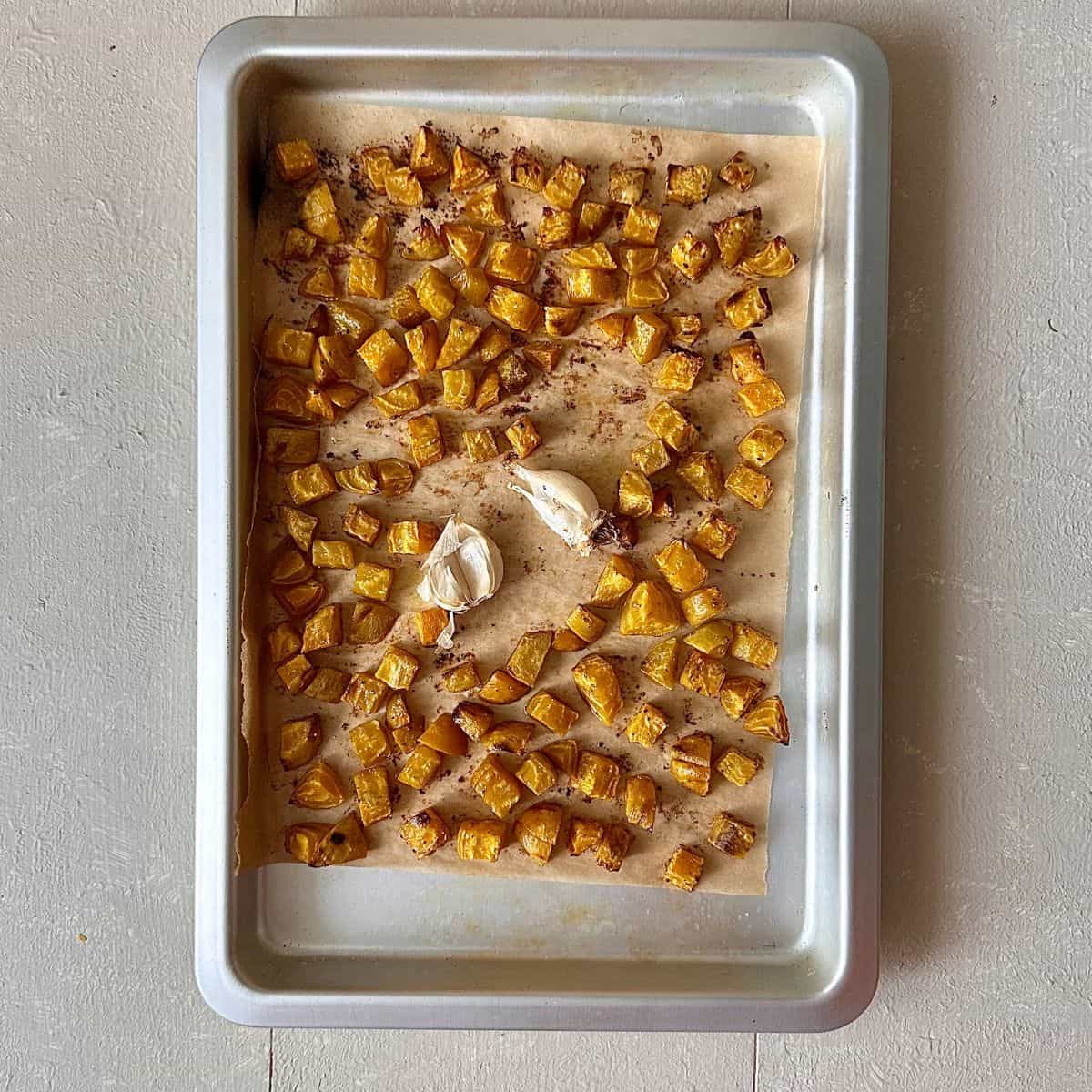
- Spread onto a baking tray/sheet pan with the unpeeled garlic and roast for about 20 minutes, until the sides start to brown.
- Set a few dice aside for garnishing.
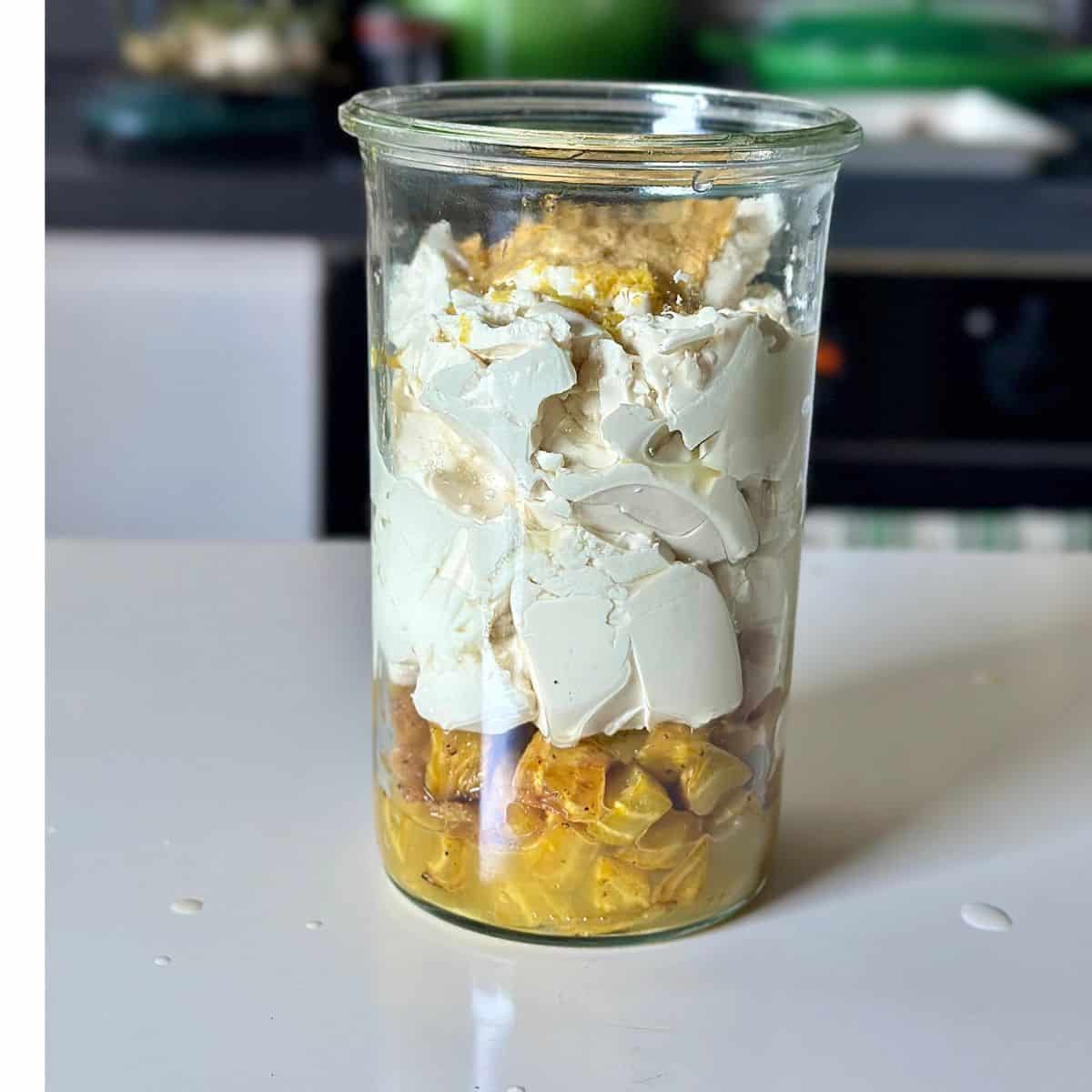
- After roasting, peel the garlic.
- Juice and zest the lemon.
- Add the roasted beetroot, roasted garlic, lemon juice and zest, tofu and nutritional yeast to a suitable container.
- Blend to a smooth purée with a stick blender.
- Check the seasoning to your taste.
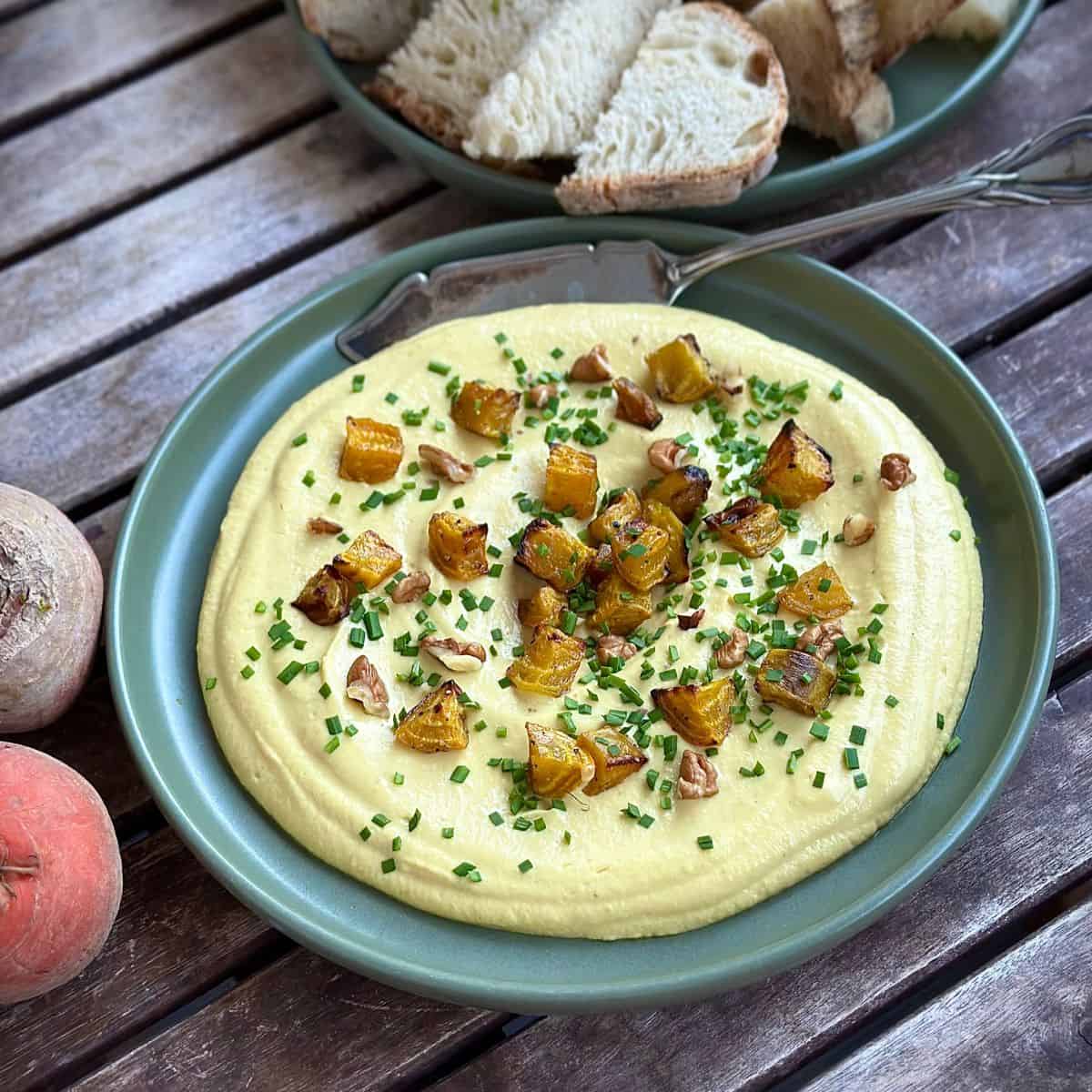
- Serve as you wish - perhaps spread onto a serving plate, garnished with some of the roasted golden beetroot dice and pieces of walnut, or serve on individual pieces of baguette.
Substitutions & Variations
- Beetroot - you can use pink or red beetroot instead of golden. The appearance will, of course, change significantly, and the flavour as well, as red beetroot is far sweeter and earthier. You may need to add more lemon juice for tang.
- Tofu - You can use medium-firm tofu instead of soft. You may need to blend a bit longer for a smooth purée.
- If you don't have tofu, you could try it with any cooked white bean. Use a 400g tin of cooked white beans. The taste will be different, however.
- Garnish is optional. You can use parsley or dill instead of chives. You can swap the walnuts for sunflower seeds or pumpkin seeds, if you like.
- Instead of nutritional yeast, you can add grated parmesan (likely contains animal rennet, so it will not be vegetarian/vegan) or a grated vegetarian hard cheese.
- No lemons to hand? You can use the juice and zest of a lime.
Equipment
For this beetroot dip, you will need:
- A baking tray / Sheet pan to roast the golden beetroot and garlic.
- A stick blender to blend all the ingredients together. You can also use a jug blender.
Storage
You can store the dip in the fridge for up to three days in an airtight container. It may release some water; if it does, just stir it well with a spoon, and it will return to its usual consistency.
This dip does not freeze well, so I would avoid it.
Recipe Tips
- Cutting the beetroot into dice and marinating with olive oil, salt, and pepper before roasting reduces the overall roasting time and improves seasoning penetration, compared to roasting the beetroot whole.
- Drain the tofu well and pat it dry before blending to reduce the water content going into the blender.
- After blending, check the seasoning and adjust as needed.
- You can also adjust the nutritional yeast if you want a more pronounced umami/savoury taste. Note that adding more may make the dip thicker.
- Serve at room temperature or slightly chilled, not straight from the fridge.
- Serve as you would a traditional dip, or serve on toasted baguette slices as finger food at a party.
FAQ
This is a versatile dip. Serve on a plate to dip into with flatbread or crackers. Serve spread on slices of baguette and garnished as finger food, use as a grain bowl topper, or even as a sandwich filling accompanying slices of cheese, for instance.
Yes, make it a day or two ahead and store as instructed. Or you can roast the beetroot and garlic ahead of time, store them in a container, and on the day of serving you just need to zest and juice the lemon and blend everything together.
No, the tofu is used for its texture and protein benefit. This dip tastes bright, with a sweet edge from the beetroot and savoury depth from the garlic and nutritional yeast.
This recipe uses 600g of soft (silken) tofu, which contains around 41g of protein. This recipe makes 6 servings, so each serving has about 6.8g of protein, more than a typical hummus. This is a protein-forward recipe from a known good source of plant protein (tofu)
📖 Recipe

Golden Beetroot Dip with Soft (Silken) Tofu.
Equipment
- Blender (stick or jug) or food processor
- Baking tray
- Measuring spoons
Ingredients
- 500 g Golden beetroot
- 600 g Soft tofu
- 15 g Garlic
- 1 Lemon for juice
- 1 tablespoon Nutritional yeast
- 1 teaspoon Sea Salt
- ½ teaspoon Ground black pepper
- 1 tablespoon Olive oil
- Chopped chives (optional) as garnish
- Walnuts (optional) as garnish
Instructions
- Preheat the oven to 200ºC
- Peel and dice the beetroot. Marinate in olive oil, black pepper and salt. Transfer to a tray with the unpeeled garlic and roast for about 20 minutes, until cooked and the sides are browned.
- Zest the lemon and juice it.
- Add the cooked beetroot (save some for garnish) to a blender, along with the peeled garlic, tofu, nutritional yeast, and lemon zest and juice, and blend into a smooth purée. Check and correct seasoning if required.
- Transfer to a plate or add dollops to toast, then garnish with roasted beetroot dice. Garnish with chopped walnuts and chopped chives.
Nutrition
NOTES
More dips and spreads to try
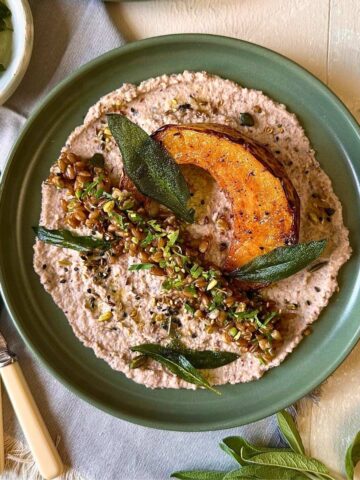
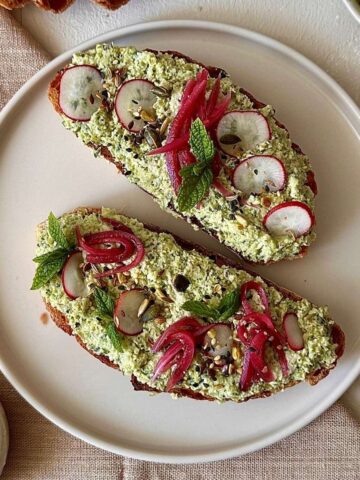
Here are more interesting dip and spread ideas for you to try, using courgettes, pumpkins, edamame, and even watermelon rind:


Food Safety
- Wash your hands regularly while preparing, handling and cooking food.
- Wipe down countertops and high-contact points regularly.
- If you cook meat and fish, do not use the same utensils on cooked food that previously touched raw meat. Use separate chopping boards for meat and fish. Wash your chopping boards immediately after use.
- Cook food thoroughly to a minimum internal temperature of 165 °F (74 °C).
- Don't leave food at room temperature for extended periods (more than 2 hours).
- Store food correctly.



Leave a Reply