

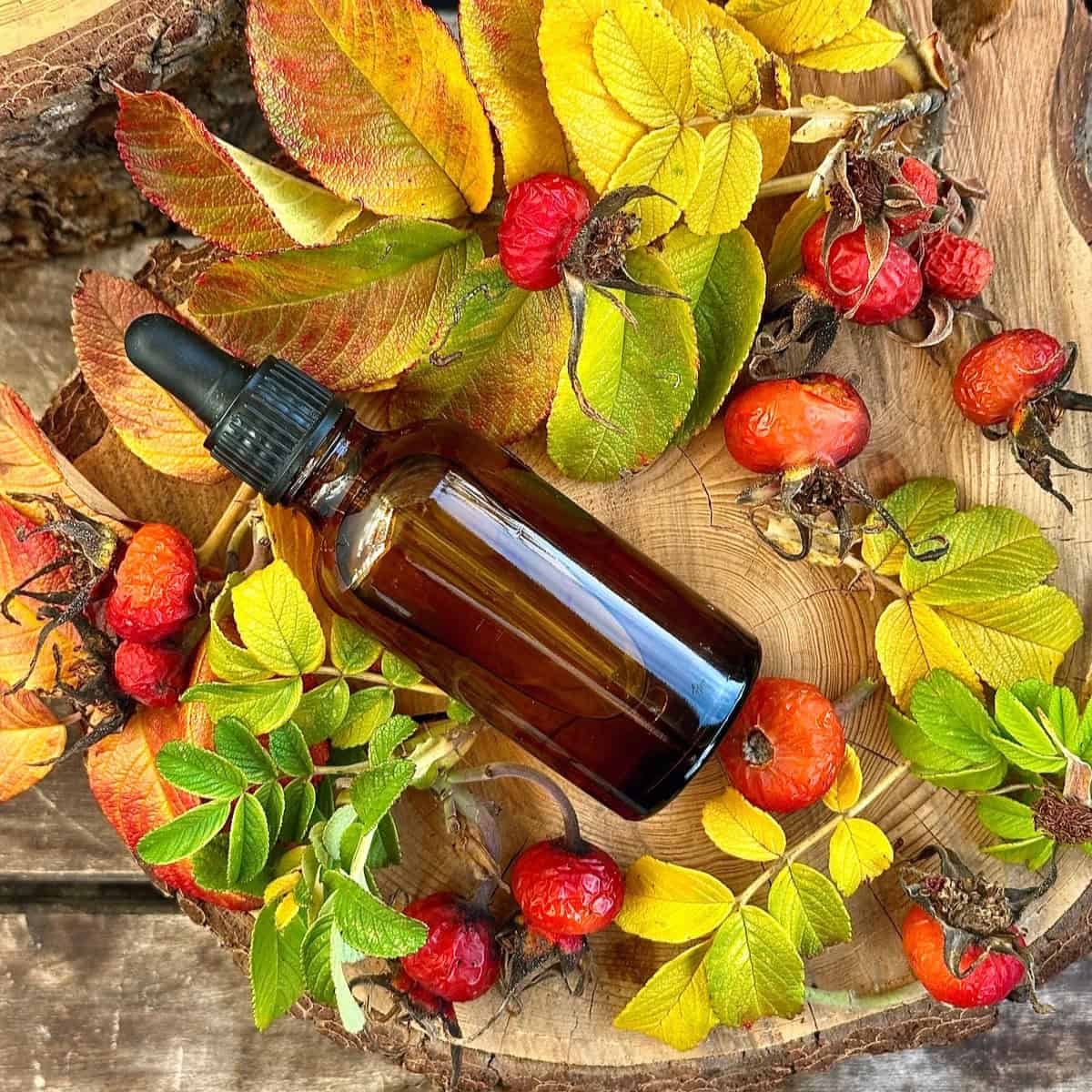
I have been making this rosehip oil in autumn for years now, ever since I learned about its benefits. Organic, good-quality rosehip oil can be really expensive, so I decided to make my own. It's easy to make; you only need two main ingredients; however, it does take time. I forage my rosehips (Rosa rugosa) from land that is not contaminated with pesticides and is away from pollution. After four years of using it, I am happy to share this recipe with you because it actually works. My skin is supple and soft, even at my age, and the sun damage has reduced.
This rosehip face oil is easy to make, and I feel much better knowing what goes into what I put onto my skin.
The rose plant is a rich source of ingredients for cooking and skin care, so it is no surprise that it is popular with foragers. Take a look at my rose water made with rose petals and my rosa harissa condiment.
In short: Homemade rosehip oil is an infused face oil made by gently warming crushed, foraged rosehips in sweet almond oil, then straining it and adding a few drops of vitamin E. It's a simple home infusion, not commercial cold-pressed rosehip seed oil. The oil infuses at a low 38°C for eight hours, so it's almost entirely hands-off, and makes about 160 ml.
What Are Rosehips and Where to Find Them
Rosehips are orange/red fruits that follow the flowering of rose plants and contain the seeds of the rose plant. Some rose plants even produce purple or black-coloured rosehips. I am particularly fond of Rose rugosa, which has large, bright red rosehips reminiscent of cherry tomatoes! I use rose rugosa rosehips in this rosehip oil recipe.
Forage them from late August to October, when the hips are plump and bright red. When foraging, avoid rose plants you suspect may have been exposed to chemical sprays. I prefer to forage for rosehips in wild places rather than in gardens or near fields and roads.
When harvesting rosehips, I suggest you have a pair of gloves handy because rose plants have thorns. Scissors make life easier, too.
Why You'll Love this Homemade Rosehip Oil
- You know what's going into what you put on your skin. No unfathomable chemical ingredients.
- Only three ingredients: rosehips, sweet almond oil and vitamin E oil.
- Cost far less than shop-bought rosehip oil.
- A lovely homemade gift.
Jump to:
Ingredients & Notes
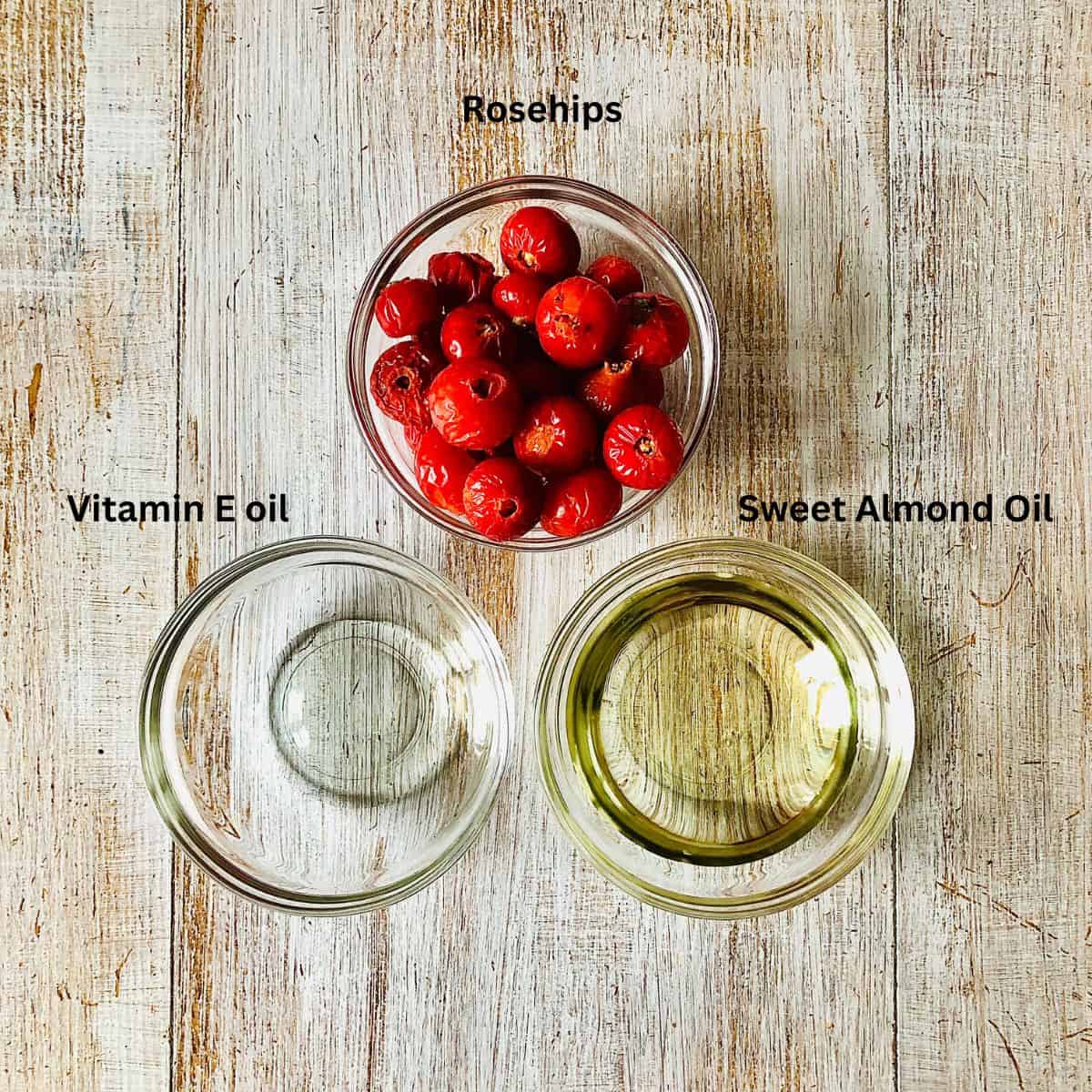
- Rosehips - Use ripe, deep red hips from the Rosa rugosa plant, foraged away from roads and sprayed land.
- Sweet almond oil - I use sweet almond oil as the carrier oil. This is the natural oil the rosehips infuse into. Sweet almond oil is low on the comedogenic scale, so it's less likely to block the skin's pores. I purchased sweet almond oil from my local health store.
- Vitamin E oil - I also add a few drops of vitamin E oil, which is linked to skin health and appearance and helps extend the shelf life of the rosehip oil. Again, I purchased the vitamin E oil from my local health store.
What's the Best Carrier Oil for Rosehip Oil?
This depends on your skin type. Listed here are different oils often recommended for specific skin types. Avoid coconut oil as it is high on the comedogenic (pore-blocking) scale.
| Oil | Skin Type | Notes |
| Sweet almond oil | Normal to dry | Not for nut allergies. Low on the comedogenic scale |
| Jojoba oil | Oily | Similar to skin's natural oils. |
| Grapeseed oil | Oily | Light and absorbed quickly |
| Apricot kernel oil | Dry or sensitive | Similar to almond but lighter |
| Argan oil | Dry and older skin | more expensive |
Equipment
You will need the following equipment:
- Temperature probe or digital thermometer - to monitor the temperature of the infusion whilst in the oven.
- Large oven-proof dish - to infuse the oil in the oven.
- 200ml Brown glass bottle with a pipette - to bottle and store the finished rosehip oil.
- Muslin cloth & Sieve - to separate the infused oil from the hips.
How to Make Rosehip Oil
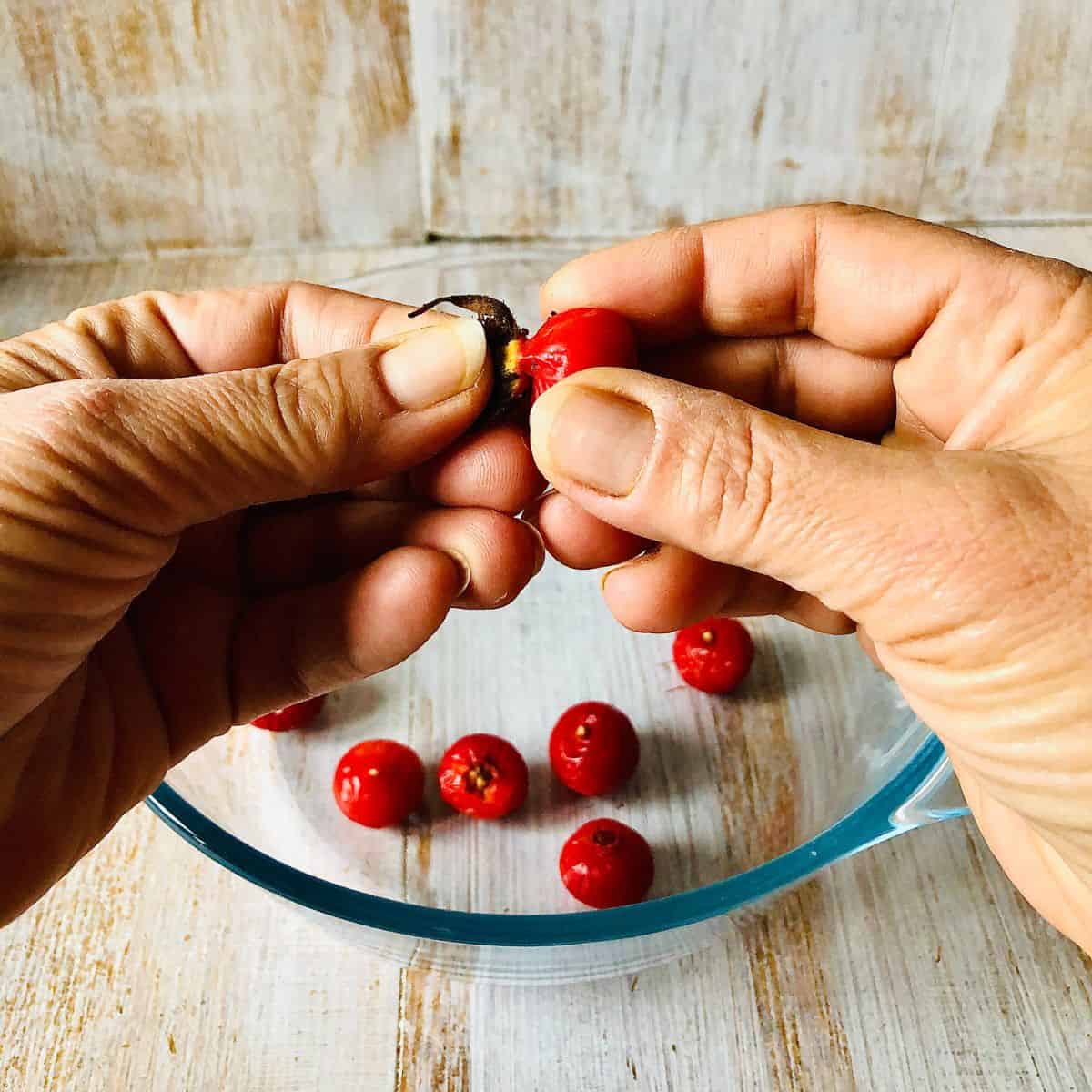
Prepare the rosehips: Remove any stems and leaves.
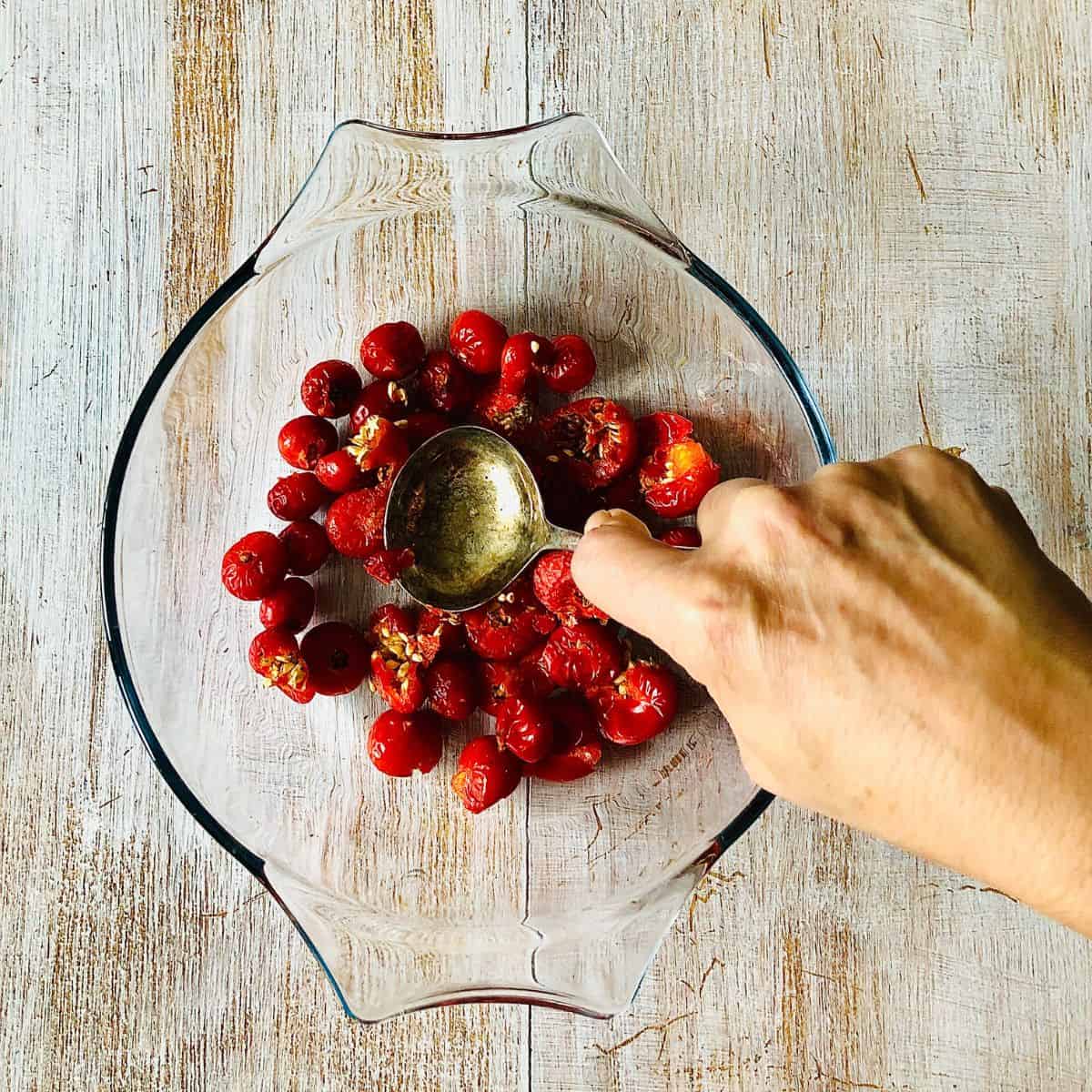
Crush the rosehips: Use the back of a spoon to crush the rosehips.
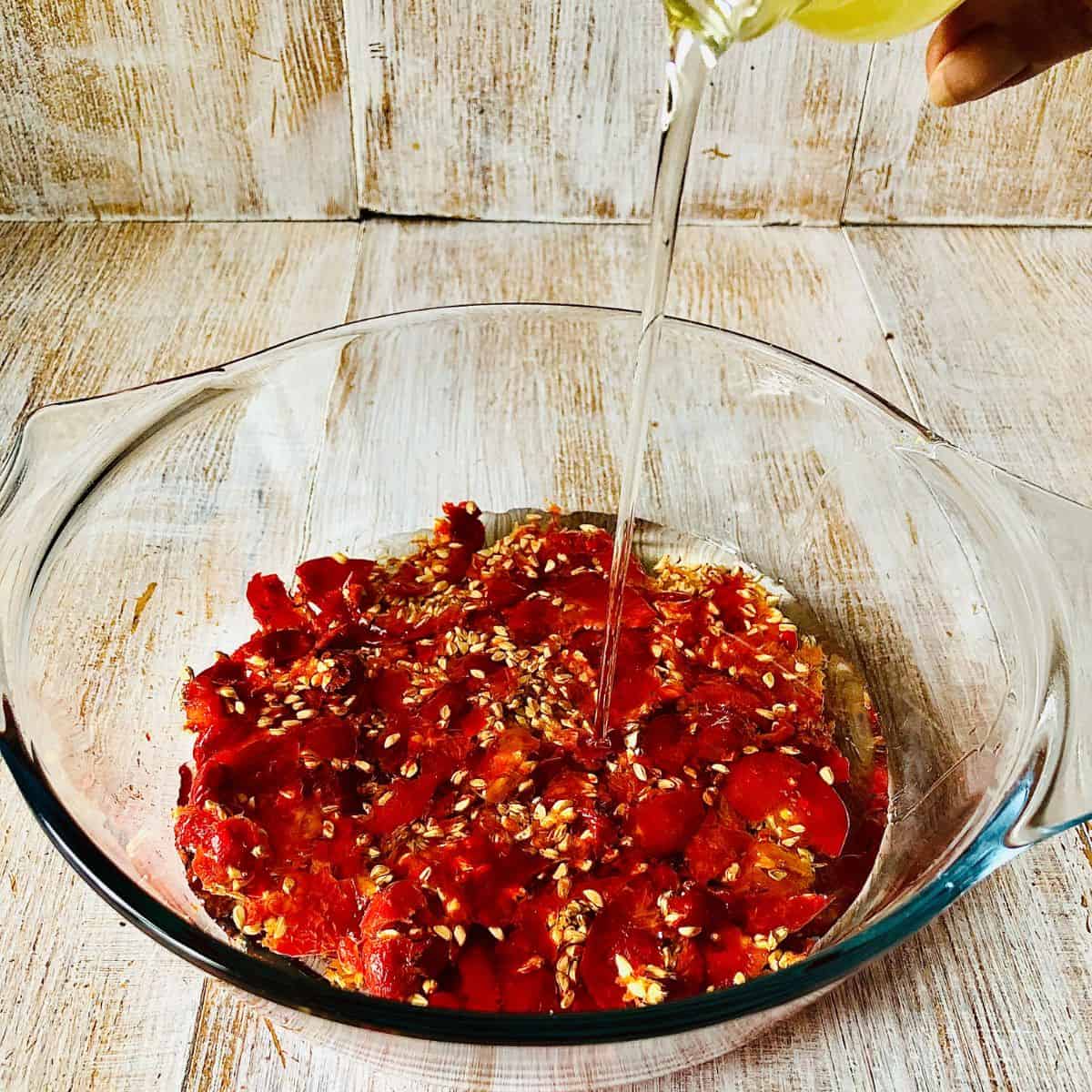
Infuse the oil: Once crushed, place the rosehips in a heatproof dish and pour the sweet almond oil over them, ensuring they are submerged.
Heat the oven to 38ºC. Place the dish in the oven for eight hours. Maintain 38ºC by monitoring with a thermometer and opening the oven door periodically if necessary.
After eight hours, leave the oil to settle in a dark place. While the oil cools, sterilise the coloured glass bottle, sieve, and glass bowl in the oven at 100ºC for 30 minutes. Pour hot ( not boiling ) water over the pipette (don't put it in the oven)
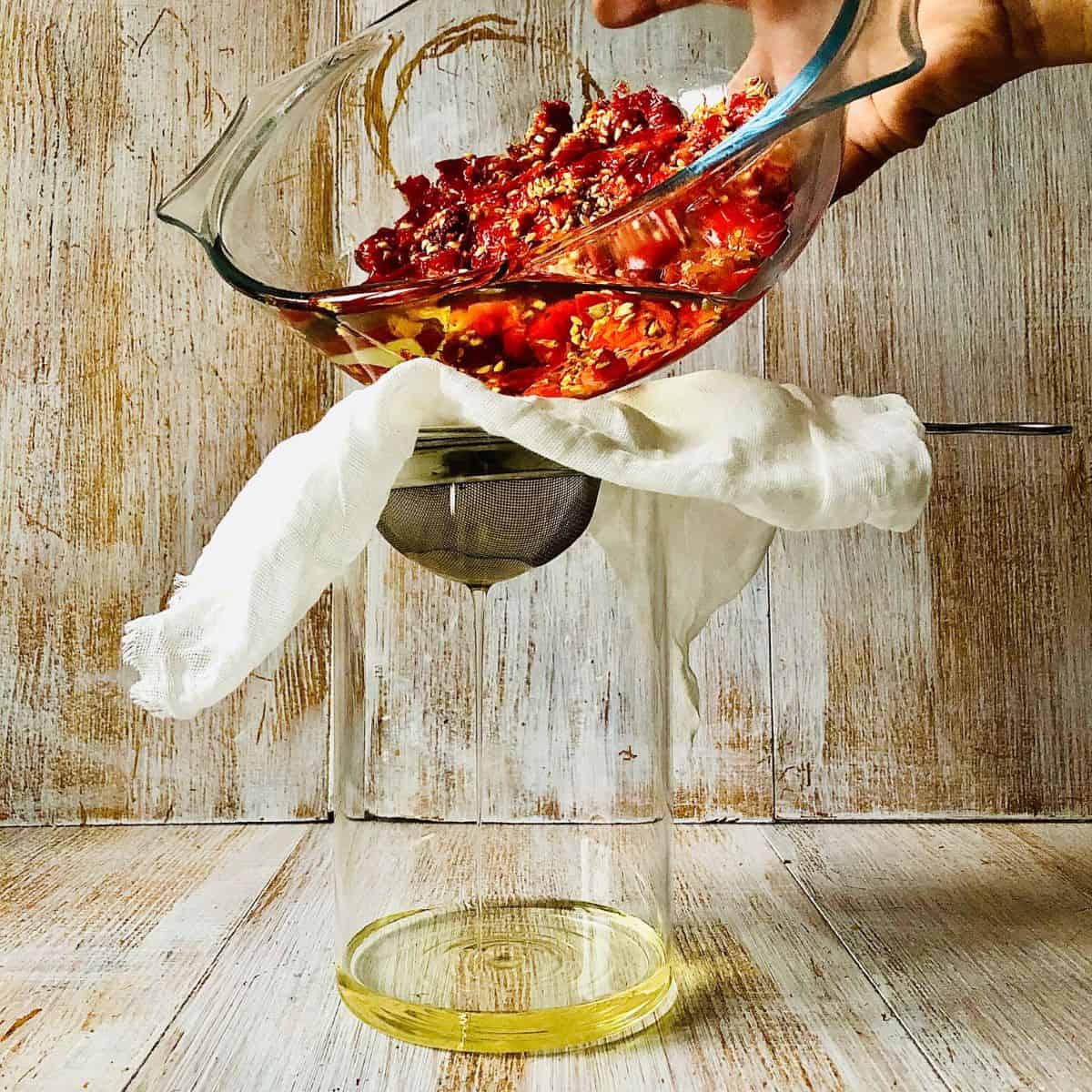
Strain the oil: Pour the oil through a sieve lined with a doubled-up muslin cloth. Gently press down the rosehips to release all the oil. Do not press down hard; otherwise, you will end up with sediments in your oil.
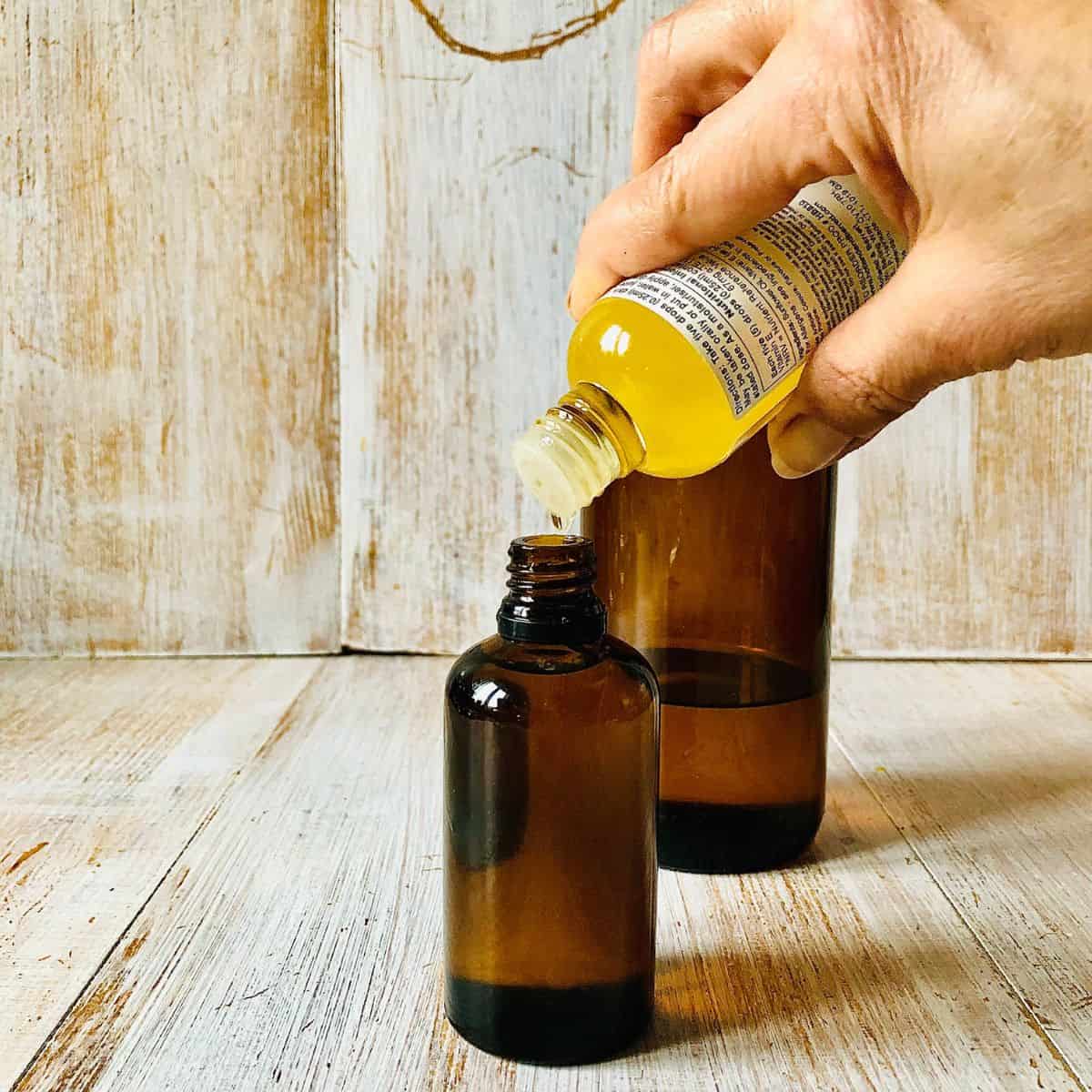
Finish with the vitamin E oil: Once all the oil has been captured, transfer it into the sterilised bottle. Finally, add a few drops of vitamin E oil.
How to Use Rosehip Oil
Massage two to three drops into your skin after you wash your face to help trap moisture. It will absorb quickly into your skin.
I love using rosehip oil to massage my face at least four to five times a week. I find it a wonderful natural moisturiser, and in my case, it has helped fade my pigmentation.
Substitutions
Dried rosehips are an option, using the same method.
See the section about carrier oils for alternatives to sweet almond oil.
If you want to make this oil but aren't sure how to manage the oven temperature, you can use the slow method. Sterilise a jar, add the crushed rosehips and oil, mix well, close the lid, and leave to infuse in a cool, dry place for two weeks. Then strain and transfer into a sterilised bottle.
Storage & Shelf Life
Decant into a small dark glass bottle with a pipette.
Store your bottle in the refrigerator or a cool, dark place, as the oil is sensitive to light and can go rancid quickly. Consequently, make small batches. The best way to tell if it is rancid is by smell. Trust your nose - if it smells "off", discard it.
Use sterilised equipment and bottles to reduce the risk of your rosehip oil going rancid. Wash them in soapy water, then place them in the oven at 100℃ for 30 minutes.
Top tips
Do not infuse the rosehips at a high temperature; you will lose vitamin C. Be patient with the infusion over eight hours at 35℃, as this helps retain the nutrients in the rosehips that benefit your skin.
Since 35℃ is low for an oven, use a temperature probe in the oil from time to time to monitor it. Maintain 35℃ by opening the oven door as needed.
FAQ's
Rosehips grow after the rose plant has flowered and dropped its petals. They are ready to pick in autumn when they are red and slightly soft. If you use them in food recipes, I have read they should be picked after the first frost, as this makes them sweeter. You can always freeze them for twenty-four hours to mimic the first frost. Rosehips will stay on the plant until animals or humans remove them. Thus, you can pick them well into the winter. They may look a bit shrivelled, but that's okay.
Yes, you can use both, using the same method. I like to use freshly picked rosehips. Using fresh rosehips does increase the risk of the oil going rancid more quickly. You can buy dried rosehips, but the drying process may have removed some of their beneficial properties. If you forage the rosehips and want to dry them, you will need a dehydrator.
You can expect your homemade oil to last for 6-12 months in a sterile bottle. The carrier oil used and its moisture content will affect shelf life. Adding vitamin E oil helps extend the shelf life.
As with anything you apply to your skin, it is wise to do a patch test before first use. Dab some on your inner forearm, leave it on for twenty-four hours, and check for any reactions. If you have a nut allergy, use a different carrier oil like jojoba.
Homemade Rosehip Oil
Equipment
- Oven-proof dish
- Muslin cloth
- 200 ml brown glass bottle
- Temperature probe
Materials
- 100 g Rosehips
- 200 ml Almond oil
- Vitamin E oil A few drops
Instructions
- Sterilise the heat-proof bowl/dish in the oven at 180ºC for 5 minutes. Sterilise the spoon you will be using to mash the rosehips as well. Once done, let it cool. Before using, it should be cool enough to touch.
- Gently wash rosehips and pat dry. Making sure they are completely dry.
- Remove the top, by pulling it away from the fruit and add it to the sterilised bowl.
- Using the back of a spoon, gently press the rosehips to squash them. The seeds will come out at this stage; don't touch them, as they can be quite itchy.
- Pour the almond oil over the rosehips, ensuring they are fully submerged.
- Set the oven temperature to 38ºC.
- Place the dish containing the rosehips and oil in the oven and bake for 8 hours.
- Remove from the oven after eight hours and let the oil settle in a dark place.
- Preheat the oven to 180ºC and sterilise a bowl, a sieve, a ladle, and the bottle (for transferring the oil) for 5 minutes.
- Once all equipment is sterilised and cooled down, proceed. Place the sieve on top of the bowl, and add two or three layers of muslin cloth over the sieve. Then pour the oil over to strain it. Gently press down the rosehips a couple of times to extract the oil; do not press too hard, as we do not want any solid residue in the oil. If you set it aside, it will strain on its own.
- Add a few drops of vitamin E oil to the strained oil. This acts as a preservative and increases shelf life.
- Transfer the oil into the sterilised bottle, label and date it and store it in a dark place at room temperature or in the back corner of your fridge.


Leave a Reply