

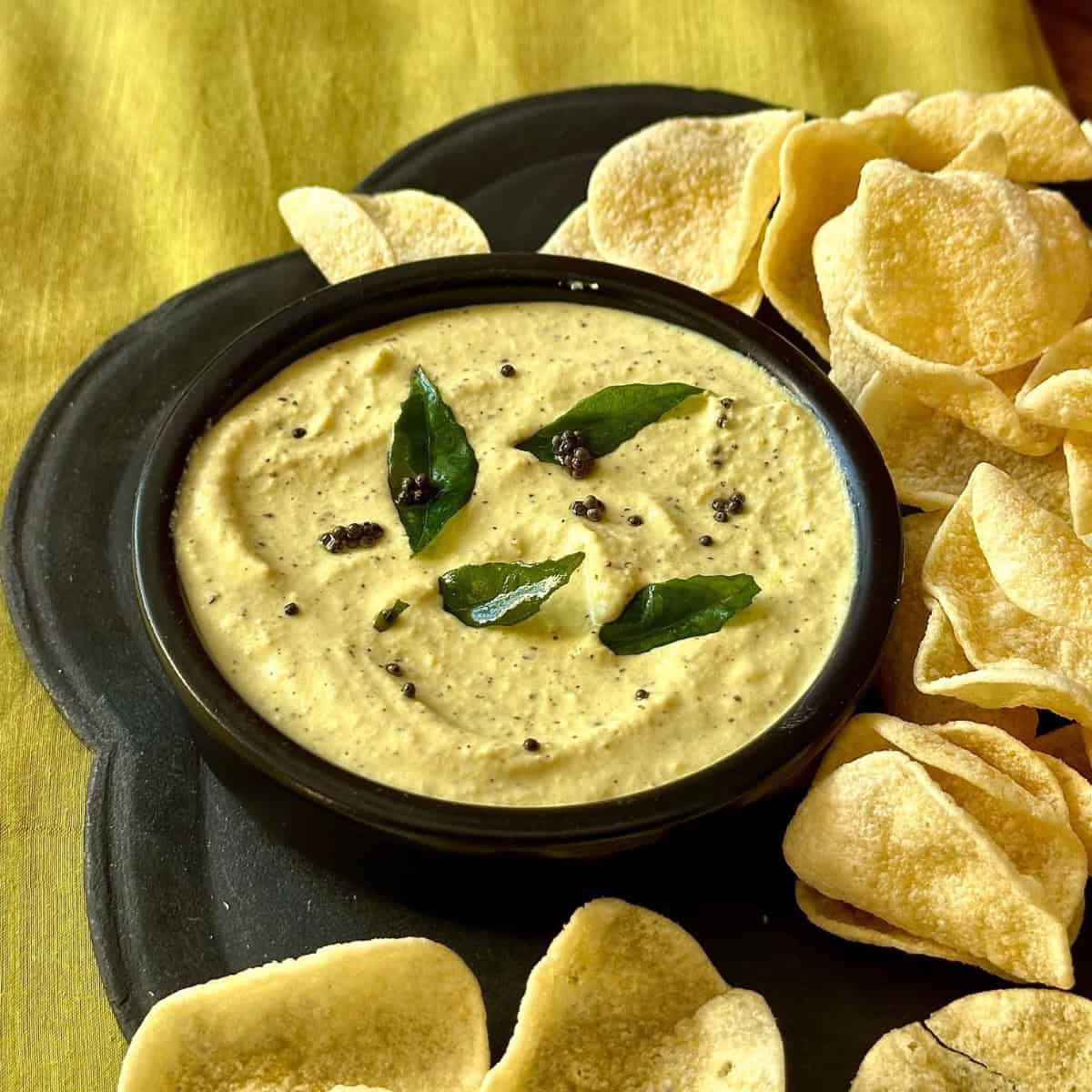
Most beetroot dips draw inspiration from the Mediterranean or Middle East, with tahini, feta, or horseradish. This dish, however, draws inspiration from South Indian pachadis, cooling side dishes usually made with yoghurt and coconut.
Golden beetroot is the foundation of this dish - milder and more subtle than red beetroot, allowing the tempering flavours to complement it and sit with it comfortably. Warmth comes from black mustard seeds popping in coconut oil, a handful of curry leaves, and a swirl of cool yoghurt. Kala namak adds a savoury, slightly sulphurous depth. No pre-roasting that takes ages or using pre-cooked beetroot - in this recipe, it is pan-fried in a fraction of the time of roasting, but not losing any of the flavour benefits roasting would give.
One pan and a blender are all you need. It's perfect for dunking, drizzling or spreading. It's bright, bursting with warm spices, and it's ready in no time. Perfect to serve on its own or use as a base for salads and even in a wrap. I love scooping it up with mini poppadoms.
In short: Beetroot dip is cooked beetroot blended with a creamy base. This version takes its lead from South Indian pachadi: diced raw golden beetroot is cooked in a coconut oil tempering of black mustard seeds, ginger, green chilli and curry leaves, seasoned with kala namak, then blended with Greek yoghurt. One pan, a blender and 25 minutes; vegetarian. Serve with poppadoms, spread in a wrap or use as a base for salads.
Why You'll Love this Golden Beetroot Dip
- The beetroot is fried in a pan - no oven roasting required.
- Golden beetroot - milder and sweeter than its ruby red cousin. Compliments the other flavours instead of dominating.
- Flavoured with tempering and Kala namak - warm, aromatic flavours reminiscent of South Indian cuisine.
- One pan and a blender - minimal equipment, which means less to clean up.
- Versatile - Use as a dip, drizzle or a salad base.
- Vegetarian - or even vegan with some swaps (see variations and substitutions)
Jump to:
Key Ingredients & Notes
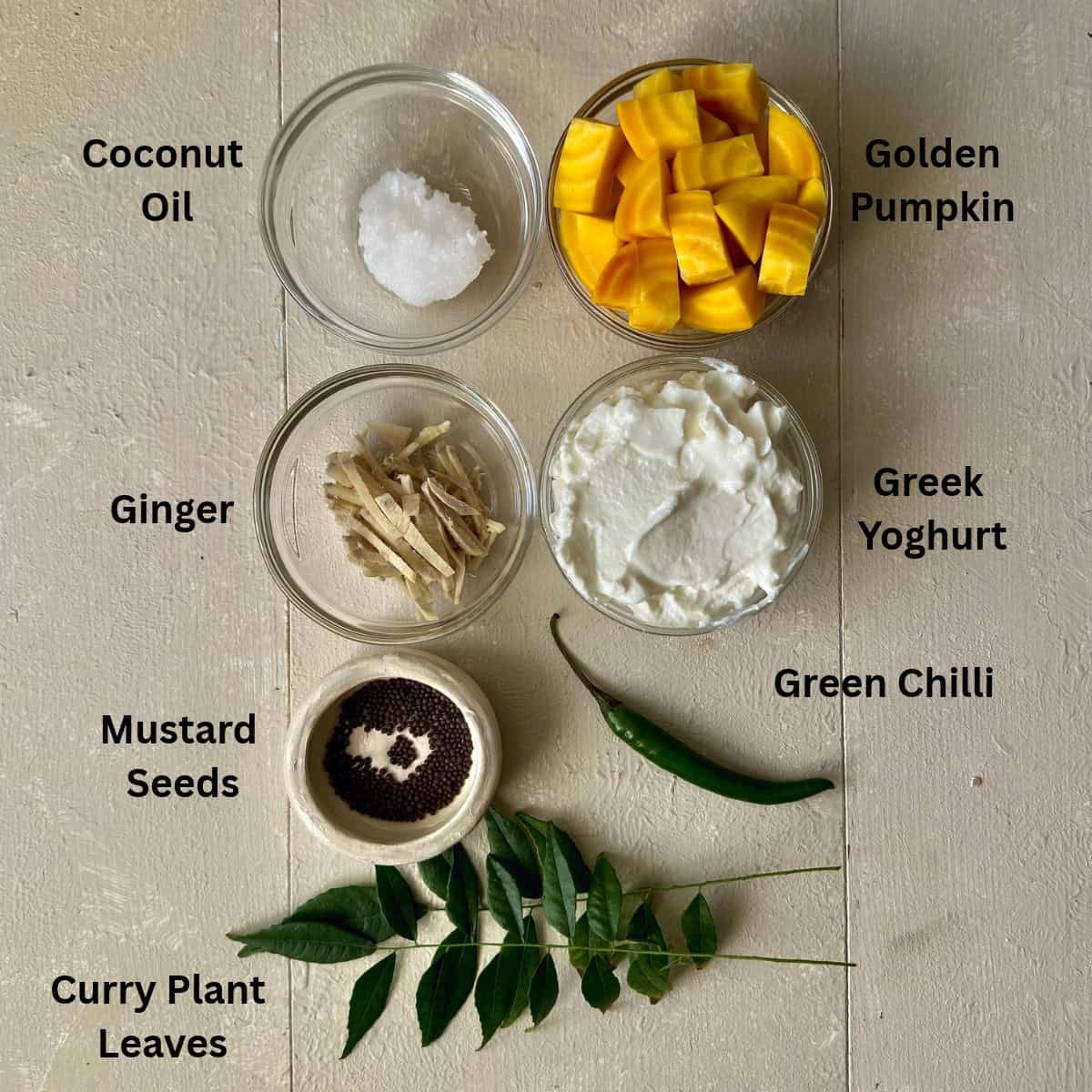
- Golden beetroot - the milder, sweeter, less earthy alternative to red beetroot. I use it so all the flavours in this dip can shine.
- Black mustard seeds, green chilli, ginger & curry leaves - the tadka (tempering) ingredients that give this dish its South Indian aromatic flavours.
- Coconut oil - traditionally used in South Indian cooking.
- Greek yoghurt - along with the tempering, yoghurt gives South Indian pachadi its key character, and serves the same purpose in the dip - a cool, creamy balance to the spices of the tempering.
- Kala namak - brings a savoury, sulphurous edge to the dip.
See the recipe card for quantities.
How to Make Golden Beetroot Dip with Curry Leaves
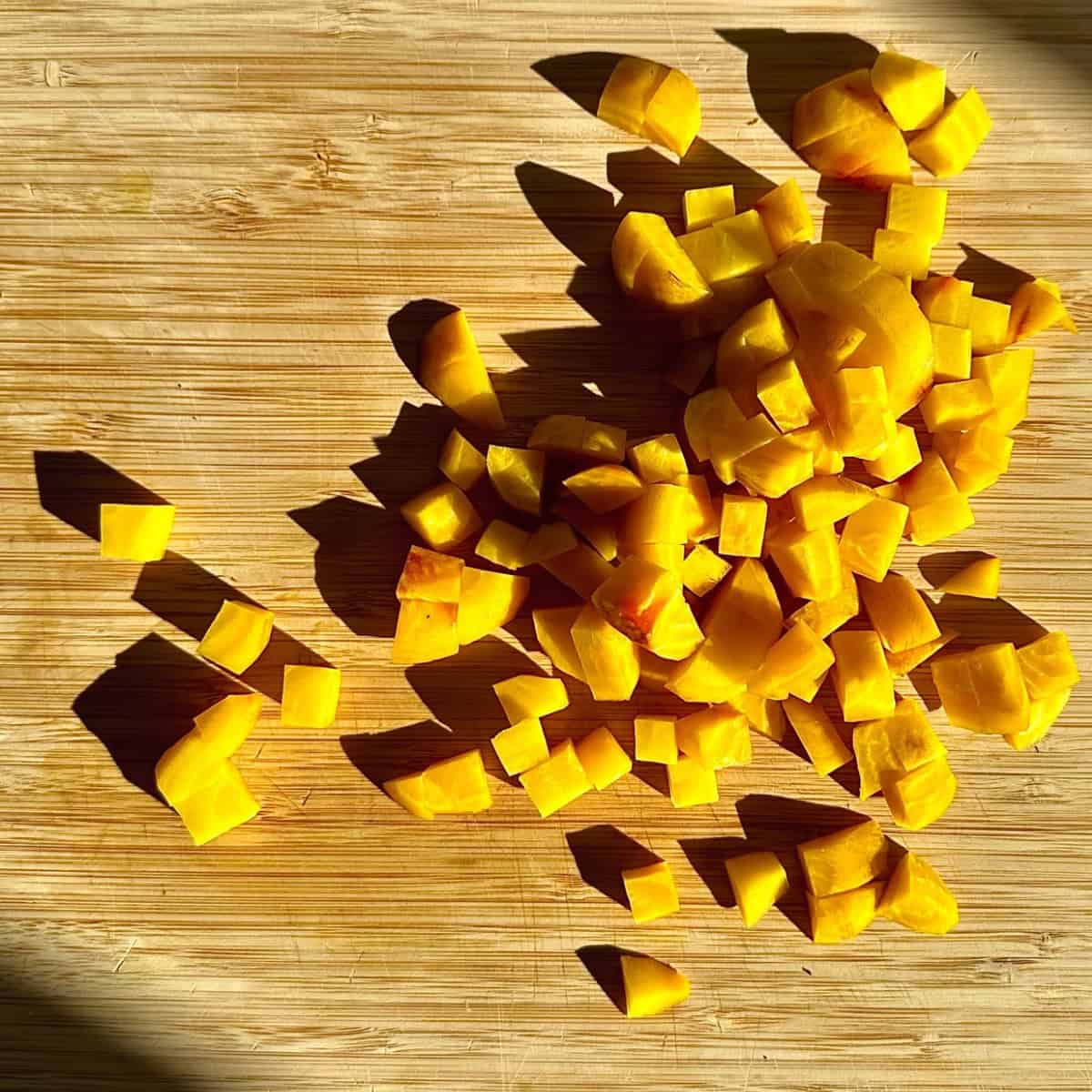
- Prep the beetroot & aromatics: Peel the golden beetroot and cut it into [10 mm] dice. Keep the pieces roughly the same size so they all soften at the same rate. Pick the curry leaves off their stems, rinse them and dry them well, because wet leaves will spit hard in the hot oil. Julienne the ginger and slit the green chilli lengthwise from the centre. Have everything ready by the hob before you start, as the next step moves quickly.
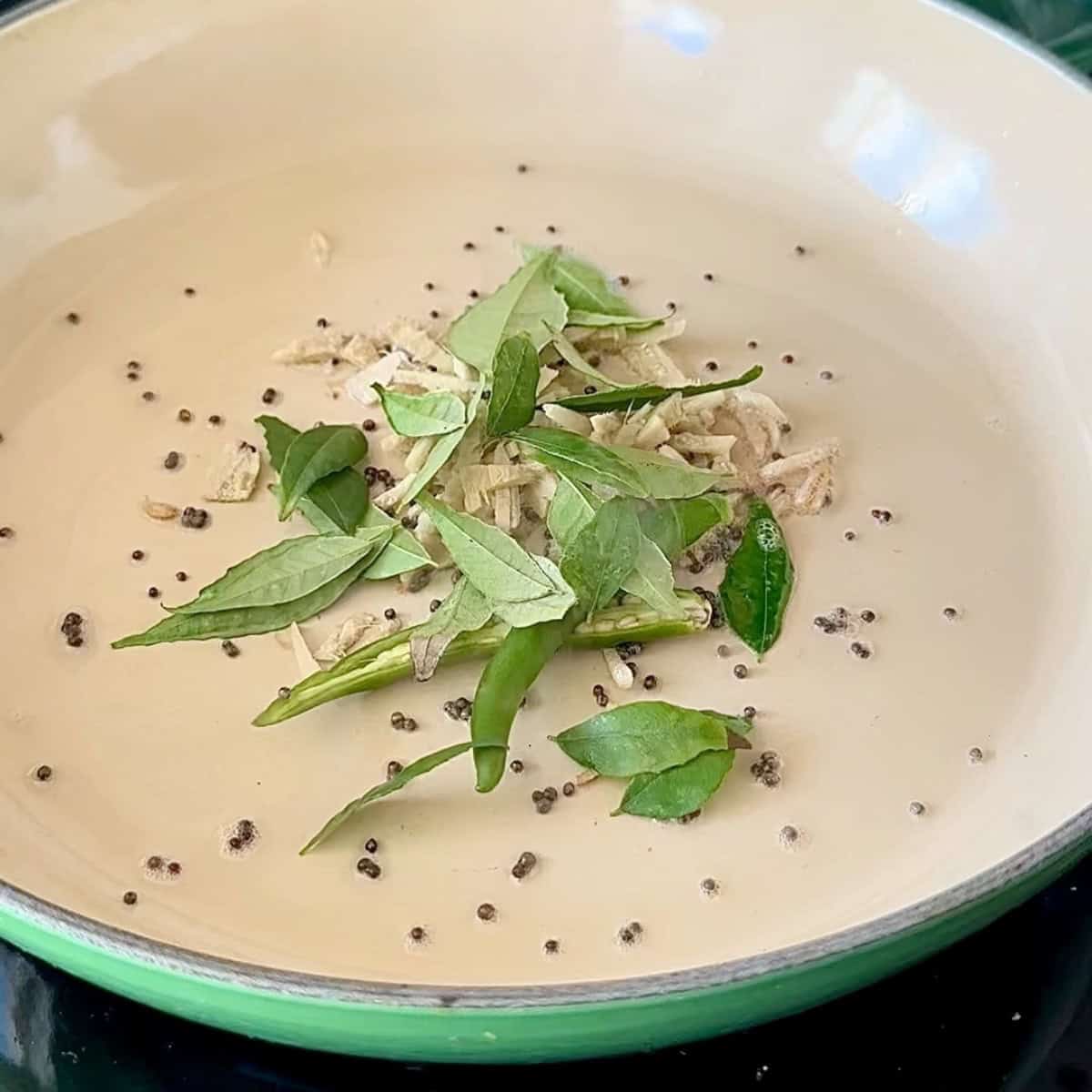
- Temper the spices: Heat the coconut oil in a pan. When it's hot, add the black mustard seeds. As soon as they start to pop, add the ginger, green chilli, and curry leaves, and fry for a minute, until fragrant. Stand back when the curry leaves go in, as they will spit
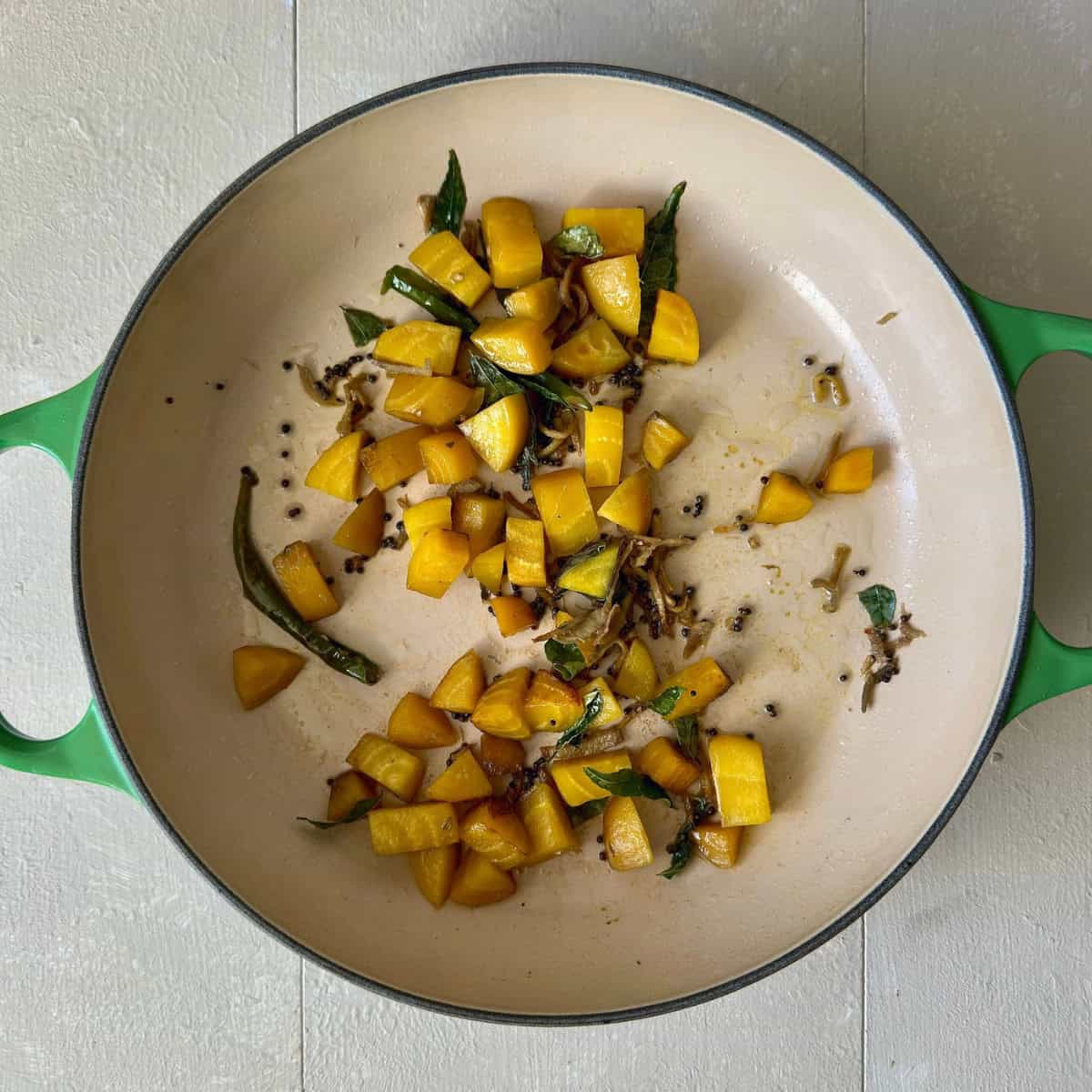
- Cook the beetroot: Add the diced beetroot and kala namak, and stir to coat it in the tempering. Add a splash of water (about 2 tbsp), cover and cook for 5-10 minutes, until the beetroot is soft but still has a little bite.
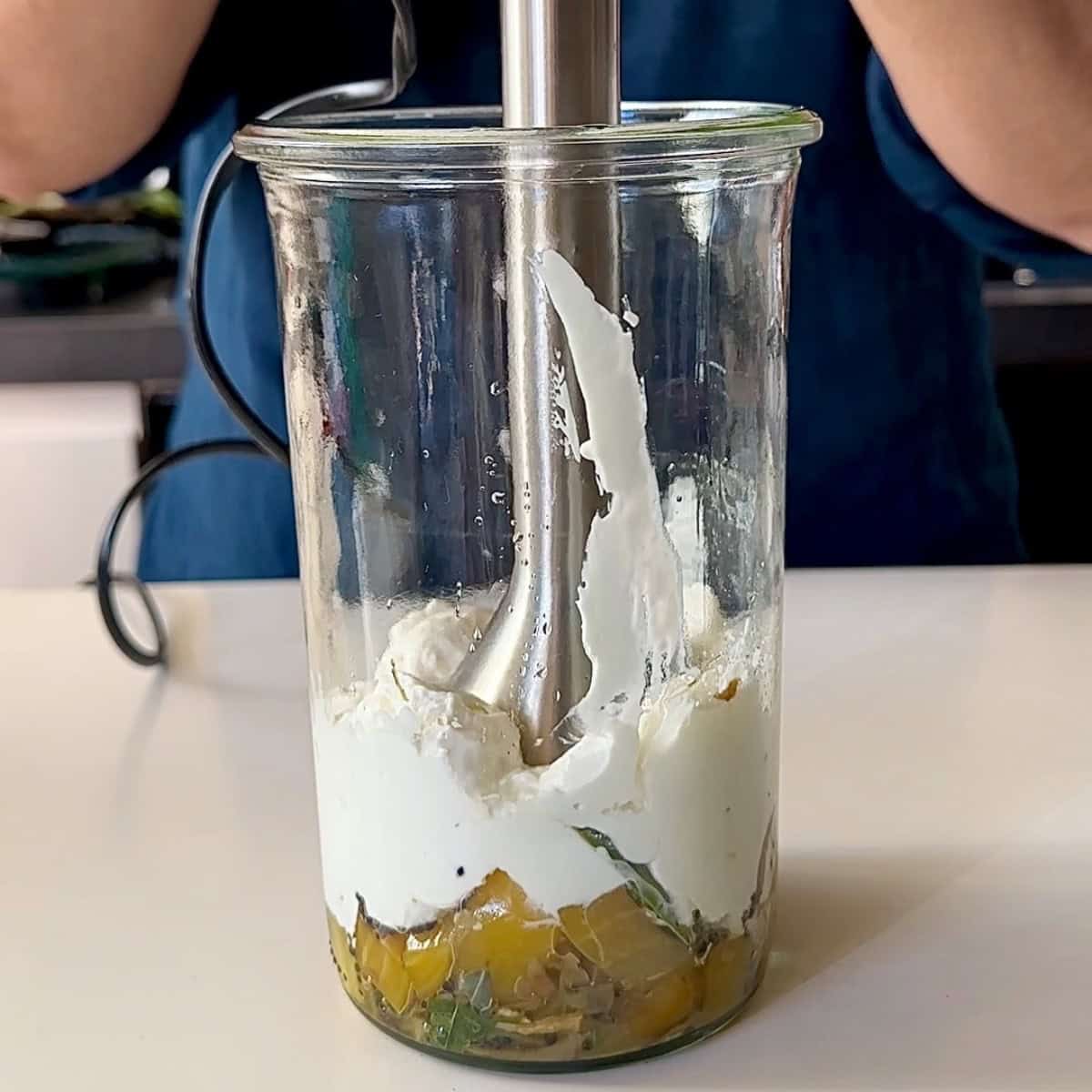
- Blend: Tip the cooked beetroot [and tempering] into a blender with the Greek yoghurt and blend to a smooth purée.
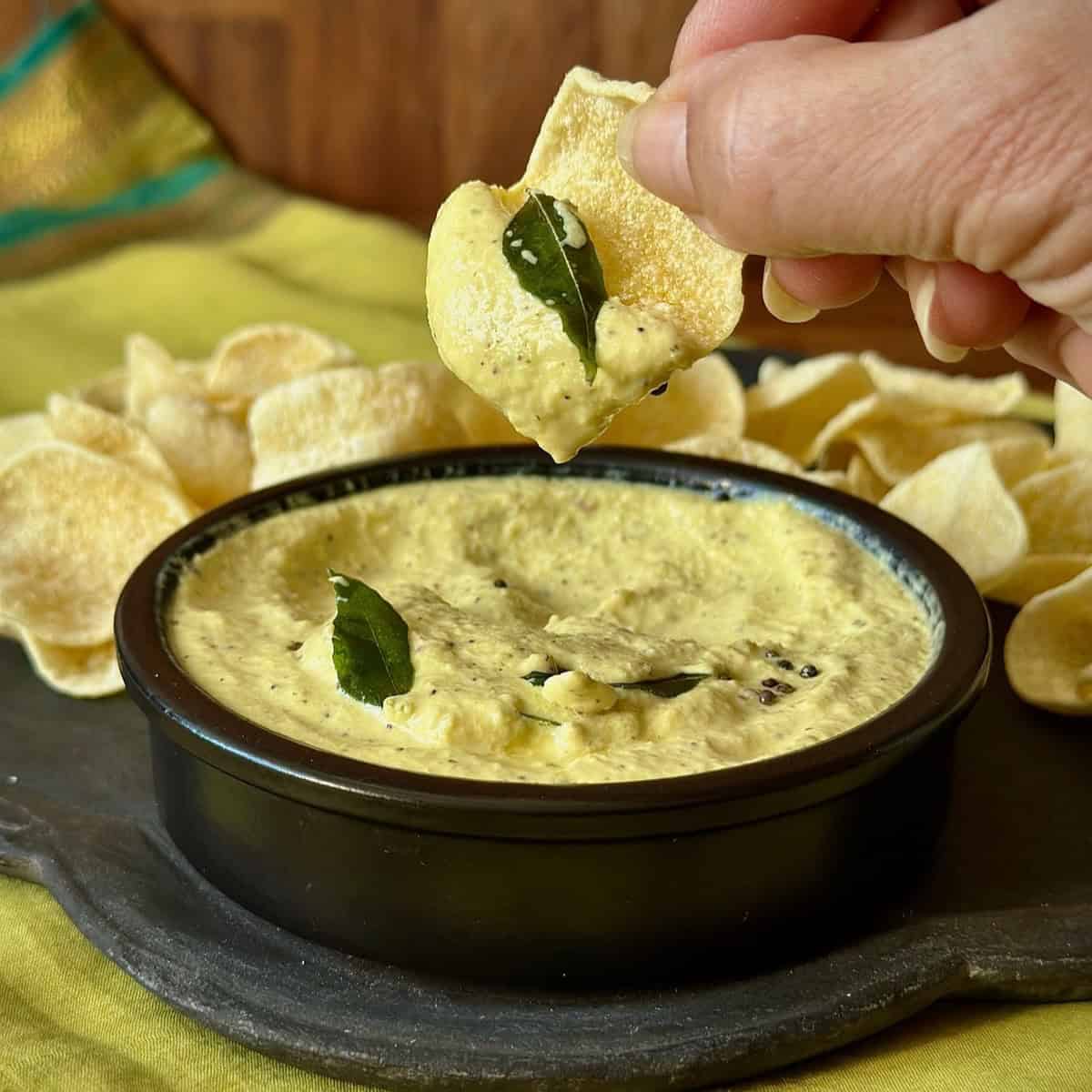
- Serve: Spoon the dip into a serving dish and serve with poppadoms.
Substitutions & Variations
- Beetroot- you can replace this with red beetroot; it will be more vibrant and earthy.
- You can use pre-cooked beetroot. It will take less time to cook after adding the tempering.
- Yoghurt- You can replace this with vegan thick yoghurt.
- You can use sea salt instead of kala namak.
- Coconut oil- You can use olive oil or any kind of vegetable oil
- Add coconut for a more authentic pachadi flavour. If you don't have fresh coconut, add 1 teaspoon desiccated coconut soaked in coconut milk or water, or use thick coconut yoghurt ( you may have to Thicken it, by transferring on a muslin cloth the let the excess water out ) instead of Greek yoghurt.
- Add some chopped cucumbers for more body and bite.
- Add finely chopped green capsicum for texture and more flavour.
Equipment
You will need the following equipment to make this golden beetroot dip:
- A large frying pan or casserole to fry the tempering and diced beetroot.
- A stick or jug blender to blend all the ingredients together once cooked.
- Digital scales for accurate ingredient measurement.
Storage
Store the dip in the fridge in an airtight container for up to three days.
I do not recommend freezing it, as the yoghurt tends to split after defrosting.
Recipe Tips
Have all your ingredients ready before you start cooking, as the process is very quick and any delays may land you with a burnt tempering.
Be careful when the curry leaves go in - the oil may spit.
Hold back some of the tempering to use as a garnish for the dip.
You can help the blending with a tablespoon of water if it isn't blending easily.
FAQs
No, but it is inspired by pachadi. Raita and pachadi are similar, being yoghurt-based side dishes. Raita is North Indian in origin and is usually made with raw vegetables like cucumber, onion, or tomato, seasoned with roasted cumin powder, kala namak, and chaat masala. Pachadi is South Indian in origin and is made with cooked vegetables like beetroot, pumpkin or okra. It has a distinctive South Indian tempering of mustard seed, curry leaves and green chillies, and contains coconut.
Kala namak is Himalayan black salt. When ground, it has a pinkish-grey colour. It has an umami, slightly sulphurous egg-like flavour. It is a common ingredient in South Asian cuisine and is celebrated in Ayurvedic medicine for its supposed medicinal properties. Using it in this dish adds extra layers of flavour, but you can also use regular salt.
Yes, although pre-cooked beets are harder to find in supermarkets. Pre-cooked red beets are more widely available. Cut it into dice as directed. Still cook it in the tempering spices, but for a shorter time, about 5 minutes
If it is too thin, its because the yoghurt is not thick enough. If you don't have access to Greek yoghurt, you may need to hang the yoghurt in a muslin cloth for the excess water to drain. You will be left with a yoghurt so thick that its almost like cream cheese. If it has split, it probably needs more blending.
Yes, you can make this dip a few days ahead and store it in the fridge. Don't freeze it, though, as the yoghurt will likely split after defrosting.
Mini poppadoms are an ideal accompaniment. Ideal for a party table. Pitta bread or a flatbread like Tikda are great accompaniments too.
📖 Recipe
Golden Beetroot Dip with Curry Leaves
Equipment
- Measuring spoons
Ingredients
- 170 g Golden beetroot
- 1 tablespoon Coconut oil
- ½ teaspoon Black mustard seeds
- 15 g Ginger
- 1 Green chilli
- 2 stems Fresh curry leaves
- 250 g Greek yoghurt
- 1 teaspoon Kala namak
Instructions
- Peel the beetroot and cut it into 10cm dice, all roughly the same size so they cook evenly.
- Pick the curry leaves from the stems, rice and dry them well. Julienne the ginger. Slit the green chilli lengthwise.
- Heat the coconut oil in a pan. When the oil is hot, add the black mustard seeds. As soon as they pop, add the ginger, green chilli, and curry leaves, and fry for 1 minute.
- Add the diced beetroot and kala namak and stir to combine. Add 2 tablespoons of water, cover and cook for ..... until the beetroot is soft but still has a little bite.
- Transfer the cooked beetroot and tempering to a blender with the yoghurt, then blend into a smooth puree.
- Spoon into a serving dish and serve with poppadoms.
More Dips and Spreads
Looking for other recipes like this golden beetroot dip? Try these:

Leave a Reply