

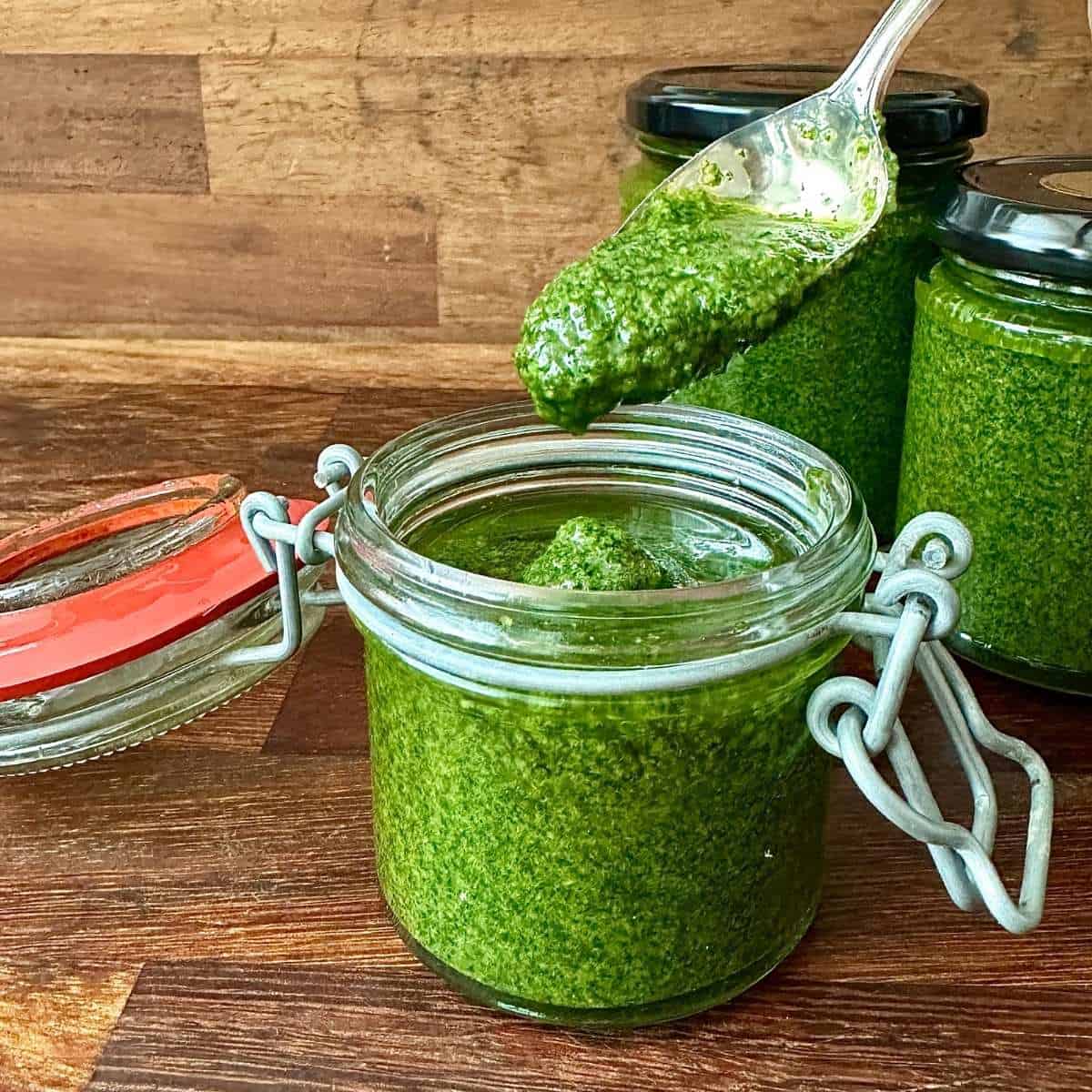
This vibrant green herb sauce is the perfect way to use up herbs that have gone slightly limp and started to yellow. Parsley, Coriander, and mint are blended with garlic, jalapeño, lemon, and olive oil to create a bold, versatile sauce that is bright, zesty, and full of life. It takes just 15 minutes to make and transforms leftover herbs into something you'll want to drizzle over soups or salads, or to slather on toast.
Why You'll Love this Low-Waste Herb Sauce
- Designed for low-waste cooking - ideal for herbs that are past their prime.
- Fresh and zesty with depth from the cumin and apple cider vinegar.
- Ready in only 15 minutes with no cooking.
- Vegan and gluten-free.
- Incredibly versatile: Use as a drizzle, dip, dressing, garnish or spread!
Jump to:
Key Ingredients and Notes
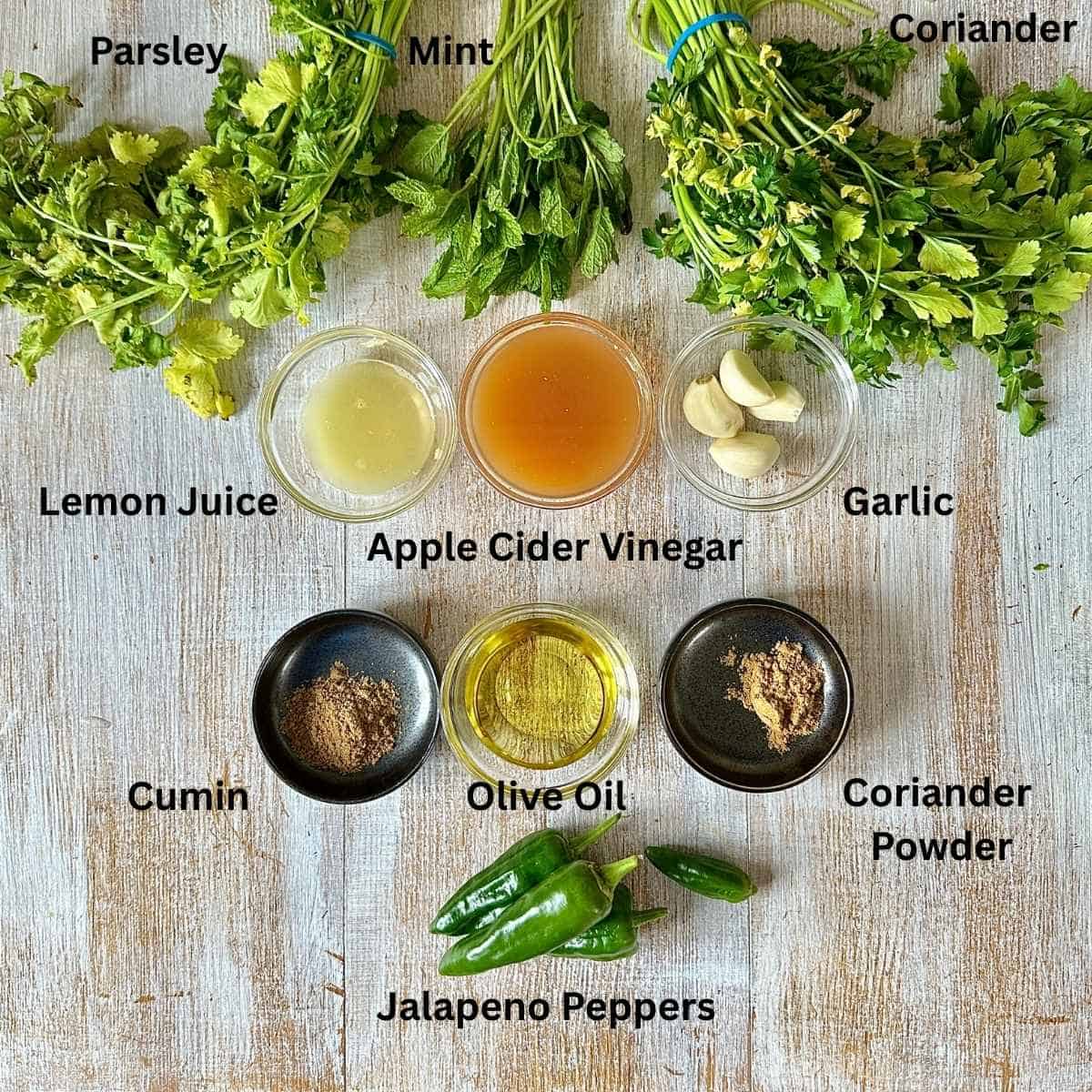
- Parsley, mint and Coriander - Classic fresh-herb trio
- Jalapeño Peppers - Added mainly for flavour. Give a very subtle heat.
- Garlic - Gives the sauce savoury depth
- Lemon juice - Lifts and sharpens the green flavours.
- Cumin & Coriander powder - Adds warmth and earthiness.
- Apple cider vinegar- helps balance the taste and acts as a preservative.
- Olive Oil (or sesame oil) - Emulsifies and brings everything together.
See the recipe card for quantities.
How to Make Low-Waste Herb Sauce
- Wash and dry all the herbs. There should be no moisture left.
- Wash the jam jars in soapy water, then sterilise them in the oven at 100ºC for 30 minutes.
- Pick the mint leaves and discard the stems (the stems can't be eaten).
- Pick through the parsley and Coriander and remove the manky ones. Yellowing and wilting is OK - keep those - discard the ones that really are too far gone and are brownish and slimy.
- Roughly chop the parsley and Coriander, including the stems.
- Peel the garlic.
- Roughly chop the jalapeño peppers.
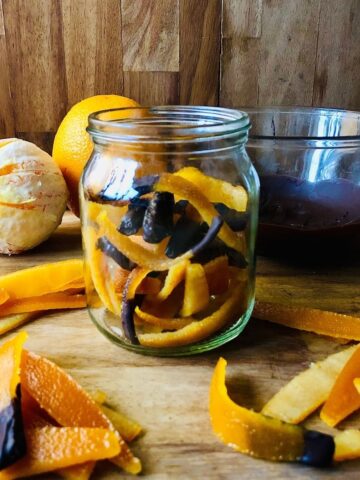
- Squeeze the juice from the lemon (In the spirit of low-waste, use the squeezed-out lemon as a cleaner for your sink or make some candied lemon - see my candied orange recipe, but replace it with lemon)
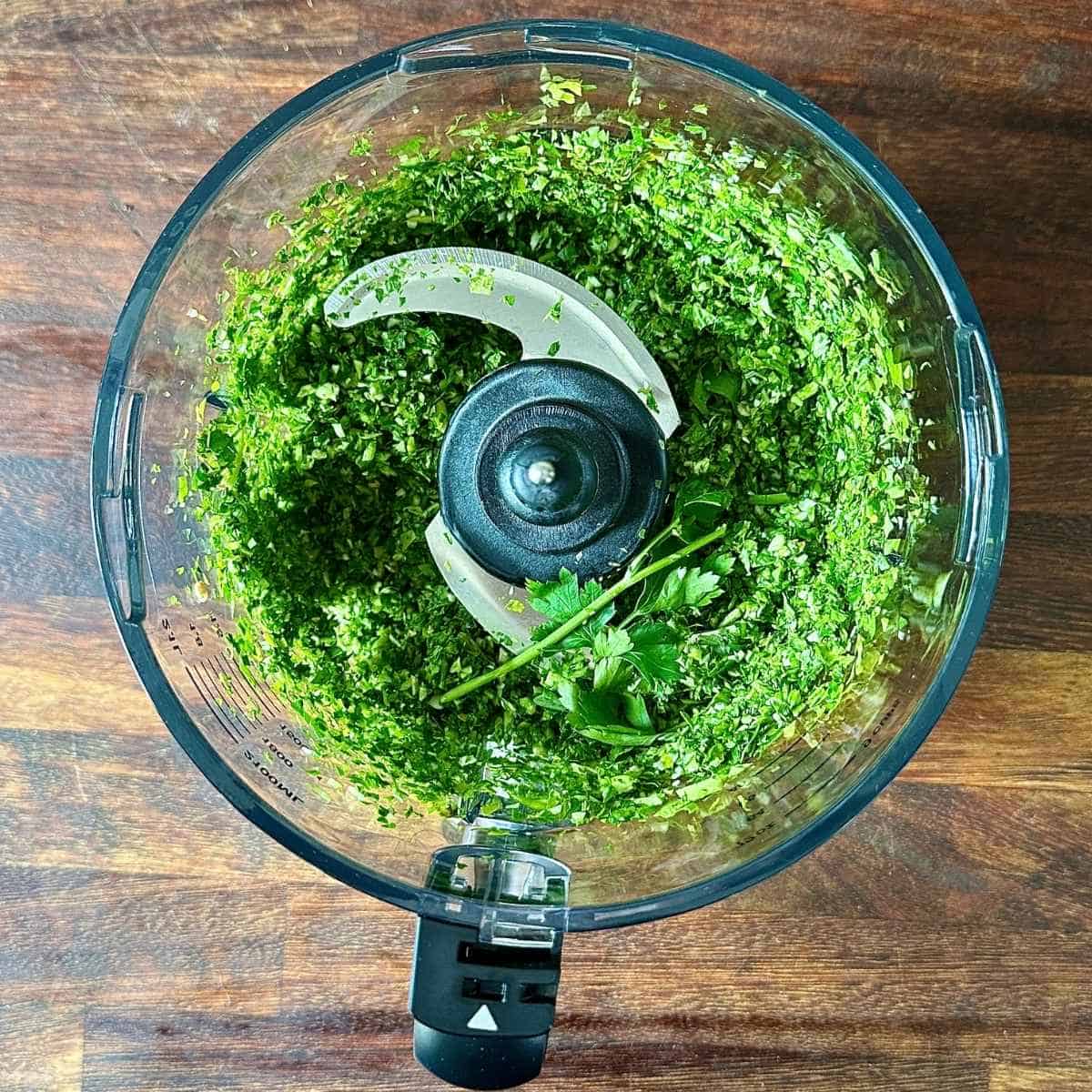
- Add the herbs, garlic, and jalapeño peppers to the blender and start to blend.
- Whilst blending, add the lemon juice and apple cider vinegar.
- When you have a rough paste, add the salt, cumin, and coriander powder.
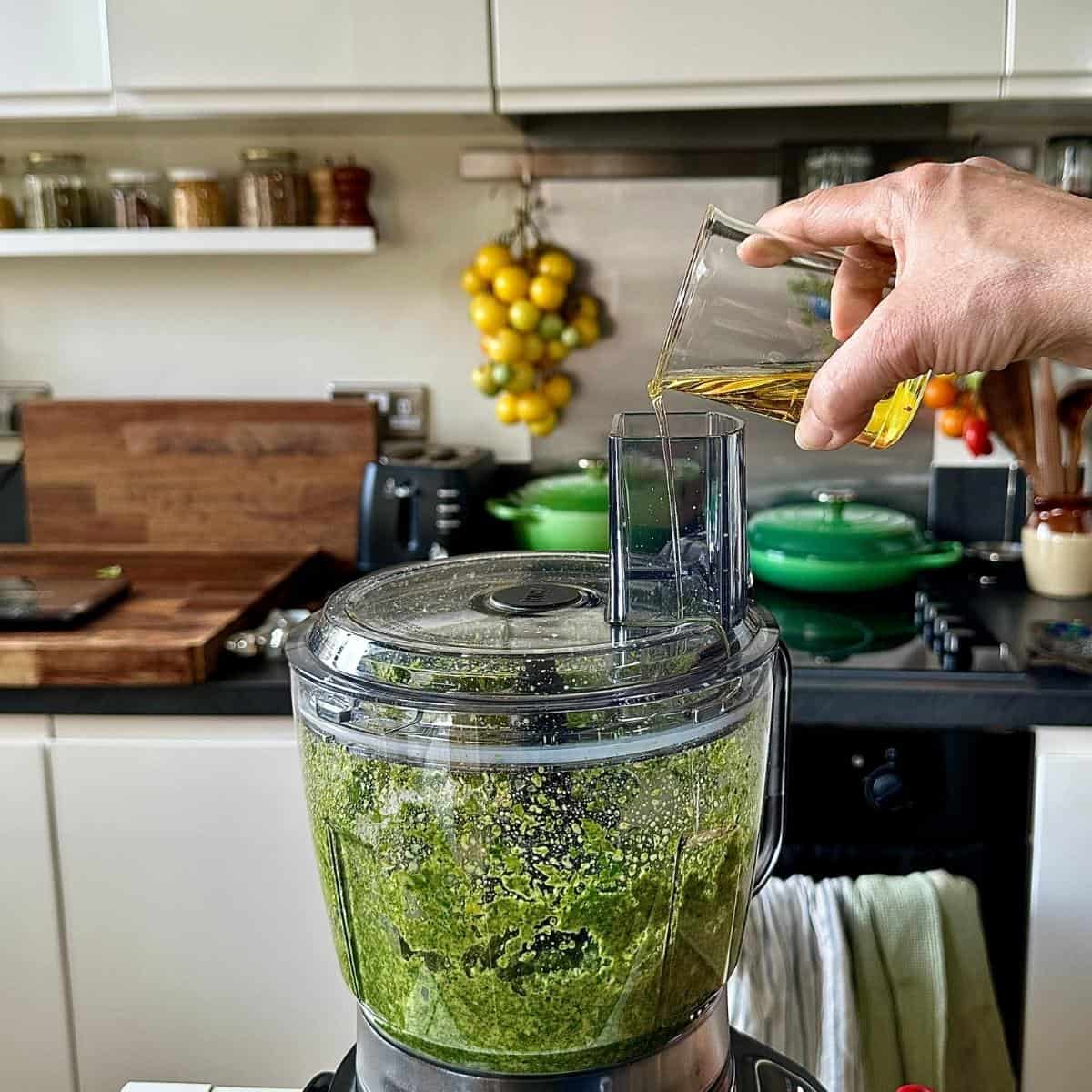
- Continue blending whilst slowly adding the olive or sesame oil.
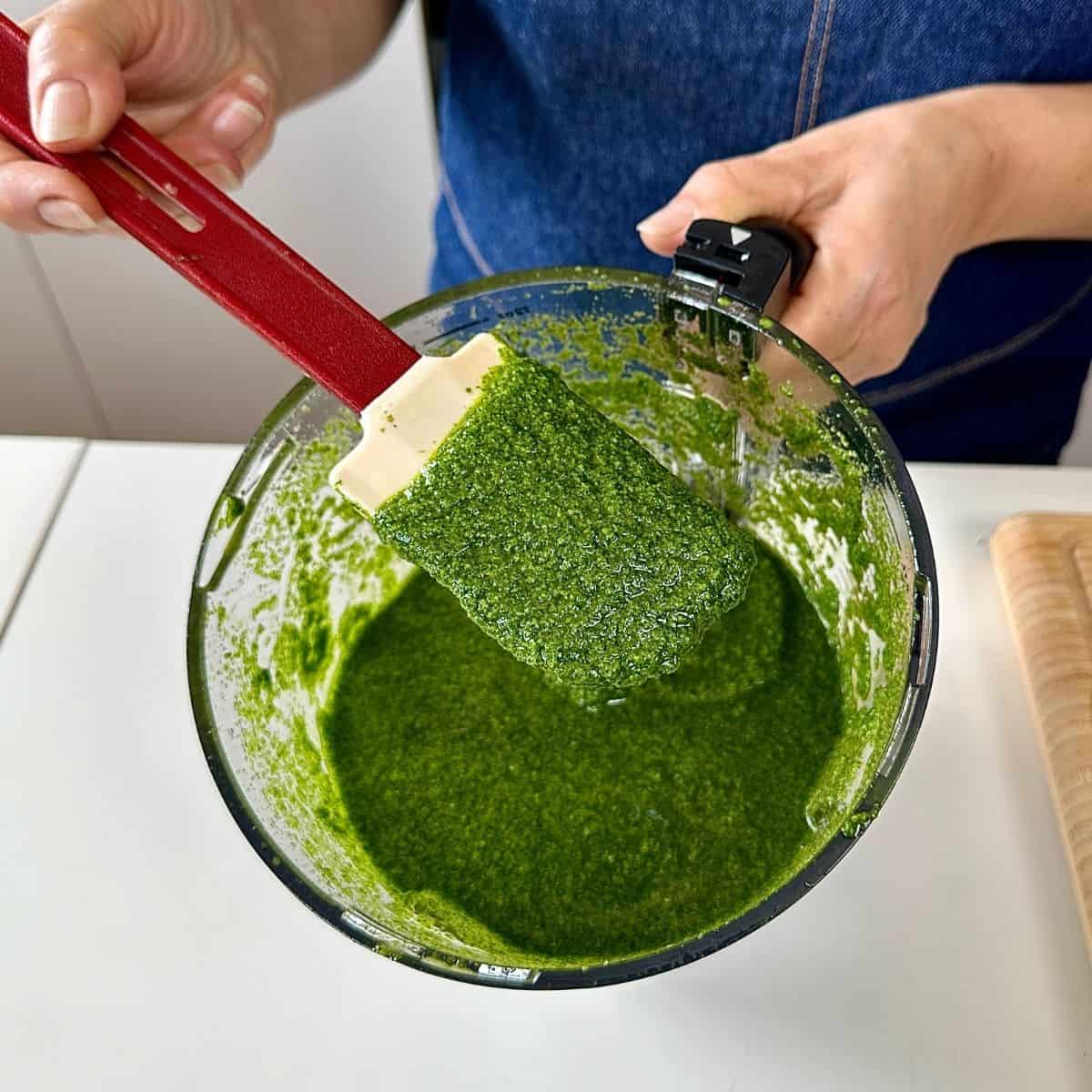
- Blend until it comes together and is smooth.
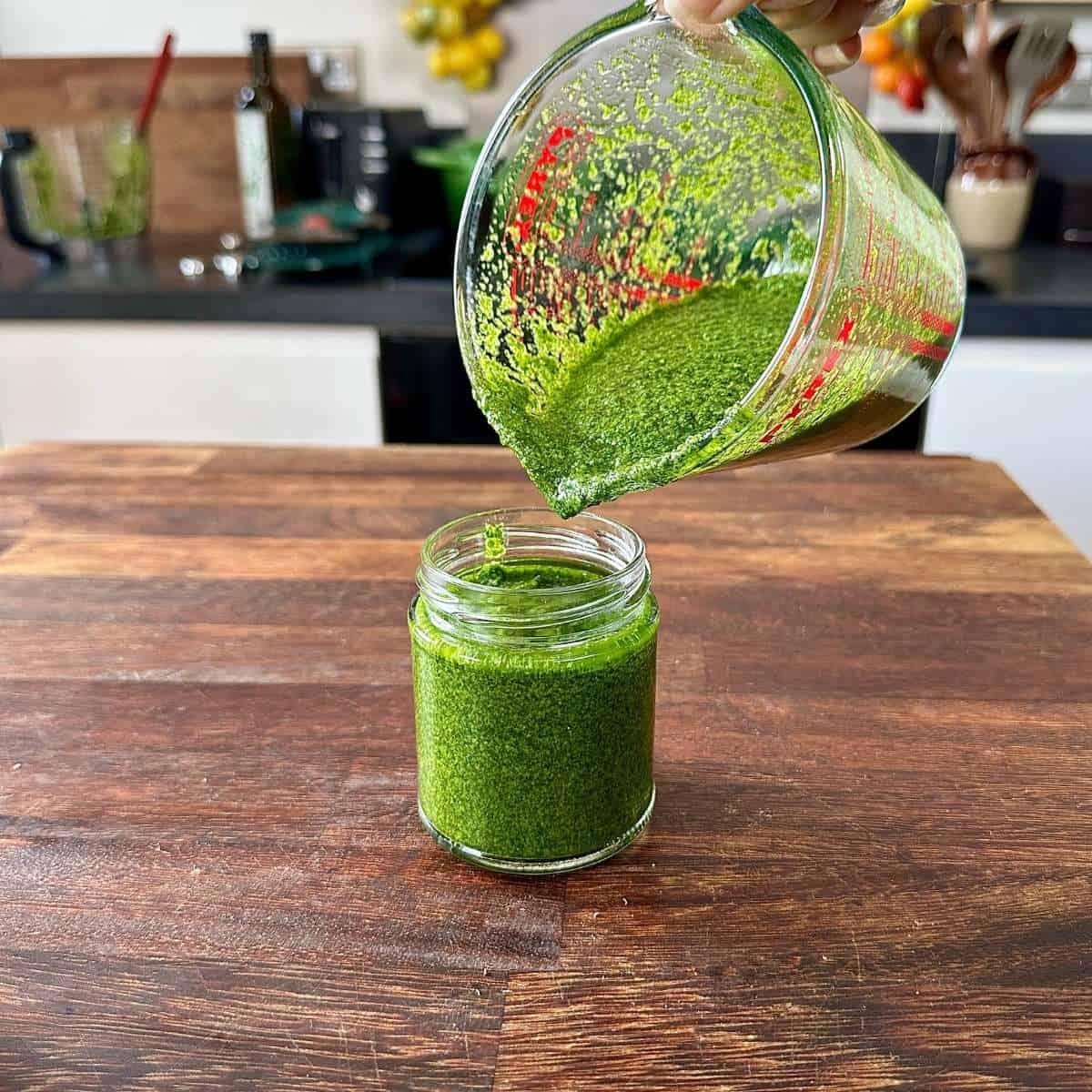
- Remove the sterilised jars from the oven and let them cool down.
- Transfer the sauce to the jars (while the jars are still warm) and top with a bit of oil. Ensure the jars are sealed tightly.
- Refrigerate the jars of herb sauce.
Substitutions & Variations
You can use any soft herbs, like chervil, basil or even tarragon. The flavour will be different, depending on the choice of herbs.
If you want more heat in the sauce, you can use Serrano peppers.
Instead of cumin, you can use caraway.
Cold-pressed sesame or olive oil can be replaced with avocado oil.
Equipment
To make the herb sauce, you will need a food processor or a blender
Storage
The sauce, covered with oil, should last in the fridge for up to two weeks, maybe even three. Use a clean, dry spoon each time. If you see any mould growth, discard the sauce immediately. You can also transfer it into silicon ice cube moulds, freeze it and use the portions as required.
Chefs Tips
When adding oil, start with a drizzle while the blender is on low speed; this will help it emulsify.
Make sure you properly sterilise the storage bottles, pour the herb sauce while the jars are still warm, and close the lids immediately.
FAQ
Absolutely! Sauces like this are ideal to freeze into cubes and use as needed. I have an Indian sauce hack inspired by North Indian food, you might like to try as well. By making a big batch of either of these and freezing it into cubes, you have an instant supply on hand for your recipes.
Yes, this is precisely what this recipe aims to do, rather than sending them to the bin. As long as they are not mouldy or slimy, wilted herbs are great for blending into sauces.
Another classic low-waste food strategy is to make your own vegetable stock from vegetable peel and scraps. Don't throw away your carrot tops; instead, use them in a dal as I have in my saag dal recipe. For more ideas for low-waste recipe ideas, see "Related Recipes" below.
📖 Recipe
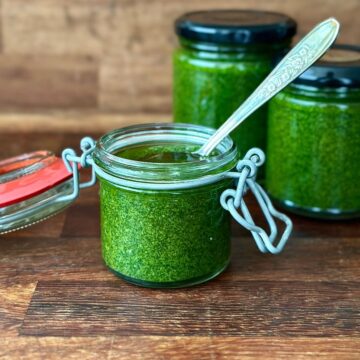
Low-Waste Green Herb Sauce
Equipment
- 3 250 ml Jam jars
Ingredients
- 150 g Parsley one bunch
- 150 g Fresh Coriander one bunch
- 50 g Mint one bunch
- 50 g Fresh Green Jalapeño Chilli four in number
- 20 g Garlic
- 1 Lemon
- 3 teaspoon Salt
- 1 teaspoon Cumin powder
- 1 teaspoon Coriander powder
- 100 ml Apple cider vinegar
- 250 ml Cold pressed Sesame oil/ Olive oil
Instructions
- Wash all herbs thoroughly and pat them dry. Set aside to air dry. There should be no water left.
- Wash jam jars in hot water and sterilise in the oven for 30 minutes at 100ºC
- Pick the leaves from the mint and discard the stems.
- Pick through the herbs, discarding the manky ones; wilted and yellow ones are fine. Roughly chop the coriander and parsley, including stems.
- Peel the garlic.
- Roughly chop the jalapeno cillies.
- Cut the lemons in half and extract the juice. The pith is okay; discard the seeds.
- In a food processor, add the garlic, herbs, and jalapeño, and start to blend. While blending, add the lemon juice and apple cider vinegar. When you have a rough paste, add salt and spices.
- Continue blending while slowly adding the oil, a little at a time. Blend till it starts to come together and is smooth.
- Remove the jam jars from the oven and allow them to cool for five minutes.
- Transfer the green sauce into the jam jars, top with a bit of oil, tightly seal the lid and refrigerate.
- Use as an extra layer of flavour on soups, salads, on toast or whatever else you fancy.
Nutrition
NOTES
Pairing Suggestions
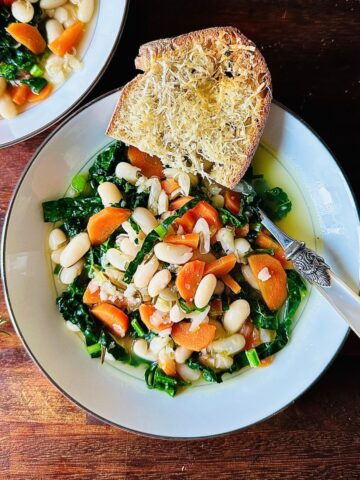
This herb sauce is excellent to pair with these recipes:
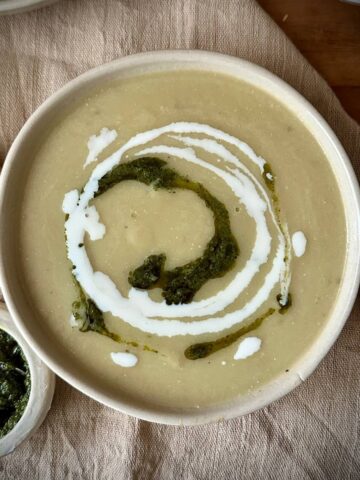


Related Recipes
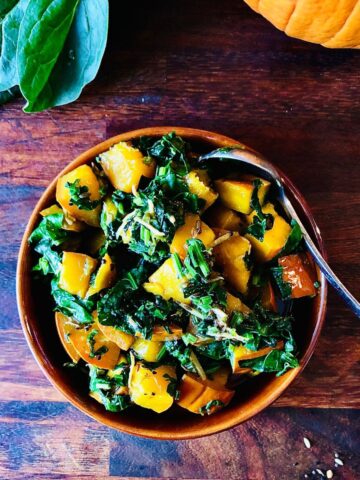
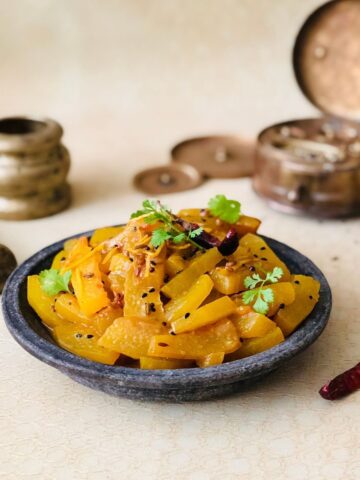
Here are some other low-waste recipes for you to try:

Food Safety
- Wash your hands regularly while preparing, handling and cooking food.
- Wipe down countertops and high-contact points regularly.
- If you cook meat and fish, do not use the same utensils on cooked food that previously touched raw meat. Use separate chopping boards for meat and fish. Wash your chopping boards immediately after use.
- Cook food thoroughly to a minimum internal temperature of 165 °F (74 °C).
- Don't leave food at room temperature for extended periods (more than 2 hours).
- Store food correctly.

Leave a Reply