

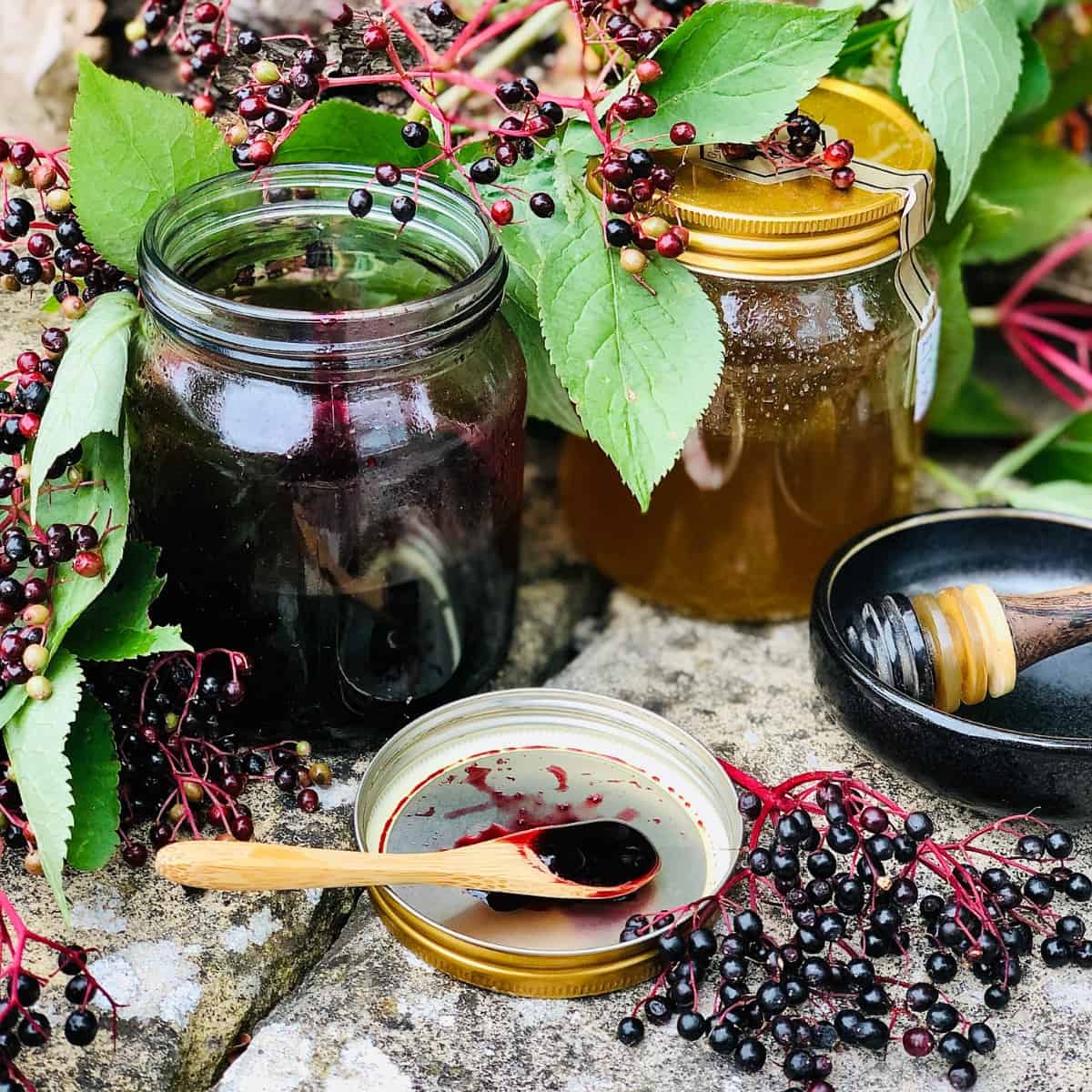
I first encountered the benefits of elderberries a few years ago when I started my foraging adventure. Elderberry is full of vital vitamin C. Before using pharmaceutical remedies, I look to nature first, so this elderberry syrup is my seasonal favourite natural remedy. In the first year, I made cordial and had a spoonful every day. Sure enough, it was the first winter that I did not suffer from a cold or cough. Cordials, however, contain added sugar, so I decided to make this elderberry syrup with honey.
Ingredients
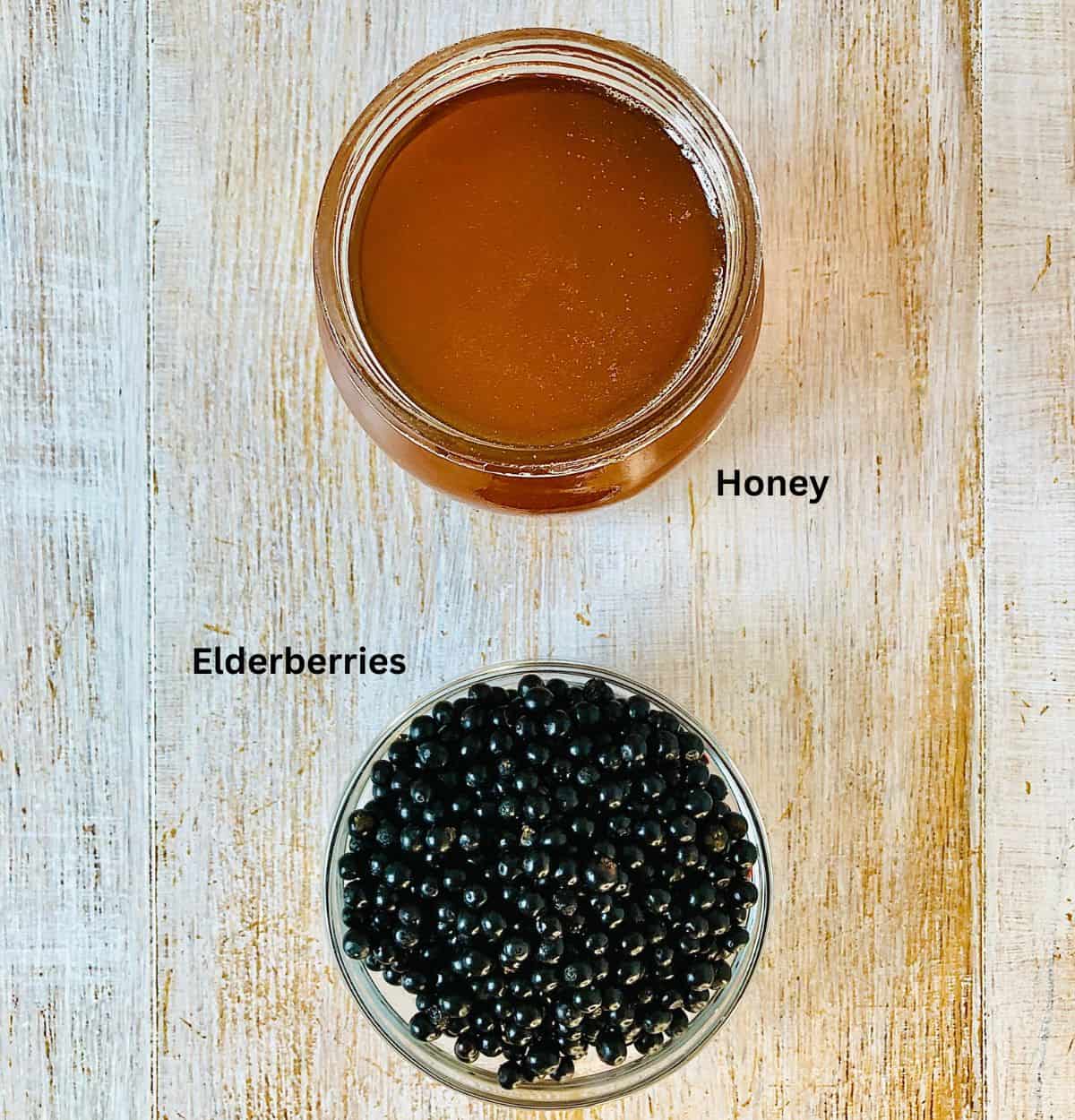
- Elderberries
- Honey, preferably raw.
- Water
Instructions
First, go out and gather elderberries. The berries appear around August to October. Elder trees and bushes grow in woodlands, hedgerows, parks, and roadsides throughout the U.K.
When gathering the elderberries, I suggest you avoid picking from roadsides or fields where farmers may have sprayed chemicals.
ALWAYS do your research when foraging for wild food and only consume what you are sure is edible.

Remove the elderberries from the stems. A quick way is to use folk and gently run from the base of the stem to the elderberries.
Transfer the berries to a pan containing the water and bring to a boil, then simmer for 15 minutes.

Transfer the cooked berries to a sieve with a bowl underneath to catch the juice. Using the back of a spoon, press the berries to release the juice. You should get about 180 gms of juice. Once done, discard the berries.

Return the juice of the cooked berries to a pan and simmer gently for 15 minutes until syrup consistency. Set aside to cool.
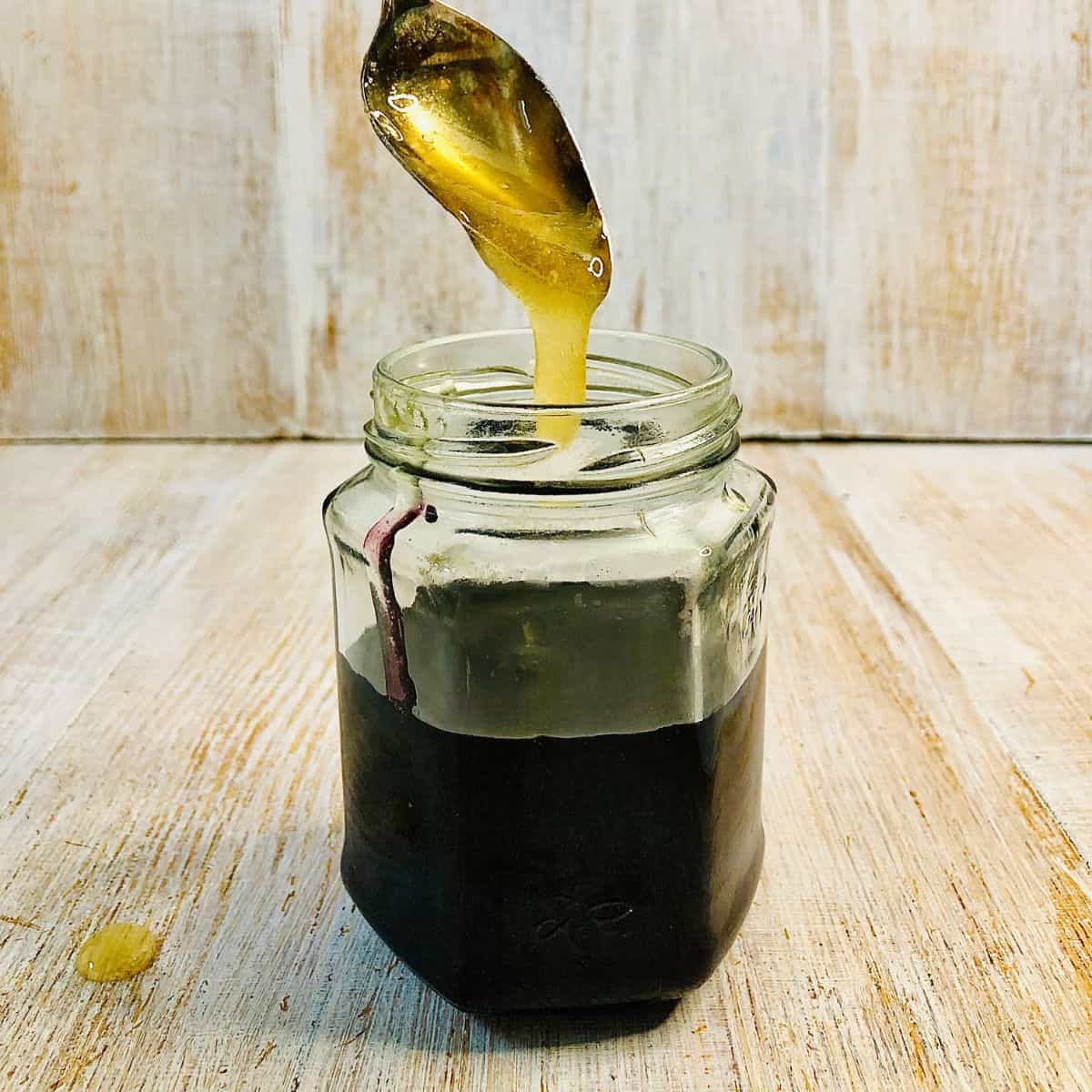
Transfer the berry syrup to a sterilised bottle and slowly add the honey. Please give it a good mix. You should have about 130 gms of elderberry honey.
Substitutions
You can use vegan honey instead of bee honey; however, you may need to adjust the quantity.
I add honey for its potential medicinal properties; however, you can substitute it with maple syrup for added sweetness and make it vegan.
Storage
Please ensure you correctly sterilise the jar you intend to store the syrup. To sterilise a bottle, wash it with hot soapy water and then leave it in the oven for a minimum of 30 minutes at 100ºC.
I have kept my elderberry syrup for over a year; however, I recommend using it within three months. Keep it refrigerated, and always use a clean, dry spoon each time you use the elderberry syrup to avoid mould growth.
Related
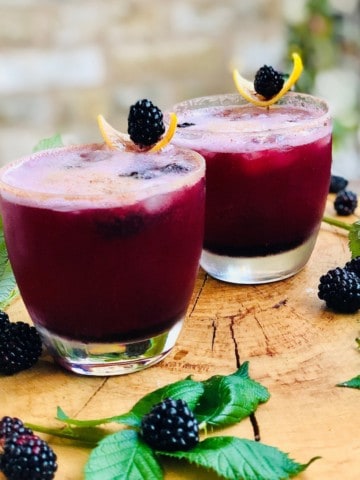
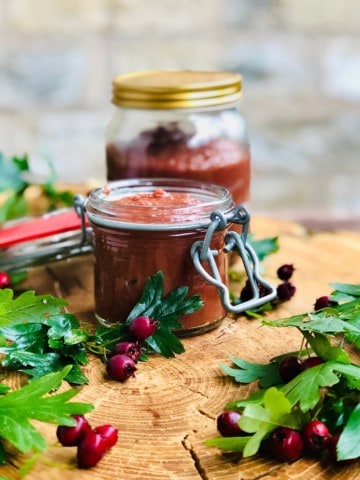
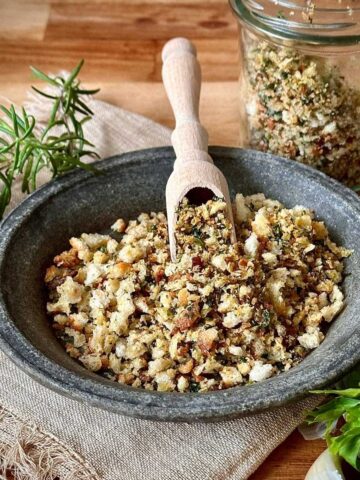
If the foraging bug bites you, I have a selection of wild food recipes using foraged berries and fruits.

📖 Recipe
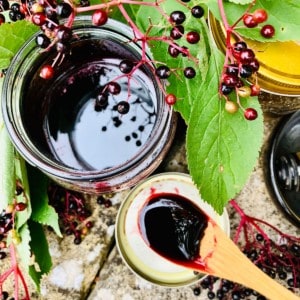
Immunity Boosting Elderberry Syrup
Ingredients
- 250 gms Elderberries Picked off the stem (15 to 20 berry clusters on the stem)
- 100 gms Honey Preferably raw, unpasteurised
- 200 ml Water
Instructions
- Gather the elderberries. Wash and pick off the stem. Use a fork to separate the berries from the stem. Ensure you only have the black coloured ones and not the green or rosy ones.
- Transfer the berries to a pan and add water. Bring to a rapid boil, then simmer covered for about 15 minutes.
- Transfer the cooked berries to a sieve with a bowl underneath to catch the juice. Using the back of a spoon, press the berries to release the juice. You should get about 180 gms of juice. Once done, discard the berries.
- Return the juice of the cooked berries to a pan and simmer gently for 15 minutes until syrup consistency. Set aside to cool.
- Transfer the berry syrup to a sterilised bottle and slowly add in the honey. Give it a good mix. You should have about 130 gms of elderberry honey.
- Seal the jar and store it in the refrigerator.
- When using the elderberry syrup, always use a clean, dry spoon and be careful not to contaminate the rest of the tonic in the bottle.
Nutrition
NOTES
FAQ's
Eating raw elderberries can cause stomach issues, nausea, vomiting or diarrhoea, so you must cook them before consuming them. Do not consume juice pressed from raw berries. Don't use the stems or leaves in any way, either. When making your elderberry syrup, picking only the black ones is essential.
Elderberries contain antioxidants and vitamins that may help to boost the immune system. They have long been a popular choice as a healing agent. Elderberries contain flavonoids that possibly reduce swelling, fight inflammation and boost the immune system. Some scientific research is out there to back up the elderberries' ability to help combat colds/flu.
Although I am a passionate believer in the power of natural remedies, I don't hesitate to seek the advice of a medical practitioner if necessary.
Looking around the web, the standard dosage for elderberry syrup is two teaspoons daily. Dosage can be increased to 3 or 4 times a day at the sign of a cold.
Aim for raw honey to get the maximum health benefits. I have my elderberry syrup on top of my porridge, sometimes as a drink mixed in warm water or just neat straight from the teaspoon. Don't add it to boiling water, as this changes the enzymes in the added honey and reduces its benefits.
Food Safety
- Wash your hands regularly while preparing, handling and cooking food.
- Wipe down countertops and high-contact points regularly.
- If you cook meat and fish, do not use the same utensils on cooked food that previously touched raw meat. Use separate chopping boards for meat and fish. Wash your chopping boards immediately after use.
- Thoroughly cook food to a minimum temperature of 165 °F (74 °C).
- Don't leave food at room temperature for extended periods (more than 2 hours).
- Store food correctly.


Elspeth says
Beautiful website. I am about to make the elderberry syrup.
Chef Tripti says
Thank you. Do let me know how it comes along.
Susan says
Lovely simple recipe. I did a double batch and added a bit of squeezed lemon juice along with the honey as an added preservative. Tastes fantastic. I really enjoyed gathering these while out with my dog who lay in the grass as passersby asked questions. It's a real conversation starter. Then off home to sit in the garden to get the berries off the stems using a fork. The weather was on my side which made the whole thing more enjoyable. Thanks for a nice clear recipe
Chef Tripti says
You are welcome! I agree gathering the berries is my favourite part too! I haven't tried the lemon, will give it a go. Since I started having this every winter, I haven't caught a cold!
Thank you for trying the recipe and for your feedback.
Misty says
How long should it last?
Chef Tripti says
Hello Misty,
I recommend three months to be on the safe side. Usually mine doesn't last that long as well. You can keep it for longer( no more than six months ), however you need to be careful with sterilisation and keep it refrigerated, always using a clean dry spoon each time.
All the very best
Tripti