

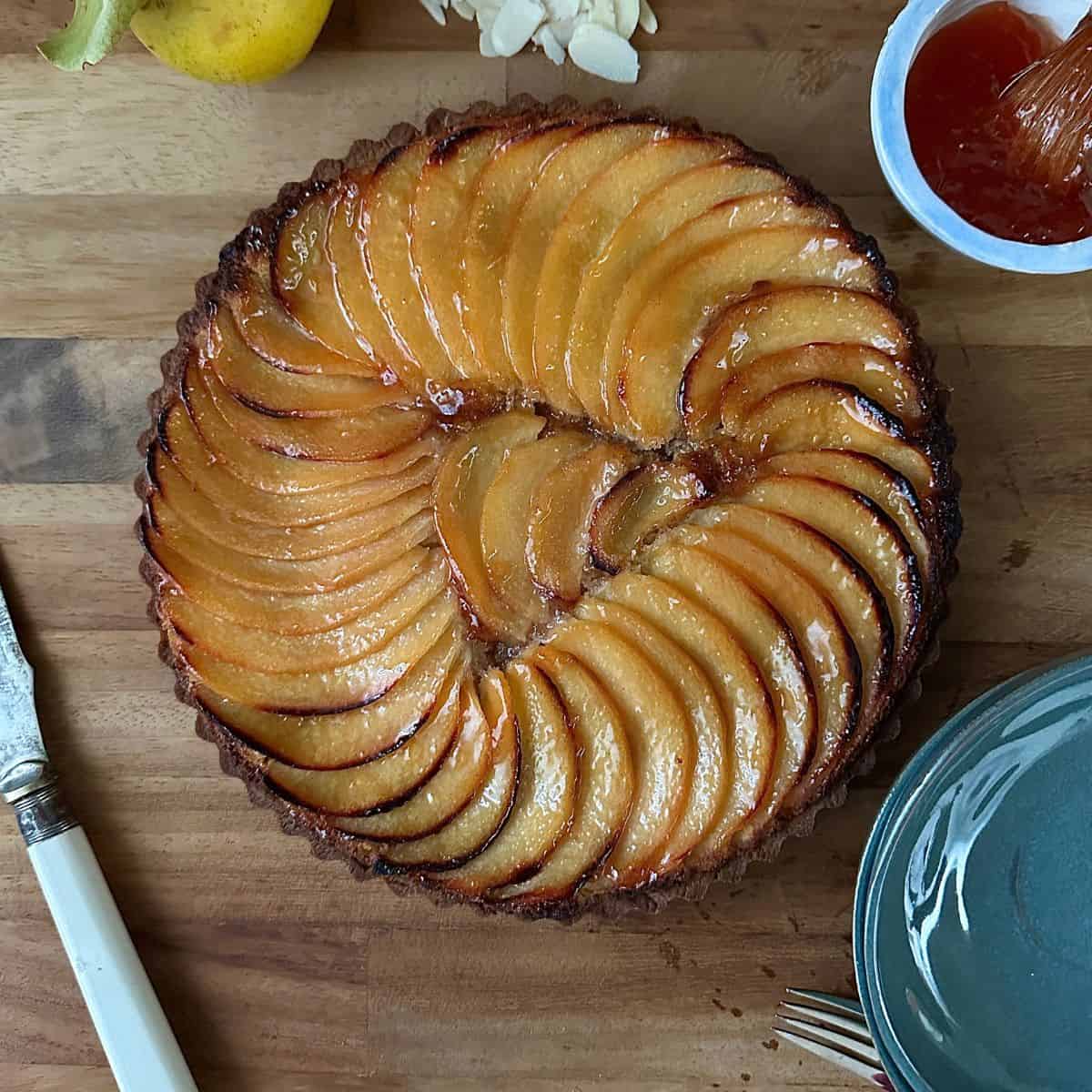
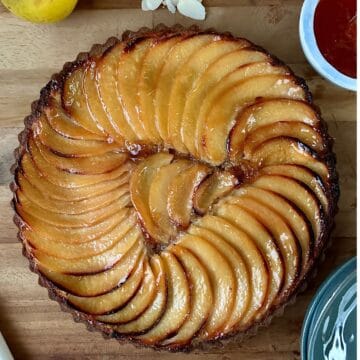
Quince is a forgotten fruit. Raw, it's inedible, hard, sour, and astringent. But with a little patience and some work, it becomes a table centrepiece like this rustic-looking vegan quince frangipane tart. This recipe takes a bit of effort, but it's well worth it.
Nothing from the poaching goes to waste either. The spiced syrup the quince is poached in becomes its glaze, and the vanilla pod, scraped for the frangipane, goes back into the pot to give the last of its fragrance. It's a small thing, but this is how I like to cook - getting the most I can from my ingredients.
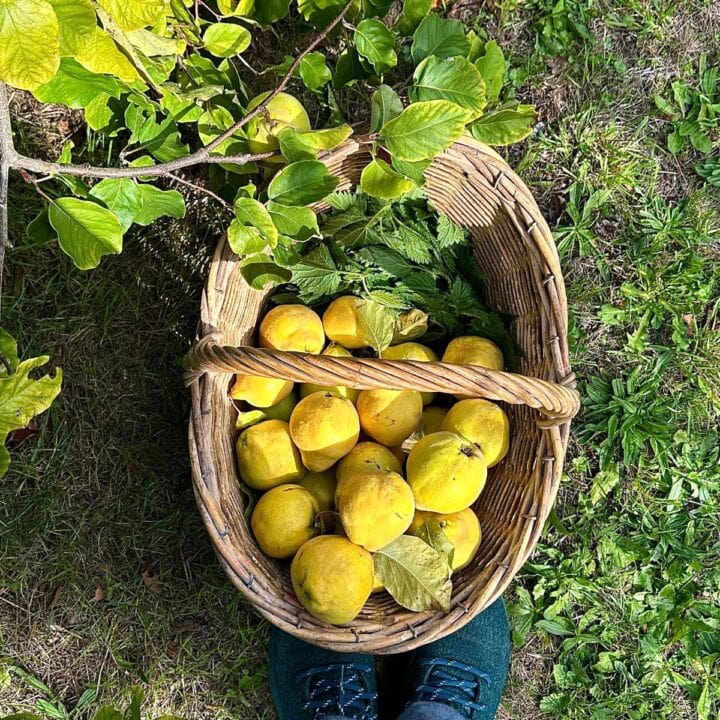
Quince is right near the top of my foraging list at this time of year. I have my go-to tree in an old orchard. The scent of ripe quince in my fruit basket is heavenly. I make batches of dried quince snacks and quince syrup, and I love to serve my Baked Quince with a White Wine, Star Anise, Cinnamon & Saffron Syrup to treat my guests.
Be quick, though, quince season is short, so grab them while they are here.
Why You'll Love
- A reason to seek out quince, a creative way to use a fruit many overlook.
- A table centrepiece - golden glazed fanned quince slices make it look striking, rustic, and homely. This is the tart I bake when I want to impress.
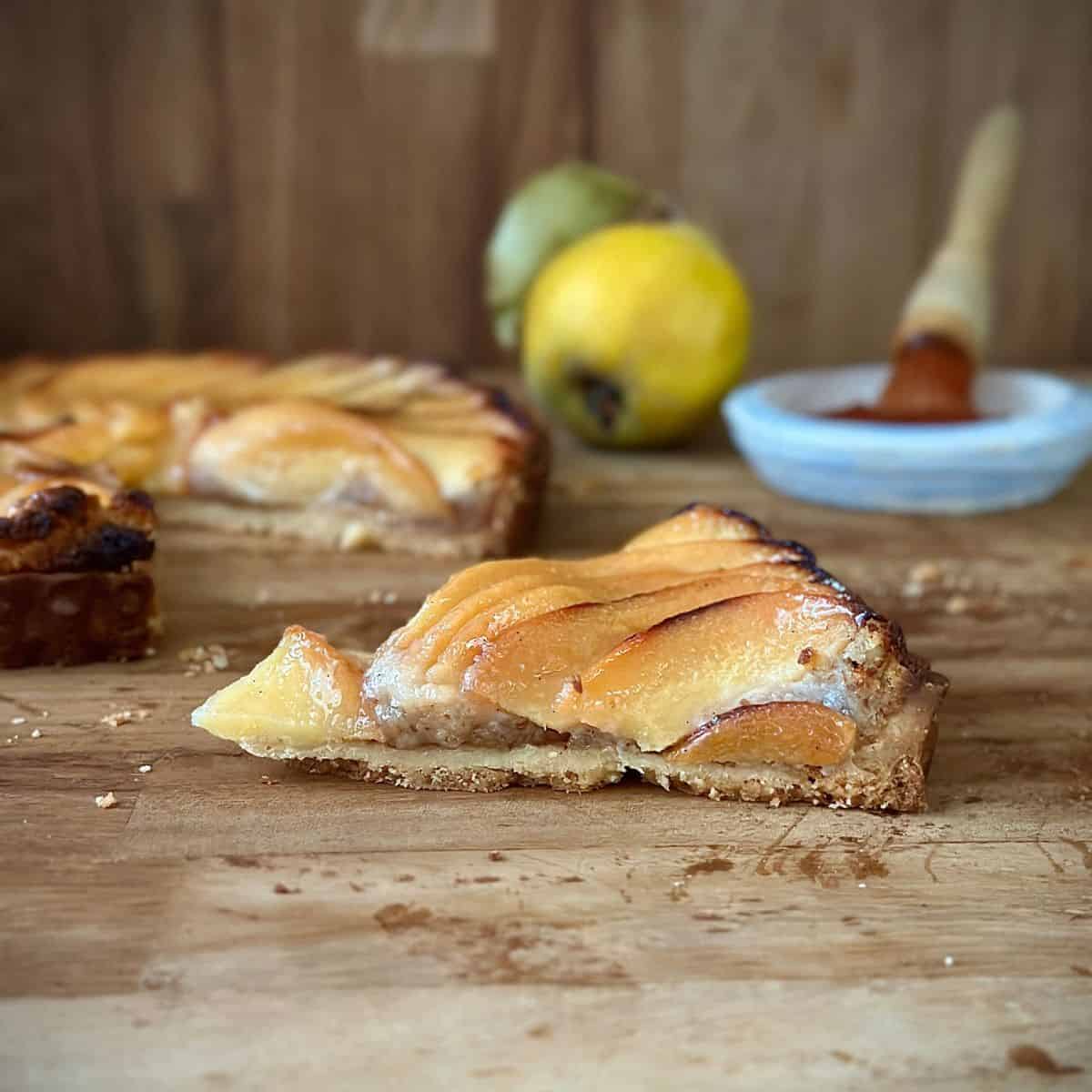
- Autumn in a single slice - warm flavours of star anise, cinnamon and vanilla run through the quince.
- One poaching pot, two jobs - the spiced syrup gently poaches the quince first, then reduces into a glossy glaze to finish the tart.
- Frangipane without eggs or dairy butter - a little flaxseed gel and vegan butter still make for a rich, almondy filling. No one would ever guess.
- Best eaten warm, with a dollop of ice cream, it's divine. My vegan spiced ice cream pairs perfectly.
Jump to:
Key Ingredients & Notes
Tart pastry & quince
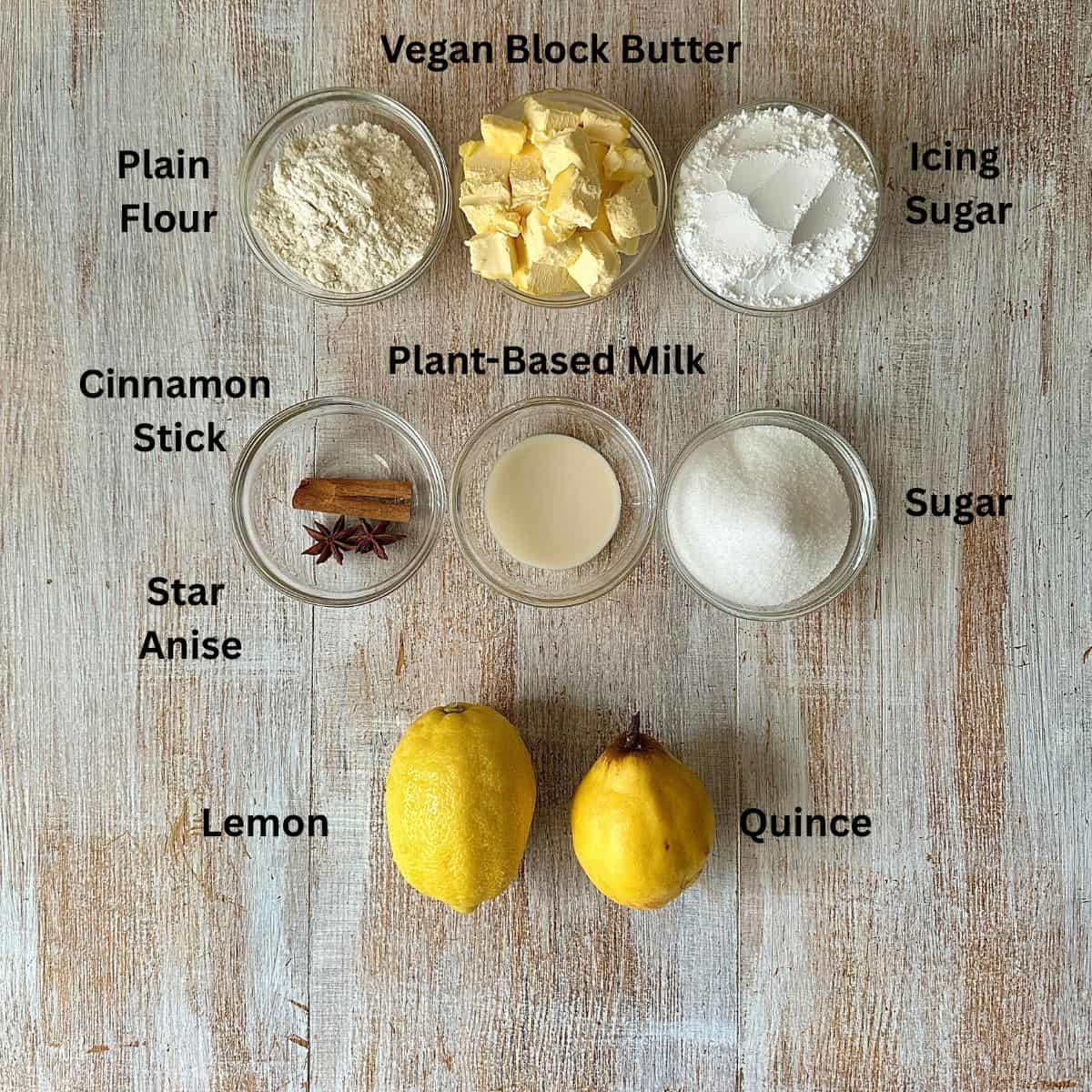
- Plain flour, block butter, icing sugar & milk - sweet pastry ingredients.
- Cinnamon stick, star anise & sugar - for the poaching liquid. Adds warm autumnal flavours.
- Lemon - quince browns quickly once peeled. Lemon juice prevents this.
Frangipane
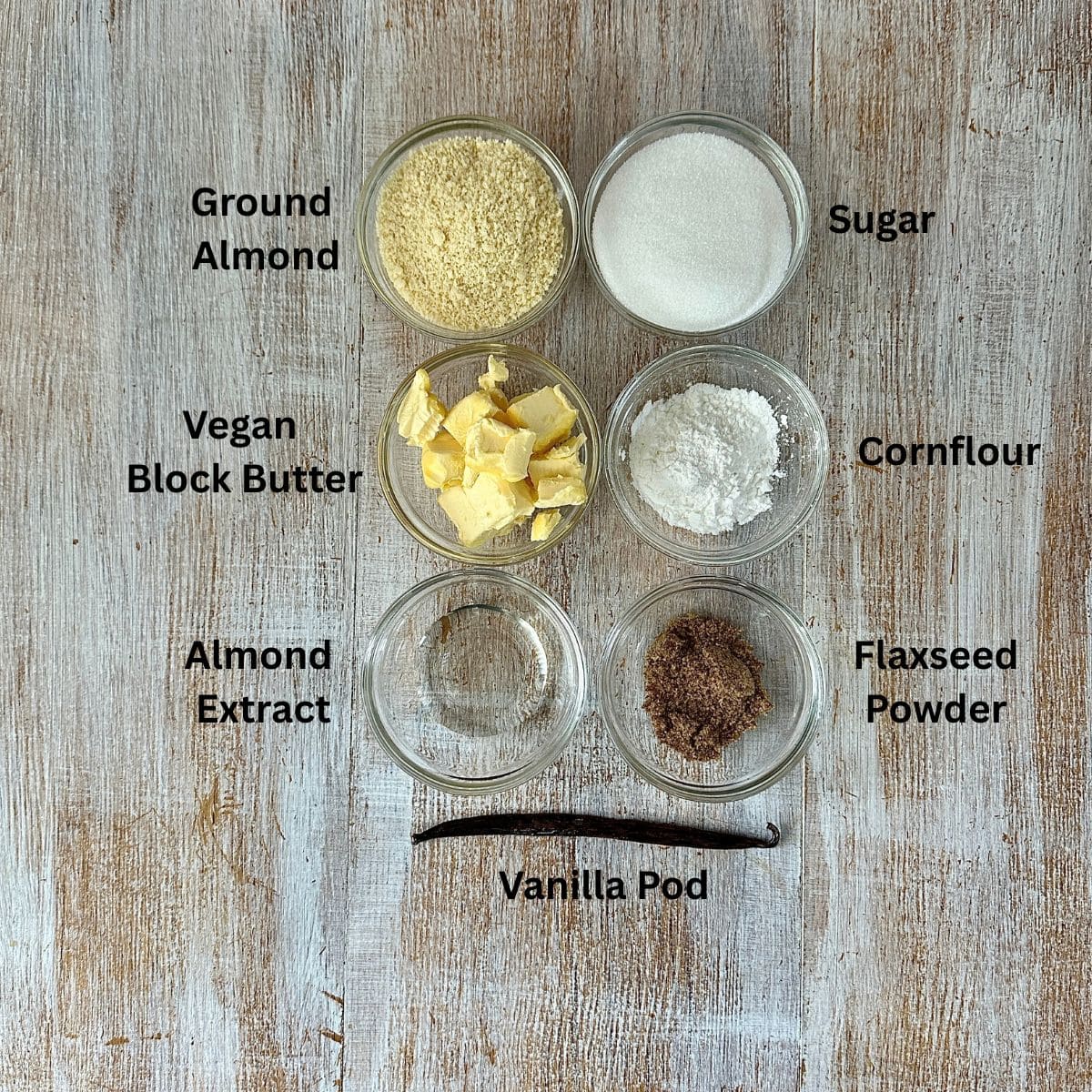
- Ground almond and almond essence - give the classic nutty frangipane flavour and body.
- Vanilla - often included in frangipane - gives a warm depth to balance the almond flavour.
- Sugar - sweetens the frangipane.
- Cornflour, flax & butter - provide the structure and texture for the frangipane. Flax replaces eggs as a binder.
See the recipe card for quantities.
How to Make
There are four main elements to making this tart:
- Making the pastry case.
- Poaching through quince.
- Making the frangipane.
- Assembling the tart.
Making the pastry case
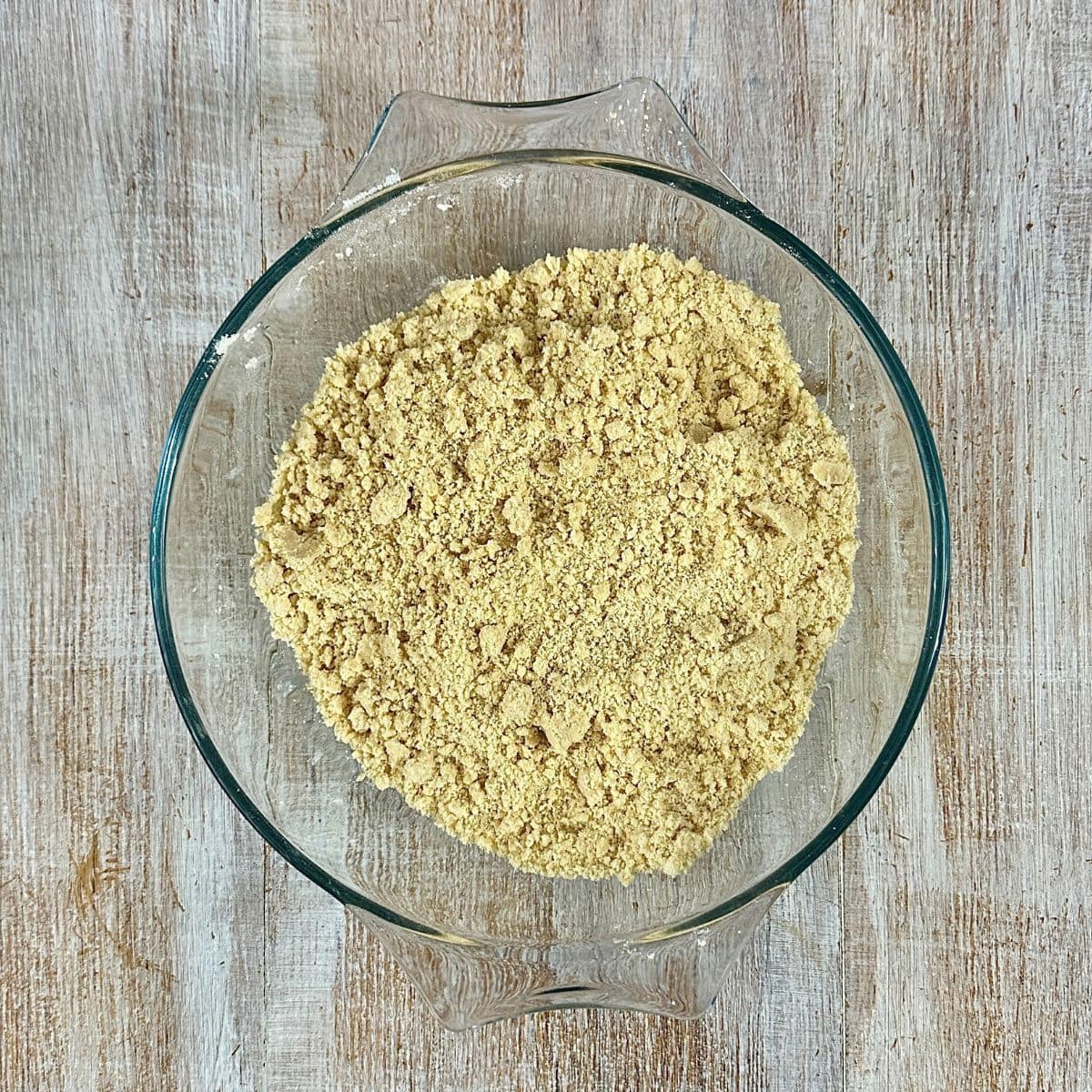
- To a bowl, add the cold cubed block butter, flour and icing sugar. Rub with your fingers until it reaches a breadcrumb consistency.
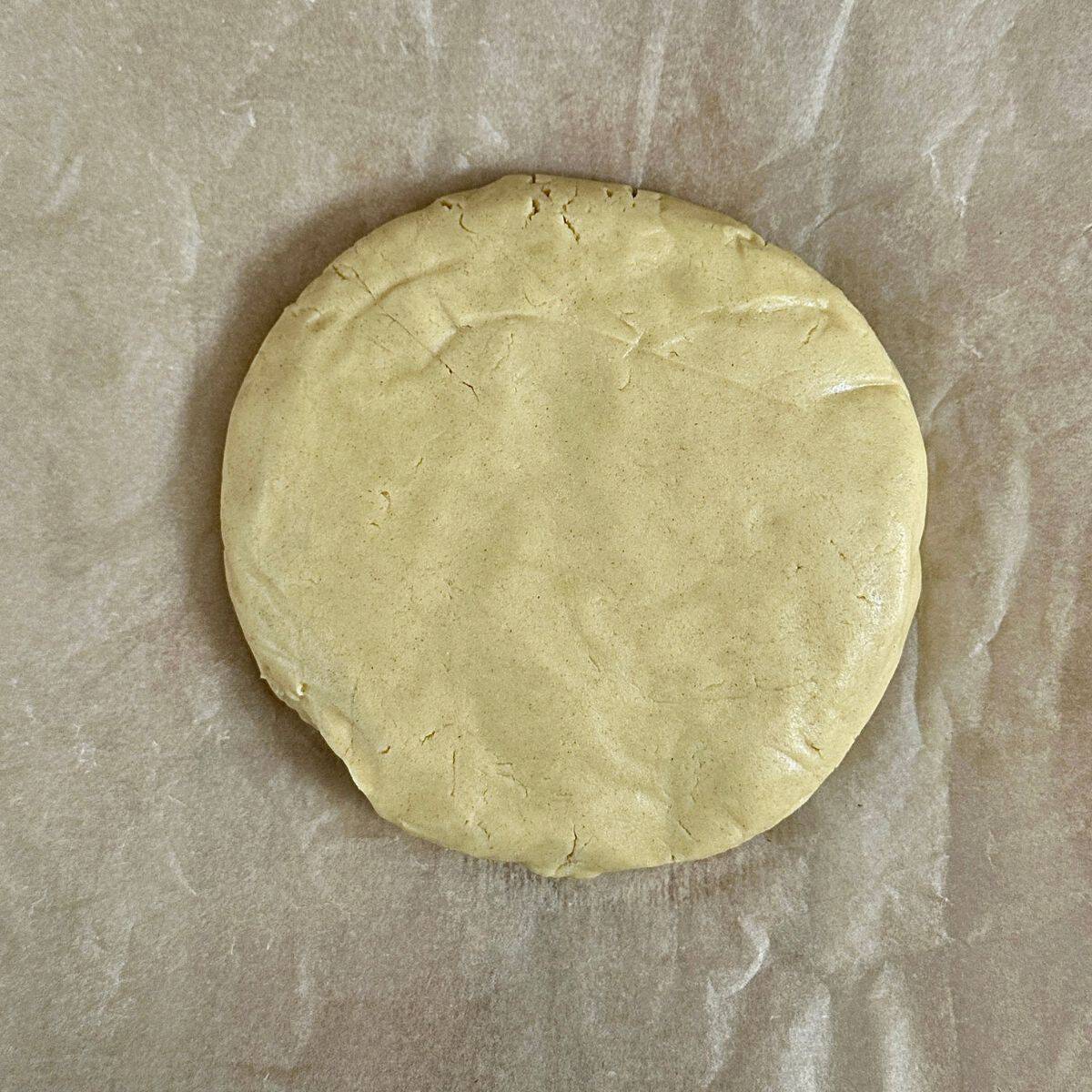
- Add a little milk and bring together to form a dough. Do not over-knead.
- Flatten to a disc, cover with parchment paper and refrigerate for 1 hour.
- After 1 hour, remove from the fridge and set aside for 5 minutes.
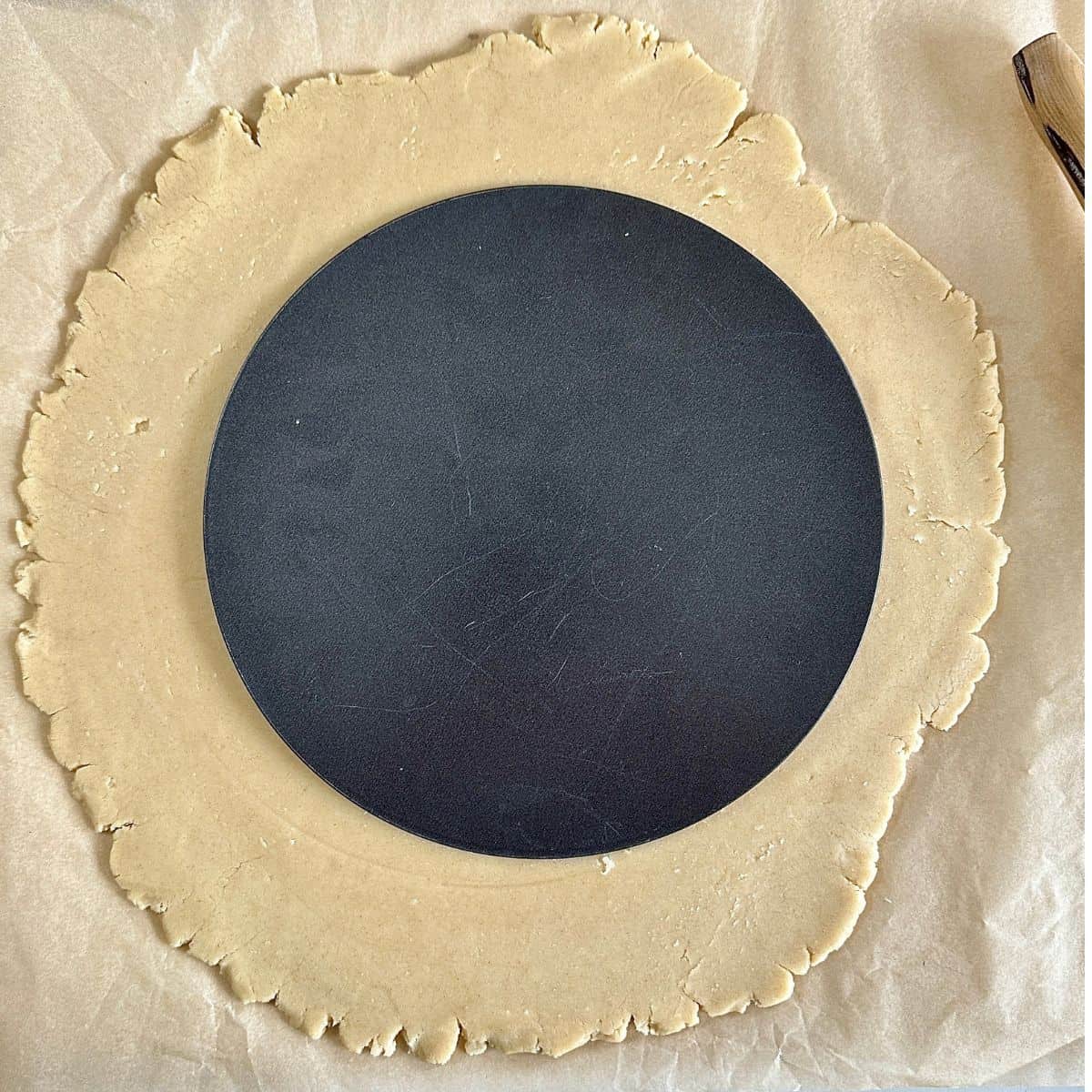
- Lightly dust your work surface with flour.
- Roll out the pastry to 3mm thickness.
- The pastry diameter should be larger than the tart tin. Rough guide: measure the inside diameter of the tin, add the depth of the tin, then add 2.5cm (1 inch).
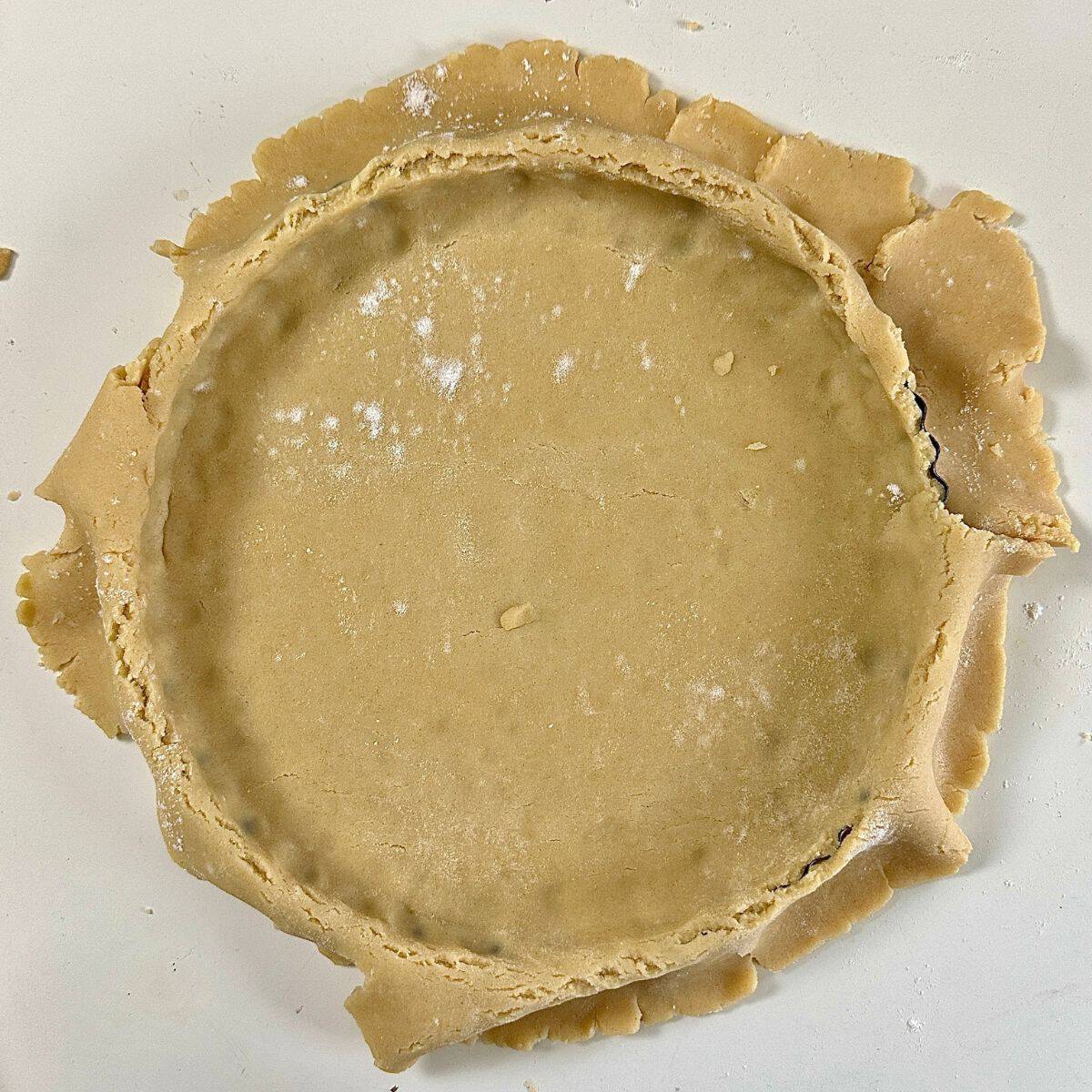
- Line the tart tin with the pastry, gently pressing it into the base.
- Trim the edges of the pastry.
- Prick the base all over with a fork to stop it rising.
- Preheat the oven to 180ºC(fan assisted)
- Refrigerate the pastry for 15 minutes.
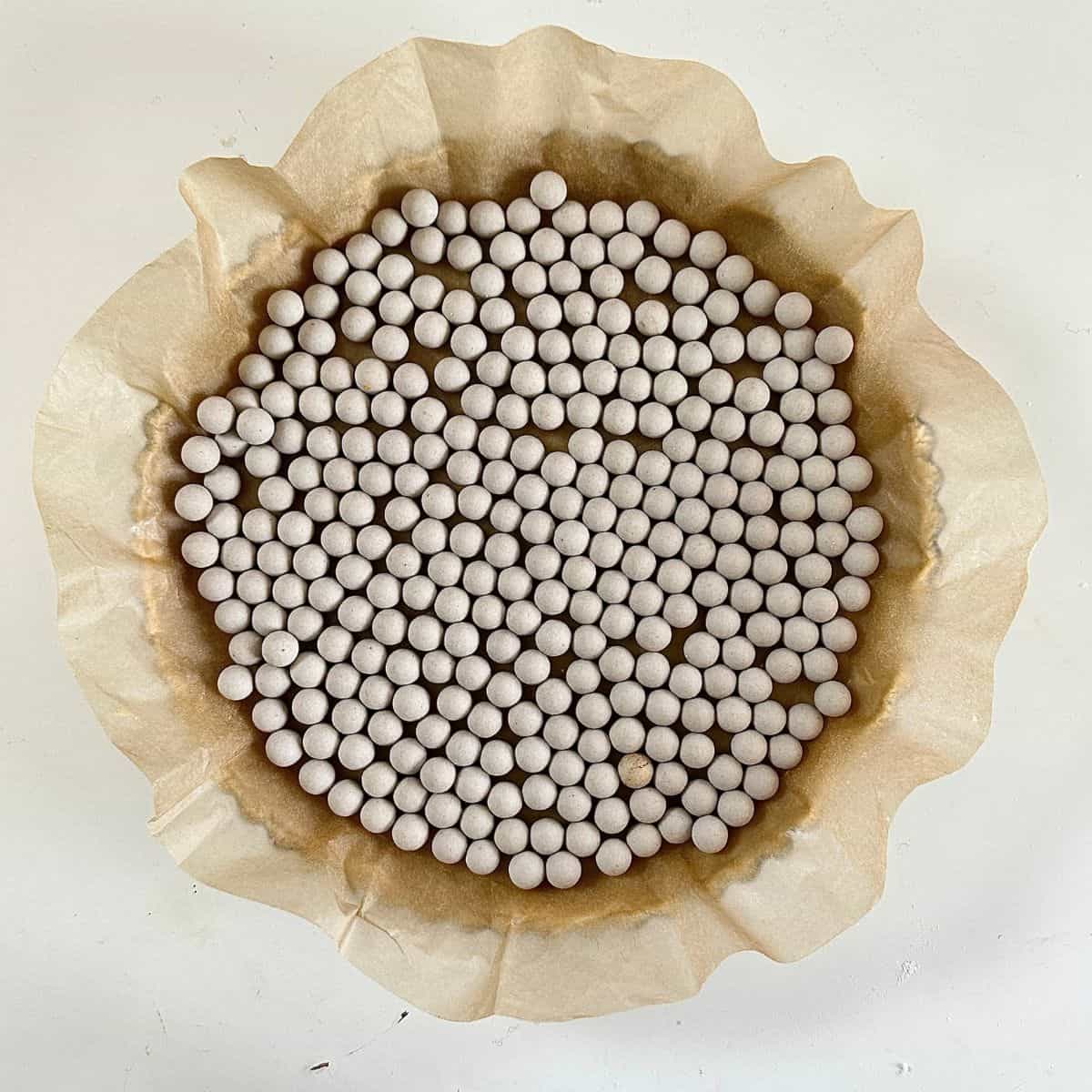
- Line the pastry with parchment paper and fill the base with a layer of ceramic baking balls, uncooked rice or dried beans.
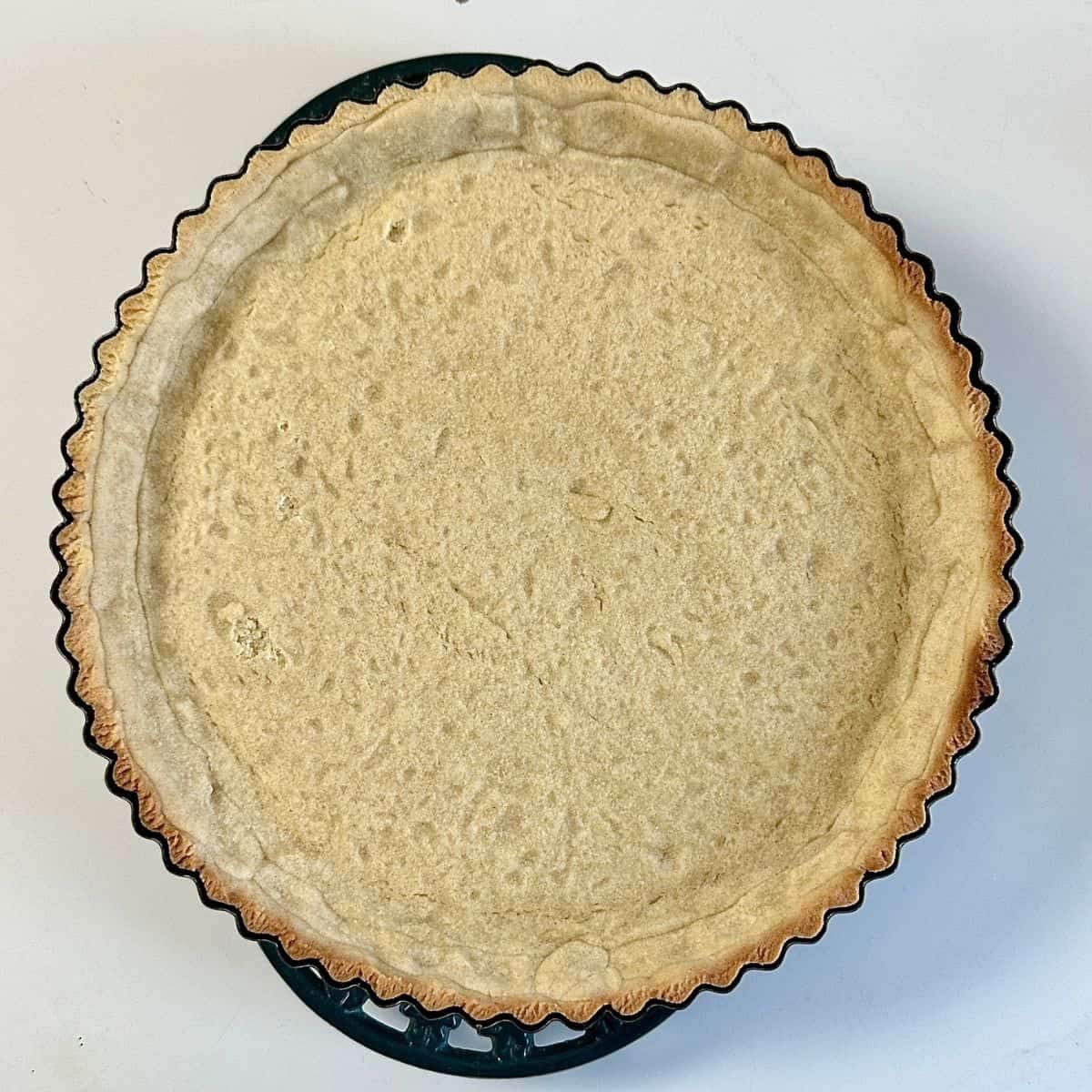
- Bake for 15 minutes, then remove the ceramic baking balls and cook for 5 more minutes.
- Remove from the oven and set aside.
Poaching the quince
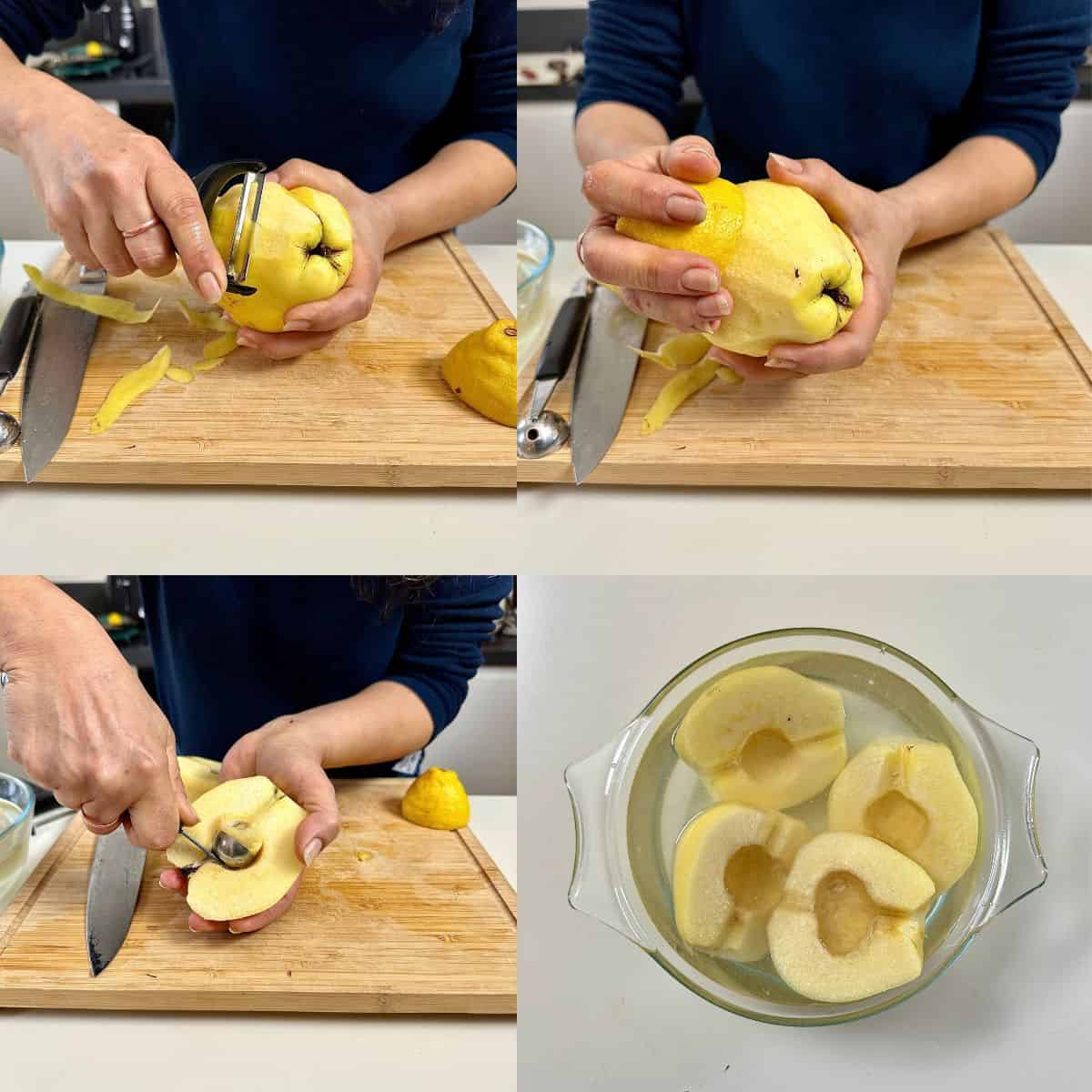
- Prepare a bowl of water and squeeze lemon juice into it.
- Peel one of the quinces. Rub the surface with a halved lemon to prevent browning.
- Cut the quince in half and remove the core and pips.
- Submerge the peeled and cored quince in the lemon water to prevent browning.
- Repeat with the remaining quince.
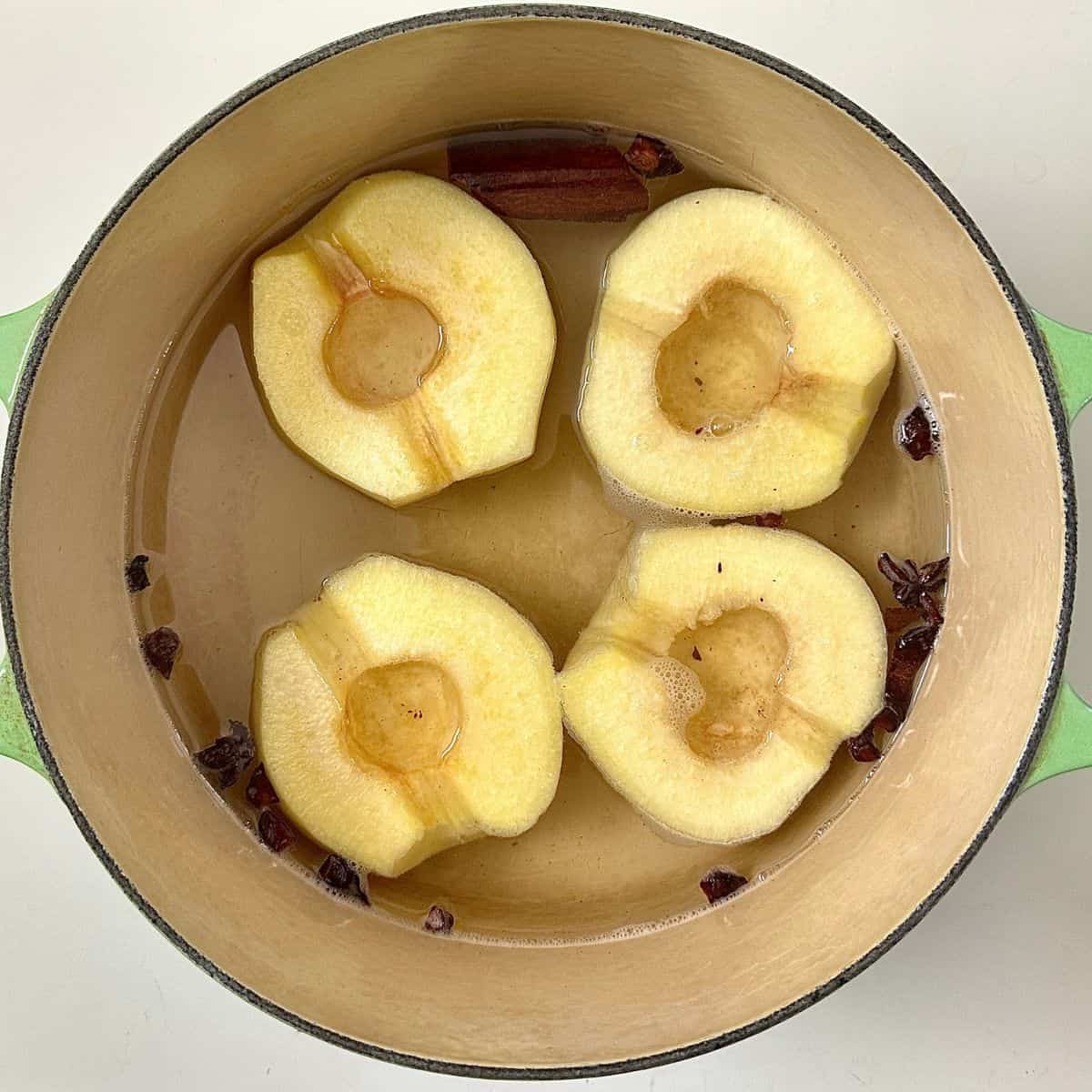
- In a large saucepan, add the water, cinnamon stick, star anise and sugar. Bring to a boil. Once the sugar dissolves, reduce to a simmer.
- Add the quince to the poaching liquid, core-side up, and simmer for 20 minutes.
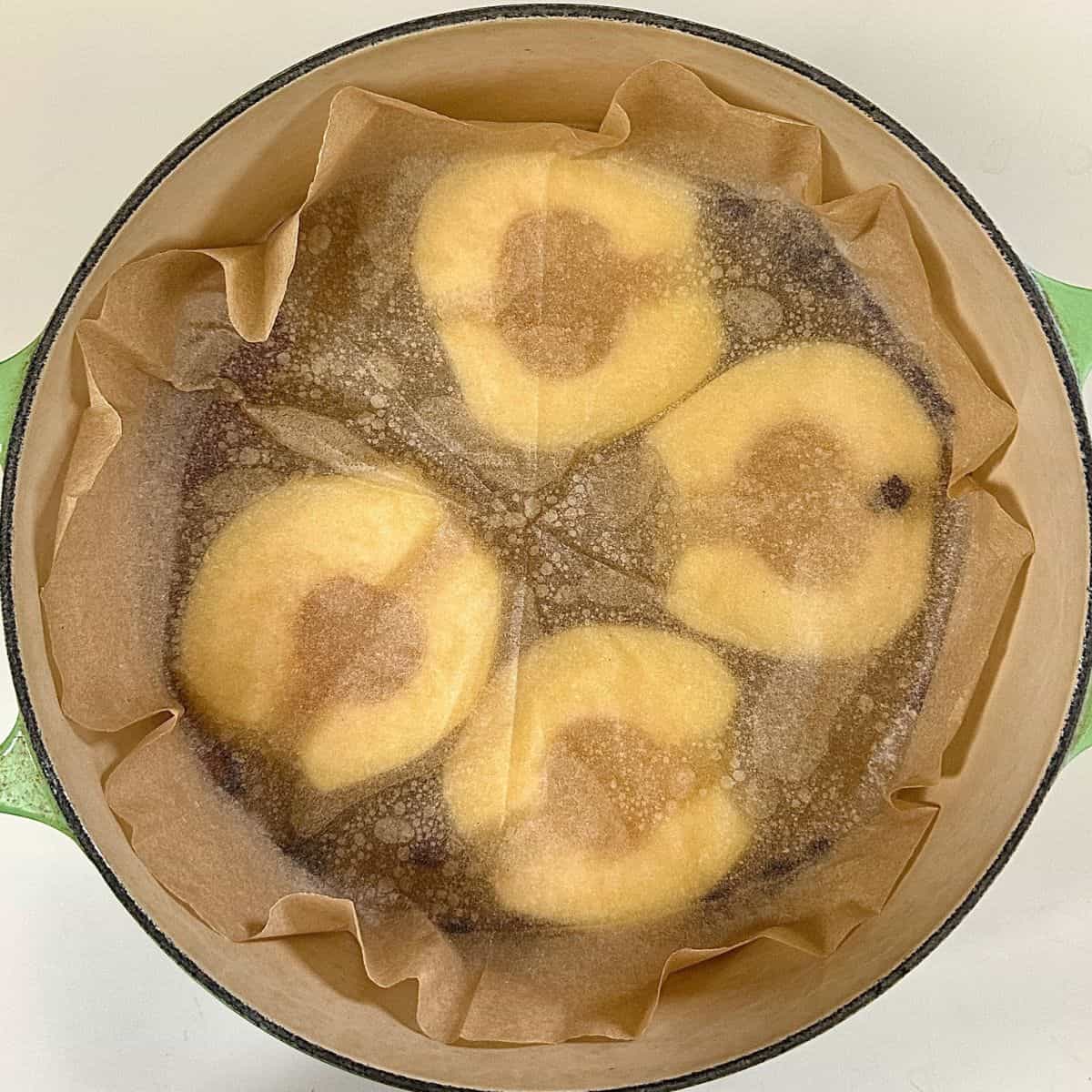
- Remove from the heat, cover with a cartouche and set aside to cool.
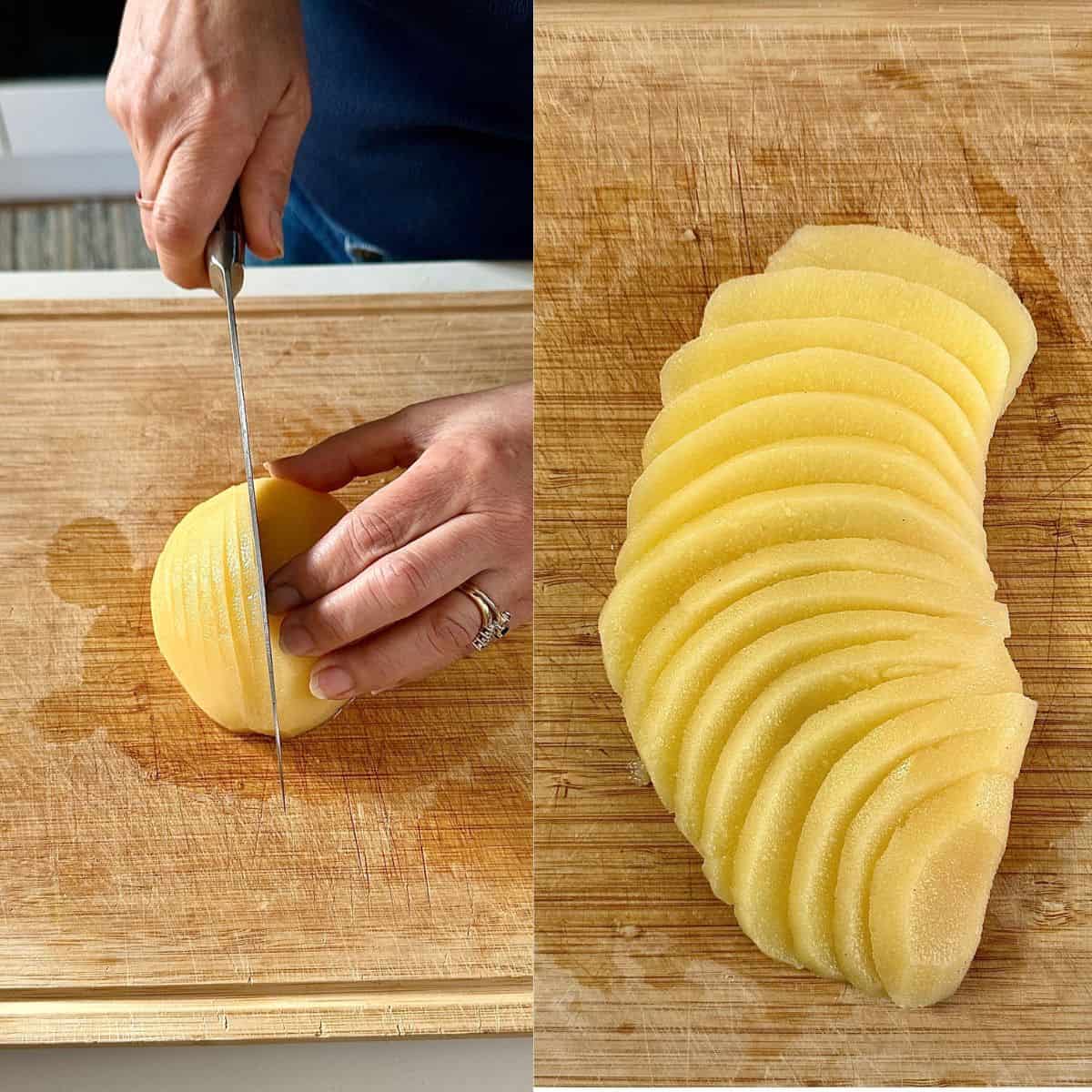
- Once cooled, slice the poached quince into 3mm slices.
- Gently press down to fan out.
- Here is a video showing you how to make a cartouche.
Making the Frangipane
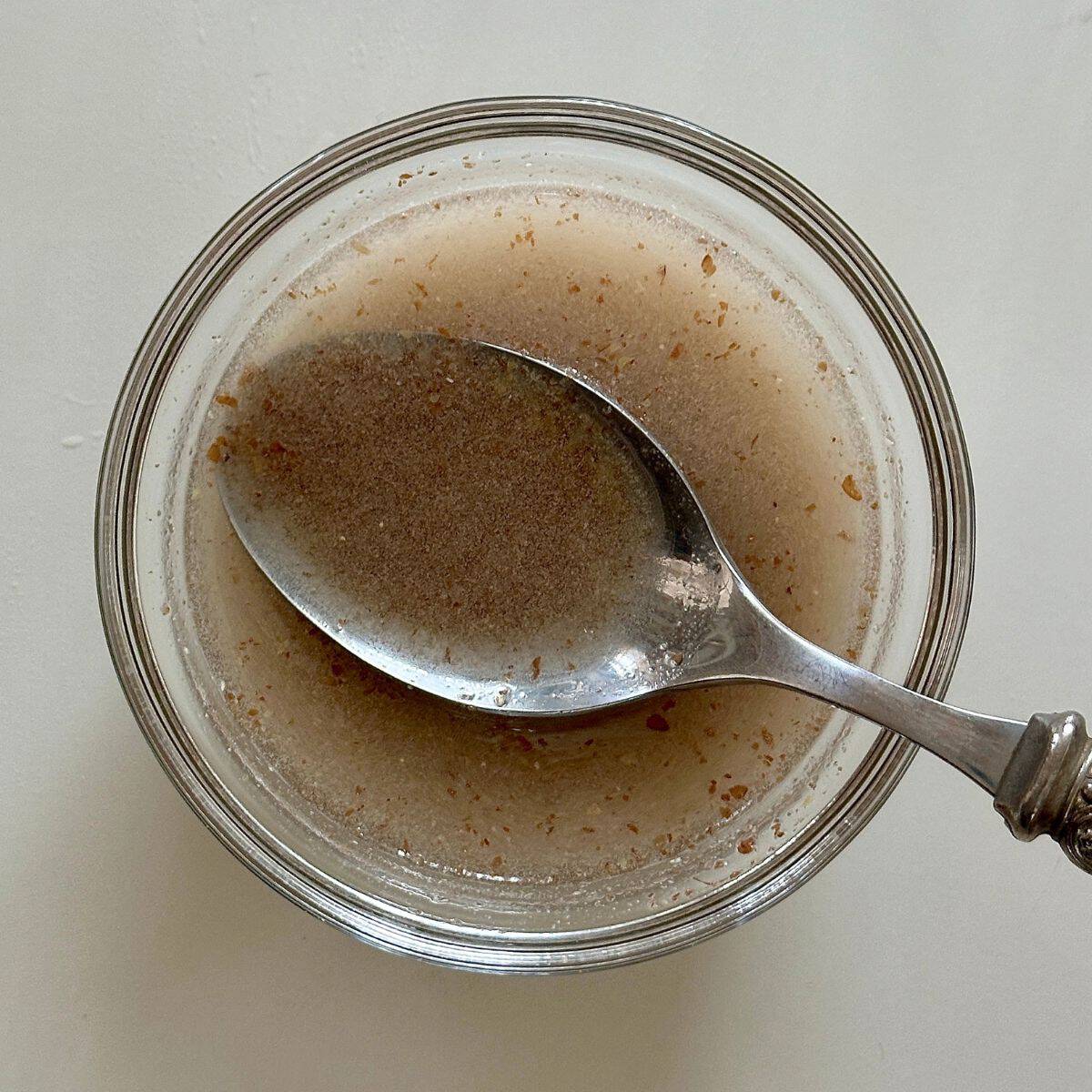
- Add the ground flaxseed to a bowl and add lukewarm water. Mix together and set aside to form a gel.
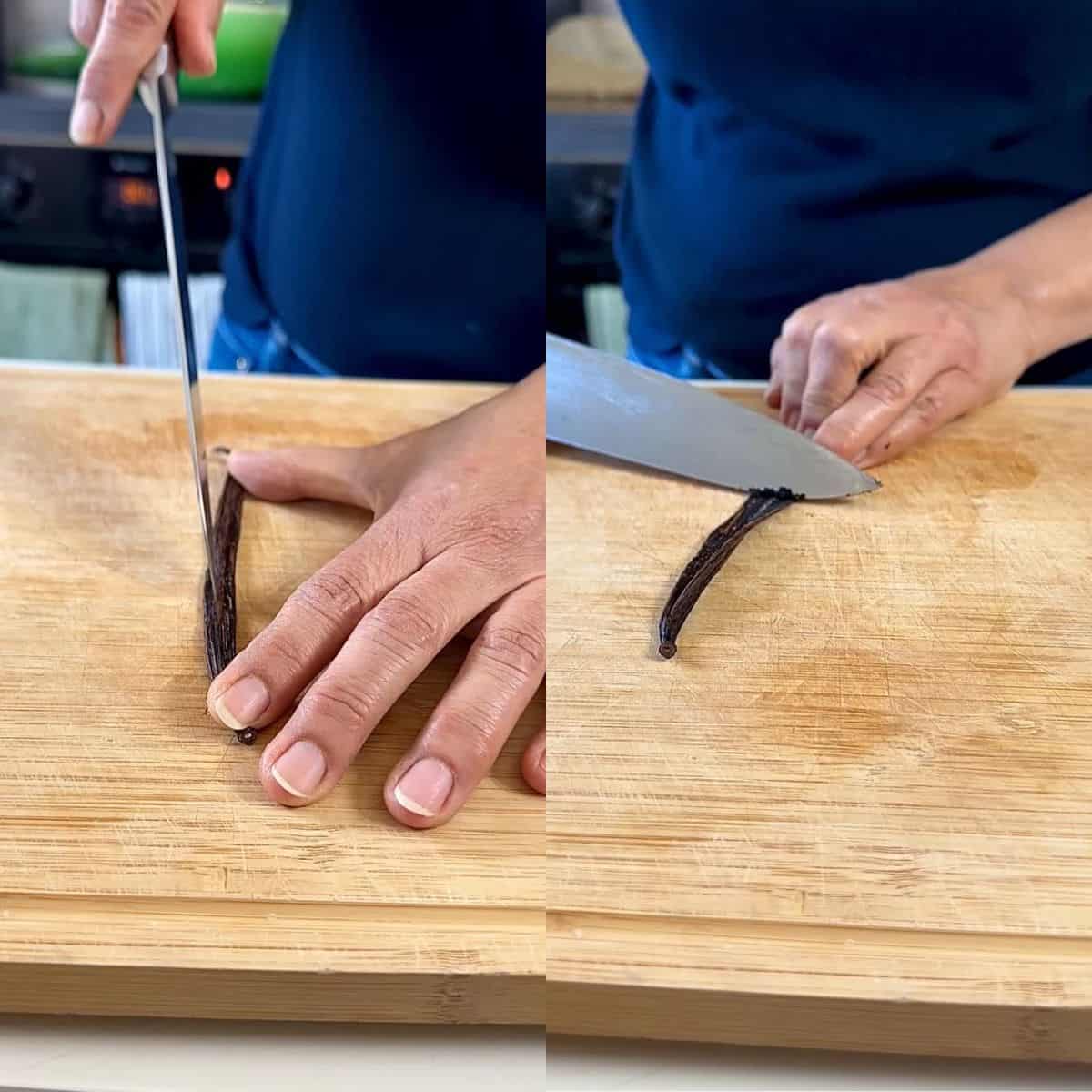
- Slice the vanilla pod down the centre (don't slice all the way through)
- Using the back of the knife, scrape out the vanilla seeds. Keep the pod case for later.
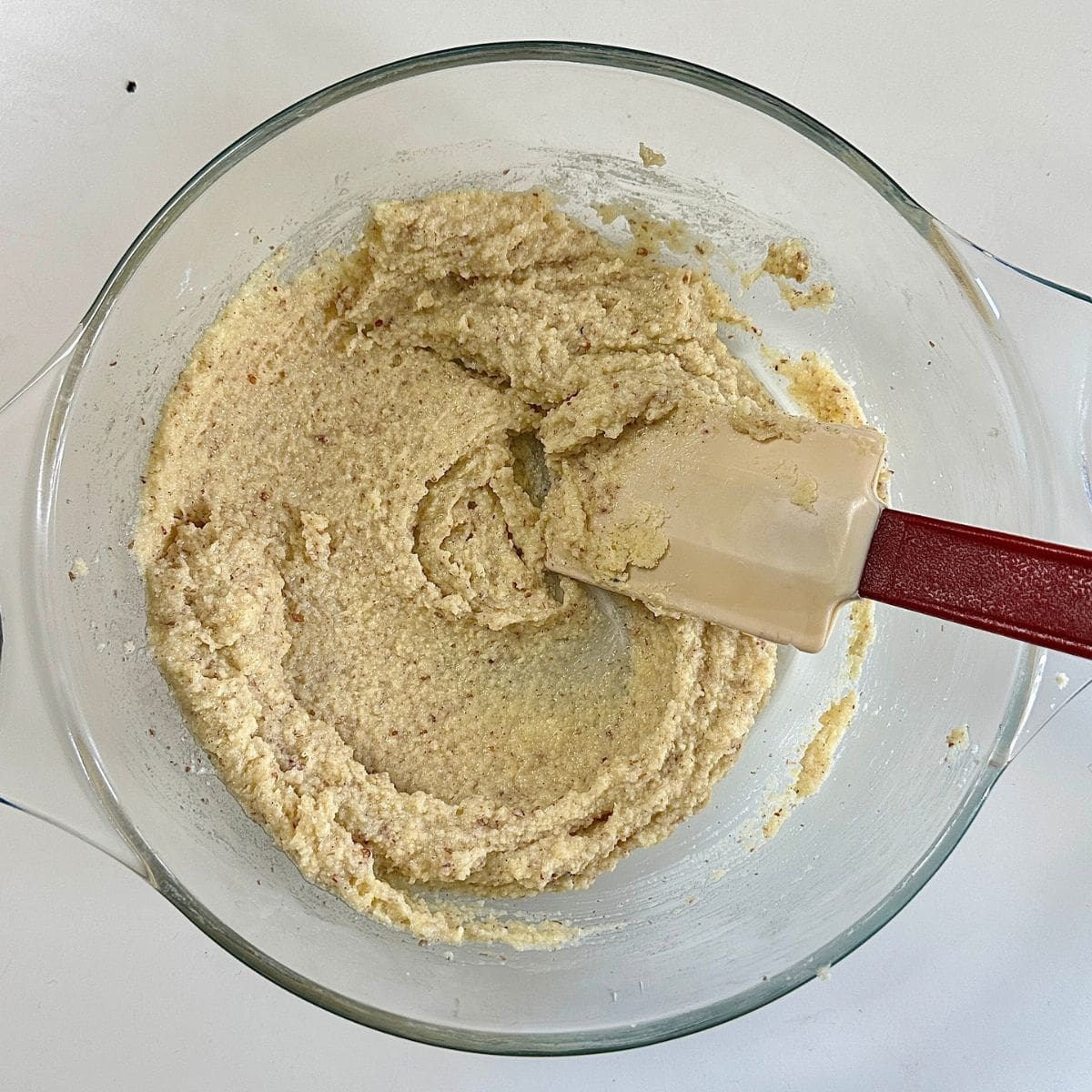
- In a bowl, mix the ground almonds, almond essence, softened (room temperature) block butter, cornflour, vanilla seeds, sugar, and ground flaxseed gel into a smooth paste.
ASSEMBLING THE tart
- Preheat the oven to 180ºC.
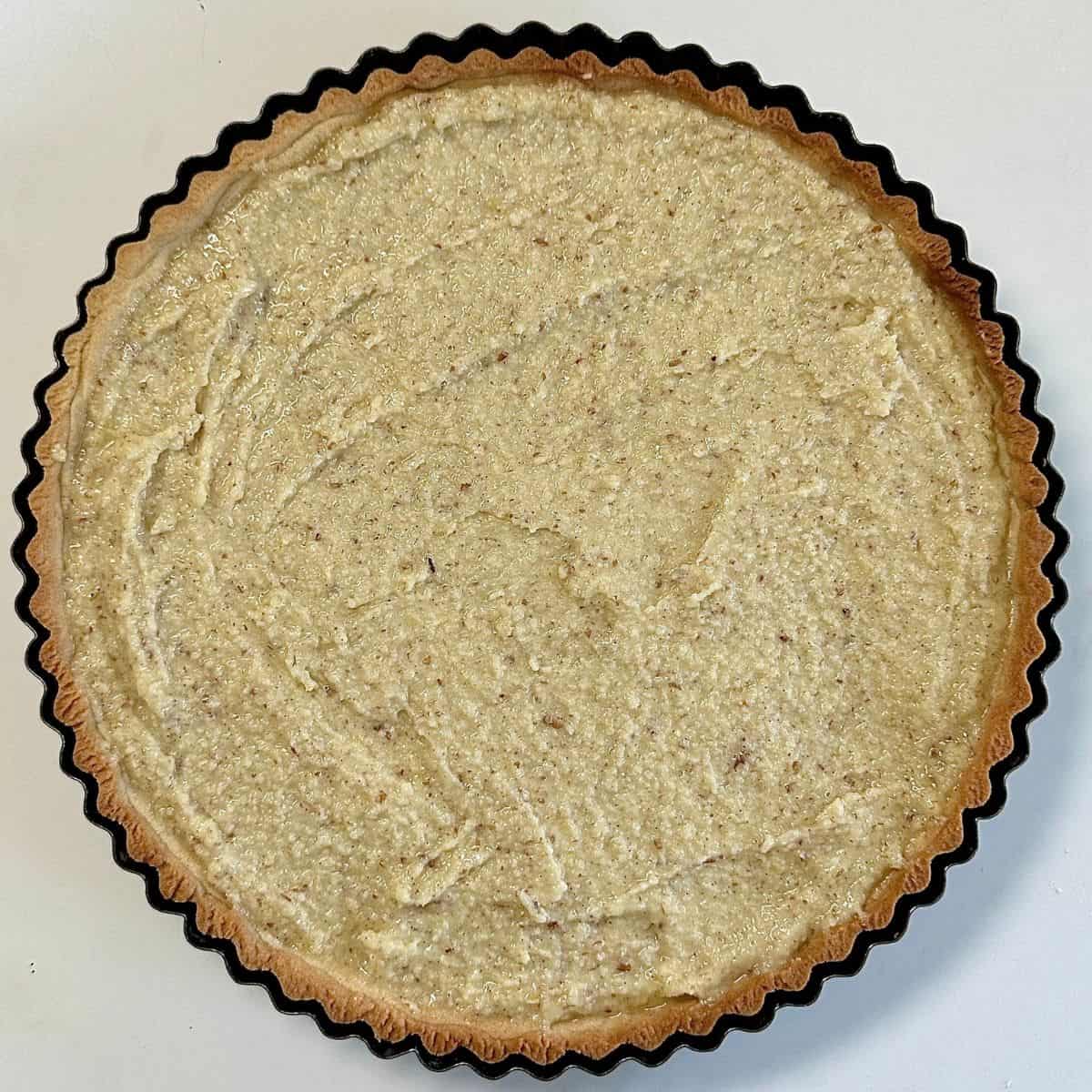
- Spread the frangipane into the pastry case.
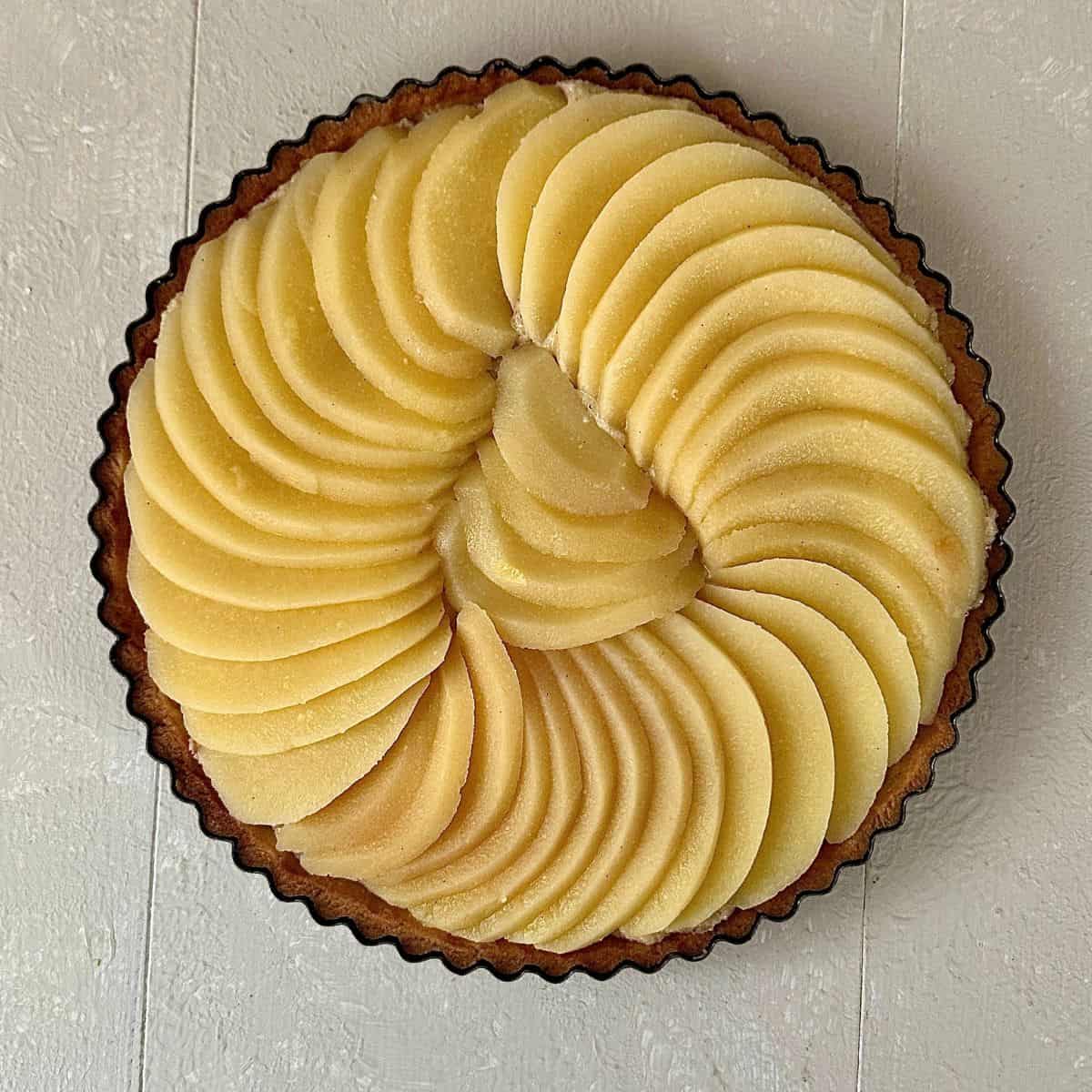
- Arrange the poached quince slices over the frangipane.
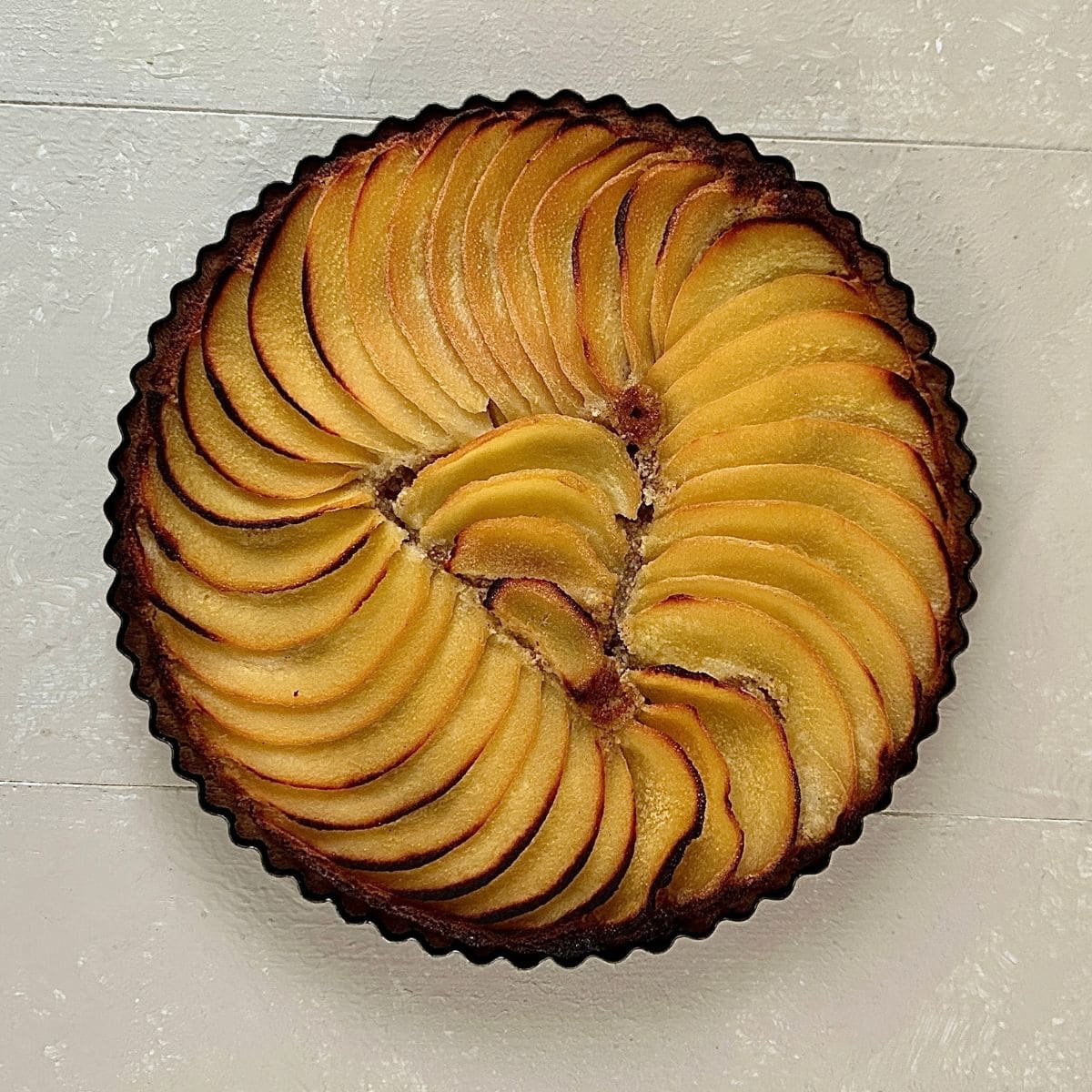
- Bake for 30-40 minutes. The tart is done when the quince turns a deep golden colour and darkens around the edges.
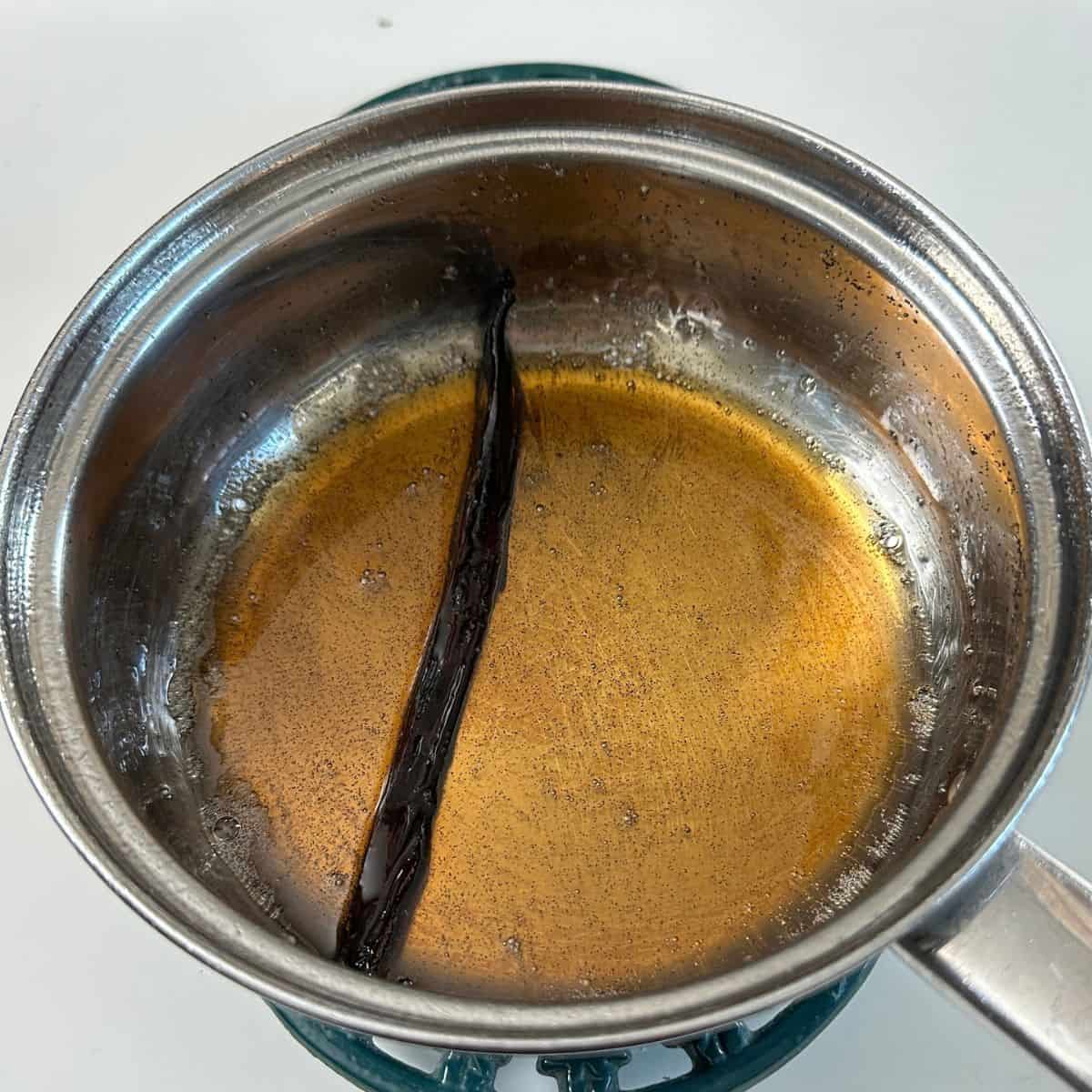
- While the tart is baking, make the glaze.
- Strain the poaching liquor to remove the cinnamon and the star anise.
- Add the vanilla pod case and reduce over medium heat until thick and syrupy.
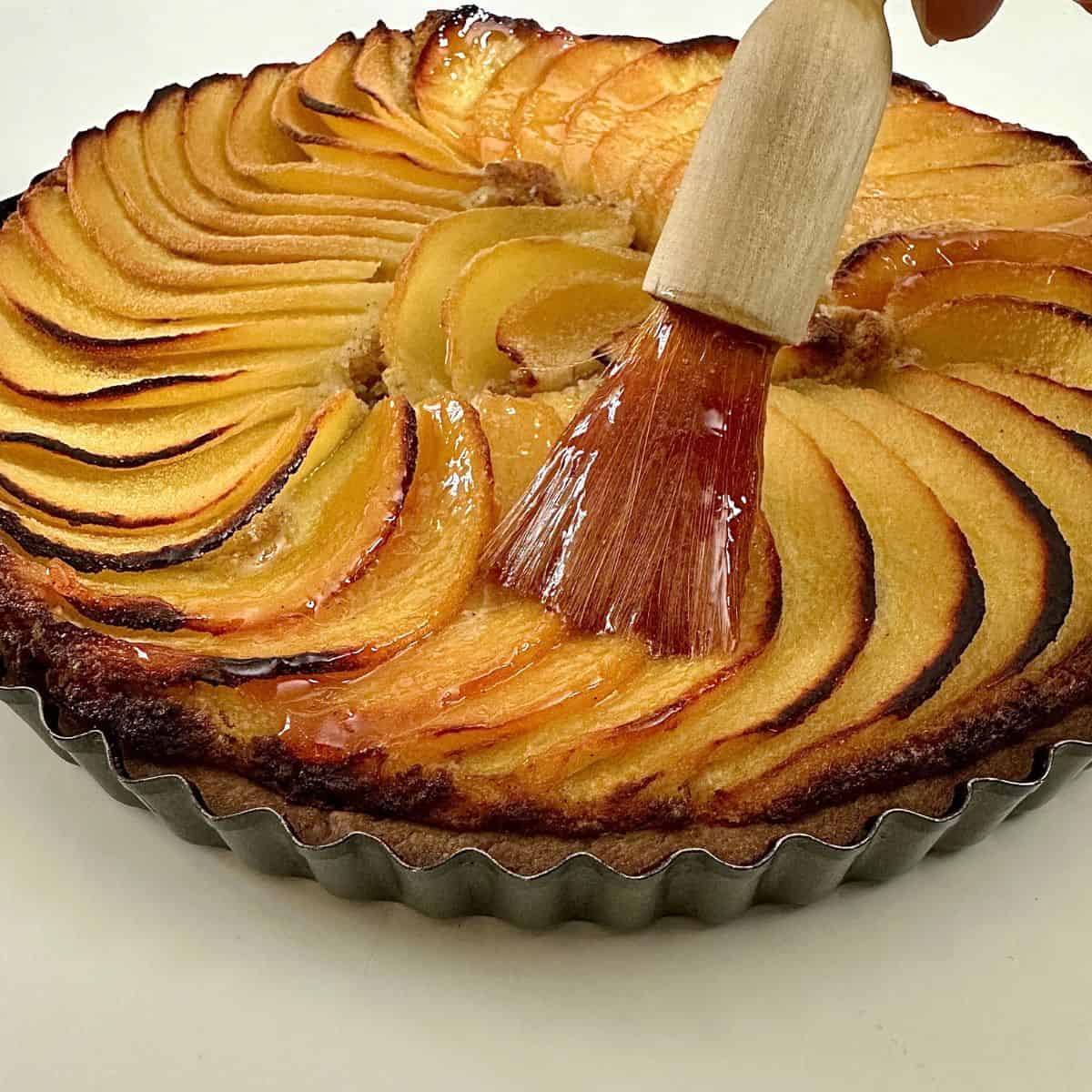
- Brush the glaze over the tart while it's still warm.
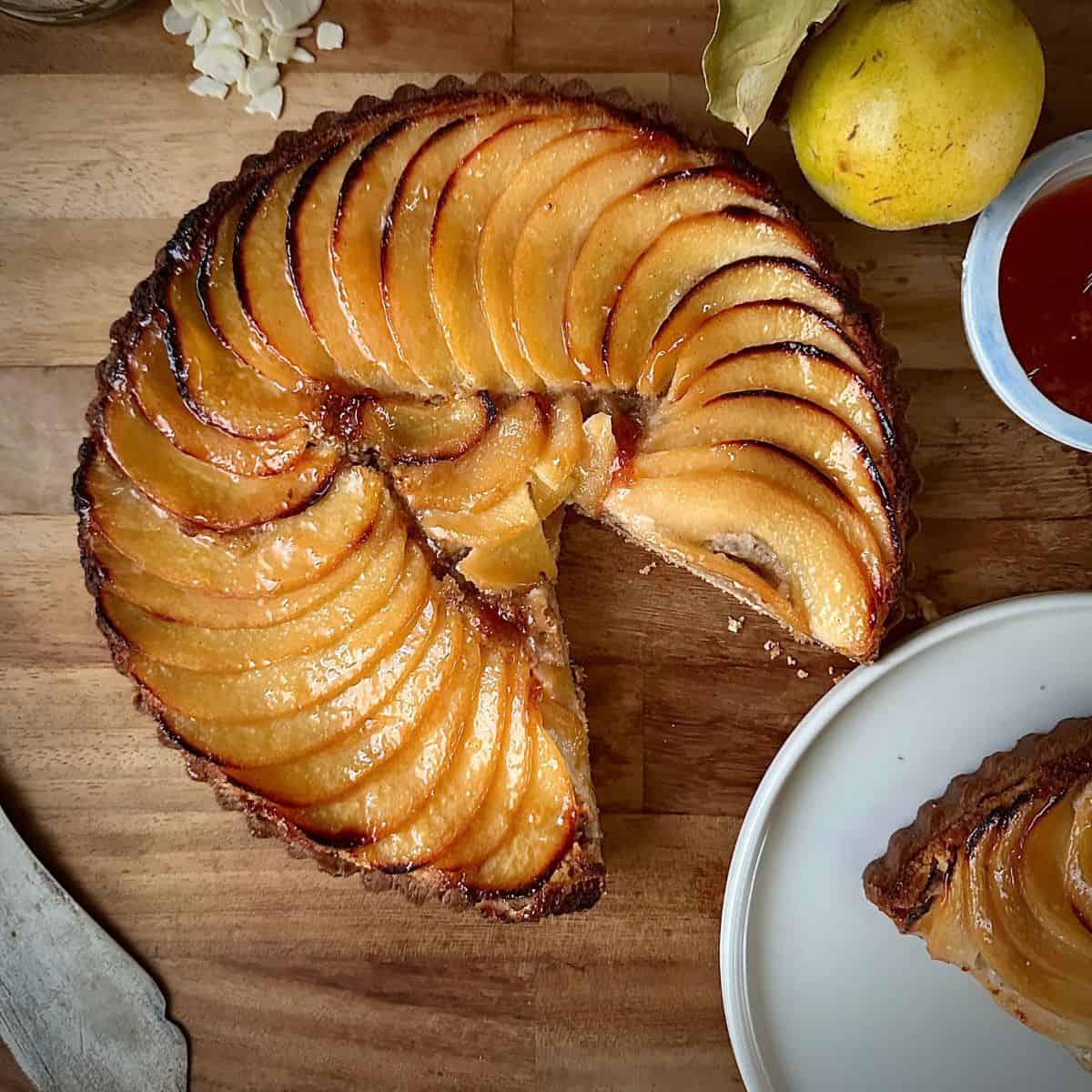
- Serve warm, on its own or with ice cream/double cream.
Substitutions and variations
- Pears instead of quince. Firm pears work well, but they will soften much faster than the quince, so reduce the poaching time. Keep the same spices and glazing method.
- Hazelnut frangipane. You can swap ground almonds for ground hazelnuts for a toastier filling. Cut out the almond essence completely, though.
- Chia seeds instead of ground flaxseeds. Chia seeds will work the same way, with the same amount of water. Bear in mind that it will change the texture.
- Change the spices. Try with cardamom pods, a bay leaf and a few threads of saffron to see where that takes the tart.
- Individual tartlets. If you have 10cm tins, divide the pastry and quince into tartlets. Baking times will change, so keep an eye on the oven.
- Dairy version. You can swap out all the vegan ingredients for their dairy alternatives at the same amounts given in the recipe. You will need 1 egg to replace the flaxseed quantity given in the recipe.
Equipment
This recipe requires some specific equipment:
- Large pot/saucepan - to poach the quince and reduce the poaching liquid.
- Fluted tart tin with a removable base -23cm (9 inches).
- Parchment paper to line and make the cartouche.
- Ceramic baking balls for when cooking the pastry. You can use uncooked rice or dried beans instead.
- Vegetable peeler and coring tool to prepare the quince for baking.
- Pastry brush to apply the glaze.
Storage
Store the fully baked tart in the fridge in an airtight container for up to three days. You can warm it up in the microwave or oven.
I do not recommend freezing it.
FAQ
Yes, this is a crucial step. Quince is quite tart and a bit hard to eat. Cooking softens it and adds sweetness and flavour.
Frangipane is made with butter, milk and eggs. For a vegan version, use a vegan block butter and not a spreadable vegan butter, as it mimics dairy butter with a higher fat content. Plant-based milk can be used. I used soya milk. I use ground flaxseed as the egg replacement. When water is added, it forms a gel that acts like egg in the recipe.
The key point with quince is that you need to cook it before eating to soften it (naturally, it is hard; think hard pear, but harder!). Cooking also destroys the tannins that make quince bitter.
The high pectin content makes quince ideal for quince jelly, a great addition to a cheese board. Elsewhere on my blog, you will find dried quince slices - a bit like a dried apple snack. I also have a quince syrup and a baked quince recipe.
A cartouche is a round sheet of baking parchment or greaseproof paper placed directly on top of food or liquid in a pan. It holds the food, like the quinces, just below the liquid surface and controls evaporation. In this recipe, the cartouche not only holds the quince down, but also lets it continue cooking in the residual heat.
📖 Recipe
Vegan Poached Quince Frangipane Tart
Equipment
- Digital scales For accurate measurements.
- Fluted Tart tin with removable base 23 cm (9 inches) For baking the tart pastry.
- Ceramic baking balls To prevent the pastry from rising during baking.
- Large saucepan or pot For poaching the quince and making the glaze.
- Peeler
- Pastry brush For applying the glaze.
- Coring tool To neatly core the quince.
- Hand whisk or Electric whisk For making the frangipane.
Ingredients
Tart base
- 250 g Plain flour
- 125 g Unsalted butter Vegan, chilled
- 80 g Icing sugar
- 1 tablespoon Milk Plantbased
Poached Quince
- 500 g Quince
- 100 g Sugar
- 750 ml Water
- ½ Lemon
- 2 Star anise
- Stick of Cinnamon 2-inch stick
Frangipane
- 90 g Ground Almond
- 2 teaspoon Flax seed powder
- 4 teaspoon Water
- 60 g Butter softened to room temperature
- 100 g Sugar
- 2 tablespoon Cornflour
- 2 teaspoon Almond extract
- 1 Vanilla pod
Instructions
Tart
- Cut the cold butter into small cubes.
- In a bowl, add the flour, icing sugar, and cold, cubed butter. Using your fingertips, rub the butter into the flour until the mix resembles breadcrumbs. Add a dash of milk and bring the mix together into a dough. Don't knead it; just bring it together until combined. Avoid overworking the dough, as this develops the gluten.
- Transfer the dough to a work surface, flatten it into a disc, wrap it in parchment paper, and refrigerate for 1 hour.
- After resting, remove the dough from the fridge and set it aside for 5 minutes.
- Lightly flour the work surface and roll the dough into a disc larger than the tart tin. The disc must be larger than the tart tin's diameter. Measure the diameter of the tin base, add the tin depth, and add approx. 2.5 cm (1 inch) to that. The disc should be no thicker than 3mm.
- Carefully line your tart tin with pastry, gently pressing it to match the tin's shape. Try not to stretch the pastry, and patch any cracks that might appear. Trim the overhanging pastry with a knife.
- Preheat the oven to 180ºC (fan-assisted)
- Prick the pastry base with a fork to prevent it from rising. Refrigerate for at least 15 minutes.
- Line your pastry case with baking parchment and fill with ceramic baking beans, uncooked rice or dried beans.
- Bake for 15 minutes, then remove from the oven, take out the parchment and beans, and bake for a further 5 minutes.
- Once done, remove from the oven, and leave to cool in the tin.
Poached Quince
- In a saucepan, add the water, sugar, star anise and cinnamon. Bring to a boil, then reduce the heat to a simmer once the sugar dissolves.
- Fill a bowl with cold water and squeeze half a lemon into it.
- Wash and peel the quince, then cut one in half lengthways. Remove the core and the stem end. As you prepare each half, soak it in the lemon water to prevent browning. See the video guide for instructions.
- Add the quince to the pan, core side up, and simmer for 20 minutes.
- Remove from the heat, cover with a cartouche and set aside to cool.
- Once cooled, remove the quince from the poaching liquor and cut each half lengthways into thin slices about 3 mm thick. Gently press down to fan out the slices. Repeat with the remaining quince and set aside.
Frangipane
- In a bowl, add the ground flaxseed, the add lukewarm water and mix to combine. Set aside to thicken into a gel.
- Place the vanilla pod on the chopping board and hold one end down. Using the tip of a sharp paring knife, make a shallow cut down the centre of the pod from end to end, stopping before you cut all the way through. Use your fingers to open the pod, then turn the knife so the blunt side faces down. Holding the top of the pod, drag the back of the knife firmly along the inside of each half to scrape out the seeds. Set aside the pod and keep it for later.
- In a bowl, mix the ground almonds, sugar, cornflour, almond extract, softened butter, and vanilla seeds. Add the flax gel and mix into a smooth paste.
Assembly
- Set the oven to 180ºC (fan-assisted).
- Spread the frangipane evenly into the pastry case and smooth the top.
- Arrange the sliced poached quince on top. See the video guide.
- Bake for 30 to 40 minutes. If your oven doesn't heat evenly, turn the tart every 15 minutes (to reduce heat loss) for an even colour. The tart is done when it is deep golden, the quince has darkened, and the edges are golden brown.
- While the tart bakes, strain the poaching liquor through a sieve to remove the cinnamon and star anise, then pour it into a saucepan with the scraped vanilla pod. Reduce over a medium heat until thick, then use it to glaze the tart while the tart is still warm, so the glaze sets evenly.
- Serve warm, on its own, with ice cream, or with cream poured over.
More tarts to try - sweet and savoury
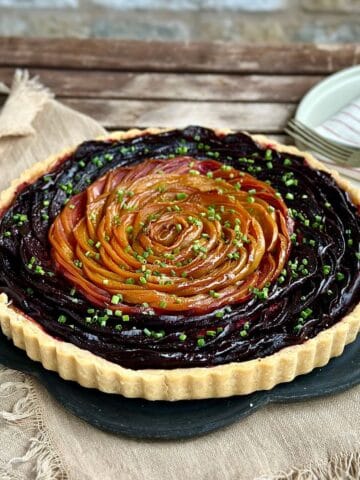
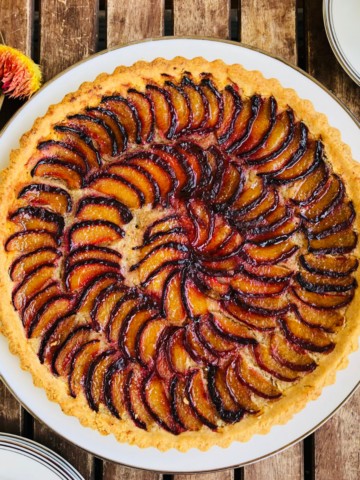
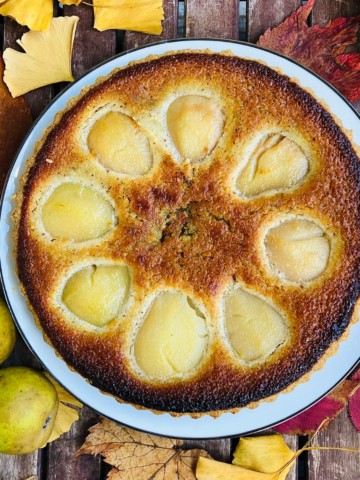
Plum, pear, beetroot, tomato - take your pick from these savoury or sweet tarts.
Leave a Reply