

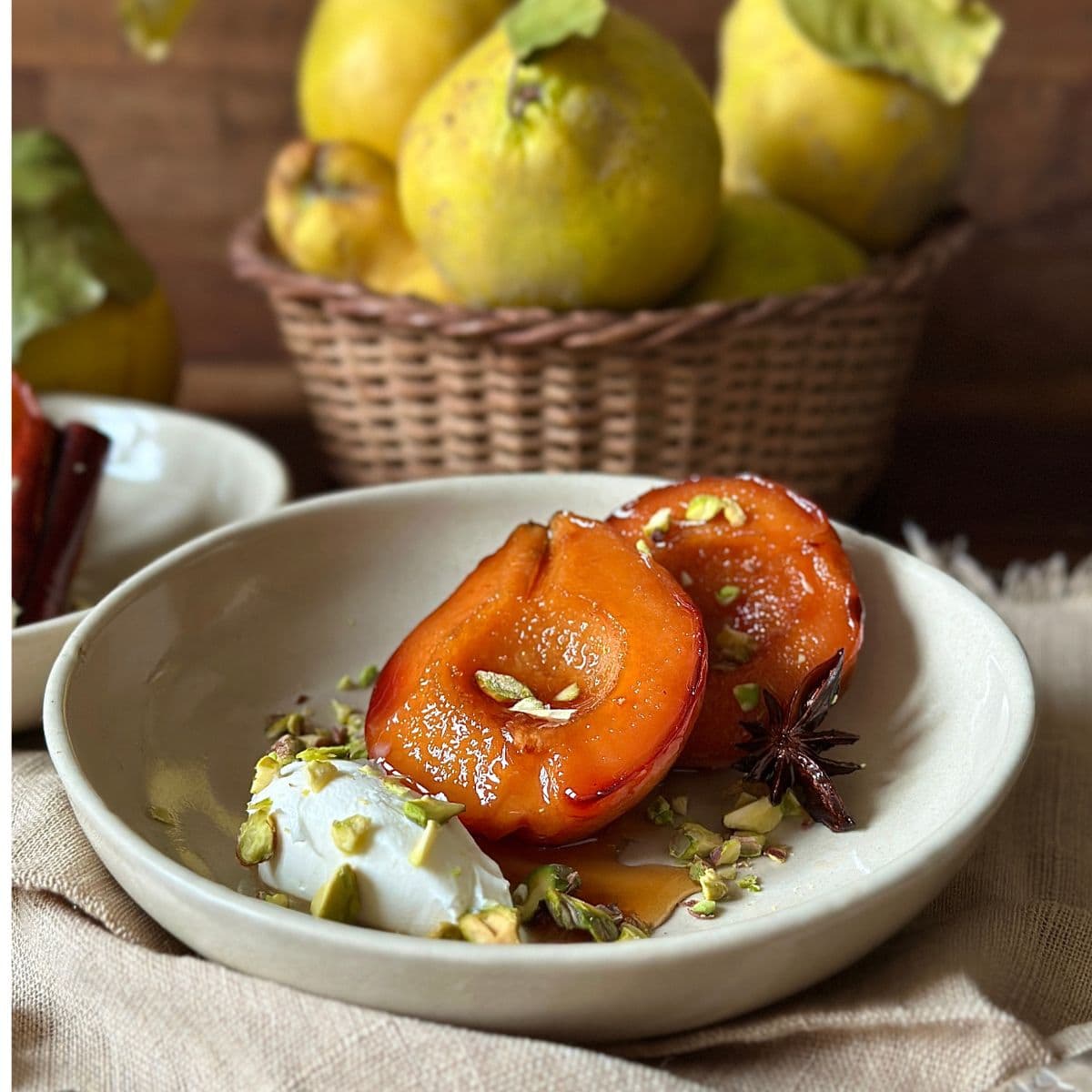
This easy baked Quince recipe is the ultimate expression of understated luxury. With it, you will transform this often overlooked autumn fruit into a truly exquisite taste experience. Slowly baked in white wine syrup infused with saffron, star anise and cinnamon, the Quince turns soft, aromatic, and a beautiful warm, rich colour, with a subtle spicy flavour. Additionally, the cream cheese adds a bright, creamy accompaniment that perfectly balances the sweetness of the baked Quince. The result is a comforting dessert that is both elegant and indulgent. This baked quince recipe will impress!
Jump to:
What is Quince? The Golden Fruit Behind This Luxurious Baked Quince Dessert
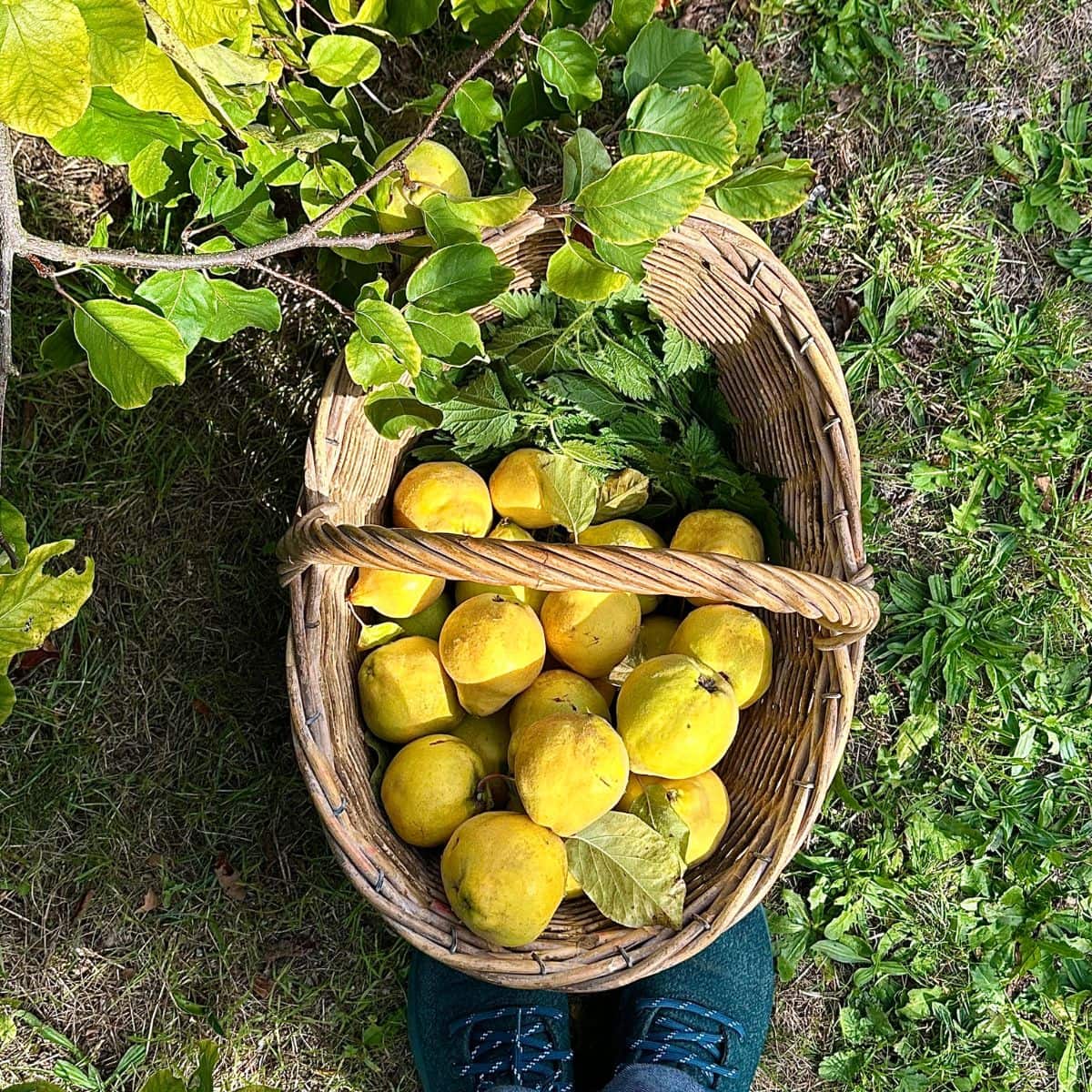
Quince is an aromatic, golden-hued fruit that is hard and tart when raw, and not commonly eaten like an apple or pear. Consequently, it is often overlooked and, in my opinion, underrated.
So, cooking Quince is the key, and upon baking or poaching, it really shows its culinary potential, becoming soft and floral, with a distinct flavour somewhere between a pear and an apple.
High in pectin, Quince is frequently used to make Quince jams and Quince jelly.
Key Ingredients & Notes
There are three main elements to this recipe: the Quince, the syrup, and the cream cheese/pistachio accompaniment.
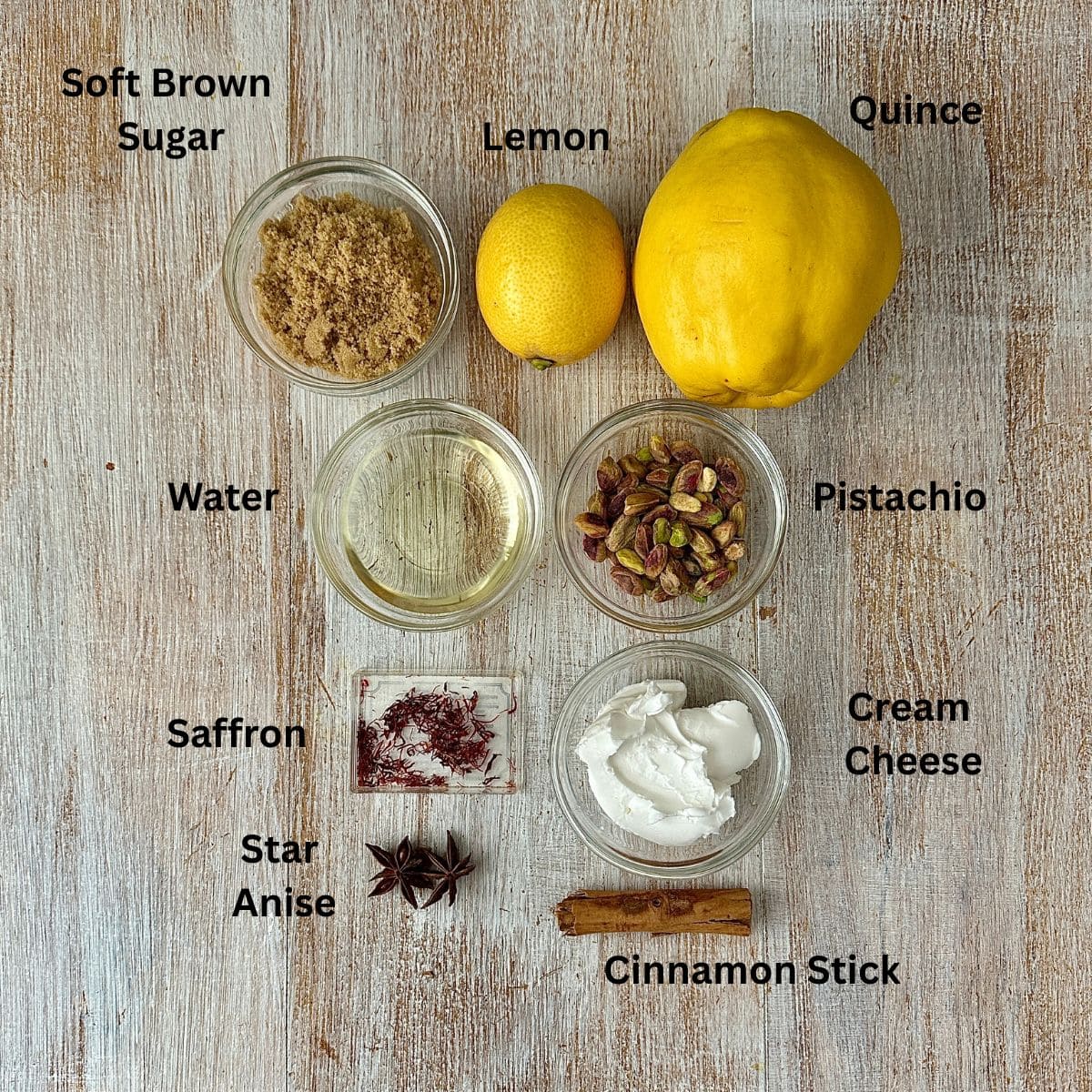
- Quince.
- Lemon: When cut, the exposed surface of the quince flesh turns brown due to oxidation, so rubbing a cut lemon on the exposed flesh will prevent this.
- Cream cheese: This provides a cool, tangy contrast to the warm, spiced fruit.
- Pistachio: Adds colour and crunch to the dessert.
- The syrup: Soft brown sugar, white wine, water, Star anise, cinnamon stick, saffron. The white wine adds subtle acidity, allowing the soft brown sugar to melt into a light caramel base. The star anise and the cinnamon provide a warm, slight spice, and the saffron a floral earthiness.
See the recipe card for quantities.
How To Make Baked Quince in White Wine Syrup
- Preheat the oven to 180ºC.
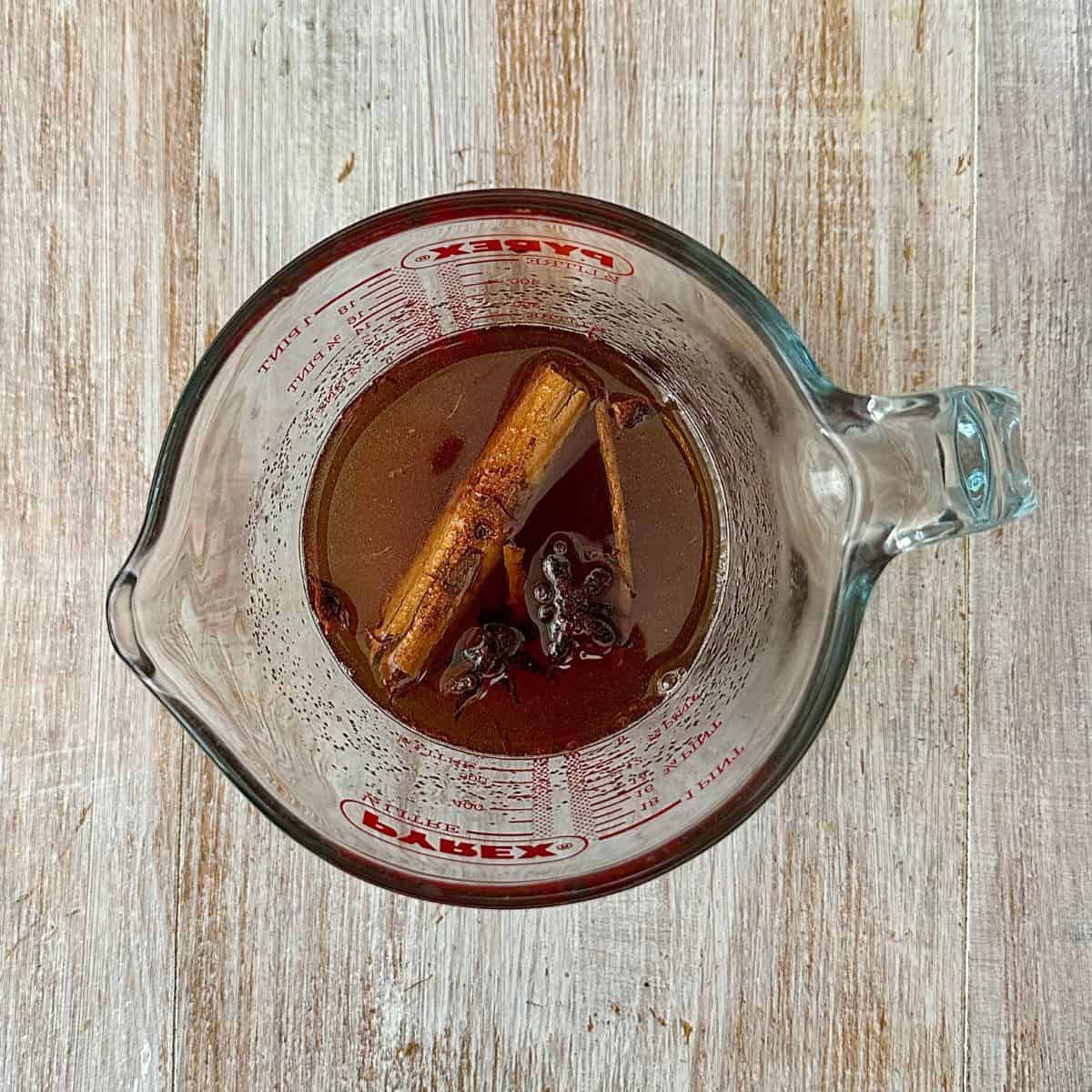
- In a jug, add the water, wine, star anise, cinnamon stick, brown sugar and saffron. Then mix this to dissolve the sugar.
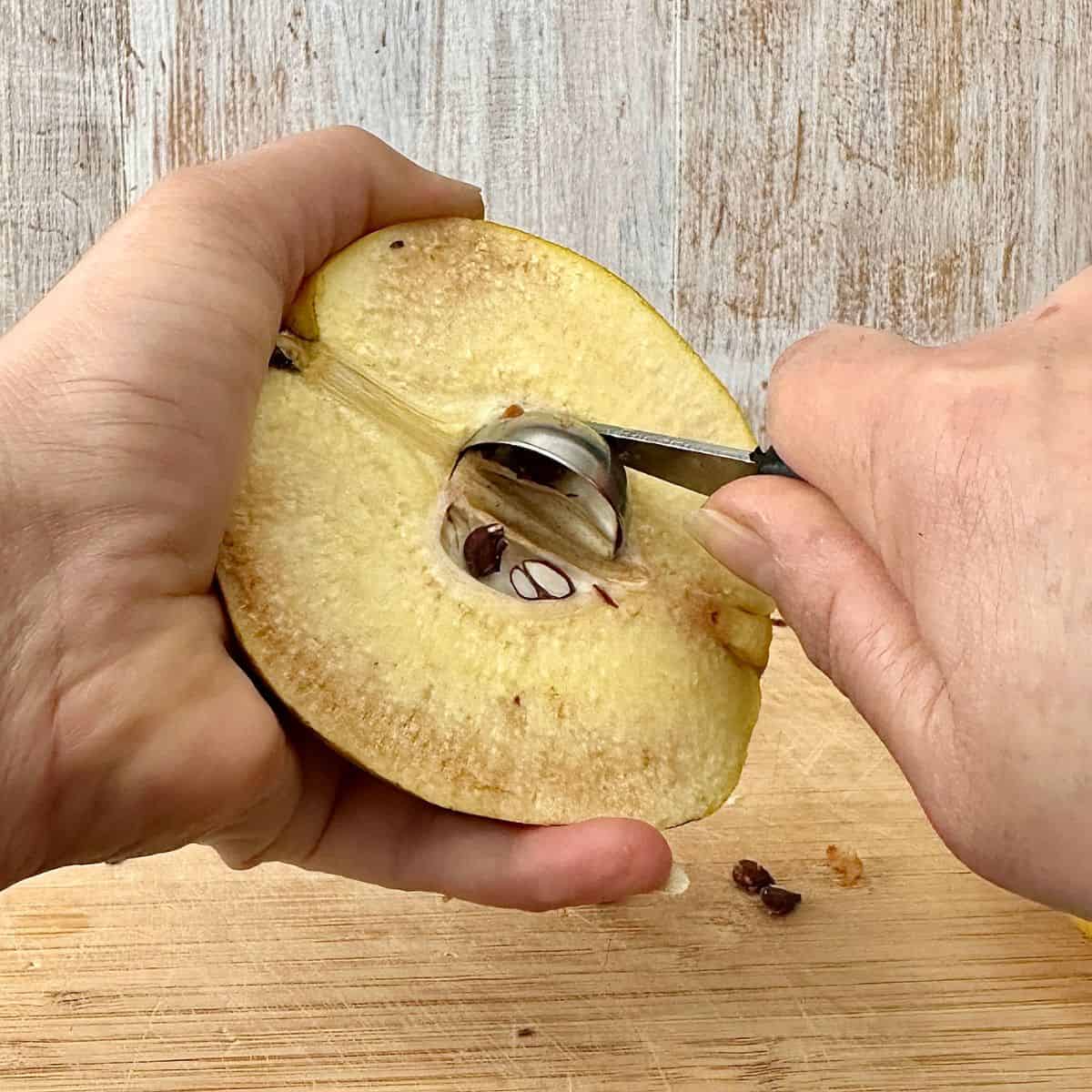
- Next, cut the Quince in half and scoop out the tough centre, including the pips. Also, remove the stem.
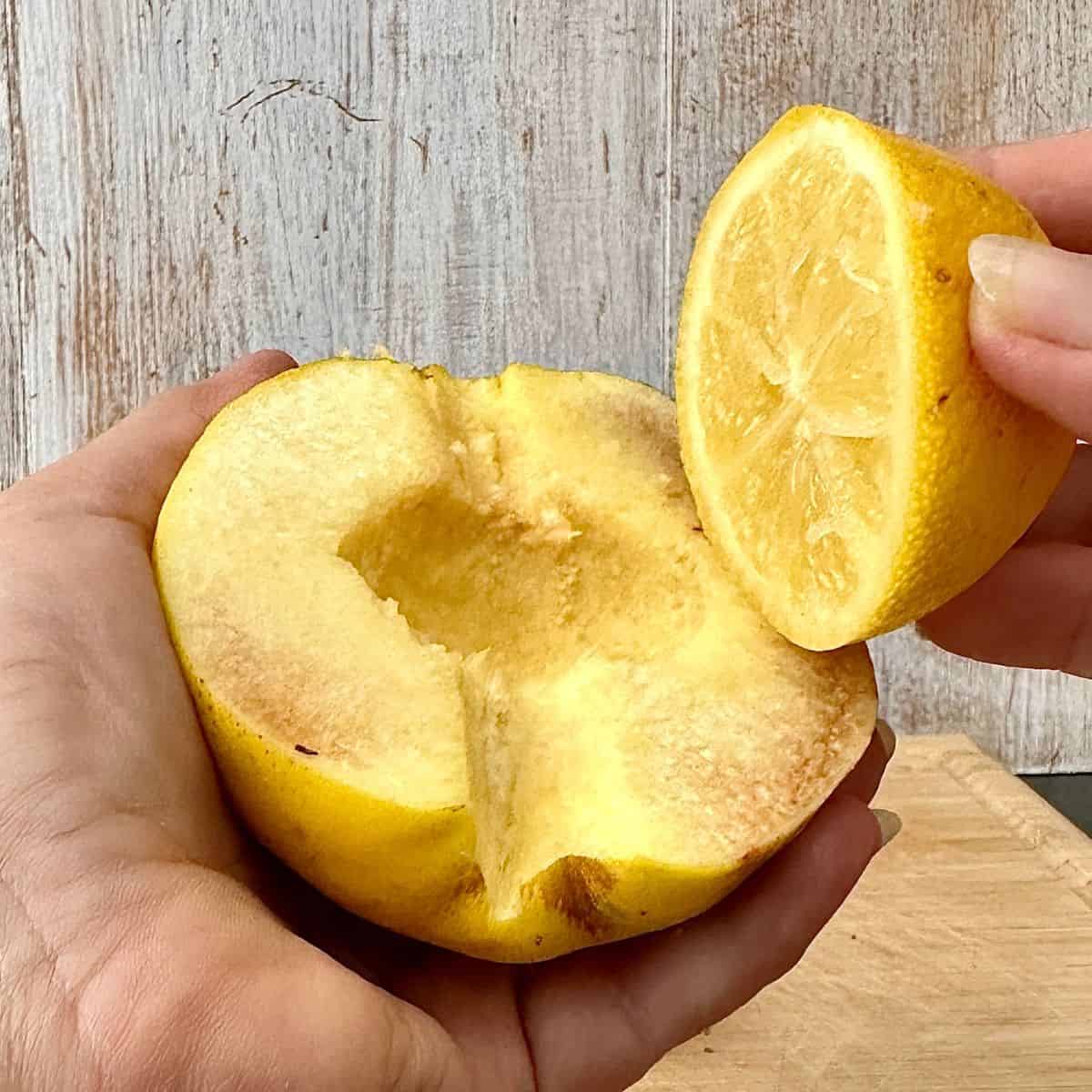
- To prevent browning due to oxidation, rub the quince flesh with a cut lemon.
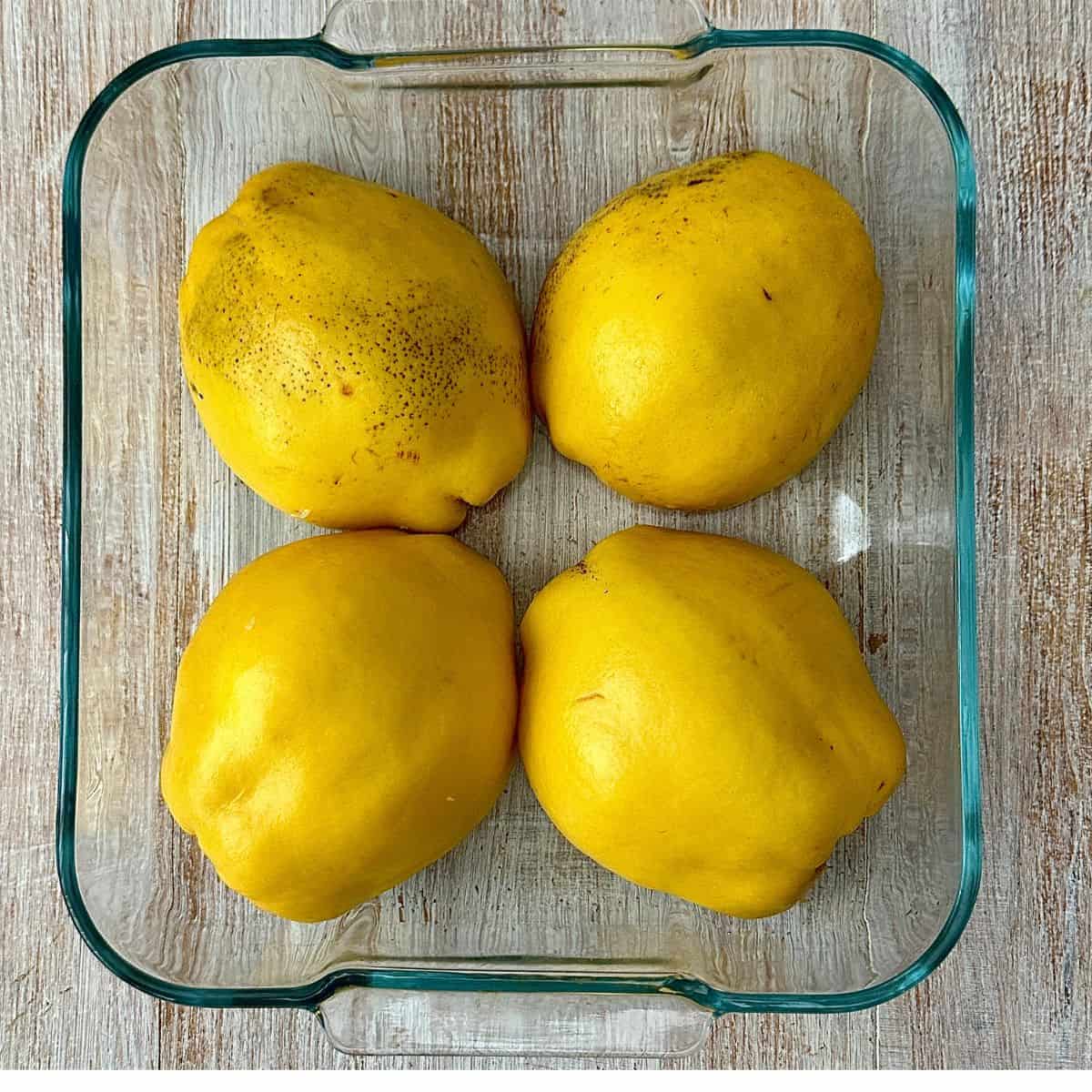
- Place the Quince halves face down in a baking tray, making sure they do not touch each other.
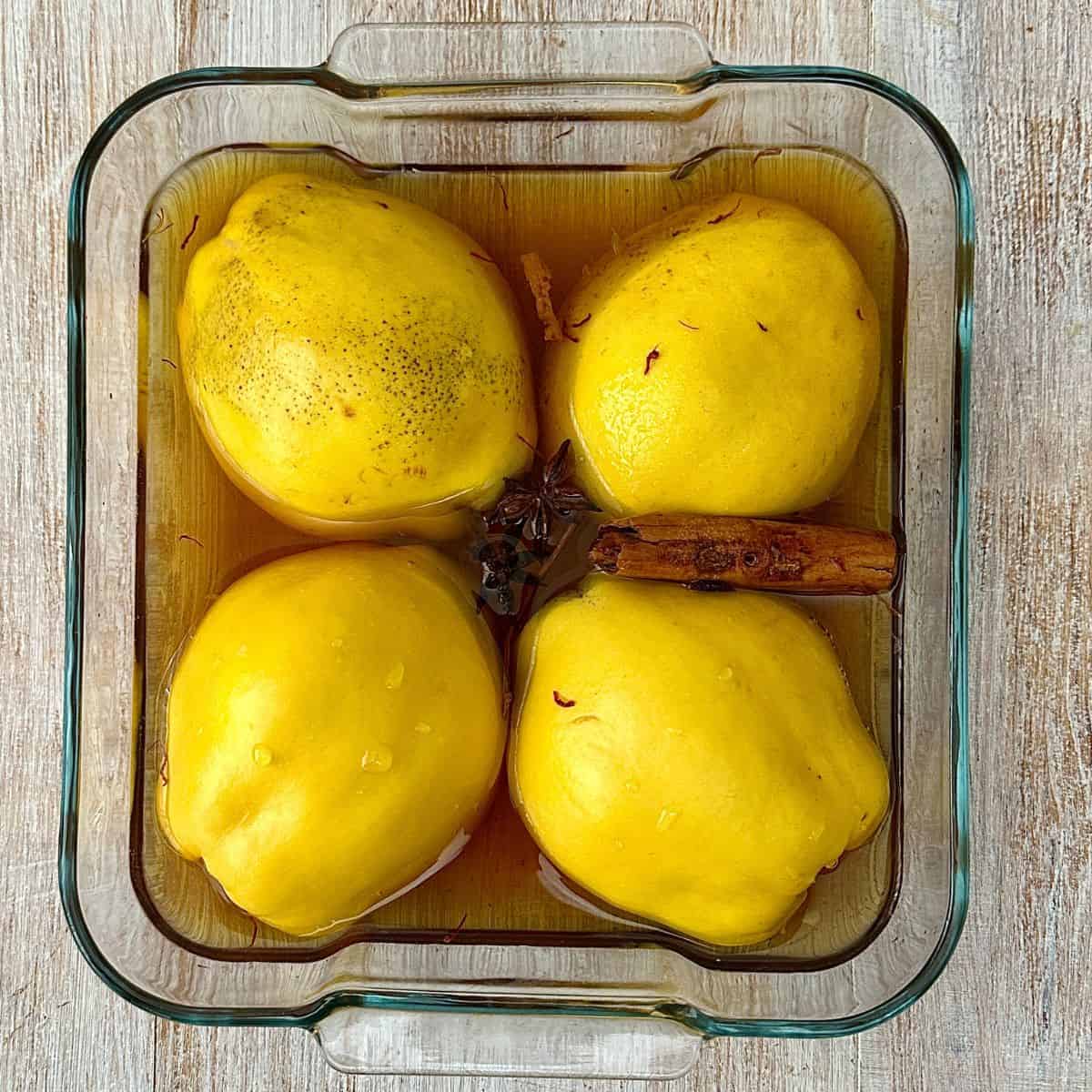
- Next, pour the syrup you prepared into the dish.
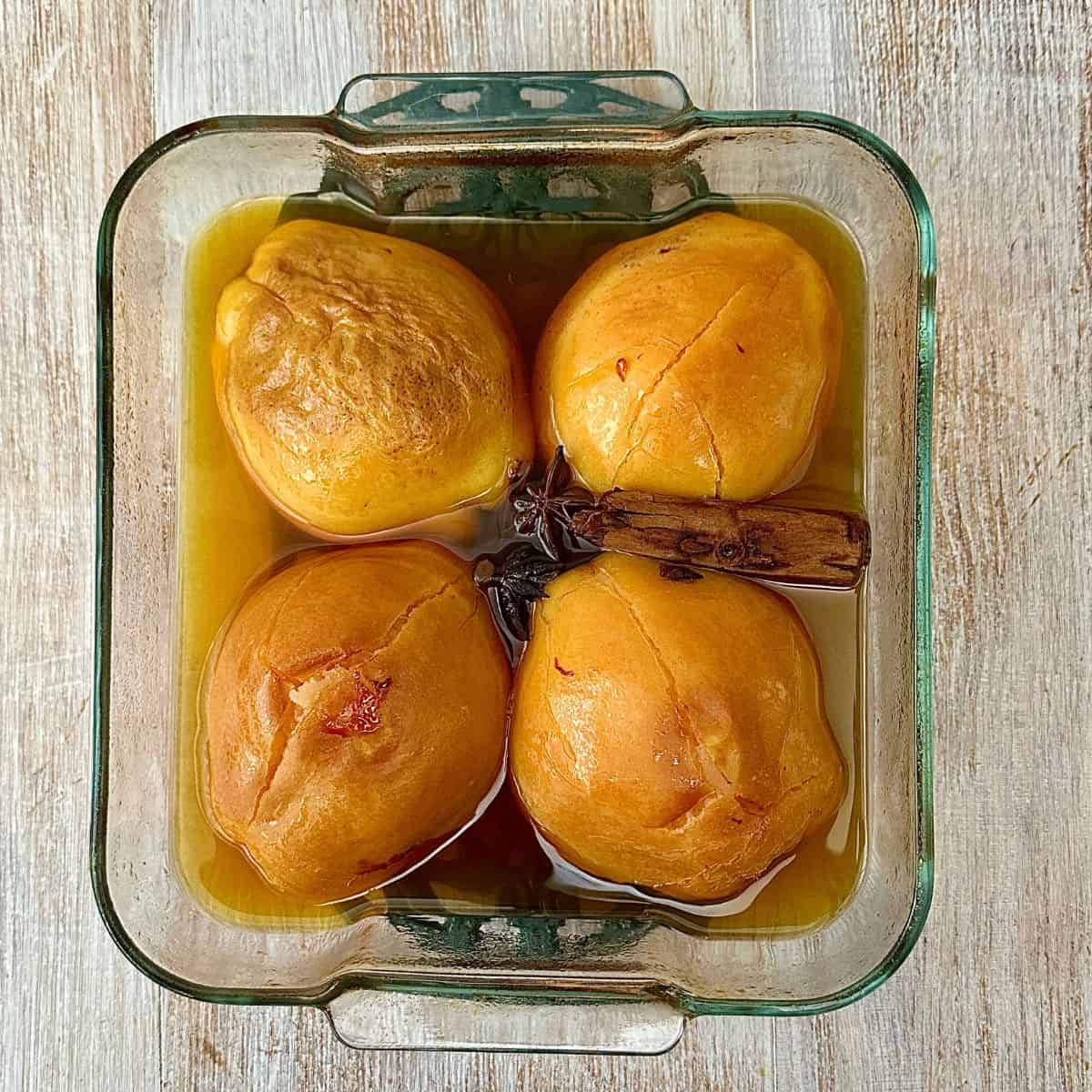
- Cover with foil and bake for 1 hour.
- While the Quince is baking, chop the pistachios.
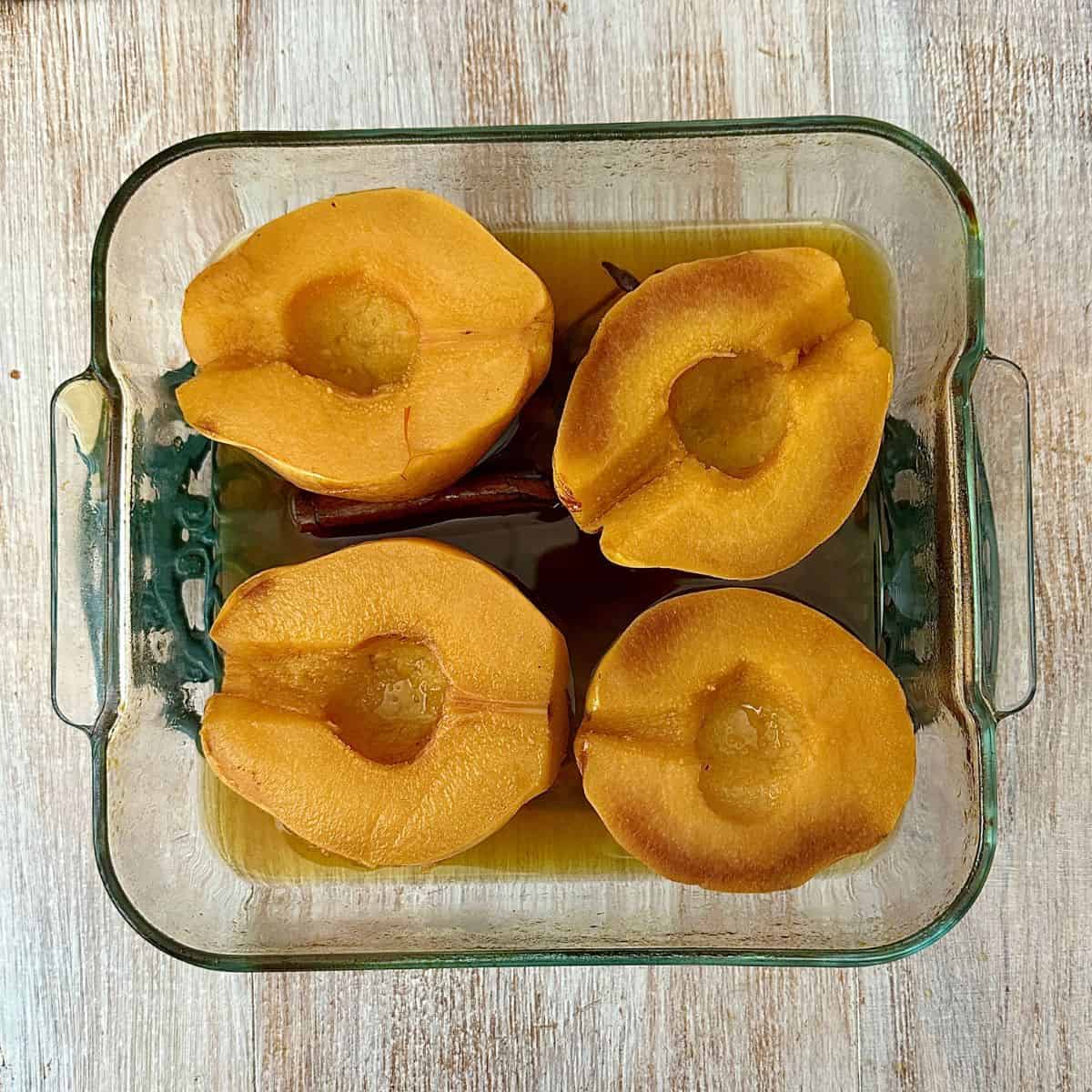
- Turn the Quince halves over and spoon the liquor over each Quince half.
- Bake for a further 15 to 20 minutes.
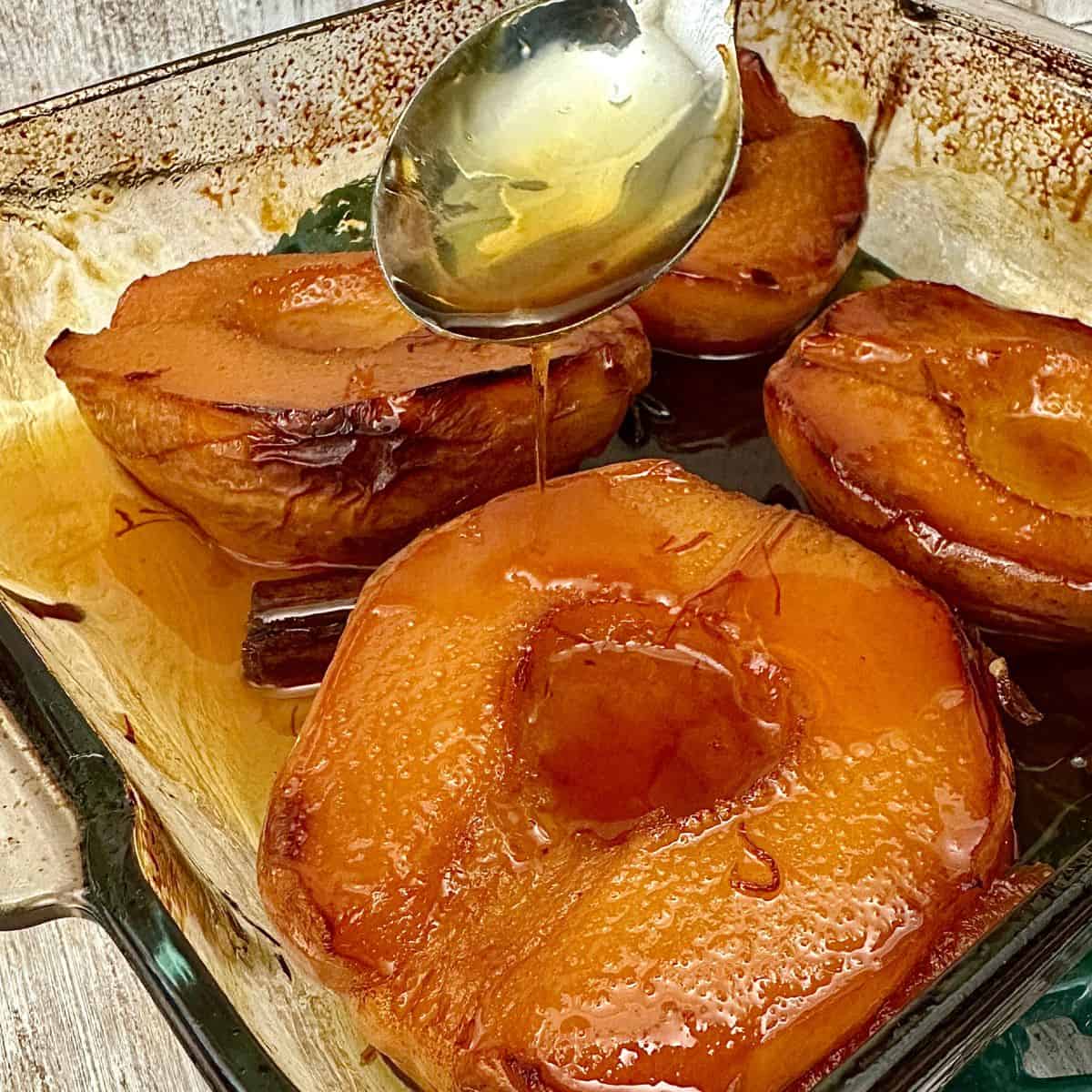
- Finally, remove the Quince from the oven and spoon the syrup over them again. The syrupy liquor will glaze the Quince.
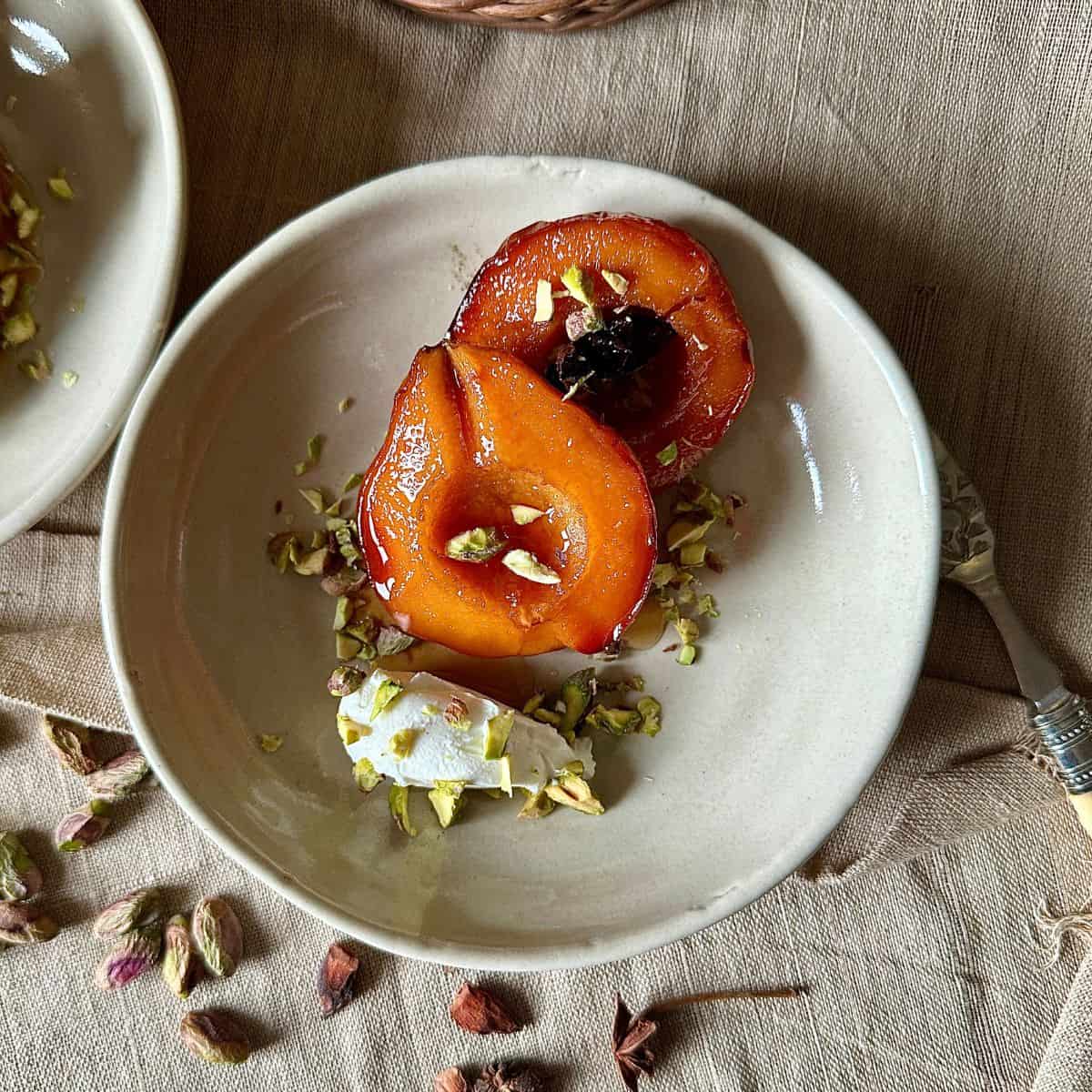
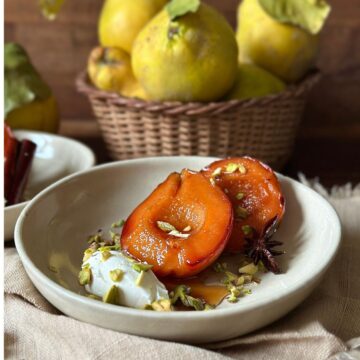
- Finally, transfer your baked Quince to a serving plate, accompany it with a quenelle of cream cheese, and sprinkle with chopped pistachios.
Variations
Why not try this baked quince recipe with a syrup made with different spices? Here are some suggestions.
- Middle Eastern-inspired syrup: rosewater, cardamom, and orange blossom for a more floral flavour.
- Western Europe autumnal blend: Nutmeg, clove and vanilla. Comforting, warm and rustic.
Equipment
You will need an ovenproof dish to bake the Quince and some tin foil.
Storage
Store in the syrup for 3 to 5 days. Freeze for up to 3 months without significant loss of flavour; there may besome loss of texture.
Top Tip
If preparing a day ahead of consumption, bake the Quince for the first hour only, covered in foil. Then cool without removing the foil, and refrigerate. Then, on the day of serving, remove the foil and cook again for the remaining 20 minutes before serving. Reheating this way ensures it is not overcooked, remains aromatic, and has the perfect texture.
FAQ's
Yes, you can; however, this baked Quince is best enjoyed freshly made and warm.
To freeze, cool completely, and make sure to cover the Quince in the syrup. When ready to eat, thaw in the fridge overnight and reheat slowly in a saucepan with the syrup. Try to avoid the microwave-it will make the fruit mushy.
First, let's start with raw Quince. If you bite into a quince like an apple, it will be hard, gritty, and tart, making it inedible to most. The flesh is like a pear, but much tougher.
Baked Quince, on the other hand, is soft, almost melt-in-the-mouth. It has a honeyed, floral flavour, with a much milder tang.
Fruits like pears and quinces need a bit of liquid to poach or bake in, otherwise they will burn and dry out. It also adds layers of flavour-the saffron, cinnamon, and star anise give a gentle, warm, spicy accompaniment to the baked Quince and balance its natural flavours. The liquor clings to the Quince, giving them an attractive glaze.
Rub a lemon or lime over the exposed quince flesh-the acid from the lemon prevents oxidation. Alternatively, you can add lemon juice, lime juice, or vinegar to water and submerge the Quince to delay oxidation.
Cream cheese or Mascarpone, served with the warm Quince, creates a very satisfying temperature contrast. Chefs utilise this temperature contrast to enhance flavour, texture and sensory experience, making the dessert feel luxurious.
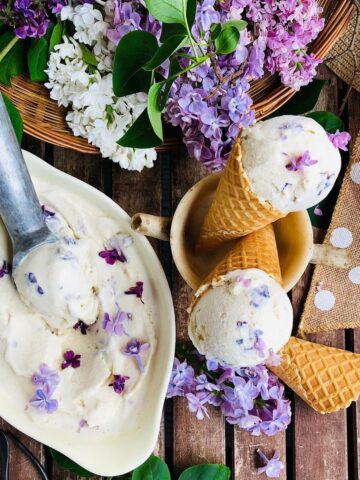
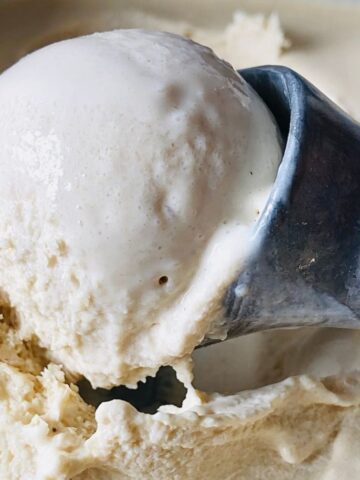
Similarly, you can serve with ice cream. I have a few homemade ice creams you can make (see the pairing suggestions).
White wine gives a subtle, balancing flavour to Quince. Dry or semi-dry white wine, like Sauvignon Blanc or Pinot Grigio, is a good choice. Avoid heavier white wines, sweet dessert wines or red wine as they will add too much flavour (unless, of course, you want a bolder flavour). We are aiming for subtle flavour layering In this recipe.
Related Recipes
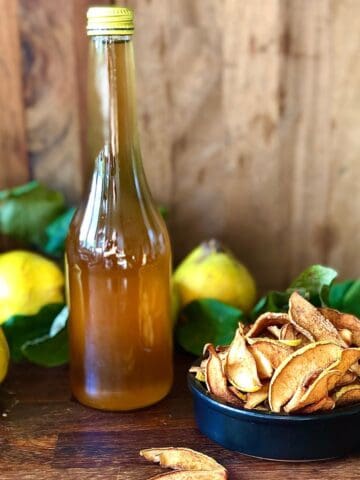
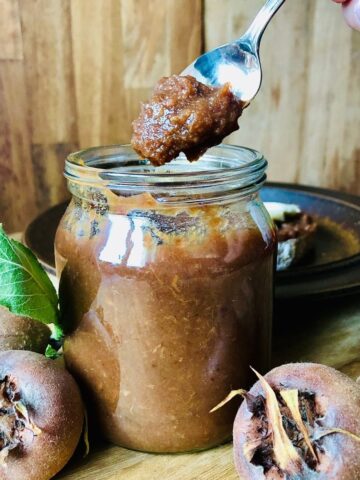
Fancy a snack? Another easy Quince fruit recipe is my dried Quince snack. Also, check out my recipes for some other overlooked fruits-medlars and crab apples.

Pairing Suggestions
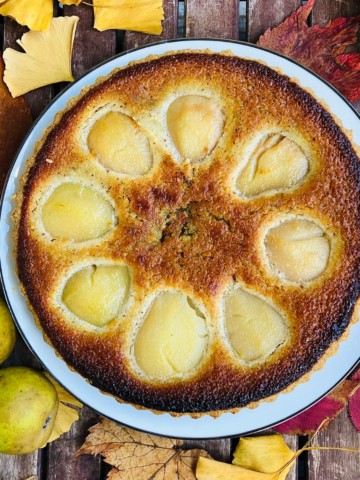
These are my favourite recipes to serve with baked Quince:
📖 Recipe
Baked Quince in White Wine, Star Anise, Cinnamon & Saffron Syrup
Equipment
- Oven-proof dish
- Tin foil
Ingredients
- 2 Quince
- 100 g Soft brown sugar
- 250 ml White wine
- 100 ml Water
- 2 Star anise
- 1 Cinnamon stick
- Saffron, a few strands
- 200 g Cream cheese
- 20 g Pistachio crushed
- ½ Lemon for the juice
Instructions
- Preheat oven to 180ºC (fan assisted)
- Add the brown sugar, white wine, star anise, cinnamon, saffron, and water to a bowl or jug, and mix until the sugar dissolves. This is your syrup.
- Wash and pat dry the quince.
- Cut the quince in half lengthwise and scoop out the centre, removing the seeds and the tough part surrounding it. Remove the centre stem above it as well.
- Rub the quince with lemon juice to stop discolouration. Repeat with the other quince.
- Place the quinces face down in a baking dish, ensuring they do not overlap or rest on one another. Each quince half should be face down in the baking dish.
- Pour the prepared liquid into the dish.
- Cover with foil. This helps retain heat in the dish.
- Bake in the preheated oven for one hour.
- While the quince is baking, chop up the pistachio and set aside.
- After one hour of cooking, remove from the oven. Remove the foil and turn the quince gently, facing upwards. Using a spoon, drizzle the syrup on top of the quince, till covered.
- Return the quince back into the oven for 15 to 20 minutes. Keep an eye on it, we dont want the quince to get too much colour.
- Once ready, remove the quince from the oven and pour the syrup over it again to moisten. The liquid will be syrupy by now, so it will remain on the top of the quince.
- Serve the quince while still warm, accompanied by a quenelle of cream cheese and chopped pistachios.
Nutrition
NOTES
Kitchen Safety
- Wash your hands regularly while preparing, handling and cooking food.
- Wipe down countertops and high-contact points regularly.
- If you cook meat and fish, do not use the same utensils on cooked food that previously touched raw meat. Use separate chopping boards for meat and fish. Wash your chopping boards immediately after use.
- Cook food thoroughly to a minimum internal temperature of 165 °F (74 °C).
- Don't leave food at room temperature for extended periods (more than 2 hours).
- Store food correctly.
PK says
Best way to eat quince. So good!