

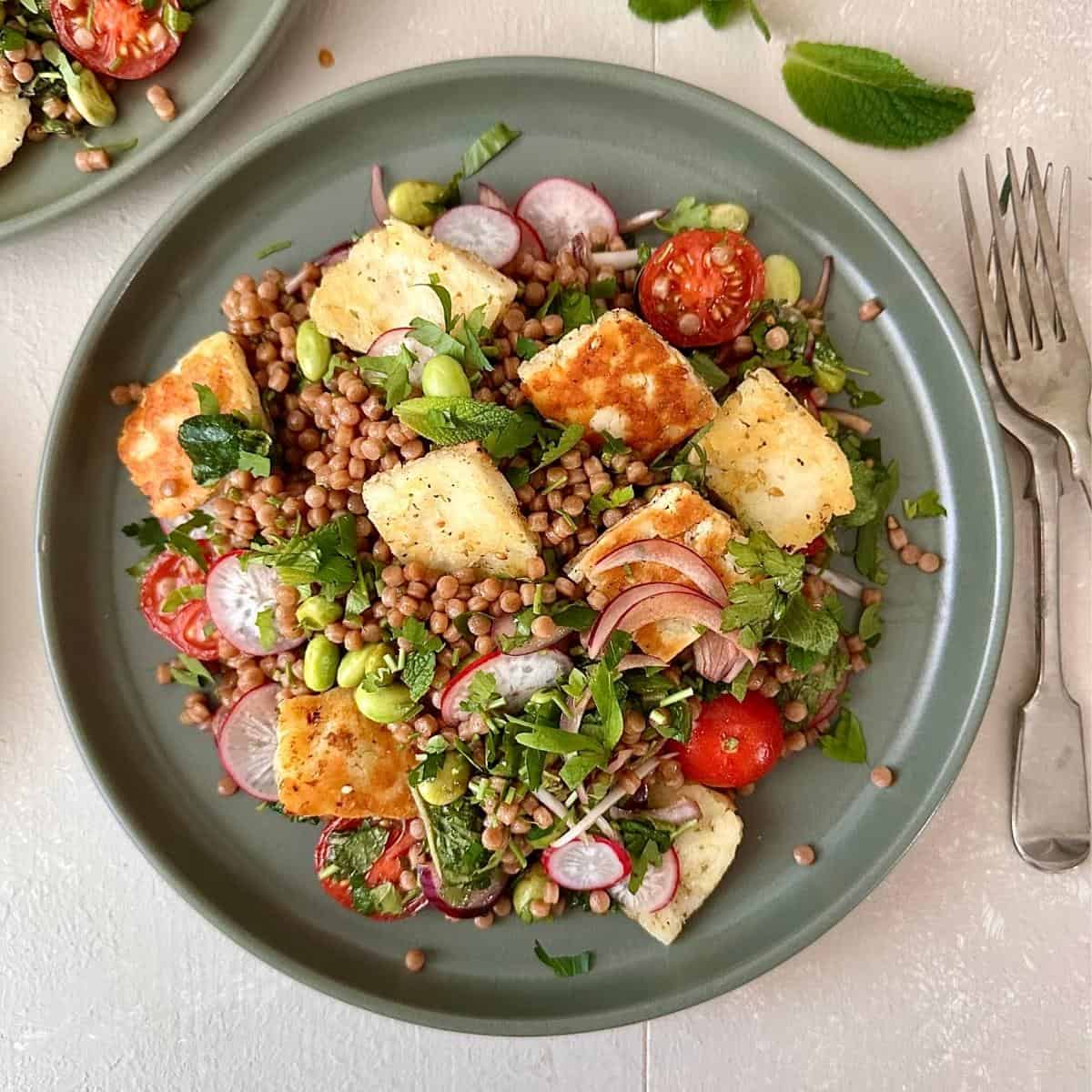
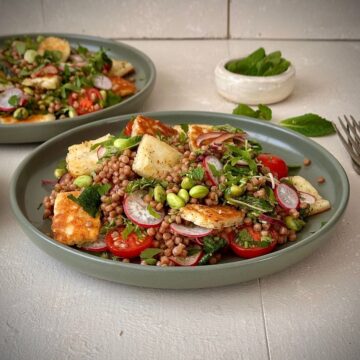
This za'atar halloumi couscous salad is a vibrant, flavour-packed dish built on contrast. I love salads, but they can sometimes feel a little uninspiring unless they bring together texture, colour and layers of flavour. This couscous halloumi salad is anything but boring.
Giant wholewheat couscous with a gentle bite is paired with golden pan-fried halloumi and fresh herbs, all brought together with a bright and tangy pomegranate dressing. The salty richness of the cheese balances beautifully with the citrusy warmth of za'atar and the sweet-sharp depth of pomegranate molasses. It's a great example of how plant-forward cooking can be both deeply satisfying and full of bold flavour.
It's a wonderfully versatile dish - perfect as a light lunch, a satisfying main meal or part of a larger spread. Best of all, it's quick and easy to make from scratch, and any leftovers make an excellent packed lunch the next day.
If you enjoy bold spice-led flavours like za'atar, you might also enjoy recipes that use harissa, another vibrant Middle Eastern chilli paste.
Why You'll Love this Za'atar Halloumi Couscous Salad
- Bold Mediterranean flavours - Za'atar-marinated halloumi and tangy pomegranate molasses bring rich layers of flavour, while fresh herbs add brightness and balance.
- Perfect contrast of textures - Wholewheat couscous with a gentle bite, crisp vegetables and golden pan-fried halloumi create a satisfying mix of textures.
- Quick to prepare - Ready in under 30 minutes. Cook the couscous and halloumi together, then prepare the vegetables and whisk the dressing.
- Versatile - Serve warm or chilled as a light lunch, a main meal or a side dish. It also makes an excellent lunchbox salad.
- Great for making ahead - The flavours develop even more overnight, so leftovers are perfect for the next day without becoming soggy.
- Balanced and nourishing - Halloumi and edamame provide protein, while wholewheat couscous adds fibre and slow-release carbohydrates to keep you fuller for longer.
Jump to:
Key Ingredients & Notes
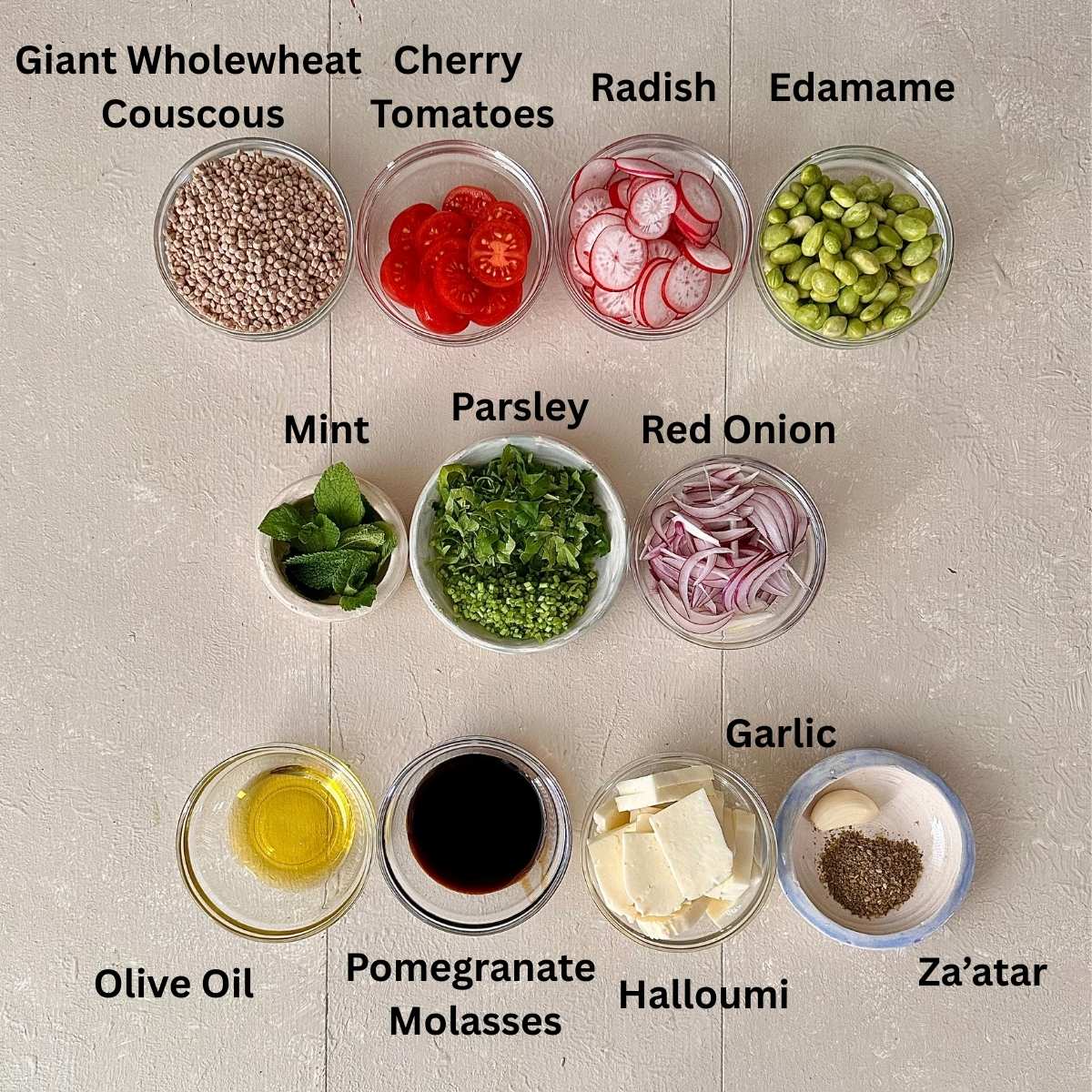
- Wholewheat giant couscous - This recipe uses wholewheat giant couscous (also known as pearl couscous), which gives the salad a pleasant bite and slightly nutty flavour. It's widely available online, in most supermarkets, or in well-stocked wholefood shops.
- Halloumi cheese - A firm Cypriot cheese that holds its shape when cooked. When pan-fried, it develops a golden crust while staying soft inside, adding both texture and savoury richness to the salad.
- Za'atar - A Middle Eastern spice blend made with herbs such as thyme or oregano, sesame seeds and sumac. The sumac gives the mixture its distinctive citrusy tang, which pairs beautifully with the salty halloumi.
- Pomegranate molasses - The star ingredient in the dressing. This thick, tangy syrup made from reduced pomegranate juice adds a sweet-sour depth of flavour that coats the couscous beautifully.
- Fresh herbs - Parsley and mint bring freshness and balance, lifting the richness of the halloumi and the tangy dressing.
- Red onion - Thinly sliced red onion adds colour and a gentle sharpness that cuts through the richness of the cheese.
- Edamame beans - These add colour, plant-based protein, and a subtle sweetness that complements the dish's savoury flavours.
- Radishes - Crisp radishes provide peppery freshness and a welcome crunch.
- Cherry tomatoes - Juicy cherry tomatoes bring bursts of sweetness and help balance the tangy dressing.
What is Giant Couscous?
Giant couscous, often called pearl couscous, is quite different from traditional fine couscous. Instead of tiny grains, it consists of small, toasted pasta pearls with a pleasantly chewy texture.
Wholewheat giant couscous has a slightly nuttier flavour and more fibre than the regular version, which makes it especially satisfying in salads like this one. Its firm texture also holds up well to bold ingredients such as pan-fried halloumi, fresh herbs and tangy dressings.
In this za'atar halloumi couscous salad, the gentle bite of the couscous helps balance the crisp vegetables and golden halloumi while soaking up the bright pomegranate dressing.
See the recipe card for quantities.
How to Make Za'atar Halloumi Couscous Salad
- Wash the radish, tomatoes, parsley and mint.
- Defrost the edamame.
- Cut the cherry tomatoes in half.
- Thinly slice the radish.
- Peel and slice the red onion.
- Roughly chop the parsley, including the stems.
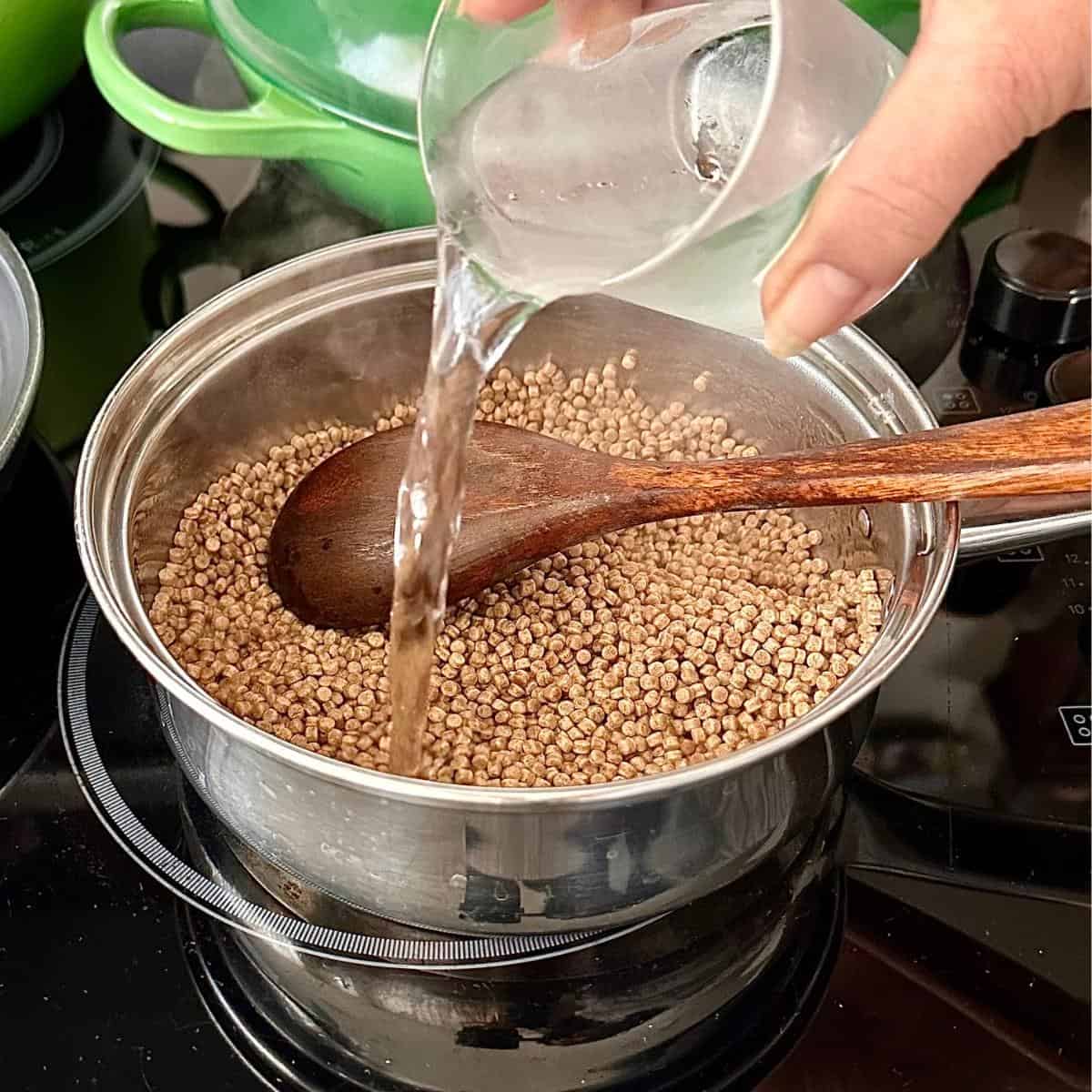
- Heat the olive oil in a saucepan.
- Add the couscous and fry for 2 minutes.
- Add the water and salt and cook for 10 minutes.
- Stir to prevent the couscous from sticking to the bottom of the pan.
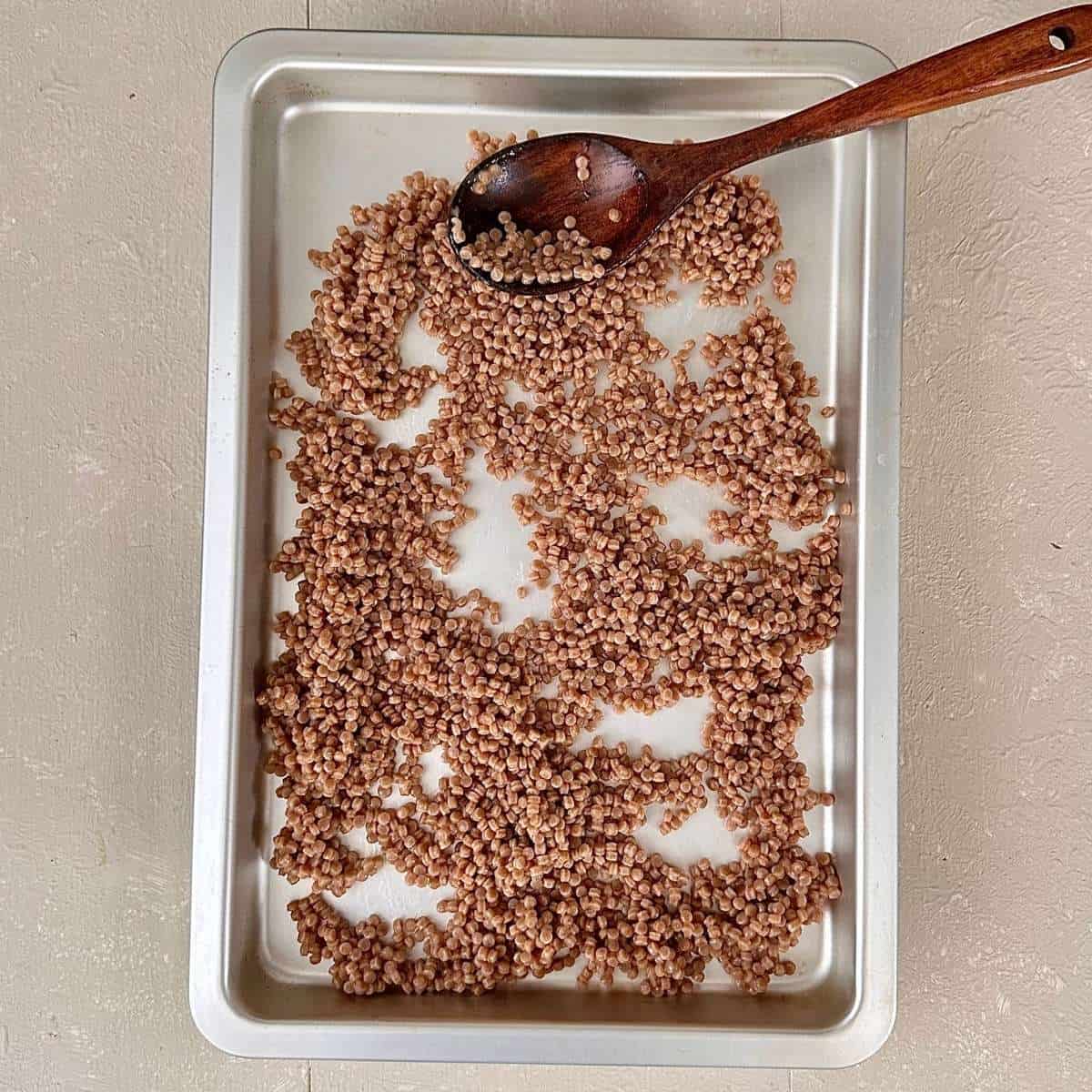
- Immediately transfer the cooked, spread-out couscous to a tray and allow to cool.
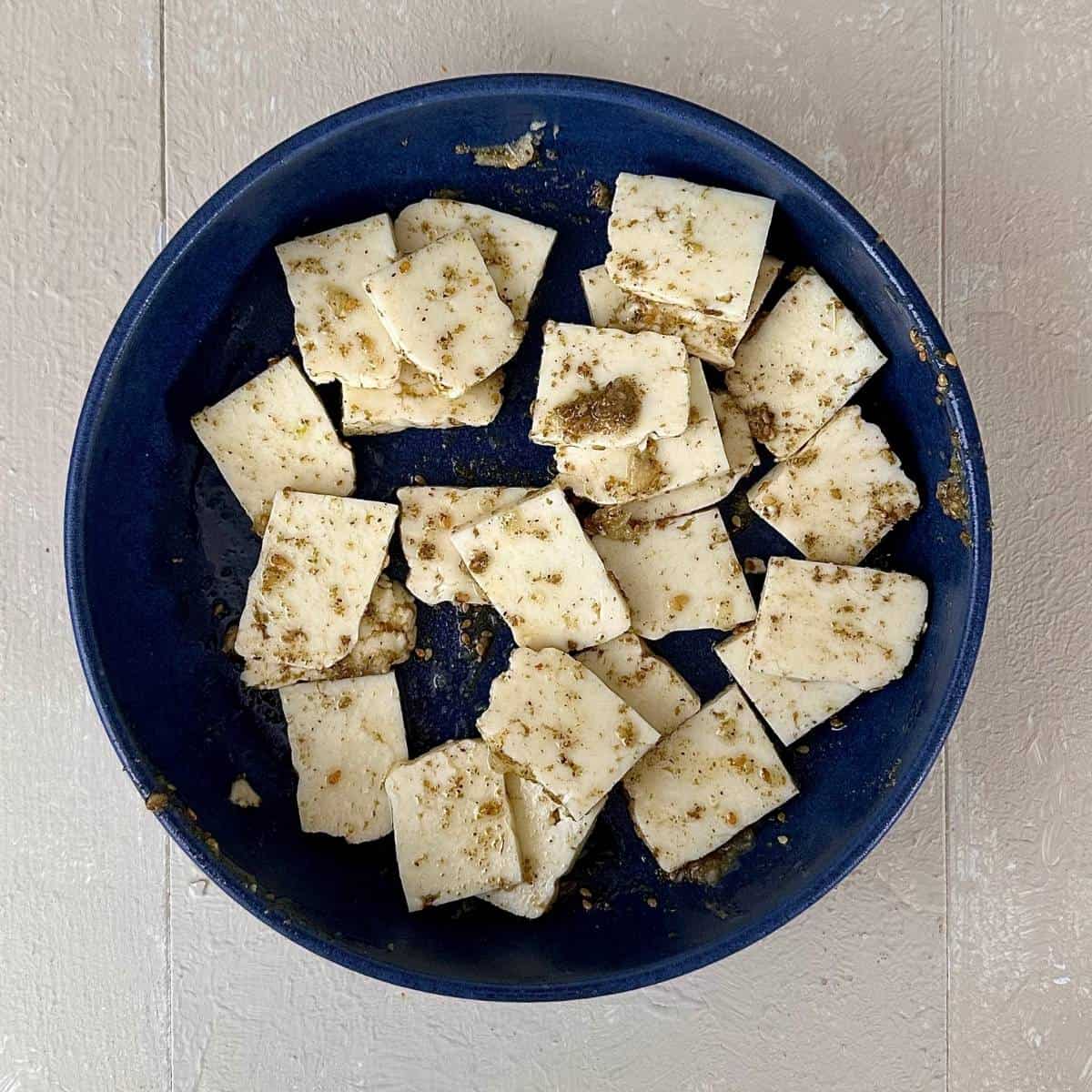
- Cut the halloumi into small 1cm squares and place in a bowl.
- Into the bowl, add 1 tablespoon of olive oil, the za'atar, and the grated garlic.
- Coat the halloumi with the za'atar, olive oil and grated garlic.
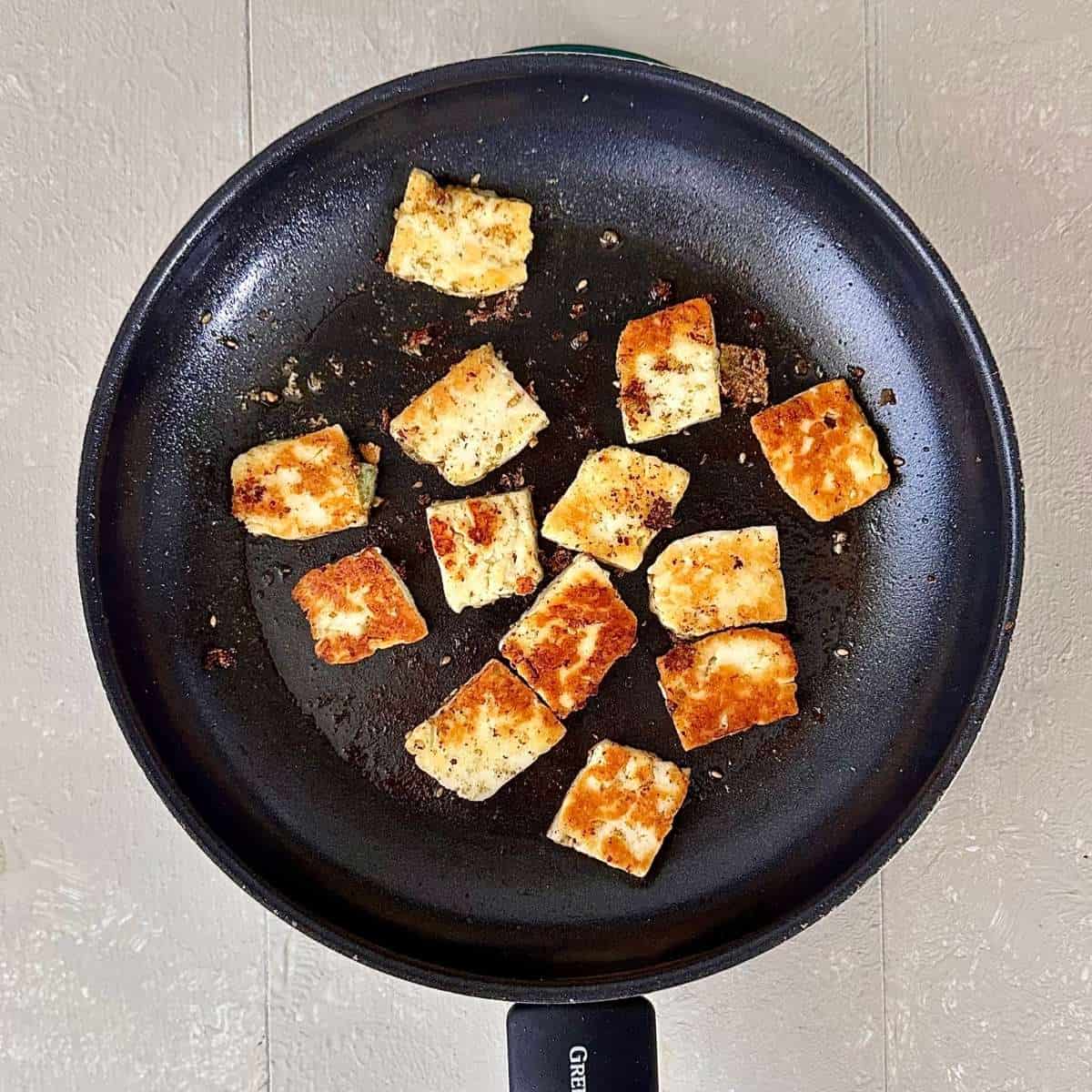
- Heat 1 tablespoon of olive oil in a frying pan and fry the halloumi on both sides until golden brown. Set aside.
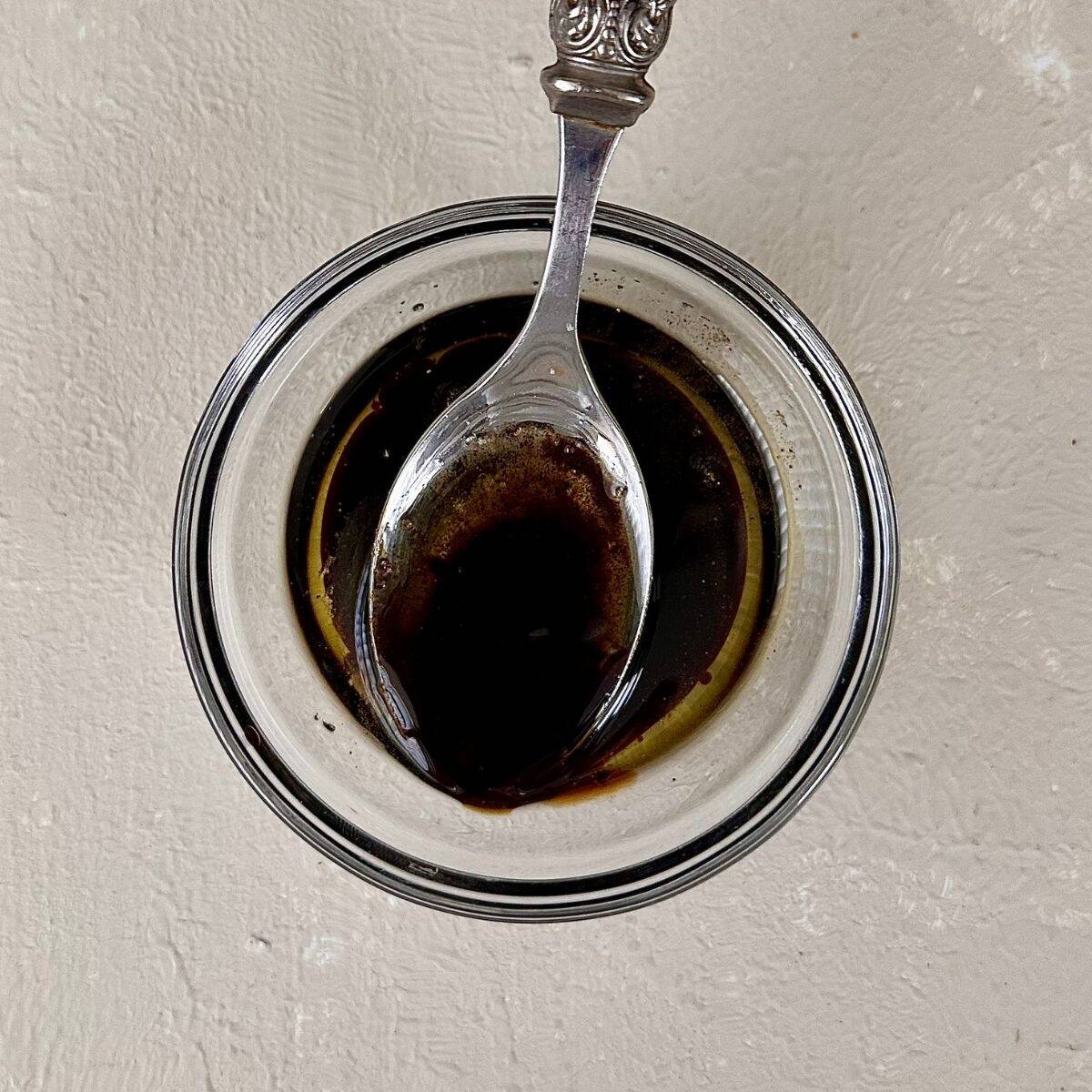
- Mix the pomegranate molasses with olive oil, salt and pepper.
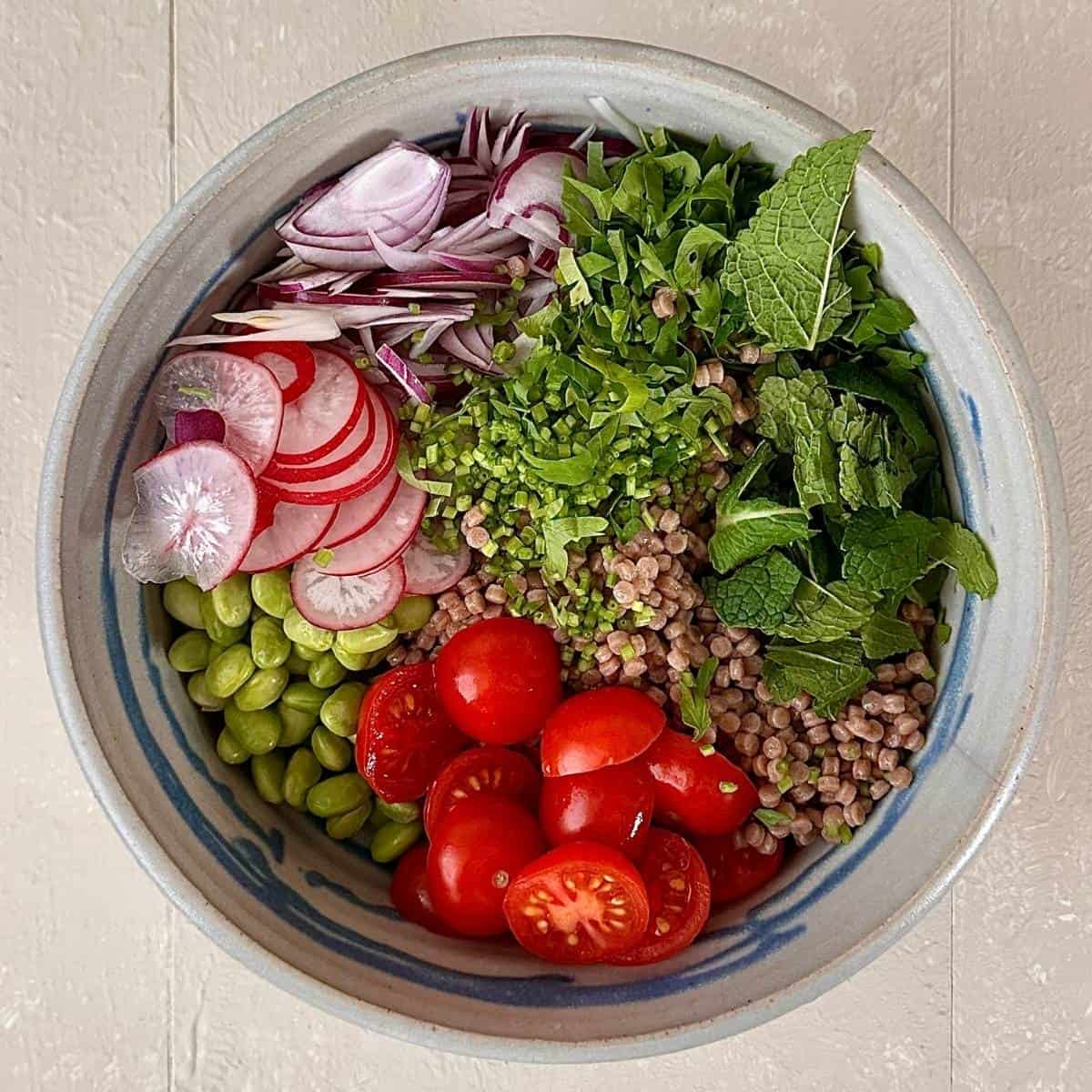
- Add the couscous, cherry tomatoes, edamame, radish, red onion, chopped parsley and mint to a bowl.
- Add the pomegranate molasses to the bowl and mix together well.
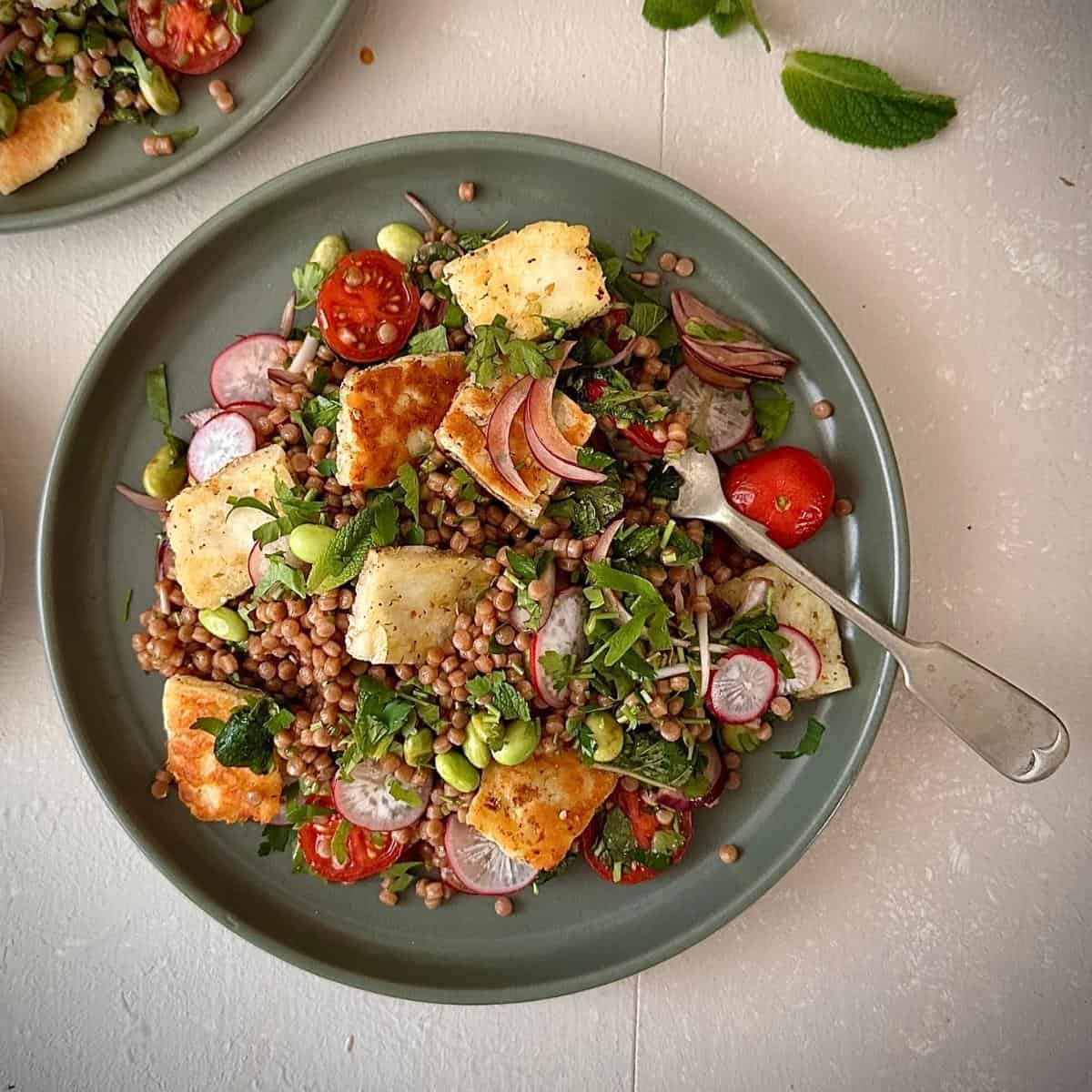
- Transfer the salad to a serving plate and add the halloumi.
Substitutions and Variations for Za'atar Halloumi Couscous Salad
This couscous salad is very adaptable, so feel free to adjust it depending on what you have on hand.
- Try a different grain - Whole wheat couscous can be replaced with regular couscous, bulgur wheat, quinoa or even red rice. Each brings a slightly different texture while still working beautifully with the dressing.
- Swap the halloumi - If you prefer a softer cheese, crumble feta over the salad instead. Alternatively, add your preferred protein, such as grilled chicken, chickpeas, or lentils, to make the dish more substantial.
- Make it vegan - Replace the halloumi with roasted chickpeas or crispy tofu, both of which absorb the za'atar flavours well.
- No za'atar? Make your own - Combine thyme, oregano, sesame seeds and a little lemon zest for a quick homemade blend. Ground coriander mixed with sesame seeds and dried herbs such as oregano, thyme, or marjoram also works well.
- Swap the onions - Red onion can be replaced with shallots or finely sliced spring onions (the green part) for a milder flavour.
- Add roasted vegetables - Roasted carrots, aubergine or courgette bring extra sweetness and depth to the salad.
- Add crunch - Toasted almonds, pistachios or pine nuts add a lovely contrast to the soft couscous and halloumi.
- Substitute pomegranate molasses - The closest alternative is balsamic vinegar reduced with a little sugar until syrupy. The flavour will be different but still provides a similar sweet-tart balance.
- Change the herbs - Parsley and mint work beautifully here, but dill or coriander can also be used, depending on your preference
Equipment
You will need digital scales to weigh everything out, but it's not essential. This recipe is so easy, you can eyeball it.
Storage
This couscous salad keeps well in the refrigerator for up to 3 days.
For best results, store the couscous salad and halloumi separately and add the cheese just before serving. Halloumi is best enjoyed freshly cooked, with its crisp exterior.
Chefs Tips
- Cook the couscous and halloumi at the same time - Prepare the couscous while the halloumi cooks. By the time the cheese is golden and crisp, the couscous would have cooled down and ready to assemble into the salad.
- Cook the halloumi in a hot pan - A properly heated pan helps the cheese develop a golden crust rather than releasing moisture, giving the halloumi a crisp exterior while staying soft inside.
- Cool the couscous- Once the couscous has cooked, cool it down immediately to stop it from overcooking and getting stuck to each other and becoming lumpy.
- Dress the couscous while it is slightly warm - Adding the dressing while the couscous is still warm allows the grains to absorb more flavour.
FAQs
Za'atar is a Middle Eastern spice blend typically made with herbs such as thyme or oregano, sesame seeds and sumac. It has a savoury, nutty flavour with a citrus edge from the sumac.
Yes, this salad is ideal to make ahead. The flavours actually develop.
Yes, this salad is delicious both warm, directly from frying the halloumi and cooking the couscous, or chilled.
Halloumi is ideal for salads because it holds its shape when cooked. When pan-fried, it develops a golden crust while remaining soft inside, adding both texture and richness.
More Fresh and Vibrant Salads
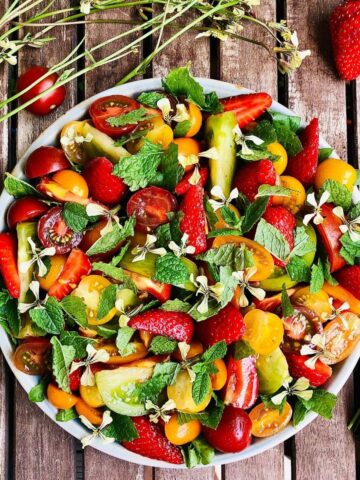
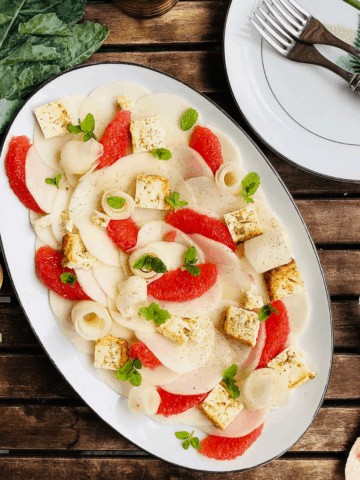
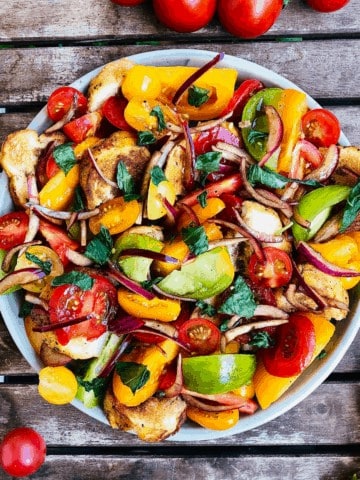
If you enjoy bright, flavour-packed salads like this one, here are a few more recipes you might like.
This za'atar halloumi couscous salad is quick to prepare and full of vibrant Mediterranean flavours. The recipe card below includes the full ingredients list and step-by-step instructions.
📖 Recipe
Za'atar Halloumi Couscous Salad
Equipment
Ingredients
Salad
- 150 g Giant wholewheat couscous
- 100 g Edamame Frozen
- 70 g Cherry tomatoes 5 - 6 in number
- 50 Baby radish 5 - 6 in number
- 60 g Red onion
- 20 g Parsley
- 10 g Mint leaves
- 1 teaspoon Olive oil
- 200 ml Water
- ¼ teaspoon Salt
Halloumi
- 200 g Halloumi
- 1 teaspoon Za'atar
- 2 tablespoon Olive oil
- 4-5 g Garlic 1 glove
Dressing
- 2 tablespoon Pomegranate molasses
- 1 tablespoon Olive oil
- ¼ teaspoon Salt
- ¼ teaspoon Black pepper
Instructions
Salad
- Wash and pat dry the tomatoes, radish, parsley and mint.
- Defrost the edamame in cold water and set aside.
- Cut tomatoes in half.
- Slice the radish thinly.
- Roughly chop the parsley (along with the stems).
- Peel and slice the red onions.
- In a saucepan, heat the olive oil over a medium heat, add the couscous and fry for a minute or two. Then add water and stir to ensure no couscous is stuck at the bottom of the pan. Add salt, cover and cook for 10-15 minutes.
- Once the couscous is cooked, transfer it immediately to a baking tray/sheet pan, spread evenly, and allow it to cool.
Halloumi
- Cut the halloumi lengthwise (approximately 1 cm thickness) and then cut horizontally into small squares.
- In a bowl, add 1 tablespoon of olive oil, za'atar, and minced or chopped garlic. Mix to combine. Coat the halloumi in the marinade and set aside.
- In a hot frying pan, add 1 tablespoon of olive oil and fry the halloumi until golden brown on both sides. Set aside.
Dressing
- Mix the pomegranate molasses, olive oil, salt and pepper.
Assembly
- Add the couscous, cherry tomatoes, radish, red onion and edamame into a bowl.
- Pour over the dressing and mix to combine.
- Add the chopped parsley. Tear mint leaves into small pieces and add to the salad. Mix well.
- Transfer the salad onto a serving plate. Add the halloumi and serve immediately.
Nutrition
NOTES
Food Safety
- Wash your hands regularly while preparing, handling and cooking food.
- Wipe down countertops and high-contact points regularly.
- If you cook meat and fish, do not use the same utensils on cooked food that previously touched raw meat. Use separate chopping boards for meat and fish. Wash your chopping boards immediately after use.
- Cook food thoroughly to a minimum internal temperature of 165 °F (74 °C).
- Don't leave food at room temperature for extended periods (more than 2 hours).
- Store food correctly.

PK says
Fantastic recipe! Made it for lunch - What a soulful meal